Philippines Is Losing Dollars Faster Than Any Country in Asia — Here’s Why
But right now, the Philippines’ dollar reserves are falling faster than any other country in Asia. And the reason is a war thousands of miles away.
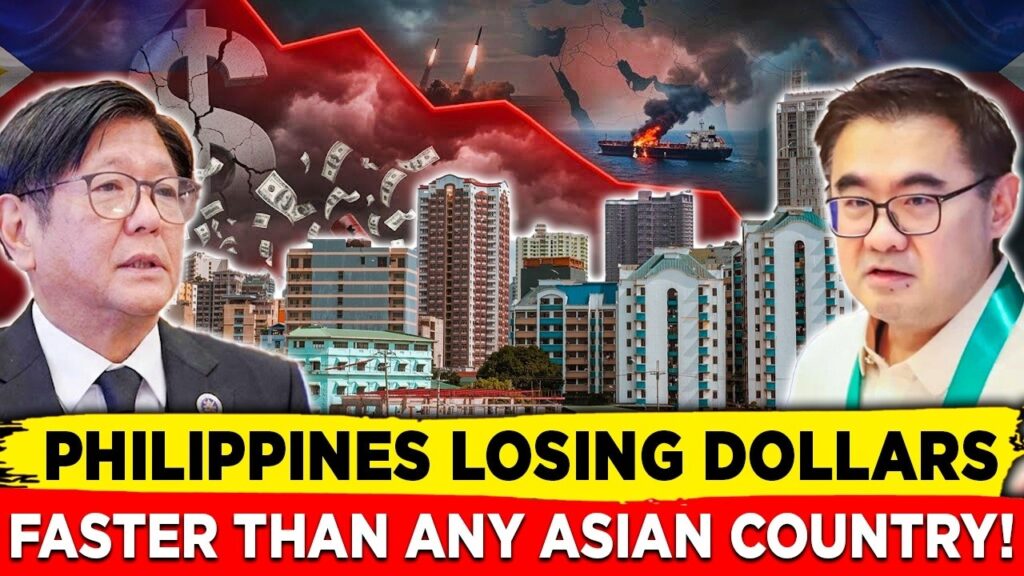
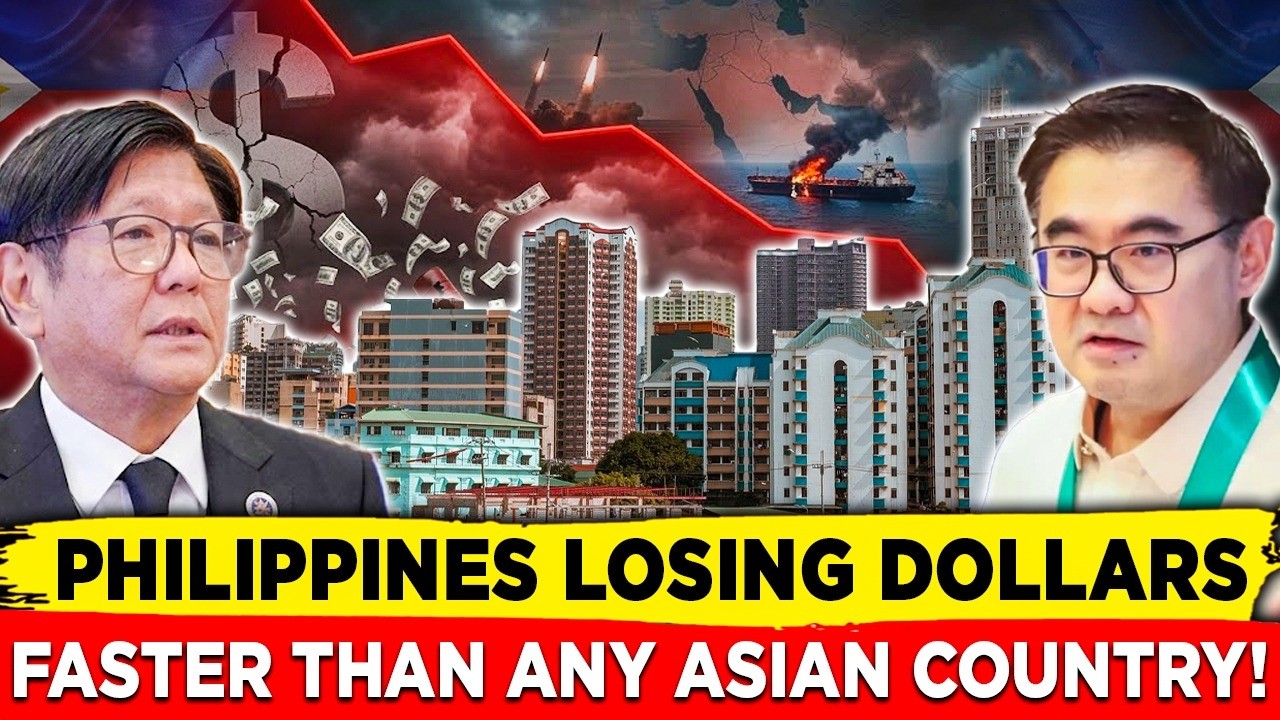
According to data compiled by Bloomberg, the Philippines’ reserves have dropped 8.1 percent since the Iran war began. The country’s stockpile is now around $104 billion. India lost 5.2 percent. Indonesia lost 3.8 percent. But the Philippines leads the losses.
This is the story of how a faraway war reaches an ordinary economy. And why this number matters more than most people realize.
What dollar reserves actually are
First, the basics. Foreign reserves are a country’s emergency savings. They are held by the central bank. In the Philippines, that is the Bangko Sentral ng Pilipinas, or BSP.
These reserves are usually kept in US dollars, gold, US Treasury bonds, and other strong currencies. They are used for important things. They pay for imports like oil and food. They support the value of the local currency. They reassure investors. They help pay external debt.
Think of them as the country’s emergency dollar savings account. When trouble comes — a war, a crisis, a market panic — the central bank can use that account to keep the economy steady.
What happened
In February 2026, Philippine reserves hit a record high of around $112.7 billion. That was the peak.
Then the Iran war began. Oil prices jumped. The US dollar got stronger. Asian currencies began to weaken. By the end of March, Philippine reserves had fallen to $107.5 billion. By May, Bloomberg data showed them at $104 billion.
In a matter of weeks, the Philippines lost billions in reserves. That is the steepest fall in Asia.
But it is important to be honest about what this is and what it is not. This is not a crisis. The Philippines still holds more than enough to cover several months of imports. The banking system is stable. Remittances from overseas Filipino workers continue to flow in.
This is not 1997, when reserves vanished and currencies collapsed across Asia. But it is real pressure. And the trajectory is what worries economists.
The oil shock
The first cause is oil.The Philippines imports most of its fuel. When wars break out in the Middle East, oil prices rise. When oil prices rise, the Philippines needs more dollars to pay for the same amount of fuel.
More demand for dollars means a weaker peso. A weaker peso means imports cost more. And the cycle keeps turning.
This is not a Philippine story alone. India, Indonesia, Thailand, South Korea, and Japan are all major energy importers. When oil markets shake, Asia bleeds. As BNY strategist Wee Khoon Chong told Bloomberg, import cover has declined across much of Asia in recent months, largely reflecting higher import costs from energy.
In other words, the war did not just spike oil prices. It quietly raised the cost of running entire economies.
The peso under pressure
The second cause is the peso itself.
The Philippine peso weakened past 60 per dollar — a record low. By the end of March, it touched 60.74. Since the end of February, the peso has dropped about 6.1 percent.
When this happens, the BSP has a choice. It can let the currency fall, or it can step in. To slow the decline, the central bank sells dollars from its reserves. This adds dollars to the market and supports the peso.
But this defense is expensive. Every dollar sold is a dollar taken out of reserves.
President Ferdinand Marcos Jr. spoke about this directly. In an interview with Bloomberg, he said it would be futile to try to spend all the country’s foreign reserves on defending the peso. He added that there is only so much a government can do because the dollar moves the way it does.
That is a remarkable admission. It tells us the Philippines is choosing its battles. It is willing to let the peso slide because fighting the dollar all the way is a losing game.
Why this hits ordinary Filipinos
Foreign reserves sound like finance jargon. But they land directly in daily life.
When the peso weakens, fuel becomes more expensive. Transport fares rise. Imported food costs more. Electricity bills creep upward. Even basic goods like cooking oil, rice, and electronics get harder to afford.
This is the quiet way that wars reach kitchens, jeepneys, and family budgets in Manila, Cebu, and Davao. A bomb falls in the Middle East. Weeks later, a Filipino mother pays more for milk.
This is what economists mean when they say global instability is now a household issue.
The Philippines at the Edge: Can Marcos Deliver the Middle-Income Dream Before the World Closes In?
Why Asia is more prepared than 1997
The good news is that Asia today is not the Asia of 1997.
After the Asian Financial Crisis, central banks across the region built much larger reserve buffers. They reformed banks. They introduced flexible exchange rates. They reduced reliance on foreign short-term debt.
The Philippines today has stronger fundamentals than it did decades ago. Reserves remain above $100 billion. The economy continues to grow. The banking sector is healthier. The BSP, led by Governor Eli Remolona Jr., is widely seen as cautious and credible.
This is why most analysts say the current pressure is manageable. Bloomberg itself noted that the region is currently better placed to handle economic turmoil than it was in past episodes like the Asian financial crisis of the 1990s or the 2013 taper tantrum.
But preparation is not immunity. Pressure is still pressure.
The bigger picture
This brings us to the deeper lesson.
Modern economic warfare is rarely direct. Few countries today block another country’s banks or seize ships. Instead, the damage spreads through interconnected systems — oil markets, currency markets, dollar flows, and reserve levels.
A war in the Middle East raises oil prices. Oil prices weaken Asian currencies. Weak currencies force central banks to spend reserves. Spent reserves shrink the buffer for the next shock.
This is the world we now live in. Geopolitical risk and economic life have merged. Currencies, supply chains, and reserves have become silent battlefields.
The Philippines stands inside this storm. It is far from the war zone, but not far from its effects.
The takeaway
So why does this matter?
It matters because foreign reserves are not just numbers in a vault. They are a country’s shield. They protect against shocks no one can predict.
When that shield gets thinner, governments lose room to maneuver. They become more vulnerable to the next crisis — whether it comes from a war, a pandemic, or a financial panic.
The Philippines is not in trouble today. But its reserves are sending a quiet message about a louder world.
Foreign reserves may sound technical. But they may be the clearest sign of how global instability reaches ordinary economies.
The Iran war is not just a Middle East story. It is now a Filipino story too.