China Just Sent 35 Warships Into Philippine Waters
The South China Sea is heating up again.
This time, the warning came from inside Camp Aguinaldo.
On May 12, 2026, the Armed Forces of the Philippines stood in front of cameras and dropped a number that shook the region. In just seven days, Chinese ships had swarmed Philippine waters in numbers not seen since April.
The count? About 35 vessels.
Not one ship. Not five. Not ten.
Thirty-five ships. All inside the Philippine Exclusive Economic Zone. All operating across four of the most sensitive spots in the entire South China Sea.
And the question now is no longer whether tensions are rising.
The real question is this: how far is China willing to push before something breaks?
The Breakdown
Let me give you the exact picture.
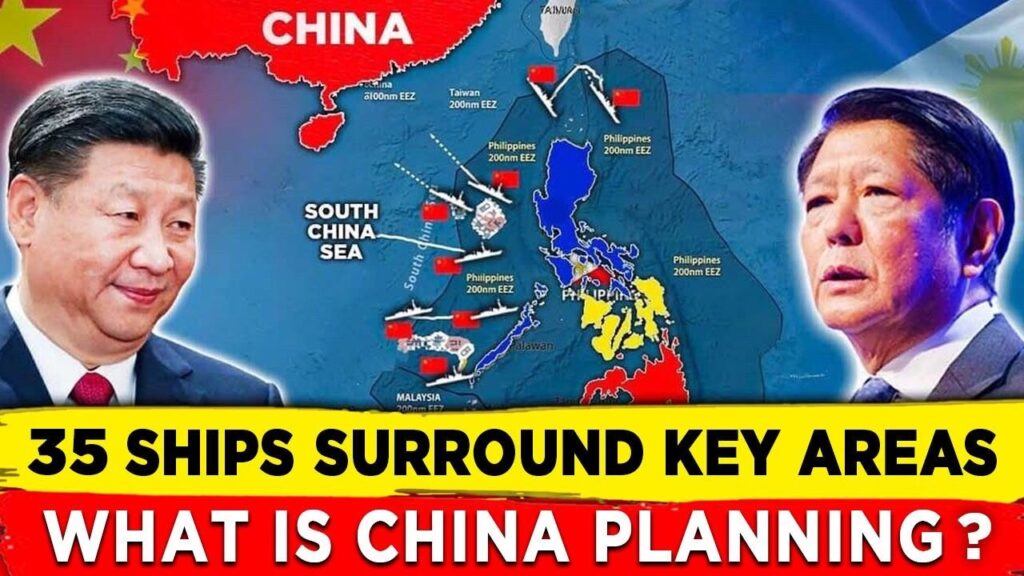
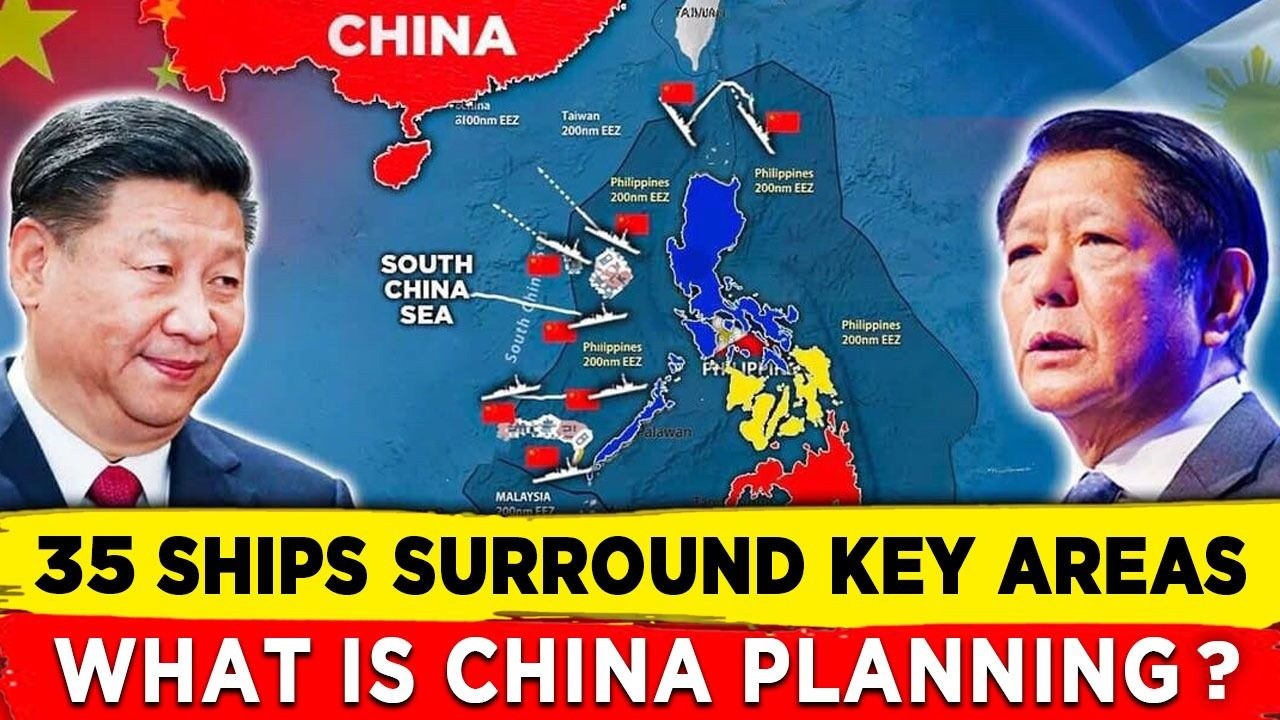
From May 4 to May 11, 2026, the Philippine military tracked 20 China Coast Guard vessels and 15 People’s Liberation Army Navy ships. That is a mix of white-hulled patrol ships and gray warships, all moving through waters Manila claims as its own.
Rear Admiral Roy Vincent Trinidad, the AFP spokesperson for the West Philippine Sea, broke down the locations one by one.
At Ayungin Shoal, also known as Second Thomas Shoal, the Philippines counted seven ships. Six Coast Guard vessels. One PLA Navy warship.
At Bajo de Masinloc, the Filipino name for Scarborough Shoal, the numbers were even higher. Seventeen ships. Nine Coast Guard. Eight Navy. The biggest cluster of the week.
At Escoda Shoal, five ships. Three Navy, two Coast Guard.
And at Pag-asa Island, the largest Philippine outpost in the Spratlys, six ships. Three Navy. Three Coast Guard.
For context, in April 2026, the Philippines tracked 62 Chinese vessels in the same areas. The May number is lower. But the message is the same.
China is not leaving.
How China Took Over Mischief Reef – Can the Philippines Stop It?
This Is Not Just a Patrol
At first, this might sound normal. Ships sail in disputed waters all the time, right?
But this is different.
This is what analysts call gray zone warfare.
Gray zone activity is pressure that stays below the line of open war. No missiles. No invasion. No naval battle. Instead, China builds presence slowly, ship by ship, patrol by patrol, until the disputed water starts to feel like Chinese water.
The tools include Coast Guard cutters, naval escorts, maritime militia boats, water cannons, military-grade lasers, blocking moves, and close-range chases. China usually calls these “law enforcement actions.” The Philippines calls them coercion.
A 2026 analysis by the Foundation for Defense of Democracies put it this way: China’s actions move “beyond routine harassment to more direct restrictions on access.” The goal, the report said, is to “assert operational control over contested waters while staying below the threshold for armed conflict.”
In other words: take the sea without firing a shot.
https://indopacificreport.com/how-china-took-over-mischief-reef-can-the-philippines-stop-it/
Raymond Powell, who runs a maritime transparency project tracking these incidents, explained the strategy in plain terms. Gray zone activity sends a quiet message to a country’s leaders: “You don’t want to escalate this. Keep this between us.”
China itself is no longer being subtle about it. On May 5, 2026, the very week these 35 ships were active, the People’s Liberation Army released photos of the China Coast Guard patrol ship Chuanshan conducting water cannon training near Scarborough Shoal. Beijing’s own caption said the ship was “patrolling on duty” in what it called the “territorial waters of China’s Huangyan Dao” and was running “comprehensive training on maritime rights safeguarding and law enforcement.”
Read that again. China is not just patrolling. It is training to use water cannons inside another country’s exclusive economic zone, and putting the photos out for the world to see.
But Manila is no longer keeping quiet either.
The Four Flashpoints
To understand why these 35 ships matter, you have to understand the four places they showed up.
Scarborough Shoal, called Bajo de Masinloc by the Philippines, sits about 220 kilometers from Luzon. China seized effective control of it during a 2012 standoff and has held it ever since. In early 2026, satellite images even showed Chinese ships placing a floating barrier at the entrance, blocking Filipino fishermen who had used those waters for generations.
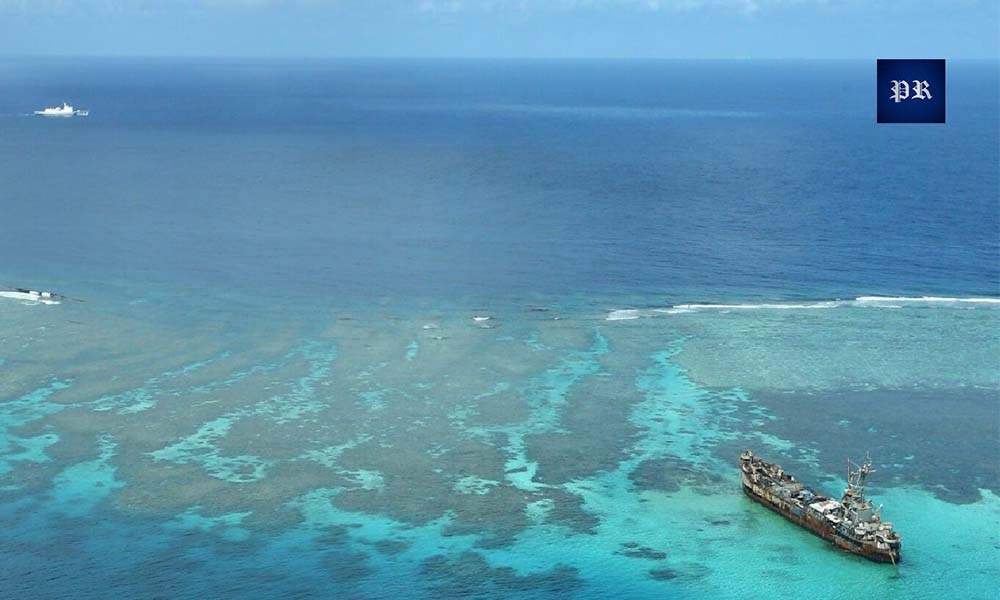
Ayungin Shoal, or Second Thomas Shoal, is even more sensitive. That is where the BRP Sierra Madre sits. The Philippines grounded the old World War II ship there in 1999 to mark its claim. A small team of Filipino marines lives on board. For years, China has tried to block their resupply runs, even using water cannons against Philippine boats.
Escoda Shoal, about 195 kilometers off Palawan, has become a quieter flashpoint. China stationed Coast Guard ships there after a tense standoff in late 2024.
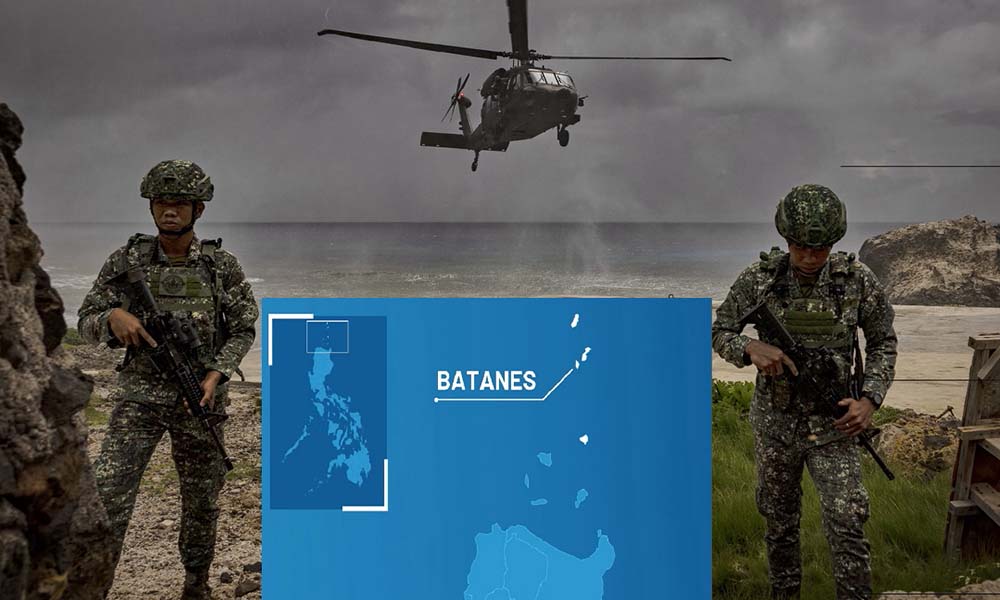
And Pag-asa Island, which means “Hope” in Filipino, is the biggest Philippine-held feature in the Spratlys. It has a runway. It has civilians. It has families. Surrounding it with warships is more than symbolic.
These are not random rocks. They are political nerves. And China just pressed all of them at the same time.
The Balikatan Connection
The timing here is not random.
The same week these ships were spotted, the Philippines was wrapping up Balikatan 2026, its largest joint military exercise ever with the United States. The drills ran from April 20 to May 8 across Luzon, the Visayas, and Mindanao.
This year was historic. Japan, Australia, and Canada joined as well. American HIMARS rocket systems were positioned in Luzon. The new NMESIS anti-ship missile system was deployed for the first time in the region. Japan even fired a Type 88 missile on Philippine soil, the first time Japanese combat forces had fired such a weapon overseas since World War II.
China was watching.
But here is the interesting part. According to Trinidad, Chinese vessels and aircraft did not carry out any aggressive actions during Balikatan itself.
“There were no recorded coercive and aggressive actions,” he said at the Camp Aguinaldo briefing. “What we noted was the presence of PLA Navy ships and China Coast Guard vessels, and the occasional presence of a PLA Air Force aircraft. There was no noted synchronized activity.”
So what does that mean?
It could mean Beijing chose not to escalate while allied forces were watching. Or it could mean China simply gathered intelligence, took notes, and waited. Then, as the drills wound down, the ships moved back in.
Either way, the message was clear. China is here. And it is not leaving just because allies are training nearby.
Manila’s New Playbook
For decades, the Philippine military focused on threats inside the country. Insurgencies. Local conflicts. Domestic security.
That is changing fast.
The AFP now follows a new doctrine called the Comprehensive Archipelagic Defense Concept, or CADC. The idea is simple but powerful: defend not just the land, but every inch of Philippine maritime territory out to the 200 nautical mile Exclusive Economic Zone.
“Their illegal presence in our exclusive economic zone has been noted,” Trinidad said. “This is the reason why we have shifted to CADC.”
That shift is real. More naval patrols. More coastal radar. More allied training. New missile systems. And one more thing that is changing the game.
Transparency.
For years, China’s gray zone playbook worked because no one talked about it. Incidents happened in the middle of the ocean, with no cameras. Now the Philippines is publishing photos, videos, and weekly vessel counts. Every ramming. Every water cannon blast. Every laser flash. The world sees it almost in real time.
Commodore Jay Tarriela, the Philippine Coast Guard spokesperson for the West Philippine Sea, captured the new approach in a single line.
“Our strategy remains one of maximum transparency and minimum provocation,” he said. “Allied coordination multiplies our effectiveness, raises the threshold for aggressive behavior, and reinforces the rules-based international order.”
In other words, sunlight is now a weapon.
The Alliance Network Is Growing
This is the part that worries Beijing the most.
The Philippines is no longer standing alone.
Washington is expanding access to Philippine bases under the Enhanced Defense Cooperation Agreement. Japan is deepening defense ties, including the recent agreement to transfer Abukuma-class destroyer escorts. Australia is signing access deals and joining patrols. Even Canada is now drilling alongside Filipino forces.
Manila-based security analyst Chester Cabalza told Indo-Pacific Defense FORUM that trilateral cooperation has been a turning point. “These partnerships enhance interoperability, improve our maritime domain awareness, and demonstrate collective resolve,” he said.
Slowly, the so-called First Island Chain, the strategic arc from Japan to Taiwan to the Philippines, is hardening. And China can see every brick being laid.
The Whole Region Is Watching
What happens in the West Philippine Sea does not stay in the West Philippine Sea.
Vietnam is watching. So are Malaysia, Indonesia, Taiwan, and Japan.
Each of these countries has its own piece of contested water. Each has its own version of Scarborough Shoal. If China can roll over Philippine claims with patrols and presence, the same playbook can be used everywhere else.
A recent CSIS study put it bluntly. From 2012 to 2021, China’s gray zone tactics were “remarkably successful.” Southeast Asian fishers were pushed off traditional grounds. Foreign oil and gas companies abandoned projects in Vietnamese waters. The status quo shifted, one quiet incident at a time.
Since 2021, that progress has stalled. Smaller states have started to push back. The Philippines has led the way. But Beijing has not given up. It has just changed the tools, leaning more on Coast Guard pressure, water cannons, lasers, and synchronized presence at multiple spots, like the four flashpoints we just saw.
That is why this latest deployment matters far beyond Manila. The whole region is reading the same script.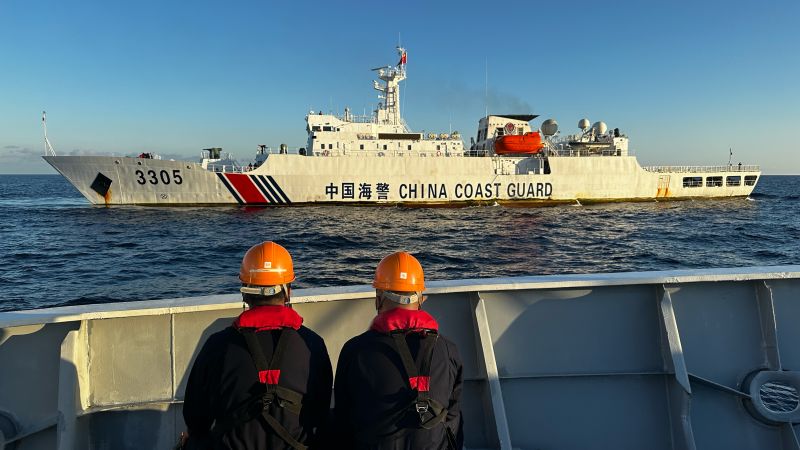
Why It Matters to the Whole World
You might be wondering why a few shoals halfway across the world should matter to anyone outside Southeast Asia.
Here is the answer.
Roughly three trillion dollars in global shipping passes through the South China Sea every year. Oil. Gas. Semiconductors. Cars. Food. Medicine. Whatever you bought today, there is a strong chance it crossed these waters.
If one nation controls the sea lanes, that nation controls the leverage. And in geopolitics, leverage decides everything.
There is also the legal side. In 2016, the Permanent Court of Arbitration in The Hague ruled that China’s sweeping claim to nearly the entire South China Sea had “no legal basis.” Beijing rejected the ruling. It has ignored it ever since.
Every ship China sends into Philippine waters chips away at that ruling. Every patrol is an argument that the law of the sea does not matter, only the ships on the water do.
The Bigger Picture
This is what makes gray zone confrontation so dangerous.
There is no clear starting point. No declaration. No formal beginning.
Just constant pressure, constant escalation, constant presence. Until one day, a ship rams into another ship. A water cannon hits a Filipino sailor. A laser blinds a pilot. A blockade tightens. A line gets crossed.
And the world wakes up to discover the South China Sea was never really stable to begin with.
China is betting that the United States will not fight over a reef. That Japan will not push past a certain point. That Australia will not commit too much. That Vietnam, Malaysia, and Indonesia will quietly accept the new reality.
The Philippines, for now, is betting the opposite.
Manila is choosing visibility over silence. Alliances over isolation. Pressure over surrender.
And every week, the numbers keep coming. Sixty-two ships in April. Thirty-five ships in May. The waters never empty. The patrols never stop.
These waters may not yet be at war.
But they are no longer at peace.