Why Malaysia Is Strengthening Sabah as Philippines Builds Up Balabac
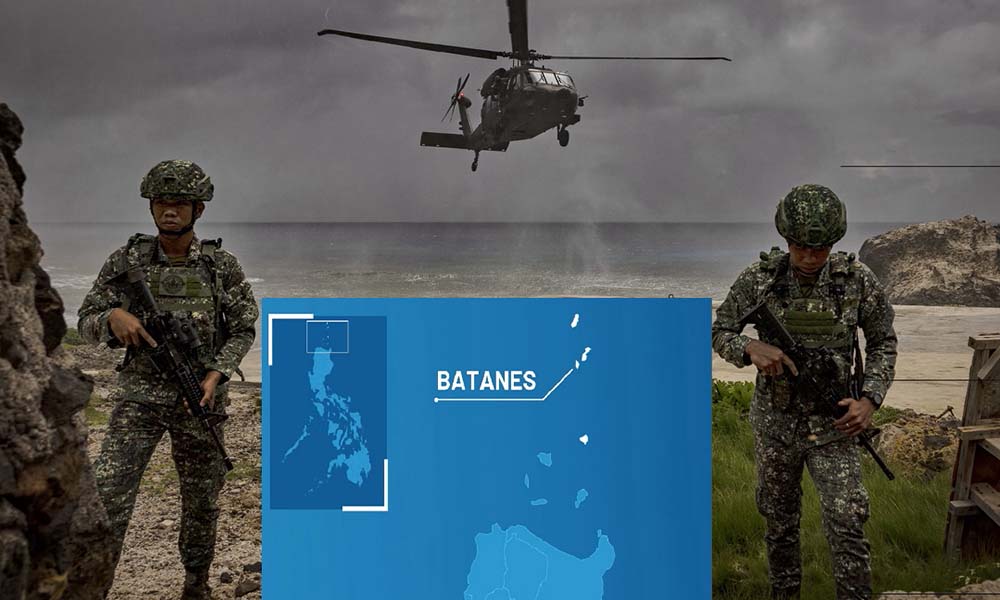
Malaysia is paying closer attention to the changing military environment around Sabah as defense infrastructure on the Philippine island of Balabac continues to develop. Located at the southern end of Palawan and roughly 50 kilometers from Pulau Banggi in Sabah, Balabac has become increasingly important because of its location, improving infrastructure and its place within the Philippines-US defense cooperation framework. The issue gained fresh attention after Malaysian Defence Minister Mohamed Khaled Nordin said on September 26 that Malaysia needs to strengthen its national defense capabilities, particularly in Sabah, because an unexpected conflict or incident involving major powers in the South China Sea could potentially affect Malaysian territory.
His remarks did not amount to an accusation that the Philippines was preparing for conflict with Malaysia. Instead, they reflected a broader concern that developments in the surrounding region could create security consequences for Sabah even when Malaysia itself is not directly involved in the original confrontation. This distinction is important because the situation is not simply about Malaysia and the Philippines facing each other militarily. It is about how both countries are adjusting their defense planning as the strategic environment around the South China Sea and the southern Philippines becomes more complicated.
Balabac Is Becoming More Important in the Regional Security Picture
For many years, Balabac was primarily known as a remote Philippine island rather than a major point on the regional security map. Its strategic importance has increased as the Philippines has improved infrastructure and defense access in the area. Balabac is one of the nine locations covered by the Enhanced Defense Cooperation Agreement, commonly known as EDCA, between the Philippines and the United States. The agreement allows US forces access to designated Philippine facilities for agreed activities, while the facilities remain under Philippine ownership and control. The additional EDCA locations, including Balabac, were announced in 2023 as part of efforts to strengthen the Philippines’ defense posture and expand cooperation with Washington. This has given Balabac greater importance because its geographic location places it close to the southern approaches of the Philippines as well as the maritime environment near Sabah.
The island’s infrastructure is another major reason for the increased attention. One of the most significant developments has been the improvement of its airfield and runway infrastructure. A longer and more capable runway can make a remote location considerably more useful because aircraft can operate from the area more effectively, while personnel, equipment and supplies can be moved more efficiently. Improved infrastructure also supports surveillance and maritime security activities because military and government agencies have greater access to a strategically located area. That does not mean Balabac has become an American territory or that Philippine sovereignty over the island has changed. It remains Philippine territory. The important change is that better infrastructure increases what can practically be done from that location.
This is where the issue becomes relevant to Malaysia. Balabac is not hundreds of kilometers away from Sabah. It is close enough that any significant improvement in military infrastructure naturally becomes part of Malaysia’s regional security calculations. Kuala Lumpur does not necessarily have to believe that the Philippines has hostile intentions in order to monitor the development carefully. Military planners routinely examine capabilities, infrastructure, geography and possible crisis scenarios. In this case, the combination of Balabac’s location, Philippine defense modernization and US-Philippines defense cooperation means Malaysia has another factor to consider when planning the defense of Sabah.
Malaysia Warns Over Balabac as Philippines Builds Up Military Near Sabah
Why Sabah Is Watching Balabac Closely
The geographical distance between Balabac and Sabah is one of the most important elements of the story. Pulau Banggi in Sabah is roughly 50 kilometers from Balabac, meaning the two areas are separated by a relatively narrow maritime space. Such proximity does not automatically create a military threat or indicate that conflict is approaching, but it does mean that developments on one side are difficult for the other side to ignore. From Malaysia’s perspective, the security of Sabah depends partly on its ability to monitor activity in nearby waters and respond to unexpected developments. This becomes even more important when the surrounding region is affected by tensions involving major powers.
Mohamed Khaled Nordin’s comments focused heavily on the possibility of a wider conflict or unexpected incident in the South China Sea spilling over into Malaysian territory. That concern reflects the fact that modern regional conflicts do not necessarily remain limited to the exact location where they begin. Military aircraft can operate across large distances, naval vessels can move between different maritime areas, commercial shipping can be disrupted and regional airspace and sea lanes can become more complicated during a crisis. Sabah’s geographic position means Malaysia has to consider these possibilities even if it is not a direct participant in a conflict involving larger powers.
Sabah already has strategic importance for Malaysia because of its location between the South China Sea and the Sulu Sea and its proximity to the southern Philippines. The area has long required attention from Malaysian security agencies because of maritime security, cross-border movement and territorial protection requirements. This means Malaysia’s defense modernization in Sabah did not begin solely because of Balabac. However, Balabac has become another factor in the broader calculation. The difference is that Malaysian officials are now openly discussing the nearby Philippine military development as part of the security environment that Malaysia needs to monitor and prepare for.
Malaysia Is Building a Wider Defensive Network in Sabah
Malaysia’s response is not centered on a single military base or one particular weapons system. Instead, the focus is on improving several layers of defense capability, including surveillance, radar, unmanned aircraft, naval assets, air capabilities and land-based readiness. Deputy Defence Minister Adly Zahari has indicated that developments involving US-supported military infrastructure on Balabac are being taken into account by Malaysia’s Defence Ministry and National Security Council as part of wider planning for northern Sabah. This suggests that Malaysia is examining the situation through a broader national-security framework rather than treating Balabac as an isolated issue.
Surveillance is particularly important because effective defense begins with awareness. A country needs to know what is happening in surrounding airspace and waters before it can respond effectively. Radar can provide early warning of aircraft and other activity, while maritime surveillance systems can help monitor vessels operating in nearby waters. Unmanned aircraft can remain airborne for long periods and provide persistent observation over areas that would otherwise require a larger number of manned aircraft or ships. Naval vessels can provide another layer of monitoring and presence, while ground forces remain important for protecting territory and critical infrastructure. When these systems are connected through communications and command networks, they become part of a wider defensive architecture.
Malaysia has already been developing this type of capability in eastern Malaysia. The Royal Malaysian Air Force has operationalized the ANKA-S medium-altitude long-endurance unmanned aircraft system at Labuan, strengthening Malaysia’s ability to conduct intelligence, surveillance and reconnaissance missions. Labuan’s location makes the development particularly relevant to Malaysia’s eastern maritime security requirements. The wider modernization effort also includes discussion of radar, coastal surveillance, unmanned systems and naval capabilities. Therefore, when Kuala Lumpur speaks about strengthening Sabah’s defenses, it does not necessarily mean that Malaysia is preparing for an immediate military confrontation. It can also mean improving its ability to see further, respond faster and remain prepared if the regional security environment changes unexpectedly.
The Balabac-Sabah Security Dilemma
The developments around Balabac and Sabah can also be understood through the concept of a security dilemma. The Philippines can improve its military infrastructure because it wants to strengthen the defense of its own territory. Malaysia can increase surveillance and military readiness because it wants to protect its own territory. Neither side needs to have aggressive intentions for both sides to become more attentive to each other’s capabilities. When one country improves its defensive position, the neighboring country may decide that it also needs to strengthen its own position.
This creates a complicated cycle. If the Philippines improves its ability to monitor the waters around Balabac, Malaysia may decide that stronger surveillance around Sabah is necessary. If Malaysia increases its maritime and air surveillance capabilities, Philippine planners may take those developments into account when considering their own defense requirements. This does not mean that either side is deliberately preparing to attack the other. It means that military planners naturally respond to changes in the capabilities and infrastructure around them. The result can be a gradual increase in military readiness without either government openly seeking confrontation.
The Sabah Dispute Adds Another Layer of Sensitivity
The longstanding dispute over Sabah makes the situation politically more sensitive. The Philippines maintains a historical claim over Sabah, while Malaysia administers the territory and rejects the Philippine claim. Because Balabac is located close to Sabah, military developments on the island naturally attract additional attention. The geographical relationship means that defense infrastructure cannot be considered entirely separate from the political history between the two countries, even when the stated purpose of the infrastructure is broader regional defense.
However, the existence of the Sabah dispute does not by itself prove that military infrastructure on Balabac is being developed to enforce the Philippine claim. There is no sufficient basis to automatically connect the two issues. The recent Malaysian defense discussion has focused primarily on the possibility of regional instability, South China Sea tensions and the potential spillover of a major-power conflict. That distinction is important because it separates a longstanding political dispute from the immediate security concerns being publicly discussed by Malaysian officials.
The Sabah issue nevertheless means that both governments have additional sensitivities to manage. Military developments close to disputed territory can attract more political attention than similar developments in a less sensitive location. This makes communication and careful interpretation particularly important. A defensive infrastructure project can be described differently by different governments depending on their strategic concerns. For Malaysia, the priority is protecting Sabah and maintaining readiness. For the Philippines, improving defense infrastructure can be presented as part of protecting national territory and strengthening its ability to respond to security challenges. These positions can exist simultaneously without automatically proving hostile intent.
Why US-Philippines Defense Cooperation Matters
American access adds another layer to Malaysia’s strategic calculation. If Balabac were only a Philippine military facility, Malaysia would still have reasons to monitor it because of its proximity to Sabah. However, its inclusion in the EDCA framework means that the island is also connected to the wider defense relationship between the Philippines and the United States. EDCA allows US forces access to designated Philippine locations for agreed activities and supports infrastructure development and the pre-positioning of supplies and equipment. The facilities remain under Philippine ownership and control.
The significance of this arrangement is therefore about access, infrastructure and cooperation rather than a transfer of sovereignty. Balabac remains Philippine territory. At the same time, its role within the Philippine-US defense relationship means that Malaysia has to consider how the island could function during a broader regional crisis. American forces and Philippine forces operate within an alliance framework that extends well beyond Balabac itself. The island therefore becomes one point within a much larger strategic network.
Malaysia Is Strengthening Defenses Without Declaring a Confrontation
One of the most significant elements of Malaysia’s public position is that Kuala Lumpur has not presented the Philippines’ defense modernization as an illegitimate act. Malaysian officials have acknowledged that the Philippines has the right to strengthen its own defense capabilities. At the same time, Malaysia argues that it also has a responsibility to protect its own territory and prepare for developments that could affect national security. This creates a more measured picture than the idea of an emerging bilateral military confrontation.
Malaysia and the Philippines have longstanding diplomatic and economic relations, while both countries have an interest in avoiding unnecessary escalation. A direct military dispute would create risks far beyond the immediate issue of Balabac. For that reason, strengthening Malaysia’s own surveillance and defense capabilities can be understood as a way of improving preparedness without directly challenging Philippine sovereignty.
The broader defense approach also includes public resilience and awareness. Malaysia launched a National Defence Literacy Programme in Sabah, reflecting the idea that national security is not limited to military equipment. Public awareness, emergency preparedness, community resilience and understanding of regional threats can also form part of national defense planning. Sabah’s location makes it particularly relevant to this approach because residents and infrastructure in the state are geographically close to several important regional security areas.
What Happens If Both Sides Continue Strengthening Their Positions?
The bigger strategic picture becomes clearer when the different developments are viewed together. The Philippines is improving infrastructure around Balabac. Malaysia is strengthening defense readiness in Sabah. The United States continues to cooperate with the Philippines through the EDCA framework. At the same time, the South China Sea remains an area of strategic competition involving major powers and several Southeast Asian countries. None of these developments automatically means that conflict between Malaysia and the Philippines is approaching.
However, together they are changing the military geography of the region. A runway can increase aviation access. Radar can provide early warning. Drones can support persistent surveillance. Ships can provide maritime presence. Communications systems can connect different parts of the network, while logistics infrastructure can allow personnel and equipment to remain available for longer periods. When these capabilities are combined, the strategic value of a location can increase significantly even if the individual infrastructure projects appear limited on their own.
For Manila, improved infrastructure at Balabac can strengthen awareness of the southern approaches to the Philippines and support territorial defense. For Kuala Lumpur, stronger capabilities in Sabah can reduce vulnerability on Malaysia’s eastern side. For Washington, Balabac is one location within a wider defense cooperation network. For the wider Indo-Pacific, the area is important because it lies close to sensitive maritime routes and the broader South China Sea security environment. These different perspectives explain why relatively small geographic locations can become important in regional strategic planning.
What the Balabac-Sabah Developments Mean for the Indo-Pacific
The developments around Balabac and Sabah are part of a larger transformation taking place across the Indo-Pacific. Countries are increasingly investing in surveillance, maritime awareness, unmanned systems, airfields, radar networks, naval capabilities and logistics infrastructure. The purpose of these investments can vary from country to country, but the combined effect is that remote islands and coastal areas are becoming more strategically useful.

Conclusion
Malaysia is clearly paying greater attention to Balabac, but the available evidence points to a broader security calculation rather than a direct military confrontation between Malaysia and the Philippines. Balabac is becoming more strategically useful because of its location, improving infrastructure and role within Philippine-US defense cooperation. At the same time, Malaysia is strengthening its defense preparedness in Sabah because Kuala Lumpur is concerned that a wider regional crisis could have consequences for Malaysian territory. The central issue is uncertainty. Balabac remains Philippine territory and Sabah remains administered by Malaysia, while the two countries continue to manage a relationship that includes both cooperation and longstanding political sensitivities. What is changing is the military usefulness of the geography between them. As Philippine capabilities around Balabac improve and Malaysia strengthens surveillance and defense capabilities around Sabah, both countries will have to account for the changing strategic environment.
About Indo-Pacific Report
For more geopolitical analysis, strategy coverage, and Indo-Pacific security reporting, visit Indo-Pacific Report:
Website
Facebook
YouTube