Malaysia Warns Over Balabac as Philippines Builds Up Military Near Sabah
Something important is changing in the security environment between the Philippines and Malaysia, and the location of that change is making the situation particularly sensitive. On September 26, Malaysian Defence Minister Mohamed Khaled Nordin launched Malaysia’s National Defence Literacy Programme in Kota Kinabalu, Sabah, while also discussing developments taking place on the Philippine island of Balabac. The timing and location were significant because Balabac is located very close to Sabah, creating a direct geographical connection between Philippine military development and Malaysian security planning. Malaysia has not said that the Philippines has no right to strengthen its own defence capabilities. Instead, the Malaysian position has been that Kuala Lumpur cannot simply ignore military developments taking place so close to Sabah, especially when the wider South China Sea remains an area of strategic competition involving several regional and major powers. This makes Balabac more than an isolated Philippine defence project. Its development is becoming part of a much wider conversation about maritime security, military preparedness, territorial sensitivities and the changing balance of capabilities in the Indo-Pacific.
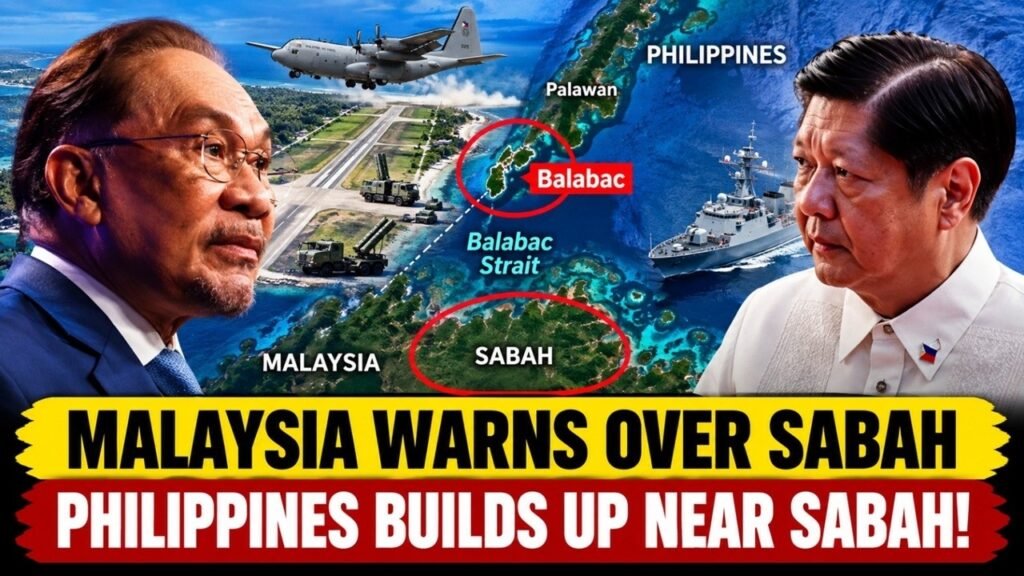
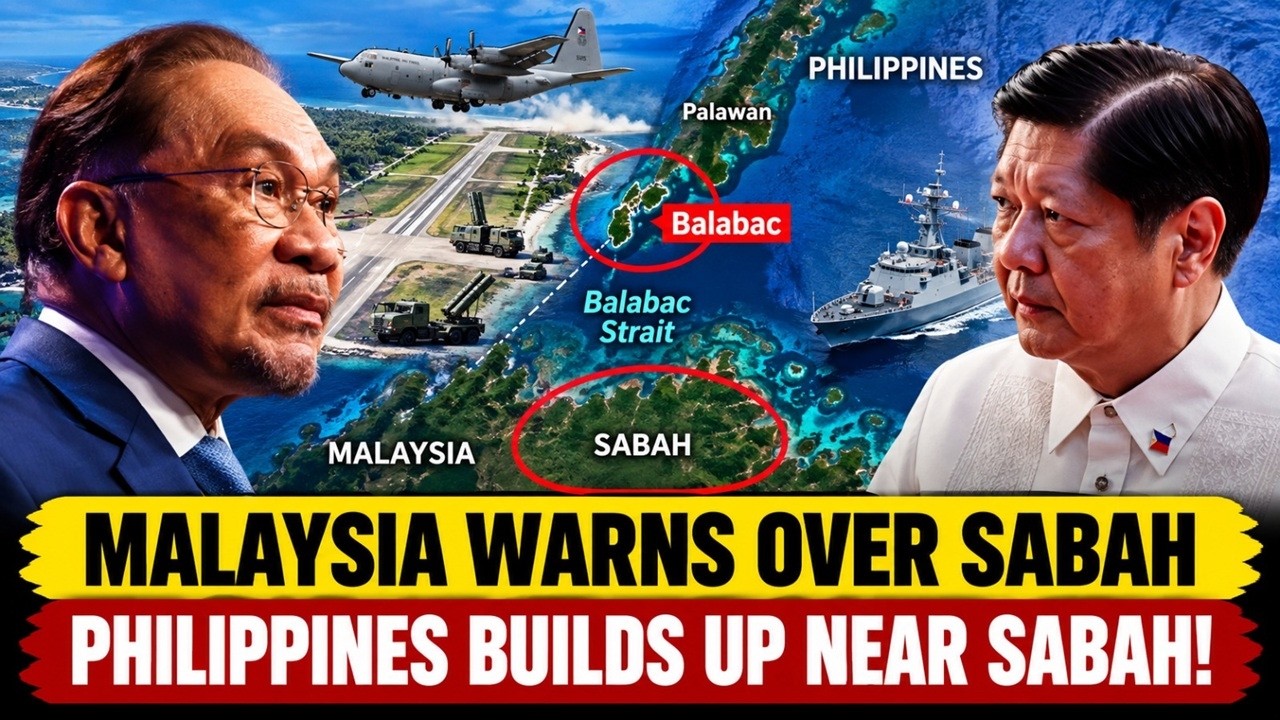
Balabac is located at the southern end of Palawan and is separated from Malaysia’s Sabah region by a relatively narrow maritime space. Pulau Banggi, one of Sabah’s islands, is roughly 50 kilometres from Balabac, with the Balabac Strait between them. The strait connects the Sulu Sea with the South China Sea and forms part of a maritime environment linking the Philippines, Malaysia and the wider region. From Manila’s perspective, Balabac is part of Philippine territory and provides an important geographical position for monitoring and operating in the southern approaches of the country. From Kuala Lumpur’s perspective, however, the same location means that a Philippine military position is developing relatively close to Sabah. This does not automatically mean that Malaysia considers the Philippine military presence hostile. It simply means that geography makes it impossible for Malaysia to ignore the development. A military facility located hundreds of kilometres away might have limited relevance to Sabah, but infrastructure and military activity taking place only a short distance across the maritime boundary naturally attract greater attention.
The strategic importance of Balabac is also connected to the island’s changing infrastructure. A remote island with limited facilities can be difficult to use for sustained military operations because aircraft, vehicles, personnel, fuel, communications equipment and supplies all require reliable logistical support. Once an airfield is improved and infrastructure becomes more capable, the same island can become significantly easier to access and operate from. This is why the development of Balabac should not be understood simply as the construction of one runway or one military facility. The broader change is the improvement of the island’s military usefulness. Better infrastructure allows Philippine forces to operate more efficiently in the southern part of the country and gives Manila greater flexibility in responding to maritime security situations. It can also provide a location for exercises with partner countries and improve the ability to move personnel and equipment through an otherwise difficult island environment.
Another important part of the story is the Enhanced Defense Cooperation Agreement, commonly known as EDCA, between the Philippines and the United States. Balabac is among the Philippine locations associated with the agreement, which provides a framework for greater U.S.-Philippine military cooperation, including approved infrastructure development, training activities and the pre-positioning of certain equipment and supplies. However, describing Balabac simply as an American military base would oversimplify the situation. The facilities remain under Philippine sovereignty, and the arrangement is designed around cooperation between the two countries rather than the transfer of Philippine territory to the United States. This distinction is important because the strategic significance of Balabac comes not only from American involvement but also from the fact that the Philippines is improving its own ability to use a strategically located part of its territory..
What Balikatan 2026 Revealed About Balabac’s Military Capability
The growing strategic importance of Balabac became much clearer during Balikatan 2026, when Philippine, U.S. and Australian forces conducted multinational military activities on the island. The exercise demonstrated that Balabac can support operations involving several countries and different types of military capabilities. One of the most notable demonstrations involved a U.S. High Mobility Artillery Rocket System, or HIMARS, launcher being transported to the island using Army watercraft. The system was brought into the operational environment, used during the exercise and subsequently moved back out. This was significant because it demonstrated that a sophisticated long-range fires system could be transported into a remote island environment, operated there and then withdrawn. At the same time, it is important to describe exactly what the exercise demonstrated. It did not establish that a permanent U.S. HIMARS unit had been stationed on Balabac, nor did it prove that American long-range missile systems would remain permanently deployed there. What it demonstrated was mobility, access and the ability to use an austere island position during a military exercise.
That distinction between temporary operational capability and permanent deployment is central to understanding the Balabac story. A military exercise can demonstrate what forces are capable of doing without creating a permanent military posture. During Balikatan, the movement of HIMARS showed that equipment normally associated with more developed military environments could be moved into a remote island location using maritime transport. This has implications for how military planners think about the island because it means Balabac does not necessarily have to host large permanent forces in order to become useful during a crisis or major exercise. If infrastructure allows equipment and personnel to arrive quickly, conduct operations and leave again, the island can function as part of a distributed military network. In an archipelagic region such as Southeast Asia, where forces may need to operate across many islands and maritime spaces, the ability to move capabilities rather than permanently concentrate them can be strategically important.
The Philippine government’s position is that strengthening Balabac is part of a broader effort to protect Philippine territory and improve the country’s ability to respond to security challenges. The Philippines is an archipelago with a very large maritime area, which means defence cannot depend entirely on concentrating military forces around Manila or the country’s major population centres. Southern Palawan provides a geographical connection toward the Sulu Sea and the southern maritime approaches of the Philippines. From this perspective, improving Balabac’s infrastructure gives Manila another location from which personnel, aircraft, vessels and equipment can support security operations. Better infrastructure can also reduce the logistical difficulties associated with operating in remote areas. This is particularly relevant for a country whose defence planning increasingly focuses on maritime security, territorial protection and cooperation with regional partners.
The Philippine military has also emphasized that stronger defence infrastructure near Malaysia should not automatically be interpreted as a hostile move against Malaysia. Philippine officials have acknowledged the geographical closeness of Balabac to Sabah while stressing that the country is exercising its sovereign right to defend its territory. Philippine and Malaysian military relationships also remain important. This is why the situation should not be presented as though the two countries have suddenly become military adversaries. The reality is more complicated. The Philippines can improve its defence capabilities while maintaining cooperation with Malaysia, just as Malaysia can strengthen its own defence posture without treating every Philippine military activity as a direct threat.
Why Sabah Is Watching Closely and What Could Happen Next
Malaysia’s reaction to Balabac has developed gradually rather than appearing suddenly with the September 26 announcement. Prime Minister Anwar Ibrahim had already raised concerns about the development around Balabac and the wider strategic environment involving the United States and China. His comments reflected Malaysia’s broader challenge: Kuala Lumpur wants to protect its national security interests while maintaining relationships with multiple major powers. Sabah officials have also adopted a cautious position, with Sabah Chief Minister Hajiji Noor stressing that the development on Balabac should not automatically be treated as a threat because the island is Philippine territory. These statements are important because they show that Malaysia’s position is more nuanced than simply opposing Philippine defence development. Kuala Lumpur recognizes the Philippines’ sovereign right to strengthen its defence while simultaneously considering how changes in military capability near Sabah could affect Malaysian security planning.
The September 26 statement from Defence Minister Mohamed Khaled Nordin added another layer to this discussion. By launching the National Defence Literacy Programme in Kota Kinabalu, he placed greater emphasis on public awareness of defence, security and sovereignty. The programme is broader than the Balabac issue and includes the need for society to understand modern security challenges, including traditional military risks as well as cyber and other non-traditional threats. Yet Khaled also used the occasion to explain why Malaysia cannot ignore military developments close to Sabah. His argument was essentially based on geography and uncertainty. Malaysia may not be involved in a confrontation elsewhere in the South China Sea, but a major incident involving other powers could still produce consequences for Malaysian territory, maritime routes, aircraft movements and regional security.
This is why Sabah has become particularly important in Malaysia’s defence planning. Sabah sits in a strategically sensitive part of Southeast Asia, surrounded by maritime routes and located close to several areas where security concerns overlap. Developments in the waters around the Philippines, the South China Sea and the Sulu region can therefore have implications for Sabah even when they do not directly involve Malaysian forces. If tensions between major powers increase, military aircraft and naval vessels could operate more frequently in nearby areas, commercial shipping could face greater uncertainty, and governments could be forced to increase surveillance and readiness. Malaysia does not necessarily need to join a confrontation to experience its effects. Geography alone can create pressure.
The most likely immediate question for Kuala Lumpur is therefore how much additional attention should be given to Sabah’s defence infrastructure, surveillance and preparedness. Malaysia has already been discussing stronger defence capabilities in its eastern region, including improvements involving land, maritime, air and cyber capabilities. Such measures can be understood as part of a broader effort to ensure that the country has sufficient options if the regional security environment becomes more complicated. At the same time, Malaysia has strong reasons to preserve defence and diplomatic relations with the Philippines. Turning Balabac into a permanent bilateral dispute would create another source of tension in a region where both countries already have shared interests in maritime security, trade and regional stability.
Balabac’s Location Is Making It a New Security Concern for Malaysia
Balabac is becoming increasingly important in the security calculations of both the Philippines and Malaysia because of its geographical position. Located at the southern end of Palawan, the Philippine island group sits close to Malaysia’s Sabah region, with Pulau Banggi only around 50 kilometres away across the Balabac Strait. That narrow maritime space connects the Sulu Sea with the South China Sea and places Balabac close to important regional sea routes. For the Philippines, the island is part of its sovereign territory and provides a strategically useful position from which Manila can strengthen surveillance, logistics, maritime security and military readiness in the southern part of the country. For Malaysia, however, the same geography means that changes taking place on Balabac cannot easily be separated from Sabah’s own security environment. The issue is therefore not simply about what the Philippines is constructing, but about how a more capable military position near Sabah could affect Malaysia’s defence planning in the future.
The geographical relationship between Balabac and Sabah becomes even more sensitive because of the long-standing Philippine historical claim over Sabah. Malaysia administers Sabah as part of the Malaysian federation, while the Philippines continues to maintain its historical claim. This does not mean that Manila is preparing to use Balabac against Malaysia, and the material available does not establish such an intention. In fact, officials from both countries have continued to emphasize the importance of stable bilateral relations. Nevertheless, territorial disputes can influence how governments interpret military developments. When military infrastructure is improved close to an area that is already politically sensitive, governments naturally pay greater attention to changes in capability. This is why Kuala Lumpur can respect the Philippines’ right to strengthen its own defence while still considering what those new capabilities could mean for Sabah.
The situation is also connected to the wider South China Sea security environment. Malaysia is not only looking at Balabac as a bilateral Philippine-Malaysian issue. Kuala Lumpur has to consider the possibility that tensions involving larger regional powers could create consequences for countries that are not direct participants in a confrontation. If military activity increases in the South China Sea, nearby states could experience changes in shipping patterns, military movements, surveillance requirements and maritime security conditions. Sabah’s location makes it particularly relevant to these developments. This is why Malaysian officials have repeatedly emphasized the need to strengthen national defence capabilities while also maintaining diplomatic relationships and avoiding unnecessary escalation.
Philippine Military Infrastructure Is Increasing Balabac’s Strategic Value
The importance of Balabac is not based on a single military facility or one weapons system. Its strategic value is increasing because several developments are taking place together, including improvements to infrastructure, greater military access, multinational exercises and stronger Philippine-U.S. defence cooperation. An island that previously had limited military utility can become considerably more valuable when its airfield, logistics facilities, transportation links and communications systems are improved. These developments make it easier to move personnel, equipment and supplies into the area and give Philippine forces more options for conducting surveillance, training and maritime security operations. In practical terms, the transformation is about making Balabac easier to use rather than simply placing more weapons on the island.
One of the most important factors is the Enhanced Defense Cooperation Agreement, or EDCA, between the Philippines and the United States. Balabac is included among the Philippine locations associated with the agreement. EDCA provides a framework for expanded military cooperation between Manila and Washington, including approved infrastructure development, training activities and the pre-positioning of equipment and supplies. However, it is important to distinguish an EDCA location from a permanent American military base. The facilities remain under Philippine sovereignty, and the agreement does not transfer ownership of Philippine territory to the United States. This distinction is especially important when discussing Balabac because describing it simply as an “American base” can make the military arrangement appear more permanent and straightforward than it actually is.
Philippines Plans Army Brigade in Palawan to Deter China in South China Sea
The development of Balabac has become more visible through multinational military exercises. During Balikatan 2026, U.S., Philippine and Australian forces conducted operations on the island, demonstrating the ability to move personnel and military equipment into a remote maritime environment. One of the most significant demonstrations involved a U.S. HIMARS launcher being transported onto Balabac using Army watercraft. The system was used during the exercise and subsequently withdrawn. This showed that Balabac could support the temporary deployment and operation of sophisticated long-range fires capabilities in an austere island environment. It did not, however, establish that a permanent U.S. HIMARS unit was stationed on Balabac or that the island had become a permanent American missile base.
Why Malaysia Is Strengthening Its Defence Focus on Sabah
Malaysia’s response to Balabac has been measured, but the issue is clearly receiving greater attention. On September 26, Defence Minister Mohamed Khaled Nordin launched Malaysia’s National Defence Literacy Programme in Kota Kinabalu, Sabah, while also explaining why developments around Balabac were relevant to Malaysian security. Malaysia’s position was not that the Philippines should stop strengthening its defence. Instead, Khaled acknowledged the Philippines’ right to improve its capabilities while stressing that Malaysia also has to strengthen its own preparedness because of the possibility that an unexpected conflict in the South China Sea could have consequences for Sabah. This reflects a broader Malaysian approach in which national defence requirements are being considered alongside regional diplomacy and strategic uncertainty.
The National Defence Literacy Programme itself has a wider purpose than the Balabac issue. It is intended to improve public understanding of defence, security and national sovereignty and to increase awareness of emerging threats that extend beyond traditional military conflict. Cybersecurity, non-traditional security challenges and national resilience are increasingly part of modern defence planning. Starting the programme in Sabah was particularly notable because eastern Malaysia faces a different strategic environment from the country’s western areas. Sabah’s proximity to the Philippines and the surrounding maritime routes means that developments in the southern Philippines and the South China Sea can have a direct geographical relevance to the state.
Malaysia also has to balance defence preparedness with its diplomatic relationships. Kuala Lumpur maintains defence and diplomatic ties with the Philippines and has an interest in preserving regional stability. At the same time, Malaysia has historically emphasized ASEAN Centrality, defence diplomacy and strategic autonomy rather than formally aligning itself with one major power against another. This makes the Balabac issue particularly sensitive because the island is connected to increased U.S.-Philippine military cooperation at a time when competition between Washington and Beijing remains an important factor in the Indo-Pacific security environment. Malaysia therefore has to consider both immediate national defence requirements and the possibility of becoming affected by a larger confrontation involving countries outside the Philippines and Malaysia.
What Happens Next: Balabac, Sabah and the Wider South China Sea
The future of the Balabac-Sabah security relationship will depend on several developments rather than one single decision. One important factor will be whether infrastructure on Balabac continues to expand and whether Philippine, U.S. and other partner forces conduct more frequent exercises there. If Balabac continues to become easier to access and support, its military usefulness could increase even without a permanent deployment of large foreign forces. Another important factor will be how Malaysia responds. Kuala Lumpur could continue strengthening surveillance and defensive readiness in Sabah while maintaining diplomatic communication with Manila. This would allow Malaysia to prepare for possible changes in the regional security environment without automatically turning Balabac into a bilateral confrontation.
The wider South China Sea situation will also be crucial. If competition between major powers remains controlled, Balabac may continue to function primarily as a Philippine defence position and a location for exercises with partners. If tensions increase significantly, however, the island’s location could become much more important. A larger regional crisis could involve changes in naval movements, aircraft operations, military logistics and maritime traffic across the surrounding waters. Malaysia would not necessarily have to become a participant in such a crisis to experience its effects. Sabah’s proximity to Balabac means that developments elsewhere in the region could create new security and preparedness requirements for Malaysia.
The Balabac issue should ultimately be understood as part of a broader transformation in the Indo-Pacific security environment. The island is not suddenly a new American base, nor is there evidence that Malaysia and the Philippines are preparing for an inevitable confrontation. What has changed is the practical military value of Balabac. Improved infrastructure, EDCA cooperation and the operational experience demonstrated during Balikatan 2026 have made the island more useful to Philippine and partner forces. Because Balabac is located so close to Sabah, Malaysia naturally has to include these developments in its own defence calculations. For Kuala Lumpur, the challenge will be to strengthen Sabah’s security without creating unnecessary tension with Manila. For Manila, the challenge will be to improve southern defence capabilities while reassuring neighbouring Malaysia that these measures are directed toward Philippine defence rather than confrontation. For Washington and other partners, the challenge will be to conduct military cooperation in a way that supports Philippine defence while taking into account the concerns of neighbouring states. How these different interests are managed will determine whether Balabac remains a manageable security development or becomes part of a larger regional dispute.
About Indo-Pacific Report
For more geopolitical analysis, strategy coverage, and Indo-Pacific security reporting, visit Indo-Pacific Report:
Website
Facebook
YouTube
Malaysia Warns Over Balabac as Philippines Builds Up Military Near Sabah