The Siege of the Sierra Madre: How China Is Slowly Strangling the Philippines’ Last Outpost in the South China Sea
A strategic analysis of Second Thomas Shoal, the grey-zone siege unfolding around it, and why a rusting World War II hull has become the most contested square mile in the Indo-Pacific.
Indo-Pacific Report | Strategic Analysis Desk | April 20
Introduction: The Ship That Should Not Matter
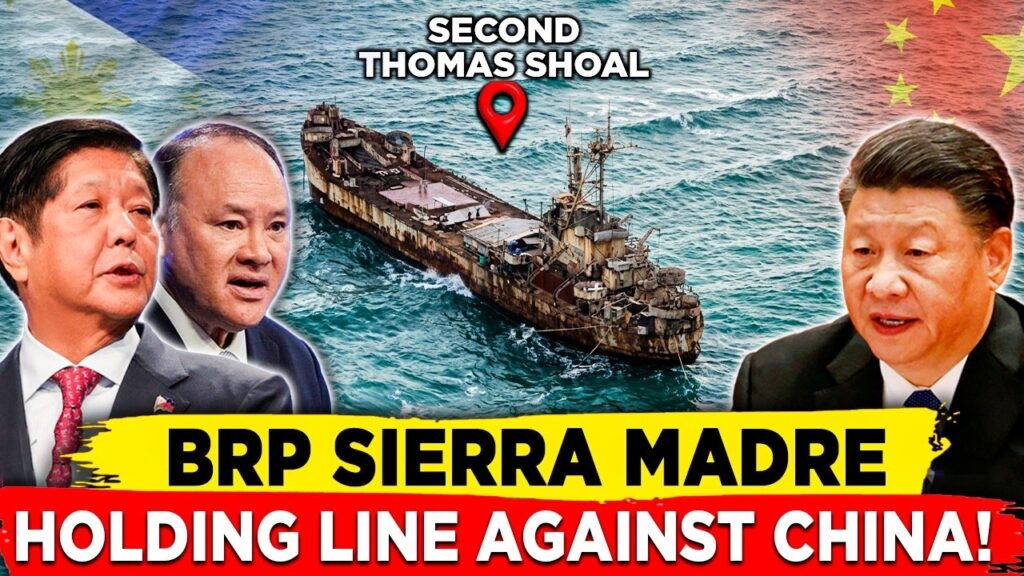
On a submerged reef at the eastern edge of the South China Sea, a rusting World War II vessel sits at permanent list, held aground by time, salt, and deliberate national policy. Her name is the BRP Sierra Madre. She is 81 years old. She has no functional weapons, no propulsion, no meaningful defensive capacity. By any conventional measure, she should not matter.
And yet, around her, one of the most sophisticated maritime pressure campaigns of the twenty-first century is unfolding in slow motion. A permanent cordon of Chinese coast guard ships, maritime militia vessels, and People’s Liberation Army Navy assets surrounds the shoal. Resupply missions run a gauntlet. Satellite imagery tracks every movement. And inside the ship’s corroding hull, a small detachment of Philippine Marines continues its mission: to remain.
This is a siege conducted in the twenty-first century idiom. The weapon is not gunpowder. It is presence. The objective is not conquest in the classical sense. It is the quiet, patient elimination of another state’s legal foothold — without a shot fired, without a declaration made, without a red line crossed.
This analysis examines the strategic logic, tactical architecture, and geopolitical implications of the contest now unfolding at Second Thomas Shoal.
The Ship and the Strategy: Why a Wreck Became a Weapon
In 1999, the Philippines confronted a strategic problem it could not afford to solve conventionally. Second Thomas Shoal — known locally as Ayungin Shoal — sits inside the country’s 200-nautical-mile Exclusive Economic Zone. Chinese activity in the surrounding waters was intensifying. Manila had neither the fiscal capacity to construct a base on the reef nor the political appetite for a direct confrontation with Beijing.
So the Philippines improvised a solution with a low cost and a high strategic payoff. It deliberately ran an old ship aground.
The BRP Sierra Madre, a former U.S. Navy tank landing ship dating from 1944, was steered onto the shoal and abandoned in place. Fourteen Philippine Marines were deployed aboard. Their mission was simple in concept and grueling in practice: stay. Establish permanent presence. Demonstrate continuing Philippine administration of the feature. Hold the sovereignty claim through physical occupation.
Twenty-six years later, the Marines are still aboard. The ship is still aground. And China has never, at any point, accepted the arrangement.
In 2016, an international arbitral tribunal constituted under the United Nations Convention on the Law of the Sea confirmed what Philippine policy had asserted since 1999: Second Thomas Shoal lies squarely within the Philippines’ EEZ. The same tribunal ruled that China’s sweeping nine-dash line — a claim enveloping approximately 90 percent of the South China Sea — had no basis under international law.
Beijing’s response was neither debate nor negotiation. It was simple rejection. And then, continuation.
The Three-Force System: China’s Shadow Navy
To understand what is happening around the Sierra Madre, one must understand that China does not operate a single maritime force. It operates three, working in concert.
The first is the People’s Liberation Army Navy (PLAN) — the conventional, uniformed fleet, now the largest navy in the world by hull count. The second is the China Coast Guard (CCG) — the largest coast guard in the world, fielding cutters that frequently rival the tonnage of frigates. The third, and the one most often underestimated in Western analysis, is the People’s Armed Forces Maritime Militia (PAFMM).
The PAFMM is a state-directed force of vessels that appear — at first glance — to be civilian fishing boats. They fly no military flag. Their crews wear no uniforms. But they are trained, organised, and deployed as an instrument of national maritime power. A May 2025 U.S. Congressional Research Service report described the PAFMM in unusually direct terms as the leading component of China’s maritime forces for asserting its claims in the South China Sea — advancing territorial positions in peacetime and, in wartime, providing reconnaissance, creating obstacles, and overwhelming adversaries through sheer numbers.
The scale of the deployment is now unmistakable. According to the Center for Strategic and International Studies’ Asia Maritime Transparency Initiative (CSIS/AMTI), an average of 241 Chinese militia vessels per day were active in the South China Sea throughout 2025 — a record high. The figure stood at 232 in 2024 and 195 in 2023. The trendline is unambiguous. The fleet grows. The presence tightens. The pressure accumulates.
This is the backdrop against which the siege of the Sierra Madre must be understood. Second Thomas Shoal is not an isolated flashpoint. It is the most acute point on a much larger map.
The Choreographed Drills: Rehearsals in Broad Daylight
The numerical expansion of the Chinese maritime militia would be strategically significant in its own right. But two incidents at the turn of 2025–2026 moved the conversation from pressure to preparation.
On 25 December 2025, while much of the world was focused on the holiday, approximately 2,000 Chinese fishing vessels operating in the East China Sea simultaneously ceased fishing operations and assembled into two parallel formations — each stretching roughly 460 kilometres end to end, in the shape of an inverted L. On 11 January 2026, the pattern was repeated. This time, 1,400 vessels formed a rectangular formation extending over 320 kilometres — so dense that commercial cargo traffic in the area was forced to divert or navigate through the formation in zigzag patterns.
Satellite analysts reacted with unusual candour. As one observer noted dryly, in nature, straight lines of that magnitude do not occur.
Gregory Poling, Director of CSIS/AMTI, writing in The New York Times, argued that these formations appear designed to test the large-scale assembly of civilian vessels in a future crisis — potentially in support of a quarantine, blockade, or other forms of coercive pressure. In other words, these were not fishing events. They were rehearsals.
A military planner looking at the same imagery sees something specific: a proof of concept. The question is no longer whether China could deploy thousands of quasi-civilian vessels in a coordinated operation. The question is whether — and when — it will.
The Cabbage Strategy: A Doctrine Hidden in Plain Sight
The siege tactics now visible around the Sierra Madre were not improvised. They were announced.
In 2013, PLA Air Force Major General Zhang Zhaozhong described on Chinese state television — publicly, and in detail — the doctrine that Beijing would apply to contested maritime features. He called it the “Cabbage Strategy.” The target, whether a reef, an outpost, or a grounded vessel, would be wrapped in successive layers of Chinese presence. Fishing boats form the inner layer. Coast guard cutters form the middle ring. PLA Navy warships form the outer perimeter. Layer by layer, like the leaves of a cabbage, the target is enveloped.
No invasion is required. No shots are fired. The target is simply surrounded until it cannot function — until resupply becomes impossible, maintenance becomes untenable, and withdrawal becomes the path of least resistance.
General Zhang was not predicting a hypothetical tactic. He was describing a live doctrine.
Thirteen years later, in April 2026, the strategy is in full execution. AMTI satellite imagery documents the architecture of the cordon around Second Thomas Shoal: China Coast Guard vessels on permanent station, dozens of militia boats layered around them, fast intercept craft held in reserve, and aerial surveillance drones maintaining overhead coverage. According to an analysis published by Small Wars
Journal in February 2026, there have been over 270 documented incidents of Chinese militia harassment and physical assault in the South China Sea since 2012.
In August 2025, a 1,500-tonne PLA Navy tugboat was identified only five nautical miles from the Sierra Madre — an unambiguous signal that Beijing is prepared, at a time of its choosing, to physically relocate the wreck. Philippine Navy spokesperson Rear Admiral Roy Vicente Trinidad confirmed that rules of engagement and contingency plans are in place for such an eventuality. President Ferdinand Marcos Jr., asked about the Chinese tugboat’s proximity, was equally direct in his reply: it would take considerably more than a tugboat to remove the Sierra Madre.
Every element of the cabbage is now in place.
The Logistics War: Starving a Garrison Without Firing a Shot
Siege warfare has always followed a single principle: the garrison is rarely defeated in battle. It is defeated in logistics. One does not fight the defender. One waits.
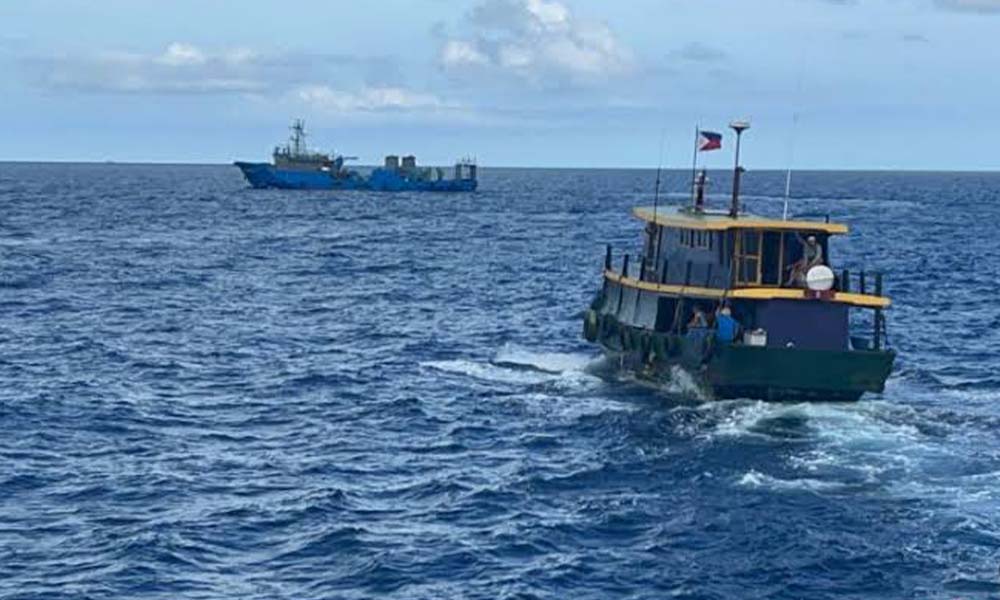
The Marines aboard the Sierra Madre cannot survive without regular external resupply. Food, potable water, medicine, fuel, and spare parts all arrive by boat, and every shipment must thread a dense gauntlet of Chinese vessels positioned specifically to impede the passage.
A July 2024 provisional understanding between Manila and Beijing produced a fragile de-escalation. Since that arrangement came into effect, the Philippines has successfully completed 13 resupply missions through 4 March 2026 — an average of one mission roughly every six weeks. Philippine officials emphasise that these missions have proceeded without the direct physical confrontations that characterised earlier encounters.
The absence of direct confrontation, however, does not mean the absence of pressure.
In November 2025, during the 12th resupply operation, Chinese vessels in the area jammed all communications — including U.S. drone surveillance operating overhead. The mission proceeded only because the carrier strike group centred on USS Nimitz was conducting joint exercises in the vicinity. The proximity of American airpower changed the calculation. That time.
The most violent moment of the modern siege came on 17 June 2024, when China Coast Guard personnel used what the Lowy Institute described as melee weapons against Philippine sailors during an attempted resupply. A Philippine Navy sailor was injured in the incident. For a period of weeks, the region held its breath, uncertain whether the threshold for mutual defence treaty activation had been crossed. It had not — which was, of course, the entire point.
This is the defining characteristic of grey-zone warfare. It is calibrated precisely to fall beneath the threshold that would trigger a conventional response, while cumulatively reshaping facts on the water.
Rust as a Weapon of War
While the diplomatic and tactical contest unfolds, a slower, less visible adversary is also at work: time.
The BRP Sierra Madre was built in 1944. She is not simply old. She is structurally decomposing. Saltwater corrosion spreads through her hull year after year. Each typhoon season accelerates the deterioration. Meaningful repair is nearly impossible under permanent Chinese surveillance — Beijing has consistently objected to any construction materials being brought aboard, interpreting them as attempts to reinforce or convert the wreck into a permanent installation.
The implication is stark. If the ship collapses — not because it is attacked, but because gravity, metal fatigue, and seawater finally complete their work — the Philippines loses its physical foothold on the shoal. Without physical presence, the legal claim of administration weakens. Without the claim of administration, the precedent for challenging China’s broader assertions erodes.
Rust is not an incidental problem for Manila. In the Chinese theory of this operation, rust is an ally.
The patience of a great power, in the end, is measured in decades. The integrity of steel is measured in seasons.
The Prize: Why One Shoal Carries the Weight of a World Order
It is worth pausing to consider why any of this matters beyond the immediate Philippine national interest. The answer lies in the underlying economic geography of the South China Sea itself.
Approximately three trillion U.S. dollars in global trade transits these waters every year. Roughly 50 percent of global maritime commerce passes through the broader sea. Beneath the surface lie an estimated 190 trillion cubic feet of natural gas and 17 billion barrels of proven and probable oil reserves. Whoever controls the sea lanes of the South China Sea holds simultaneous economic leverage over Japan, South Korea, Taiwan, Vietnam, the Philippines, and, by extension, the entire export-dependent Indo-Pacific economy.
This is the prize. And this is why even a single rusting ship on a single reef inside a single Exclusive Economic Zone can carry the strategic weight of a world order.
The United States has responded with the instruments it possesses. Carrier strike groups deploy to the region. Joint exercises are conducted. Senior officials have repeatedly affirmed that the U.S.–Philippines Mutual Defense Treaty applies to armed attacks on Philippine vessels in the South China Sea.
But here lies the strategic asymmetry that defines the entire contest: carrier groups deter war. They do not stop a coast guard vessel from blocking a resupply boat. They do not stop communications jamming. They do not stop rust.
This is precisely the space in which grey-zone warfare operates — and precisely why it is so effective. It wins in the seams where the full weight of American conventional deterrence cannot be brought to bear.
The Endgame: Victory Through Exhaustion
China’s objective at Second Thomas Shoal has never been concealed. Chinese officials have stated it repeatedly and on the record: the BRP Sierra Madre must be removed, the reef vacated, and the Philippine claim functionally abandoned through Philippine withdrawal.
The chosen instrument for achieving this outcome is not force. It is fatigue.
The July 2024 provisional arrangement should not be mistaken for goodwill. It is patience dressed in diplomatic language. As CSIS/AMTI noted in a March 2026 assessment, while visible confrontations have declined since the understanding was reached, China has maintained permanent monitoring and de facto control around the shoal. Navy, coast guard, and militia assets remain on station. The architecture of the siege has not been dismantled. It has simply been turned down.
The message embedded in that continuing presence does not require words. We are here. We are not leaving. And eventually — you will.
“270 incidents in 13 years — each one a millimetre of sovereignty lost. This is the domino. It does not fall with a bang. It falls with a whisper.”
This is the doctrine that analysts have come to call salami slicing — not one decisive act of aggression that triggers a unified international response, but an accumulation of thousands of small provocations, each individually beneath the threshold that would justify retaliation, collectively reshaping the operational environment.
If the Sierra Madre falls — whether voluntarily through Philippine withdrawal or structurally through physical collapse — China does not need to declare victory. The reef simply becomes empty. A precedent is quietly established. And every other claimant in the region — Vietnam, Malaysia, Indonesia, Brunei — watches, calculates, and updates its own risk assessment.
Strategic Outlook: The War Fought in Slow Motion
The siege of the Sierra Madre will not be broken by a Navy SEAL operation. It will not be ended by a single diplomatic agreement. It will not be resolved by a declaration of war — because no war has been declared, and that is the entire point of the Chinese approach.
If the outpost survives, it will survive because of something far harder to manufacture than firepower: will. The will of the Philippine state to keep sending resupply boats through a wall of Chinese vessels, week after week, year after year. The will to absorb pressure without responding in ways that would provide Beijing the pretext it seeks. The will to remain.
Four strategic conclusions follow from the analysis above.
First, Second Thomas Shoal is the defining test case for grey-zone deterrence. The outcome will shape how every other claimant in the South China Sea — and every maritime democracy bordering a revisionist power — calibrates its own defensive posture. The lessons of Ayungin will be studied in
Hanoi, Jakarta, Taipei, and Tokyo for decades.
Second, the Chinese maritime militia is no longer a subsidiary instrument. It is the main instrument. A doctrine that once relied on conventional naval power has been decisively supplemented by a quasi-civilian force that operates precisely in the legal and operational ambiguity where adversaries cannot easily respond. Any future Indo-Pacific defence architecture that does not plan specifically for the PAFMM is incomplete.
Third, alliance credibility is now being tested at the tactical level, not the strategic level. The U.S.–Philippines Mutual Defense Treaty has never been more publicly affirmed. But credibility in the grey zone is measured not in treaty language but in operational presence — the proximity of the Nimitz, the coordination of drone surveillance, the timing of joint exercises. This is the new test of alliance reliability, and it is being conducted in real time.
Fourth, the strategic value of legacy assets is being redefined. The Sierra Madre is, in narrow military terms, worthless. In strategic terms, she is one of the most valuable pieces of Philippine real estate. The lesson for small and middle powers confronting revisionist neighbours is unambiguous: physical presence, even minimal and symbolic presence, is among the cheapest and most enduring forms of sovereignty projection available.
Fourteen Marines on a decomposing ship. Surrounded by 241 Chinese vessels a day. Sitting above three trillion dollars of annual trade. On a reef that may, in the long arc of twenty-first-century history, help determine which order governs the Indo-Pacific.
This is not a local dispute. It is the frontier of the world order — and it is being contested, one cabbage leaf at a time.
Indo-Pacific Report provides strategic analysis on maritime security, great-power competition, and the geopolitics of the world’s most contested region.
Visit us at www.indopacificreport.com.