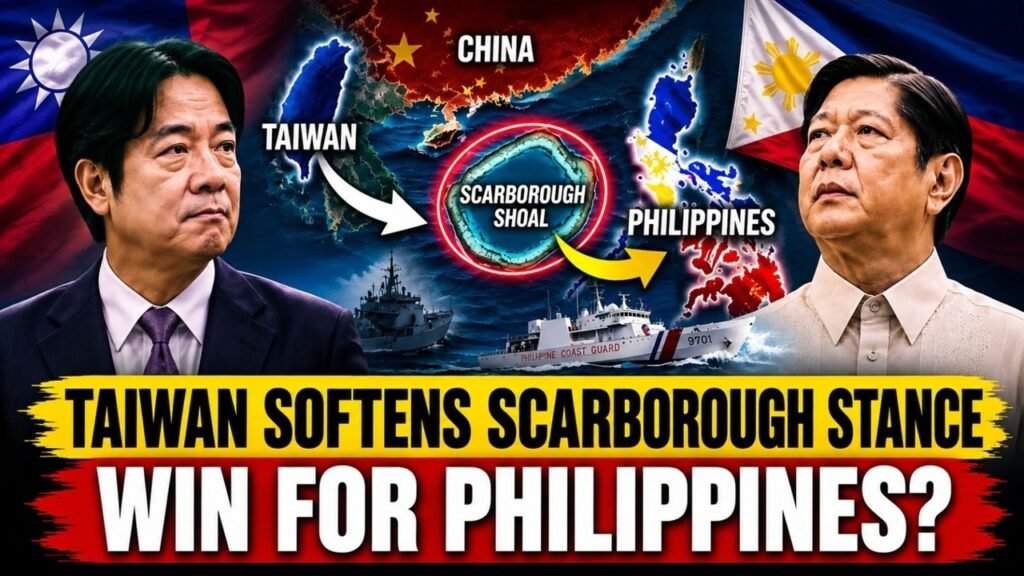
Taiwan Just Changed Its Scarborough Shoal Claim — China Won’t Like This
Taiwan has not abandoned its claim to Scarborough Shoal, but its approach to the Philippines is becoming increasingly cautious and strategic. This is one of the most interesting developments in the wider South China Sea and Taiwan security picture because Taipei is attempting to balance two objectives that could easily come into conflict. On one side, Taiwan wants to preserve its longstanding sovereignty claims in the South China Sea. On the other, it has a growing strategic interest in maintaining a stable anScarboroughShoald cooperative relationship with the Philippines, a country whose geography could become extremely important in any future Taiwan Strait crisis.
Taiwan’s position became clear again on July 12, 2026, when its Ministry of Foreign Affairs reaffirmed that the Republic of China, or Taiwan, had not changed its sovereignty claims or policies concerning the South China Sea islands. Taipei said disputes should be resolved peacefully according to international law and the law of the sea, including the United Nations Convention on the Law of the Sea. Taiwan also reiterated that it should be included in multilateral mechanisms dealing with South China Sea disputes and called for freedom of navigation and overflight to be protected.
That statement is important because it shows that Taiwan has not withdrawn from the South China Sea issue. However, Taiwan’s position also demonstrates that preserving a territorial claim does not necessarily require confrontation with every other claimant. Taipei can maintain its claim to Scarborough Shoal while avoiding a political or diplomatic conflict with Manila.
This is where the wider strategic picture becomes important. Scarborough Shoal is not an isolated maritime dispute. It sits within a much larger geographical system linking the South China Sea, the Philippines, the Bashi Channel, Taiwan and the Western Pacific. As military cooperation between the United States and the Philippines expands, the northern Philippines is becoming increasingly significant to the security environment around Taiwan. The result is a strategic paradox. Taiwan has a territorial claim that overlaps with Philippine interests, yet Taiwan also has a strong reason to keep the Philippines on friendly terms. China remains Taiwan’s primary security challenge, while the Philippines is increasingly positioned along one of the most important maritime approaches to Taiwan.
Why Scarborough Shoal Matters
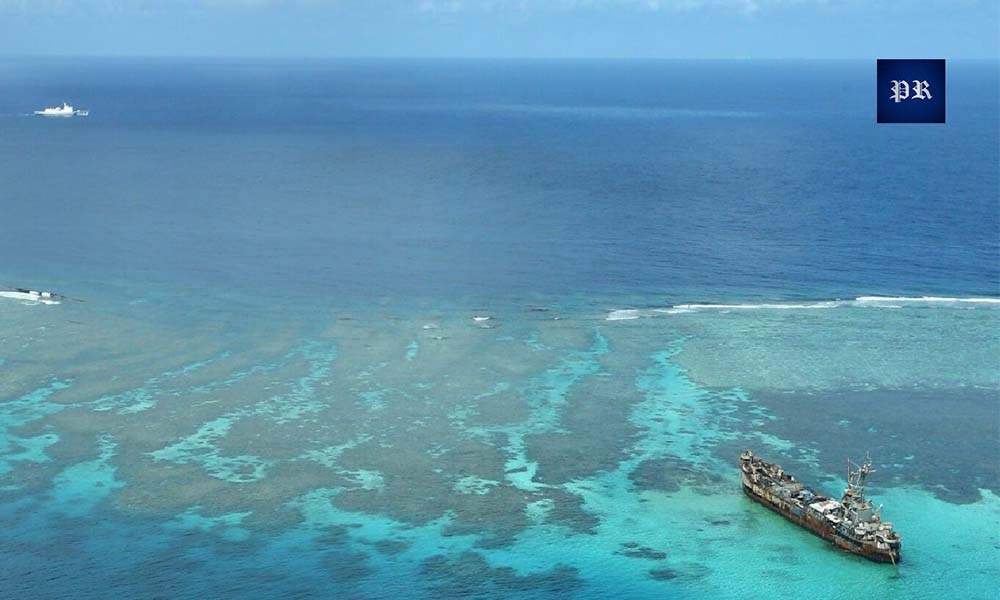
Scarborough Shoal, known in the Philippines as Bajo de Masinloc and in China as Huangyan Dao, is one of the most strategically sensitive features in the South China Sea. It is located roughly 200 kilometers from the Philippine coast, making it geographically much closer to the Philippines than to Taiwan or mainland China. The shoal has been under China’s de facto control since 2012. Since then, Chinese coast guard forces have maintained a strong presence in the area, while Philippine fishermen and government vessels have repeatedly encountered Chinese maritime forces.
The situation remains active in 2026. In July, Philippine authorities accused Chinese coast guard vessels of using water cannons against Philippine vessels near Scarborough Shoal and reported a dangerous close encounter involving a Chinese vessel and a Philippine fisheries boat. China rejected the Philippine characterization of the incident and said it had taken control measures against vessels it considered to be operating illegally in waters claimed by China. These incidents demonstrate why Scarborough Shoal remains strategically important. The issue is not simply about a line on a map. It involves fishing rights, maritime access, coast guard operations, surveillance, sovereignty claims and the ability of different states to maintain a physical presence.
Australia Is Quietly Building a New Defense Alliance with the Philippines
The 2016 South China Sea arbitration ruling is also central to understanding the dispute. The Permanent Court of Arbitration did not determine sovereignty over Scarborough Shoal itself. However, it ruled on several maritime rights issues and found that traditional fishing rights existed around the shoal. The tribunal also rejected China’s broader maritime claims where they exceeded the rights available under international law. China has rejected the ruling, while the Philippines continues to cite it as an important legal foundation for its position.
The legal situation and the operational reality are therefore different. The Philippines has legal arguments and geographic proximity. Taiwan maintains its own historical and sovereignty position. China, meanwhile, has maintained the strongest physical presence around the shoal. That difference between legal claims and effective control is one of the most important reasons Scarborough Shoal remains a dangerous flashpoint.
Taiwan Has Not Abandoned Its Claim
One of the most important points that should not be misunderstood is that Taiwan has not surrendered its claim to Scarborough Shoal. Taipei’s July 12 statement explicitly reaffirmed that its sovereignty claims and relevant policies concerning the South China Sea remain unchanged. Taiwan also repeated its call for peaceful dispute resolution, adherence to international law, freedom of navigation, and Taiwan’s participation in multilateral mechanisms dealing with regional maritime disputes.
This means that Taiwan’s relatively restrained approach toward the Philippines should not be interpreted as a formal withdrawal from its territorial position. Instead, Taiwan appears to be separating its sovereignty claims from its broader strategic relationships. A country can maintain a territorial claim without making that claim the center of every bilateral relationship, and Taiwan has strong incentives to take this approach with the Philippines.
If Taipei were to aggressively confront Manila over Scarborough Shoal, it could create another strategic problem at a time when Taiwan already faces significant pressure from China. The potential political benefit of confrontation would be limited, while the broader strategic costs could be considerable. Taiwan therefore has reasons to preserve its claim while avoiding unnecessary friction with a country that is becoming increasingly important to its security environment.
This is why Taiwan’s position may appear contradictory at first. Taipei can maintain that its claim remains unchanged while simultaneously avoiding the kind of confrontation that China has repeatedly had with the Philippines. The difference is not necessarily about who cares more about the claim. Rather, it is about strategic priorities. Taiwan can preserve its position on Scarborough Shoal while recognizing that maintaining a stable relationship with the Philippines may be more important to its wider security interests.
The Philippines Could Be Dragged Into a Taiwan Crisis
Philippine officials have repeatedly acknowledged the possibility that a Taiwan conflict could directly affect their country. President Ferdinand Marcos Jr. has previously warned that the Philippines could be drawn into a Taiwan conflict because of its geographic proximity. The issue is particularly sensitive because nearly 200,000 Filipinos live and work in Taiwan, creating a major humanitarian and evacuation challenge if fighting were to break out. The Philippine government has developed contingency planning for the evacuation of Filipino citizens from Taiwan.
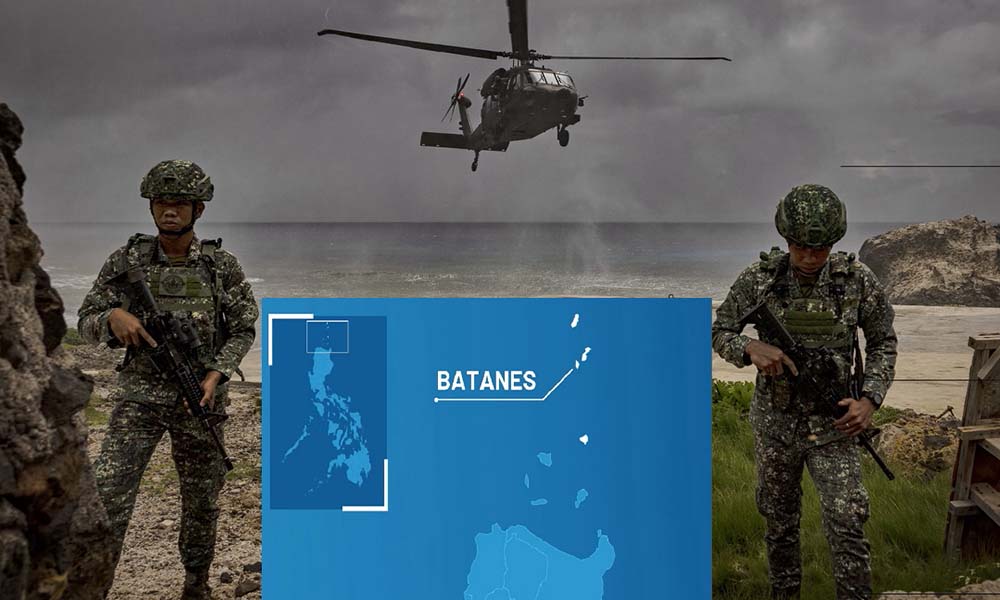
Batanes could potentially play a role in such operations because of its proximity to Taiwan. Reuters has reported that Philippine authorities have considered Batanes as a potential staging point for bringing Filipino workers home during a crisis, although the islands themselves have limited infrastructure and resources. This humanitarian dimension is important because it demonstrates that the Taiwan issue is not purely theoretical for the Philippines. A conflict across the Taiwan Strait could immediately create practical challenges involving evacuation, transportation, food supplies, maritime safety, refugees and civilian protection. That means Manila has strong reasons to prepare even if it does not want to become a participant in a war.
Taiwan and the Philippines Do Not Have Identical
It would also be a mistake to portray Taiwan and the Philippines as natural allies on every South China Sea issue. They are not. Taiwan maintains its own sovereignty claims over features in the South China Sea, and Taiping Island, which Taiwan administers, is particularly important to Taipei’s position. The Philippines, meanwhile, has its own territorial and maritime claims and strongly emphasizes its rights under international law, including those recognized in the 2016 arbitration ruling.
As a result, Taiwan and the Philippines have overlapping interests in some areas but competing positions in others. Their relationship is therefore better understood as one of selective cooperation rather than complete strategic alignment. The two countries can cooperate on maritime safety, humanitarian assistance, economic ties, and regional stability while continuing to disagree over sovereignty and maritime claims.
This type of relationship is not unusual in international relations. Countries frequently cooperate in one area while competing or disagreeing in another. For Taiwan and the Philippines, this distinction may become increasingly important as the regional security environment becomes more complicated. Their shared interest in maintaining regional stability can coexist with unresolved disagreements over territorial claims, allowing both sides to pursue practical cooperation without requiring complete agreement on sovereignty.
China’s Pressure on the Philippines
There is a major strategic paradox developing in the Indo-Pacific. The more pressure China places on the Philippines, the more important the Philippines may become to Taiwan. Chinese maritime pressure has encouraged Manila to strengthen its defense partnerships with the United States, Japan and other regional partners.
The July 2026 confrontations around Scarborough Shoal demonstrate that maritime tensions remain active. Philippine authorities reported Chinese water-cannon use against vessels near the shoal, while China said its coast guard had taken lawful control measures against what it considered unauthorized activity. These incidents contribute to a broader pattern in which Manila increasingly views maritime security as a national defense priority. As Philippine defense cooperation expands, the country’s strategic value in the wider Indo-Pacific also increases. For Taiwan, this can create an unusual situation. China’s pressure on the Philippines may indirectly strengthen the strategic relationship between Manila and Washington, while that stronger relationship makes the Philippines more important to Taiwan. In other words, pressure intended to constrain the Philippines could potentially make Manila more strategically valuable to Taipei.
Taiwan’s July 2026 Position Is Especially Significant
Taiwan’s July 12, 2026 statement provides an important window into Taipei’s thinking. The Taiwan Ministry of Foreign Affairs said that its South China Sea sovereignty claims and policies remained unchanged. At the same time, it emphasized peaceful dispute settlement, international law, freedom of navigation, and joint development. Taiwan also argued that it should not be excluded from multilateral mechanisms dealing with South China Sea disputes.
The wording matters because Taipei is not signaling that it intends to abandon the South China Sea. Instead, it is emphasizing a rules-based and diplomatic approach. This gives Taiwan room to preserve its territorial claims without automatically entering into confrontation with Manila. It also allows Taipei to position itself as a participant in regional maritime affairs while seeking to avoid unnecessary escalation. Such an approach is particularly useful at a time when Taiwan faces increasing strategic pressure from China.
What Happens If China Tightens Control Around Scarborough Shoal?
One major uncertainty is how Taiwan would respond if China significantly increased its control around Scarborough Shoal. Taipei’s current strategy of restraint could become increasingly difficult to maintain if the dispute escalates substantially. If Philippine vessels were repeatedly blocked, fishing rights were increasingly restricted, or China established more permanent infrastructure around the shoal, pressure on Taiwan to clarify or strengthen its position could grow.
Taiwan would then face a difficult strategic decision. A stronger statement could reinforce its South China Sea claim while demonstrating solidarity with the Philippines. However, it could also increase tensions with China and potentially complicate Taiwan’s relationship with Manila if Taipei’s position differed from Philippine expectations. This is what makes Scarborough Shoal such a difficult strategic issue for Taiwan. The balance that may work during a period of controlled tension could become far harder to maintain during a major crisis, forcing Taipei to weigh its territorial claims against the broader strategic importance of maintaining stable relations with the Philippines.
The Strategic Triangle Is Becoming Clearer
The emerging strategic triangle can be understood through three countries: Taiwan, the Philippines, and the United States. Taiwan is the central geographic focus of a potential crisis, while the Philippines sits immediately south of Taiwan and controls territory near important maritime approaches. The United States, meanwhile, has a defense treaty with the Philippines and a major security relationship with Taiwan, although the nature of these relationships is different. Together, these overlapping relationships create a complicated strategic environment in which the Philippines can play an important role in Taiwan’s security even without becoming a formal military ally of Taipei. Its territory, geography, and alliance with the United States already give it considerable strategic importance.
For Taipei, the rational approach is therefore to avoid creating unnecessary disputes with Manila. This is one reason Taiwan’s handling of Scarborough Shoal is particularly important. Taiwan can maintain its territorial and legal position while avoiding actions that could unnecessarily damage its relationship with the Philippines. Such an approach allows Taipei to preserve its claims without allowing a separate territorial dispute to become a broader strategic problem.
Three Possible Futures for Scarborough Shoal and Taiwan
The first possible future is pragmatic coexistence. Taiwan maintains its claim to Scarborough Shoal but avoids direct confrontation with Manila. The dispute remains unresolved, but Taiwan-Philippines relations continue to develop in other areas.
The second possibility is greater Chinese pressure. If Beijing expands its operational control around Scarborough Shoal, the Philippines could strengthen its military partnerships further, while Taiwan could face greater pressure to make its own position more visible. The third possibility is a Taiwan Strait crisis. In such a situation, Scarborough Shoal could become part of a much larger regional security picture. The Bashi Channel, Batanes, U.S. access to the Philippines and evacuation routes from Taiwan could all become strategically important. The third scenario would represent the biggest test of Taiwan’s current balancing strategy.
Conclusion
Taiwan is not abandoning Scarborough Shoal. Its official position remains unchanged, and Taipei continues to assert its South China Sea claims while calling for disputes to be handled through international law and peaceful mechanisms.
What appears to be changing is the strategic importance Taiwan attaches to its relationship with the Philippines. The Philippines is geographically close to Taiwan, sits alongside the Bashi Channel, and is becoming increasingly integrated into U.S. regional defense planning. The northern Philippine province of Batanes has already become a focus of military exercises involving anti-ship systems and more than 17,000 American and Philippine personnel.
At the same time, tensions between China and the Philippines around Scarborough Shoal remain active, with new maritime confrontations reported in July 2026. For Taiwan, these developments create a clear strategic dilemma. It must protect its territorial claims, but it must also protect relationships that could become important in a future crisis with China.
That is why Taiwan’s approach to Scarborough Shoal may be best understood not as retreat, but as strategic prioritization. Taipei can maintain its claim while avoiding unnecessary confrontation. It can disagree with Manila on sovereignty while cooperating with Manila on regional stability. It can preserve its South China Sea position while recognizing that the Philippines is becoming increasingly important to Taiwan’s wider security environment.
The larger lesson is that territorial claims and strategic partnerships do not always move in the same direction. Taiwan may continue to claim Scarborough Shoal, but it also needs a stable Philippines. Scarborough Shoal may be a territorial dispute on the map, but the Philippines itself is increasingly becoming part of Taiwan’s strategic map.
About Indo-Pacific Report
For more geopolitical analysis, strategy coverage, and Indo-Pacific security reporting, visit Indo-Pacific Report:
Website
Facebook
YouTube
Taiwan Just Changed Its Scarborough Shoal Claim — China Won’t Like This