Philippines Is Now America’s “MODEL ALLY” — China Faces a New Threat
The United States has described the Philippines as a “model ally,” but the real significance of that description goes far beyond diplomatic praise. Washington is increasingly looking at Manila as an example of what it wants its regional alliances to become: stronger, more capable, more self-reliant and more willing to contribute directly to regional deterrence.
Speaking in Manila, U.S. Under Secretary of War for Policy Elbridge Colby delivered a message aimed at answering one of the biggest questions surrounding American strategy in Asia: Is the United States pulling back from the Indo-Pacific?
His answer was direct. America is “definitely not disengaging from Asia.” Instead, Washington is seeking to strengthen its position and maintain what Colby described as a favorable balance of power in the region. But there was another important part of the message. The United States does not want to carry the entire security burden by itself.
Washington wants partners rather than protectorates. That distinction could become one of the defining principles of America’s future alliance strategy in the Indo-Pacific. Instead of relying primarily on American military power to defend its allies, Washington wants countries such as the Philippines to develop greater capacity to defend their own territory, strengthen their maritime forces and contribute directly to deterrence. The Philippines is particularly important because its geography places it directly along the First Island Chain, connecting the waters around Japan and Taiwan with the South China Sea and the approaches toward Borneo. For Washington, the objective is increasingly clear: make potential aggression difficult before a conflict begins.
That is the logic behind what Colby called “deterrence by denial.” Instead of simply telling an adversary that aggression will be punished after it happens, deterrence by denial attempts to make aggression difficult or even impossible to achieve in the first place. The Philippines sits directly inside that strategy. Its location gives the United States access to critical maritime approaches. Its military modernization is giving Manila greater ability to defend those approaches. Its growing interoperability with American forces makes the alliance more useful during a crisis. This is why calling the Philippines a “model ally” matters. The real story is not simply that America is staying in Asia. It is that Washington wants its allies to become stronger contributors to the regional balance of power. And the Philippines may be the clearest test of whether that strategy can work.
Why the Philippines Matters So Much to Washington
The strategic importance of the Philippines begins with geography. The country sits between several of the most important maritime areas in the Indo-Pacific. To the west lies the South China Sea. To the north lies the Luzon Strait and the maritime approaches toward Taiwan. Beyond the northern passages lies the Western Pacific. To the south, the Philippine archipelago extends toward Borneo and the wider maritime routes of Southeast Asia. This geographical position places the Philippines across important routes connecting the South China Sea with the Pacific.
Philippines Is Finally Getting 2 Submarines — China Will Have to Rethink the South China Sea
That is why the Philippines forms a critical part of the First Island Chain, a strategic geographic concept generally running from Japan through Taiwan and the Philippines toward Borneo. For the United States, this geography can support surveillance, maritime patrols, air operations, logistics, coastal defense and military mobility. But the most important advantage is that the Philippines sits close to Taiwan and the approaches to the Western Pacific. This means Manila can influence the strategic environment around two major theaters at the same time: the South China Sea and the waters surrounding Taiwan.
The Philippines therefore has strategic importance far beyond the size of its military. A country does not need to possess the world’s largest navy or air force to become strategically important. Geography can provide capabilities that money alone cannot buy. The United States can deploy aircraft carriers, submarines, long-range aircraft and other advanced military assets across the Indo-Pacific. But military power becomes considerably more useful when it has access to ports, airfields, logistics facilities, communications networks and capable local partners. The Philippines provides much of that geographic foundation. This is one reason Washington is investing so heavily in the relationship.
The Philippines Is Transforming Its Military
The concept of “deterrence by denial” is becoming increasingly important to understanding American strategy in the Indo-Pacific. Traditional deterrence is based largely on punishment, with the basic message that if an adversary launches an attack, it will face unacceptable consequences. Deterrence by denial takes a different approach by making the message more direct: even if an adversary attempts to attack, it may not be able to achieve its objective. The purpose is to make aggression so difficult, costly and uncertain that a potential adversary decides not to attempt it in the first place. For the Philippines, this means developing military and maritime capabilities that can make its territory and surrounding waters more difficult to dominate. Coastal-defense missile systems can threaten hostile ships before they approach the coastline, fighter aircraft can strengthen air defense and surveillance, naval forces can monitor maritime approaches,
while the Philippine Coast Guard can maintain a persistent presence in contested waters. Radar, intelligence and surveillance systems can provide early warning and help Philippine forces understand what is happening across their maritime domain. None of these capabilities individually needs to defeat a major military power. The objective is instead to create a connected defensive network in which an adversary cannot operate freely without facing significant resistance and uncertainty. This network becomes considerably more effective when Philippine capabilities are integrated with American intelligence, communications, logistics, training and military support. The result is not necessarily one massive military force, but a distributed defensive system in which different capabilities work together to make potential aggression harder to execute. This approach is particularly important in the South China Sea, where competition frequently takes place below the threshold of conventional war and involves maritime patrols, Coast Guard operations, surveillance, blocking maneuvers and other forms of gray-zone pressure.
EDCA Is Turning the Alliance Into Infrastructure
Military power depends heavily on infrastructure because aircraft need airfields, ships need ports, soldiers need logistics facilities, and missile systems require reliable communications, maintenance and operational support. Modern military operations also depend on fuel supplies, ammunition storage, maintenance facilities, secure data networks, surveillance systems and command centers. This is where the Enhanced Defense Cooperation Agreement, or EDCA, becomes particularly important to the U.S.-Philippines alliance. Signed in 2014, EDCA provides greater rotational access for U.S. forces at designated Philippine facilities while supporting infrastructure development, logistics, training and military interoperability. In 2023, Washington and Manila announced four additional EDCA locations: Naval Base Camilo Osias, Camp Melchor Dela Cruz, Lal-lo Airport and Balabac Island, bringing the total number of EDCA locations to nine. The geographical distribution of these sites is strategically important because locations in Cagayan and Isabela place the alliance closer to the Luzon Strait and Taiwan, while Balabac extends the network toward the southern approaches of the South China Sea.
Other locations provide access to different parts of the Philippine archipelago, creating a distributed network rather than relying on a single concentrated military installation. This distribution can make the overall defense network more resilient because an adversary would face greater difficulty disrupting the entire system through attacks against only a small number of locations. EDCA therefore provides more than physical access for American forces; it helps develop the infrastructure, logistics and interoperability required for the alliance to respond effectively during a regional crisis. For Manila, this means improved facilities, stronger defense capabilities and greater military readiness, while for Washington it provides access to strategically positioned Philippine territory along the First Island Chain. The U.S.-Philippines alliance is therefore no longer defined only by diplomatic agreements and defense treaties; it is increasingly being built into the physical geography, infrastructure and strategic architecture of the Philippines.
Why the First Island Chain Matters
The First Island Chain is central to the strategic competition between China and the United States because it forms an important geographic barrier and maritime corridor between China’s coastal waters and the wider Pacific. The term generally refers to the chain of islands and territories extending from Japan through Taiwan and the Philippines toward Borneo. From a military perspective, this geography matters because control, access and military presence along the chain can influence how easily naval and air forces move from China’s near seas into the broader Pacific. For Washington, stronger partnerships with countries located along the First Island Chain can make it more difficult for a potential adversary to operate freely beyond its immediate coastal waters, while also providing the United States and its allies with strategically positioned locations for surveillance, logistics, maritime operations and defense planning. From China’s perspective, the same geography can be viewed as a strategic barrier that complicates its ability to project naval and air power into the Pacific. This is why the Philippines has become so important to the wider regional security picture. The country is not simply a single strategic location on the map but an extensive archipelago stretching across a large portion of the maritime space between the South China Sea and the Pacific. Its northern islands are particularly significant because of their proximity to Taiwan and the Luzon Strait, while its western coastline faces the South China Sea and its southern territory connects with important maritime approaches toward Borneo and Southeast Asia. This geographic position gives the Philippines strategic relevance in multiple directions and allows it to influence important maritime routes without necessarily operating far beyond its own territory. A stronger Philippine military can therefore contribute to the wider regional balance by making its territory, coastline and surrounding waters more difficult for a potential adversary to dominate. This is the central logic behind deterrence by denial: rather than relying only on the threat of retaliation, the objective is to use geography, military capabilities, infrastructure and partnerships to make potential aggression more difficult, costly and uncertain.
The First Island Chain is central to the strategic competition between China and the United States.
Why the Philippines Is Becoming America’s Model Ally
The Philippines is becoming a model ally because it represents the direction Washington wants its broader alliance system to take across the Indo-Pacific. This model is not based on a relationship in which the United States provides everything while its allies simply depend on American protection; instead, it is built around shared responsibility and greater contributions from both sides. The Philippines provides strategically important territory, geographic access, local military forces, maritime presence and increasingly capable defense systems, while the United States contributes advanced military capabilities, intelligence, logistics, training, technology and strategic deterrence. Both countries are working to improve interoperability, develop and upgrade defense infrastructure, conduct increasingly complex joint exercises and strengthen their ability to respond to potential security challenges.
The model is particularly important for the Indo-Pacific because the region is too vast for the United States to secure through American forces alone. A network of capable and increasingly self-reliant allies allows Washington to build a broader defensive architecture across the region rather than depending on a single military structure. Japan plays a critical role in the north, Australia provides important strategic capabilities farther south, while the Philippines occupies a crucial position in Southeast Asia and along the maritime approaches to the Western Pacific. Other regional partners can contribute in different ways according to their geography, capabilities and national interests. The result is an increasingly interconnected network of security partnerships rather than a single centralized military structure, and this is what makes the Philippine example strategically significant for the future of America’s Indo-Pacific strategy.
The Taiwan Factor
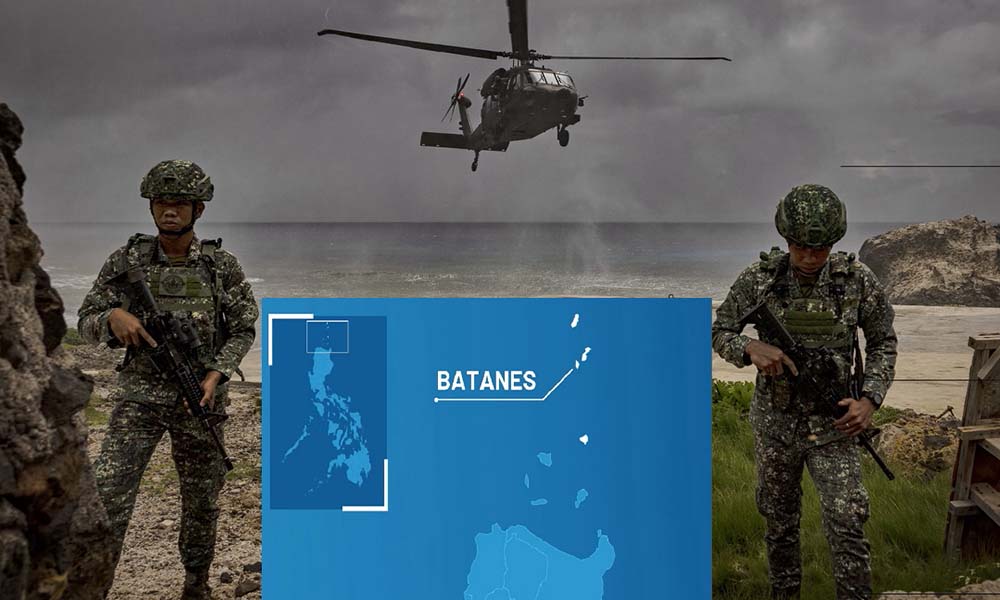
The Philippines’ strategic importance becomes even clearer when Taiwan is taken into consideration. The northern Philippines is located relatively close to Taiwan, particularly around the Batanes Islands and the Luzon Strait, making Philippine territory potentially important during any major Taiwan Strait crisis. In such a situation, Manila could face the urgent task of evacuating Filipino citizens from Taiwan, while U.S. forces could potentially require access to Philippine infrastructure, ports and airfields for logistical and operational purposes.
Maritime surveillance would also become increasingly important, particularly around the Luzon Strait and the Bashi Channel, which connects the South China Sea with the wider Western Pacific. The northern Philippine islands could therefore become important for humanitarian assistance, evacuation operations, logistics, surveillance and other support activities. However, this does not mean that the Philippines would automatically enter a Taiwan conflict or participate directly in hostilities. Manila would still have to consider its own national interests, political calculations and security priorities. Nevertheless, geography could make complete detachment extremely difficult if a major crisis erupted near Taiwan. This is another reason Washington has a strong interest in strengthening Philippine defense capabilities. A more capable Philippines would give the United States greater strategic flexibility in the region while simultaneously giving Manila stronger tools to defend its own territory and protect its population. The U.S.-Philippines relationship is therefore no longer focused solely on China and the South China Sea; it is increasingly connected to the wider security environment surrounding Taiwan, the Luzon Strait, the Bashi Channel and the broader balance of power in the Indo-Pacific.
Can Deterrence Prevent War?
This is ultimately the biggest question surrounding the U.S.-Philippines security strategy: can stronger military cooperation prevent a war rather than prepare for one? The purpose of the American strategy is not simply to fight a conflict but to make potential aggression so costly, difficult and uncertain that an adversary decides not to initiate it. If China believes that coercing the Philippines would carry serious military, political and economic consequences, deterrence has succeeded. Similarly, if potential aggression becomes too difficult to execute because the Philippines has stronger coastal defenses, maritime forces, surveillance systems, intelligence capabilities and support from the United States, the strategy is achieving its intended purpose. At the same time, effective deterrence also depends on the ability of both countries to manage maritime incidents without allowing them to escalate into armed conflict. However, if rapid military buildup creates constant confrontation and increases the chances of miscalculation, the strategy could produce the opposite effect.

This is why the balance between strength and restraint is so important. A weak Philippines could invite greater coercion, while an overly confrontational alliance could increase the risk of escalation. The strategic objective therefore lies between vulnerability and unnecessary confrontation. The Philippines needs sufficient military capability to defend its territory and raise the cost of aggression, while the United States needs enough regional presence and support to reinforce that deterrence. At the same time, both countries need reliable communication channels, clear procedures and effective crisis-management mechanisms to prevent accidents or maritime confrontations from turning into a wider conflict. That difficult balance between military strength, preparedness and restraint lies at the heart of the concept of “deterrence by denial.”
Three Possible Futures for the U.S.-Philippines Alliance
The Real Meaning of “Partners, Not Protectorates”
The phrase “partners, not protectorates” captures the fundamental change taking place in the U.S.-Philippines alliance. Washington is not saying that it will abandon the Philippines; instead, it is emphasizing that the Philippines must become capable enough to contribute significantly to its own defense. This means developing stronger military forces, better defense infrastructure, more capable maritime security agencies, improved intelligence and surveillance capabilities, stronger command and control systems, greater interoperability with U.S. forces, and a greater willingness to carry part of the regional security burden. The Philippines is increasingly moving in this direction as its military modernization accelerates, its defense cooperation with the United States expands, and its maritime presence becomes more persistent. At the same time, Manila’s role in regional diplomacy is becoming increasingly important, while its strategic geography is gaining even greater value as competition between China and the United States intensifies across the Indo-Pacific.
Conclusion
The United States calling the Philippines a “model ally” is therefore much more than a diplomatic compliment. It reflects a broader transformation in American strategy. Washington wants to remain deeply engaged in the Indo-Pacific, but it also wants its allies to become stronger, more capable and more self-reliant. The Philippines is emerging as one of the clearest examples of that approach. Its geography places it at the intersection of the South China Sea, the Luzon Strait, Taiwan and the Western Pacific. Its military is shifting from an internal-security focus toward external defense. Its Navy and Coast Guard are becoming more capable. Its coastal-defense systems are expanding.
Its infrastructure is being connected more closely to American operations. Its military forces are training with the United States at increasingly sophisticated levels. And its strategic role is expanding beyond defense into regional diplomacy through ASEAN. At the same time, the alliance faces serious risks. China views the expanding U.S.-Philippines security relationship with suspicion. Maritime confrontations remain frequent. Gray-zone competition creates constant opportunities for miscalculation. And the stronger the military presence becomes, the more important crisis communication will be. The ultimate objective, however, is not war. It is deterrence. Washington wants a region in which aggression becomes too difficult, escalation becomes too unattractive and war becomes too irrational to initiate. The Philippines is becoming central to that strategy. The country is no longer simply a state that America promises to defend. It is increasingly becoming a country that contributes directly to the defense of the Indo-Pacific. And that may be the real meaning behind Washington calling the Philippines its “model ally.”
About Indo-Pacific Report
For more geopolitical analysis, strategy coverage, and Indo-Pacific security reporting, visit Indo-Pacific Report:
Website
Facebook
YouTube
Philippines Is Now America’s “MODEL ALLY” — China Faces a New Threat