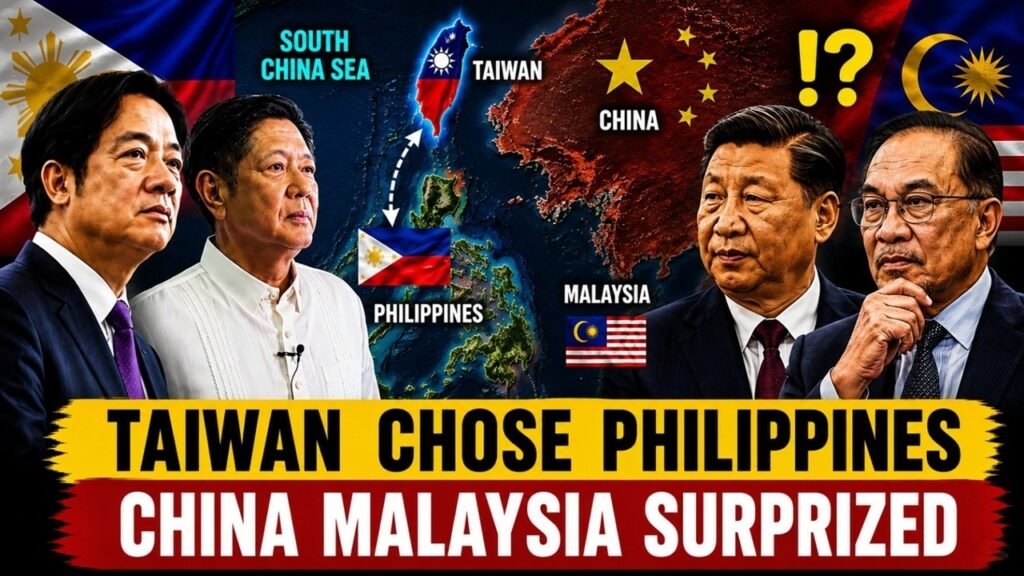
Taiwan Choose Philippines as Malaysia Moves Closer to China
Malaysia’s position on Taiwan has traditionally been based on its diplomatic recognition of the People’s Republic of China and its support for the One-China policy. However, recent remarks by Prime Minister Anwar Ibrahim have attracted particular attention because of the stronger language used to describe Taiwan’s relationship with China. Anwar has described Taiwan as “part of China,” a formulation that goes beyond simply explaining Malaysia’s diplomatic position and comes closer to Beijing’s preferred framing of the Taiwan question. China welcomed the remarks, while Taiwan strongly criticized them. For Taipei, the distinction is important because many governments in Southeast Asia recognize Beijing while still emphasizing peaceful resolution, regional stability and opposition to unilateral changes to the status quo.
The issue is especially important because Malaysia is not a minor economic partner for Taiwan. Malaysian and Taiwanese businesses are connected through manufacturing, electronics, technology, logistics and investment. Malaysia has also become increasingly important to companies diversifying production beyond mainland China. The country’s semiconductor ecosystem, particularly in Penang and other industrial areas, has attracted major international investment in areas such as chip assembly, testing, packaging and supporting electronics industries. This creates a strategic contradiction for Kuala Lumpur. Malaysia wants to maintain strong economic relations with China while simultaneously benefiting from Taiwanese investment and the wider global effort to diversify technology supply chains. If political rhetoric toward Taiwan becomes increasingly aligned with Beijing, Taiwanese companies could eventually pay greater attention to the political environment in which they operate. That does not mean Taiwanese investment will immediately leave Malaysia, but it does mean political confidence has become a more important part of the economic relationship.
Taiwan and Malaysia Have Deep Economic Ties Despite Political Differences
The Taiwan-Malaysia relationship is much broader than their respective positions on the Taiwan Strait. Trade, investment, tourism, manufacturing and technology have created a dense economic relationship over several decades. Malaysia is particularly important because it occupies a strategic position within Southeast Asia’s electronics and semiconductor network. Penang has developed into one of the region’s major electronics manufacturing clusters, with extensive activity involving semiconductor assembly and testing, industrial equipment, automation and supporting supply chains. Taiwanese companies are part of this wider ecosystem, meaning Malaysia has a direct economic interest in remaining attractive to Taiwanese and other international investors.
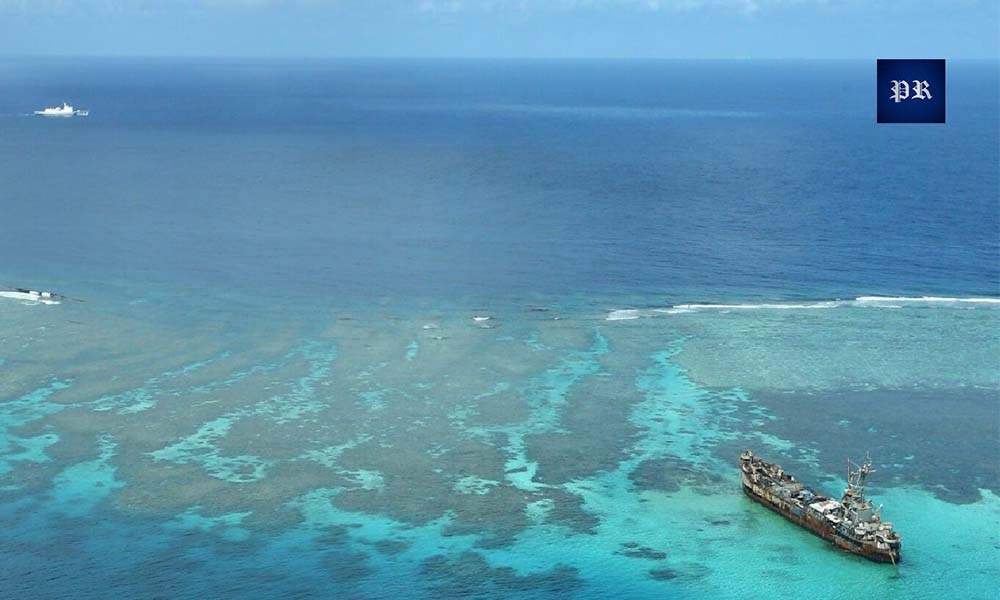
Philippines Is Building Up Balabac — Malaysia Didn’t Expect This
This relationship also fits into a much larger global supply-chain shift. Companies from Taiwan, South Korea, Japan, the United States and Europe have been diversifying production locations because of geopolitical tensions and concerns about excessive dependence on China. Malaysia has benefited from this trend because of its established industrial base, skilled workforce, infrastructure and position along major Asian trade routes. Taiwan’s semiconductor industry is particularly important to the global economy, while Malaysia has developed strengths in the downstream stages of semiconductor production. That creates economic interdependence even when political positions differ. Kuala Lumpur may have close relations with Beijing, but Taiwanese companies remain valuable to Malaysia’s industrial strategy. Taipei therefore has an interest in protecting the stability of these commercial relationships even when Malaysia’s political messaging becomes less favorable to Taiwan.
The important point is that economic cooperation does not automatically translate into strategic alignment. Malaysia can continue trading with Taiwan while maintaining a political position close to Beijing. Taiwan can continue investing in Malaysia without expecting Kuala Lumpur to support Taiwan diplomatically. But from Taipei’s perspective, political predictability matters. If Malaysia increasingly adopts language associated with Beijing’s position on Taiwan, Taiwanese businesses may become more cautious about future expansion, especially if regional tensions increase. This is one reason Taiwan is paying closer attention to other Southeast Asian countries, particularly those whose geography and security partnerships give them a more direct role in a potential Taiwan Strait crisis.
Why Taiwan Sees the Philippines Differently From Malaysia
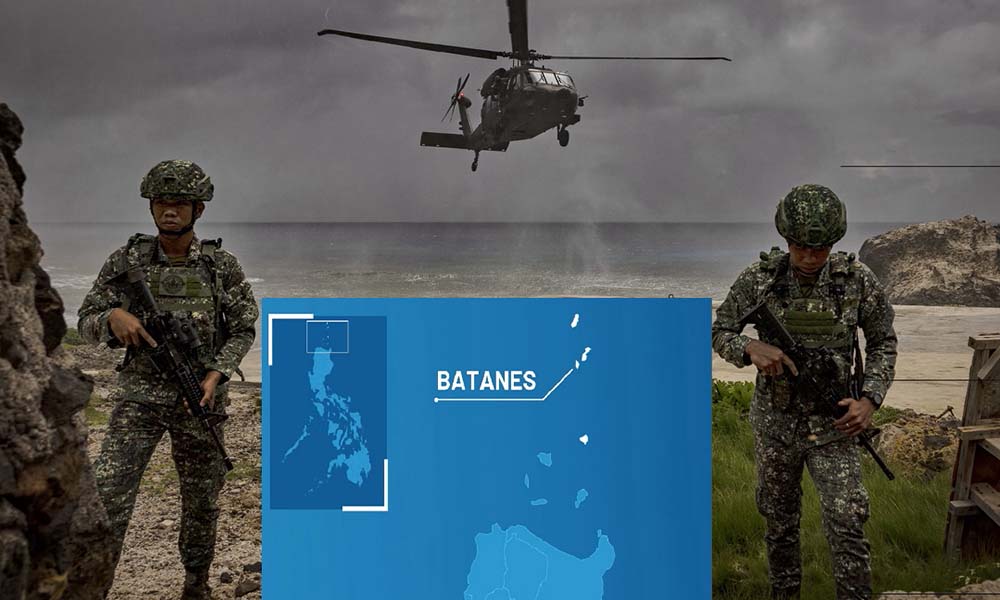
The Philippines presents Taiwan with a very different strategic calculation. Like Malaysia, the Philippines does not formally recognize Taiwan as a sovereign state and maintains a One-China policy. Philippine President Ferdinand Marcos Jr. has repeatedly reaffirmed that position and has emphasized that Manila does not intend to interfere in Taiwan’s internal affairs. Yet formal diplomatic policy is only one part of the strategic picture. Geography gives the Philippines an importance that Malaysia cannot easily match. Northern Philippines lies directly south of Taiwan, with the Bashi Channel separating the two areas. This places Philippine territory and surrounding waters inside the wider strategic environment of the Taiwan Strait.
The distance between Taiwan and the northern Philippines is relatively short compared with the distances separating Taiwan from many other Southeast Asian states. This means a major crisis around Taiwan could have immediate consequences for Philippine airspace, shipping, fishing, communications and civilian movement. The Philippines would also have to consider the presence and activities of U.S. forces because Washington and Manila are treaty allies. Under the Enhanced Defense Cooperation Agreement, the United States has expanded access to selected Philippine military facilities, creating additional strategic options for American forces across the northern Philippines. This does not mean those facilities are automatically available for a Taiwan conflict, because any use would depend on political and military decisions at the time. Nevertheless, their location makes the Philippines increasingly important in regional contingency planning.
For Taiwan, this changes the meaning of the relationship. Taipei does not necessarily need Manila to recognize Taiwan diplomatically or promise military assistance. A Philippines that remains politically stable, economically connected, militarily capable and closely linked to the United States and Japan can already provide significant strategic value. The Philippines is therefore becoming important to Taiwan not because Manila has formally chosen Taiwan, but because geography has placed the two countries inside the same security environment. If tensions around Taiwan continue to rise, this geographic connection is likely to become even more important.
The Philippines Is Taiwan’s Closest Strategic Neighbor in Southeast Asia
The Philippines occupies a unique position in Taiwan’s strategic environment because of its location immediately south of the island. While other Southeast Asian countries such as Malaysia, Indonesia, Singapore and Vietnam have important economic and maritime relationships with Taiwan, none has the same geographic proximity. Northern Luzon and Taiwan are separated by the Bashi Channel, making the Philippines one of the first countries likely to feel the effects of a major Taiwan Strait crisis. This proximity matters for far more than military planning. A serious confrontation could affect commercial shipping, aviation routes, telecommunications, fishing activity, energy markets and the movement of people across the region. The Philippines would therefore face direct economic and security consequences even if its government attempted to remain outside the conflict.
The country’s geographic importance has increased further because the Philippines sits between several major strategic areas: the Taiwan Strait to the north, the South China Sea to the west and the Philippine Sea to the east. These waters connect important routes linking Northeast Asia with Southeast Asia and the wider Pacific. For China, the Philippines is relevant because of its position along the first island chain. For the United States, the country provides an important geographic link between its alliances with Japan and Australia and its broader Indo-Pacific strategy. For Taiwan, the Philippines represents a potential southern gateway into the wider Pacific environment. This does not make the Philippines a guaranteed participant in a future conflict, but it means that Manila’s decisions could become strategically significant much faster than those of more distant Southeast Asian governments.
Why the Bashi Channel Matters in a Taiwan Strait Crisis
The Bashi Channel is one of the most important geographic features connecting Taiwan with the wider waters of the western Pacific. Located between Taiwan and the northern Philippines, it provides a maritime passage between the South China Sea and the Philippine Sea. Under normal conditions, the channel is part of a broader regional maritime environment used by commercial vessels, fishing fleets and military forces. During a Taiwan Strait crisis, however, its strategic significance could increase dramatically because of its location close to Taiwan and its connection to major sea lanes.
A serious military confrontation would not necessarily be confined to the immediate waters surrounding Taiwan. If China attempted to impose a blockade, quarantine or other form of military pressure, forces on both sides would need to monitor surrounding maritime approaches. The Bashi Channel could become important for surveillance, naval movement, submarine operations, logistics and the movement of aircraft. Its position also makes it relevant to any attempt by U.S. or allied forces to operate in the western Pacific. The exact role of the channel in a future crisis would depend on the nature of the conflict, but its geographic position ensures that it would receive significant attention from military planners.
Taiwan Does Not Need Philippine Diplomatic Recognition to Value Manila
It is easy to judge Taiwan’s international relationships by asking which countries formally recognize Taipei, but that approach misses the importance of modern security and economic networks. The Philippines maintains diplomatic relations with Beijing and follows the One-China policy, yet Taiwan and the Philippines have developed extensive practical connections in trade, tourism, employment, education and business. Thousands of Filipino workers have built connections with Taiwan, while Taiwanese visitors and businesses maintain long-standing links with the Philippines. These relationships create a level of social and economic interaction that exists independently of formal diplomatic recognition.
Taiwan’s growing interest in Manila is therefore better understood through the concept of strategic resilience. Taipei does not necessarily need the Philippines to announce political support for Taiwan. Instead, Taiwan benefits if the Philippines remains economically stable, maintains strong relationships with its partners and retains the ability to protect its own sovereignty. A resilient Philippines creates a more predictable environment south of Taiwan. This becomes particularly important as competition between China and the United States increasingly extends beyond the Taiwan Strait into the South China Sea and Philippine Sea.
The Philippines Is Balancing China, Taiwan, Japan and the United States
The Philippines is not simply moving into an anti-China camp. That interpretation would overlook the complicated strategy being followed by Manila. President Ferdinand Marcos Jr. has maintained the Philippines’ One-China policy while simultaneously strengthening the country’s alliance with the United States and its strategic partnership with Japan. Manila has also continued diplomatic and economic engagement with Beijing, particularly because China remains an important trading partner and a major regional economic power. This balancing strategy reflects the reality that the Philippines cannot afford to completely abandon any of these relationships.
China remains economically important to the Philippines, while the United States remains central to Philippine defense planning. Japan has become an increasingly important economic and security partner, and Taiwan has strong connections with the Philippines through trade, tourism, investment and Filipino employment in Taiwan. Manila therefore has incentives to maintain working relationships with all sides. The challenge is that competition between China and the United States is making this balancing strategy more difficult. Every new military exercise, maritime confrontation or development around Taiwan can increase pressure on Philippine policymakers.
Taiwan Is Not Formally Choosing the Philippines
The idea that Taiwan is “choosing the Philippines” needs to be understood carefully. There is no formal Taiwan-Philippines military alliance, and Manila has not abandoned its One-China policy. Taiwan has also not publicly declared that the Philippines is replacing Malaysia as its main Southeast Asian partner. What is changing is the strategic value Taipei assigns to Manila. Malaysia remains economically important because of its manufacturing base, semiconductor connections and role in Southeast Asian supply chains. But the Philippines offers something Malaysia cannot provide in the same way: direct geographic proximity to Taiwan and integration into the U.S.-Japan security network.
This distinction could become extremely important if tensions around Taiwan continue to increase. A future Taiwan crisis would not necessarily remain limited to the Taiwan Strait. The surrounding waters, including the Bashi Channel and Philippine Sea, could become strategically important for military movements, shipping, surveillance and logistics. Philippine territory could also become more relevant because of its proximity to Taiwan and its defense relationship with the United States. None of this guarantees that Manila would support Taiwan militarily. In fact, Philippine leaders would probably try to avoid becoming directly involved for as long as possible. But the closer a crisis moves toward Philippine waters and airspace, the harder complete neutrality could become.
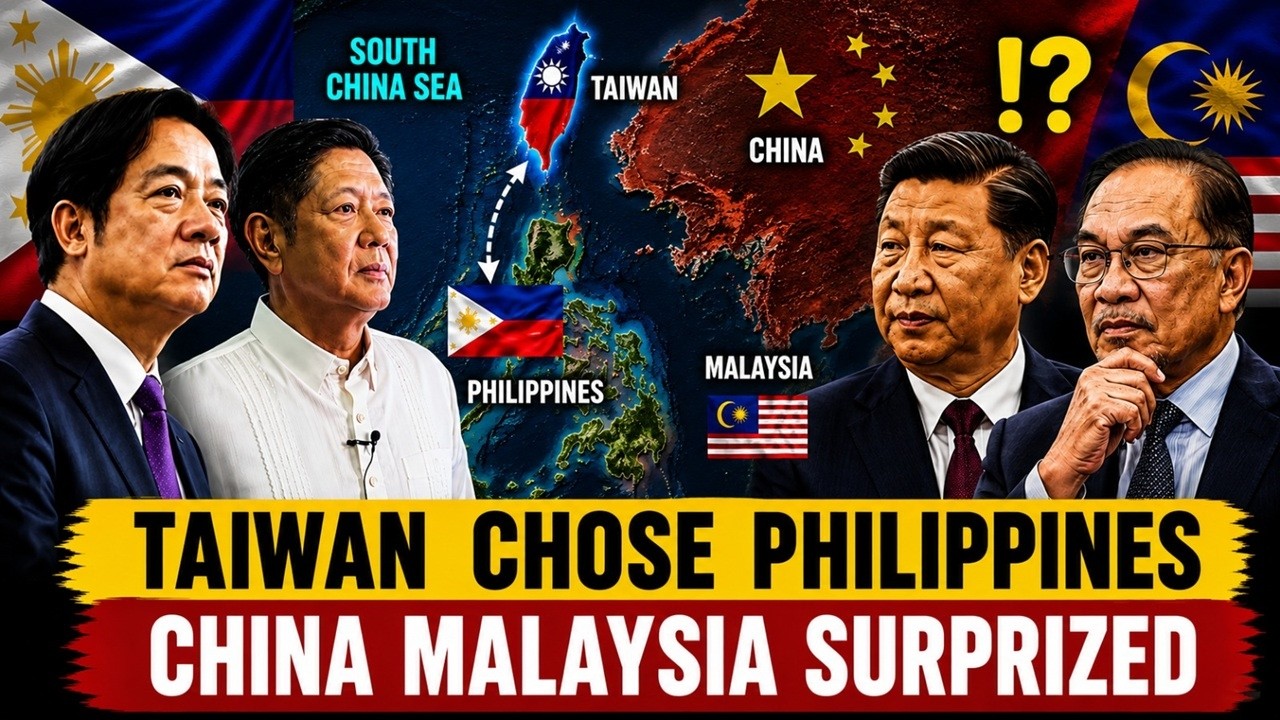
The larger story, therefore, is not that Southeast Asia is simply choosing between China and Taiwan or between China and the United States. The region is developing a much more complicated network of overlapping relationships. Malaysia can maintain strong economic ties with Taiwan while strengthening its political relationship with Beijing. The Philippines can maintain the One-China policy while strengthening defense cooperation with Washington and Tokyo. Taiwan can deepen economic and practical relations with Manila without demanding diplomatic recognition. This is the new strategic reality of the Indo-Pacific. Countries are trying to preserve economic interests while building security partnerships and avoiding direct confrontation. For Taiwan, the Philippines has become increasingly important because geography makes the relationship impossible to ignore. The Bashi Channel cannot be moved, northern Luzon cannot be moved, and the Philippine Sea cannot be moved. If a serious Taiwan crisis ever occurs, those geographic facts may matter more than diplomatic statements.
About Indo-Pacific Report
For more geopolitical analysis, strategy coverage, and Indo-Pacific security reporting, visit Indo-Pacific Report:
Website
Facebook
YouTube