Philippines Is Building Up Balabac — Malaysia Didn’t Expect This
The story of Balabac is no longer simply about the Philippines, China and the United States. Malaysia’s reaction on August 19 has added an unexpected and important dimension to the growing security competition in Southeast Asia. Malaysian Prime Minister Anwar Ibrahim has raised concerns about US-backed Philippine military development on Balabac, while Malaysian officials have also warned about the possibility of military miscalculation and escalation near Sabah. The reaction is significant because Balabac is located close to Malaysia’s eastern state of Sabah, making developments on the island directly relevant to Malaysian security calculations.
Why Balabac Matters: Geography Explains Almost Everything
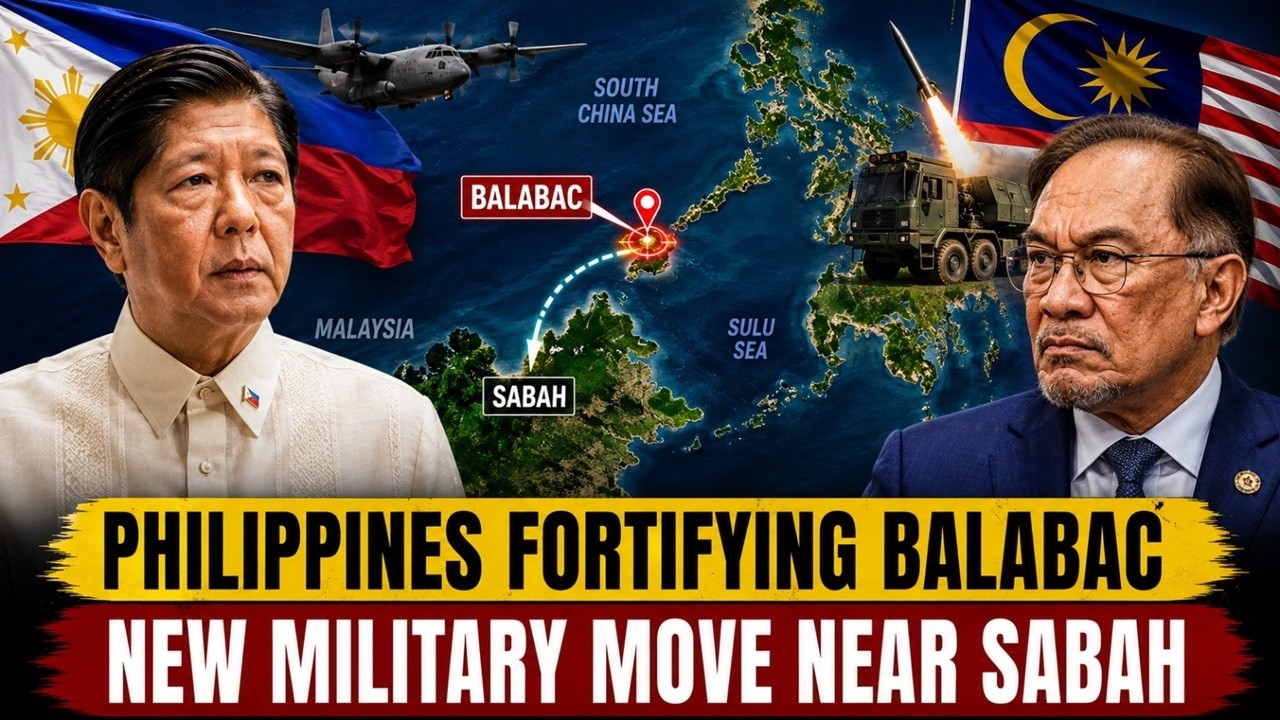
Balabac is located at the southern end of Palawan, near Malaysia’s Sabah and close to the maritime approaches connecting the South China Sea with the Sulu Sea. It is not important because it is a huge island or because it contains one of the largest military installations in Southeast Asia. Its strategic value comes primarily from its location. In maritime Southeast Asia, geography can transform a relatively small island into an important military and logistical position because access to sea routes, airspace and surrounding waters can matter more than the physical size of the territory itself.
This geographical position gives Balabac significance beyond its immediate surroundings. The island sits at the intersection of several strategic environments. To the north is Palawan and the wider South China Sea. To the south is the maritime space leading toward the Sulu and Celebes seas. To the west is the wider maritime environment contested by China and the Philippines, while Malaysia’s Sabah lies relatively close to the south. That combination makes Balabac unusually relevant to the security calculations of several countries at once.
Why the Philippines Is Building Up Balabac
The Philippines’ military development around Balabac should be understood as part of a much larger effort to modernize and distribute its defense infrastructure. For years, Manila’s military posture has faced a basic geographical problem. The Philippines is an archipelago spread across thousands of islands, while many of its most important security concerns are located far from the country’s main population centers. A defense strategy concentrated too heavily in a few locations can therefore create vulnerabilities when a crisis develops far from those positions.
China’s growing military and coast guard presence in the South China Sea has made that problem more urgent. Manila increasingly needs the ability to see farther into surrounding maritime areas, move forces more quickly and respond to incidents without depending entirely on bases located farther north. Forward positions can help close that geographical gap, and Balabac is particularly useful because of its location near several strategically important maritime approaches.
What does China changing its tactics mean for the Philippines?
EDCA Made Balabac More Important
Balabac became significantly more important when the Philippines and United States announced in 2023 that it would be one of four additional locations under the Enhanced Defense Cooperation Agreement, or EDCA. The expansion increased the number of EDCA locations in the Philippines to nine. The agreement is important because it gives the United States greater access to Philippine military facilities and allows the two countries to develop infrastructure, conduct exercises and improve their ability to operate together.
However, EDCA should not simply be interpreted as a return to the traditional American overseas base model. The strategic value of EDCA is more flexible. It involves access, infrastructure, logistics, training, exercises, interoperability and the ability to position or move equipment when required. This distinction matters when looking at Balabac because the island does not need to become a permanent American base to become strategically valuable to Washington.
Balikatan 2026 Demonstrated Balabac’s Military Potential
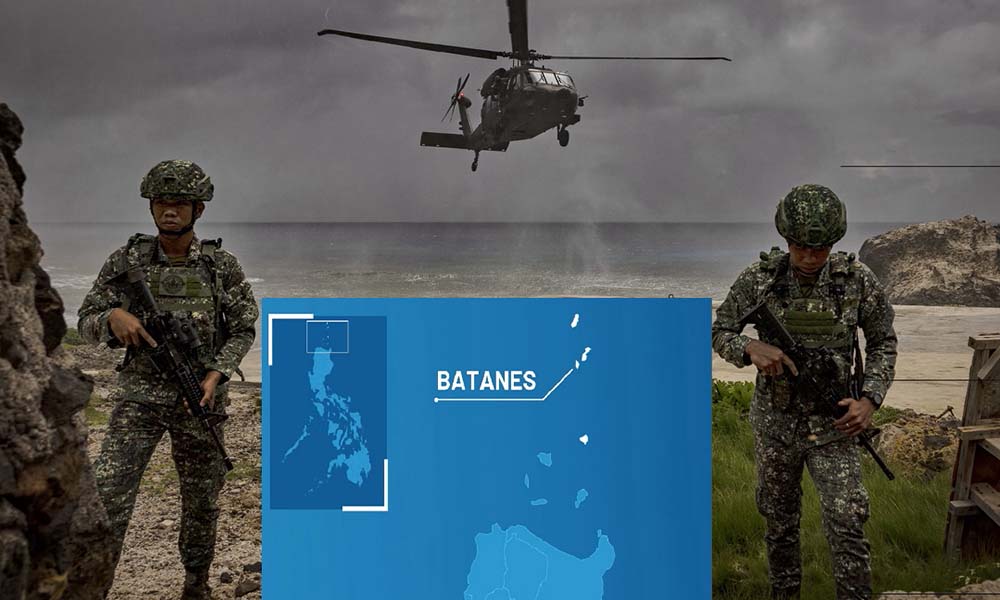
The strongest evidence of Balabac’s growing military significance came during Balikatan 2026. In May 2026, American, Philippine and Australian forces participated in military activities around Balabac that demonstrated how the island could be used in a real operational environment. US Marines, US Army personnel, Philippine Marines and Australian forces practiced securing and holding Balabac Airfield, turning what might otherwise appear to be a theoretical military capability into something that was actually demonstrated during a major exercise.
US MV-22 Ospreys were used to insert forces, while US Army HIMARS systems were moved into position using Army watercraft. The exercise also involved live-fire integration against simulated maritime targets. These activities demonstrated that forces could arrive on the island, secure an airfield, establish military positions, move long-range fires and coordinate operations involving multiple allied forces.
The significance of the exercise goes beyond the individual weapons involved. It demonstrated the operational concept behind Balabac. The island can potentially serve as a forward location from which forces can monitor and influence surrounding maritime areas. US Army material discussing the exercise also connected HIMARS operations on Balabac with the protection of shipping moving toward the Sulu and Celebes seas. That makes the island relevant not only to Philippine territorial defense but also to the broader maritime security environment of southern Southeast Asia.
China Is the Strategic Driver, But the Story Is More Complicated
China remains one of the central reasons behind the Philippines’ changing defense posture. Beijing has significantly expanded its military and coast guard capabilities in the South China Sea, while tensions between China and the Philippines have increased over disputed maritime areas. For Manila, this has created a clear requirement to improve its ability to monitor and defend its maritime approaches.
However, it would be too simplistic to say that China is specifically afraid of Balabac unless Beijing itself makes such a statement. The stronger argument is that Balabac is one component of a much broader response to China’s growing regional capabilities. The Philippines wants to improve surveillance and deterrence. The United States wants a more distributed military posture in the Indo-Pacific. Australia and other partners are becoming increasingly involved in regional exercises. Balabac fits naturally into that wider strategic environment.
Now Look at Balabac From Malaysia
The story changes considerably when Balabac is viewed from Malaysia rather than Manila. From the Philippine perspective, the island is a forward defensive position designed to address growing external pressure. From Kuala Lumpur’s perspective, however, it is a military location developing relatively close to Sabah.
This difference in perspective explains why Malaysian officials have become increasingly attentive to developments around Balabac. Malaysia does not view the regional security environment exclusively through the lens of the China-Philippines dispute. Kuala Lumpur also has to consider the direct implications of military developments close to Malaysian territory, particularly in Sabah, an area with its own complex security history and strategic importance.
The Sabah Dispute Adds Another Layer
The relationship between Balabac and Sabah cannot be understood without considering the long-running territorial dispute between Malaysia and the Philippines. The Philippines continues to maintain its claim over Sabah, which Malaysia administers. In February 2026, the Philippine Department of Foreign Affairs again reaffirmed Manila’s position on the Sabah issue. That does not mean the Philippines is developing Balabac as a military platform against Malaysia. There is no reason to make such a claim without evidence. The significance of the Sabah dispute is more subtle. It means that a growing Philippine military presence near Sabah exists within a historical relationship that already contains a territorial disagreement.
The Balabac Security Dilemma
The competing perspectives around Balabac illustrate a classic security dilemma. Manila sees Chinese military pressure and responds by strengthening its defenses. Washington sees growing strategic competition in the Indo-Pacific and responds by expanding military access and interoperability with the Philippines. Kuala Lumpur sees a growing military capability close to Sabah and becomes more concerned about uncertainty and possible miscalculation.
A security dilemma develops when one country’s attempt to become more secure makes another country feel less secure. The second country then takes its own defensive measures, which can make the first country even more concerned. The cycle can continue even when every participant believes that it is acting defensively. That is why Balabac deserves attention beyond the Philippines-China dispute. The island illustrates how military modernization can have consequences that extend beyond the country conducting the modernization. A capability designed to deter one potential threat can influence the calculations of several other countries at the same time.
Balabac Is Part of a Much Bigger Southeast Asian Shift
The developments around Balabac are part of a broader transformation of Southeast Asia’s security architecture. The Philippines is developing a more distributed military infrastructure. The United States is expanding access and interoperability with its treaty ally. Australia is participating more actively in major regional exercises. China continues to strengthen its military capabilities and presence in disputed maritime areas.
At the same time, countries such as Malaysia are trying to protect their national interests without becoming directly trapped in the strategic competition between Washington and Beijing. This is one of the most difficult challenges facing Southeast Asian governments. They want security partnerships, economic relationships and strategic autonomy at the same time.
What Happens Next?
The future importance of Balabac will depend on how the Philippines, United States, Malaysia and other regional actors manage the changing security environment. The island is likely to remain important for Philippine surveillance, military exercises, logistics and maritime defense. Its value to the United States will depend on how Washington and Manila develop their broader defense relationship and how often allied forces use Philippine facilities.
For Malaysia, the central concern will be whether military developments near Sabah remain predictable and transparent. Kuala Lumpur has an interest in maintaining stable relations with Manila while ensuring that developments close to Sabah do not create new security risks. For the Philippines, the challenge will be to strengthen deterrence without unnecessarily alarming its ASEAN neighbors. Manila will need to demonstrate that military modernization is primarily about national defense and regional stability rather than creating new territorial pressure.
The Strategic Paradox of Balabac
Balabac was strengthened to make the Philippines more secure. For Manila, it represents a forward defensive position against growing Chinese pressure and a way to improve the country’s ability to monitor and respond to developments across its southern maritime approaches. For Washington, it is another piece of a more distributed Indo-Pacific defense network built around access, mobility and interoperability.
But for Malaysia, the same island sits close to Sabah in a region where territorial disputes, military modernization and great-power competition increasingly overlap. That does not mean conflict is inevitable, nor does it mean that the Philippines is preparing to use Balabac against Malaysia. It means that the strategic consequences of the island’s development extend beyond Manila’s immediate calculations.
About Indo-Pacific Report
For more geopolitical analysis, strategy coverage, and Indo-Pacific security reporting, visit Indo-Pacific Report:
Website
Facebook
YouTube
Philippines Is Building Up Balabac — Malaysia Didn’t Expect This