China Just Warned 3 Philippines Aircraft Over Scarborough Shoal
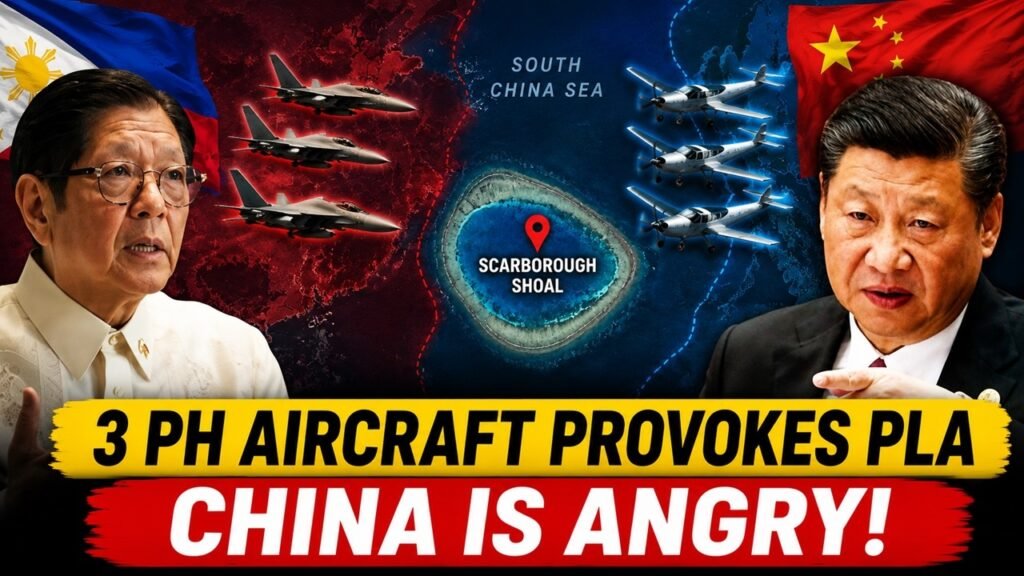
China has warned three Philippine aircraft after the People’s Liberation Army Southern Theater Command said it tracked and monitored them near Scarborough Shoal on August 21. The aircraft identified by China were an Islander, a C-208 and a PA-31T. Beijing said the aircraft entered what China calls the territorial airspace over Huangyan Dao without authorization and warned that such encounters could create “misunderstanding and miscalculation.” The incident is important because it adds an air dimension to a confrontation that has historically been dominated by fishing boats, coast-guard vessels and maritime patrols.
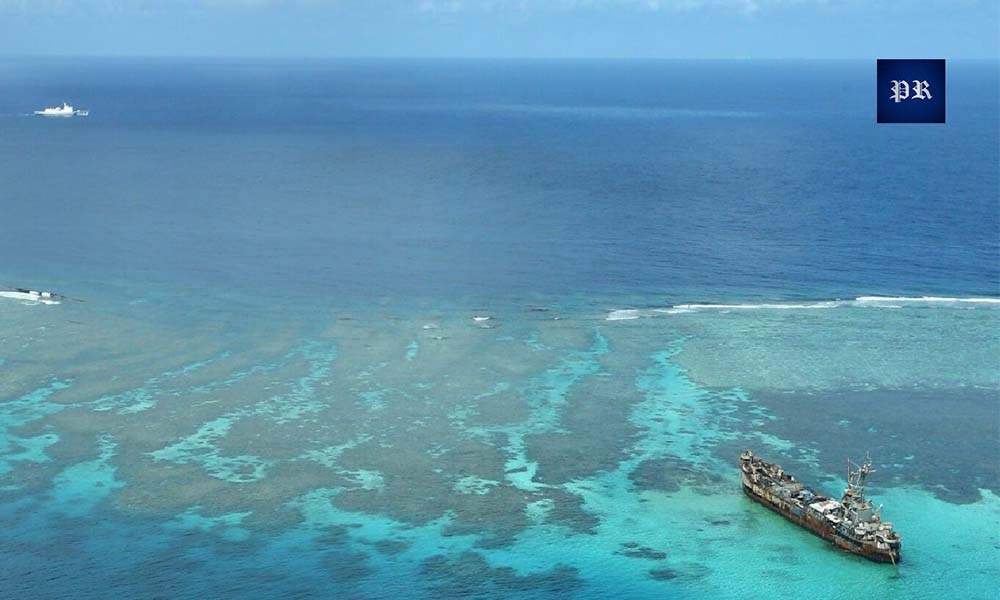
Scarborough Shoal, known as Huangyan Dao in China, is one of the most sensitive flashpoints in the South China Sea. It lies about 220 kilometers from Luzon and roughly 900 kilometers from the nearest Chinese mainland coastline, although the exact distances vary depending on the reference points used. Its location gives it importance far beyond its small physical size. The shoal is close to the Philippines, sits inside the wider South China Sea strategic environment and has become a visible test of competing Chinese and Philippine claims.
The latest aircraft incident also comes shortly after China conducted joint naval and air activity around the shoal on August 1. That sequence matters because it suggests the confrontation is becoming increasingly multi-domain. The contest is no longer limited to coast-guard ships challenging Philippine vessels. Naval forces, military aircraft and surveillance platforms are increasingly becoming part of the same operating environment, creating more opportunities for dangerous encounters and miscalculation.
Why Scarborough Shoal Matters to China
Scarborough Shoal is a small group of reefs, rocks and shallow waters in the South China Sea, but its strategic value is considerable. For the Philippines, the feature is close to Luzon and has long been associated with fishing activity, maritime access and national security. For China, Huangyan Dao is presented as part of Chinese territory and is included within Beijing’s broader South China Sea claims. The result is a dispute in which the physical size of the feature has little relationship to its political and strategic importance.
The shoal also matters because control is not simply measured by who publishes a map or issues a statement. In practical terms, the more important question is which country can operate around the feature on a regular basis. A government that can send coast-guard vessels, patrol aircraft, fishing fleets or military forces into an area while preventing the other side from doing the same can gradually change the operational reality without formally changing the legal status of the territory.
That makes Scarborough a useful example of modern gray-zone competition. Instead of relying on a conventional military occupation, pressure can be applied through patrols, warnings, blocking maneuvers, surveillance and repeated encounters. Over time, the side that maintains the stronger and more consistent presence can influence what other actors consider normal or risky behavior. This is why an incident involving three relatively small Philippine aircraft can have significance far beyond the aircraft themselves.
What Happened on August 21?
According to China’s PLA Southern Theater Command, three Philippine aircraft were detected and monitored near Scarborough Shoal on August 21. Chinese forces said they tracked the aircraft and issued radio warnings after describing their presence as an unauthorized intrusion into Chinese territorial airspace. Beijing identified the aircraft as an Islander, a C-208 and a PA-31T, adding that naval and air forces were involved in the response.
It is important to distinguish between China’s operational statement and the underlying legal dispute. Beijing’s description of the surrounding airspace as Chinese territorial airspace reflects China’s position. It should not be treated as an internationally settled determination of sovereignty or airspace. The status of Scarborough Shoal remains politically disputed, while the 2016 South China Sea arbitration addressed maritime entitlements and rights without deciding sovereignty over the feature.
What is not disputed as a matter of reporting is that Chinese military forces say they monitored Philippine aircraft and issued warnings. That operational development is significant because aircraft are much faster than surface vessels and can approach one another with very little warning. A maritime encounter can remain tense for several minutes or even hours, while an aircraft encounter can become dangerous within seconds.
The Three Philippine Aircraft Identified by China
The three aircraft named in China’s statement provide an important clue about the nature of the Philippine activity. The Islander is a light utility aircraft commonly associated with short-range transport, surveillance and maritime-support missions. The C-208 is a light turboprop platform that can be used for transport and surveillance duties. The PA-31T is another relatively small aircraft type rather than a high-end fighter aircraft.
This is important because the incident should not be portrayed as an encounter between Philippine fighter jets and Chinese combat aircraft. The available information points instead to Philippine light aircraft being monitored and warned by Chinese military forces. That distinction matters when assessing the immediate military risk and the likely purpose of the Philippine flights.
At the same time, the relatively modest size of the Philippine aircraft does not make the incident strategically insignificant. Surveillance and patrol aircraft can provide information about maritime movements, monitor Chinese activity and demonstrate that the Philippines continues to operate in the area. In a gray-zone dispute, presence and information can be as strategically important as firepower.
What the 2016 Arbitration Ruling Actually Decided
In 2013, the Philippines initiated arbitration against China under the United Nations Convention on the Law of the Sea. The proceedings eventually produced the tribunal’s landmark award on July 12, 2016. The case became one of the most important legal developments in the modern South China Sea dispute.
The tribunal rejected the legal basis for China’s claimed historic rights in areas where those claims exceeded the maritime entitlements allowed under UNCLOS. It also concluded that Scarborough Shoal is a high-tide feature that does not generate an exclusive economic zone or continental shelf of its own. The tribunal further addressed traditional fishing rights and certain Chinese activities affecting Philippine maritime rights.
However, the tribunal did not decide which country has sovereignty over Scarborough Shoal. It also did not draw a maritime boundary between China and the Philippines. That distinction is essential because political arguments about the award often confuse maritime rights with territorial sovereignty.
What does China changing its tactics mean for the Philippines?
China’s Coast Guard Presence Around Scarborough
The Chinese Coast Guard has become one of the most visible instruments of Beijing’s South China Sea strategy. Coast-guard vessels allow China to maintain a persistent presence while operating in a law-enforcement framework rather than openly deploying warships for every encounter. This distinction can help keep confrontations below the threshold associated with conventional military conflict.
For the Philippines, however, the effect can still be significant. A Coast Guard vessel blocking or challenging a Philippine ship can influence whether that ship reaches its intended location. Repeated encounters can also create uncertainty for fishermen and government vessels attempting to operate in the same area.
This is why the Coast Guard role cannot be dismissed as secondary. In a gray-zone confrontation, law-enforcement vessels can become the front line. They can establish patterns of behavior and physical presence while military forces remain in the background. The August 2026 developments suggest that this maritime pressure is increasingly being complemented by visible PLA air and naval activity.
China Brings Naval and Air Forces to Scarborough
On August 1, China announced joint naval and air patrols around Scarborough Shoal. The PLA Southern Theater Command described the activity as combat patrols intended to strengthen readiness and defend what Beijing describes as Chinese sovereignty and maritime rights.
The significance was the combination of military capabilities. Naval forces and aircraft were operating in coordination around a disputed feature that has historically seen substantial Coast Guard activity. This demonstrated that Beijing can bring higher-end military assets into the same environment when it considers the strategic situation important enough.
The exercise should not automatically be interpreted as evidence of an imminent Chinese attack. There is no sound basis for making that conclusion from the exercise alone. The safer assessment is that China was signaling readiness, demonstrating multi-domain capability and reinforcing its message that it intends to maintain a strong presence around Huangyan Dao.
What China May Be Trying to Achieve
China’s private intentions cannot be known with certainty, but the pattern of activity allows several reasonable interpretations. Beijing appears determined to reinforce its operational presence around Scarborough and to make clear that Chinese forces will monitor and challenge activities that China considers inconsistent with its claims. The sequence is significant: persistent Coast Guard presence, maritime confrontations, joint naval and air patrols and now warnings involving Philippine aircraft. These activities do not necessarily represent a single escalation plan, but together they demonstrate a broad range of tools available to China.
The strategic objective may therefore be less about a dramatic seizure and more about establishing a durable operating environment. If Philippine forces know that every patrol could result in a Chinese response, the cost of maintaining access increases. That is a central feature of gray-zone competition. For Manila, maintaining a presence around Scarborough has strategic value. Philippine operations demonstrate that Chinese warnings do not automatically prevent Philippine forces from operating in the area. They also provide information about Chinese activity and reinforce Manila’s broader maritime position.
The Philippines also has domestic political reasons to remain active. Scarborough is closely connected to fishing communities and national sovereignty. A prolonged reduction in Philippine activity could be interpreted domestically as acceptance of a stronger Chinese role.
But Manila faces a difficult calculation. More operations can preserve access, while also creating more opportunities for confrontation. The challenge is therefore not simply whether the Philippines should operate around Scarborough, but how it can do so while reducing the chance of a dangerous incident.
Why the U.S.-Philippines Alliance Matters
The United States is an important background factor because the Philippines is a U.S. treaty ally. Washington and Manila have expanded defense cooperation substantially, including agreements and guidelines addressing security challenges across multiple domains.
This does not mean that every confrontation around Scarborough would automatically trigger U.S. military intervention. Treaty obligations depend on the circumstances, and an ordinary radio warning is obviously different from a deliberate armed attack.
The alliance matters because a serious incident involving Philippine military forces could have consequences beyond the immediate China-Philippines relationship. Beijing has to consider the possibility of broader diplomatic and strategic consequences, while Manila has to consider how an incident could affect its alliance commitments and regional security policy.
The risk becomes higher when several military and law-enforcement platforms operate in the same area. A coast-guard confrontation can be followed by a naval patrol, which can coincide with aircraft activity. Each layer creates additional opportunities for misunderstanding.
The most dangerous scenario would be an incident involving casualties or significant damage. Governments under domestic political pressure may find it difficult to appear weak after such an event, even if both sides privately want to de-escalate.
Three Possible Scenarios for Scarborough Shoal
The first scenario is continued gray-zone pressure. China could maintain regular Coast Guard patrols, monitor Philippine aircraft and vessels, and conduct occasional military exercises. The Philippines could continue its own operations while both sides avoid actions likely to cause a major military incident.
The second scenario is increasing military enforcement. Chinese naval and air forces could appear more frequently, while Coast Guard activity becomes more persistent. Philippine aircraft and vessels could face increasingly direct monitoring and interception. This would raise the risk without necessarily producing an open conflict.
The third scenario is accidental escalation. A close intercept, collision, communication failure or unsafe maneuver could create casualties or damage. Once such an incident occurs, political pressure could force both governments to take stronger positions, making the crisis harder to contain.
The Real Danger Is Miscalculation
China and the Philippines both have powerful reasons to avoid an open war. The economic, political and military costs would be enormous. That is why the most serious risk may not be deliberate war planning but miscalculation.
Gray-zone competition depends on testing boundaries. Each side wants to demonstrate resolve but also expects the other side to understand what it considers acceptable. If those expectations differ, a routine operation can quickly become a dangerous encounter.
The reference to “misunderstanding and miscalculation” in China’s August 21 statement therefore deserves attention. It describes the central risk of the current environment: neither side needs to want a crisis for a crisis to happen.
One important indicator will be whether Chinese military aircraft continue regular activity around Scarborough after the August exercises. If such patrols become routine, the air domain may become a permanent component of China’s operational strategy around the shoal.
A second indicator will be Philippine behavior. If Philippine aircraft and vessels continue operating in the area, future Chinese responses will show whether Beijing intends to rely primarily on radio warnings and surveillance or move toward closer interception and physical pressure.
A third indicator will be communication between the two governments and their militaries. Effective communication can reduce the risk that an unexpected maneuver becomes a crisis. If communication channels weaken while operational activity increases, the danger of miscalculation will rise.
Scarborough Has Entered a New Phase
Scarborough Shoal has not suddenly become a war zone, but the confrontation around it has entered a more complicated phase. The August 1 joint naval and air patrols and the August 21 warning involving three Philippine aircraft demonstrate that the dispute is expanding beyond the traditional Coast Guard contest.
The legal dispute remains separate from the operational contest. The 2016 arbitration did not determine sovereignty over Scarborough Shoal, while China rejected the tribunal’s conclusions. What is changing is the practical competition over access, surveillance, presence and the ability to challenge the other side. The biggest question is therefore not simply who claims Scarborough Shoal. It is who can operate around it, who can challenge that activity and whether both sides can continue doing so without crossing a dangerous threshold. A single collision or unsafe interception could matter more than months of diplomatic statements.
The August 21 warning to three Philippine aircraft is significant because it shows how the Scarborough Shoal confrontation is expanding into the air. China has already demonstrated naval and air activity around the feature, while Philippine forces continue to maintain their own presence.
For China, persistent operations can reinforce its claim and strengthen its practical control over the surrounding operating environment. For the Philippines, continued operations can demonstrate access and prevent Chinese presence from becoming completely normalized. Neither side has an easy path forward.
The greatest danger is miscalculation. Scarborough is now an environment where coast-guard vessels, naval ships and aircraft can operate in close proximity. As the number of interactions increases, so does the possibility that a routine encounter could become a crisis neither Beijing nor Manila intended.
About Indo-Pacific Report
For more geopolitical analysis, strategy coverage, and Indo-Pacific security reporting, visit Indo-Pacific Report:
Website
Facebook
YouTube
China Just Warned 3 Philippines Aircraft Over Scarborough Shoal