Philippines Strengthens Grip in South China Sea with Pag-asa Runway Upgrade
“The runway is complete.” That was the quiet line coming out of Manila this week, almost understated, almost routine. And yet, if you’ve been watching the South China Sea even casually, you know this is not routine. Not even close. Here’s the real question: Can a strip of concrete change the balance of power in one of the world’s most contested waters? It sounds dramatic. But in the South China Sea, drama doesn’t always come with explosions. Sometimes it comes with asphalt.
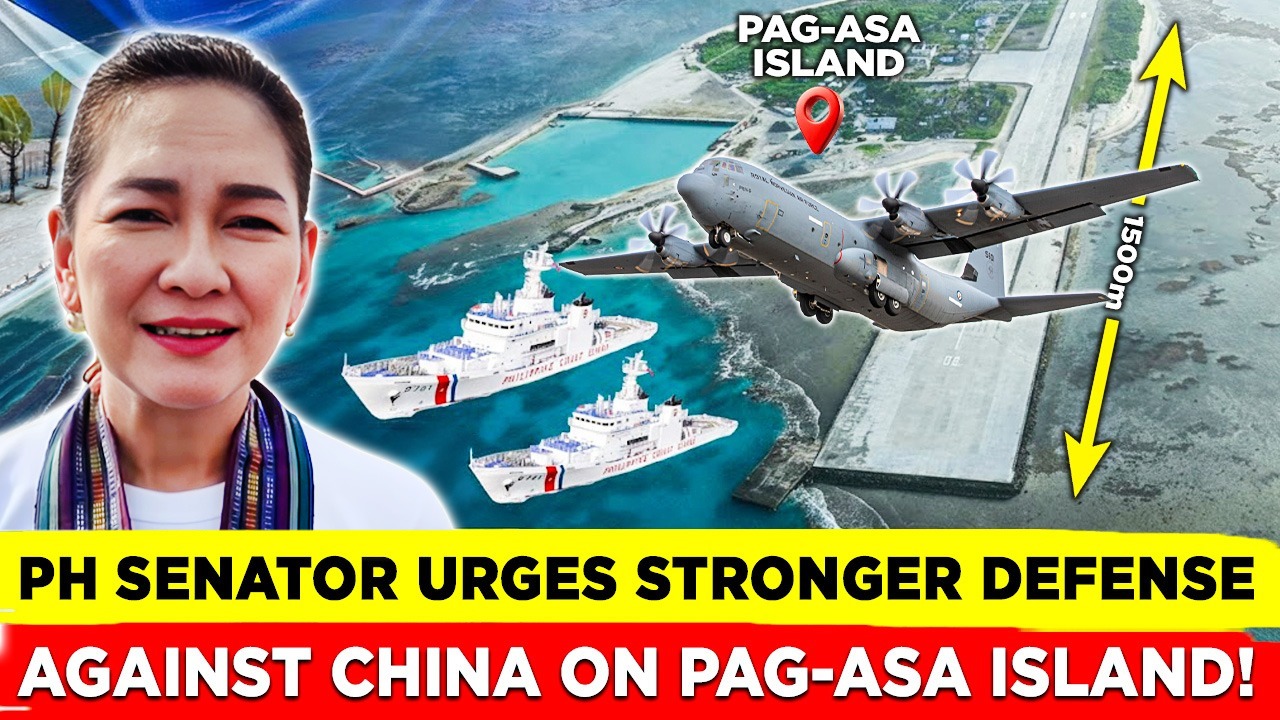
The Philippines has just finished upgrading the runway on Pag-asa Island, known internationally as Thitu and at first glance, it feels like just another infrastructure story. Pour concrete. Extend landing capacity. Improve logistics. Standard stuff. Except this isn’t a sleepy provincial airport. This is a remote outpost in the Spratly chain, sitting in waters that handle roughly a quarter to a third of global maritime trade, trillions of dollars’ worth of commerce moving through narrow sea lanes every year.
One-third of global shipping passes through these waters. Oil. Gas. Semiconductors. Food. Everything. So when a country strengthens its ability to operate there, even quietly, it matters. And that’s why this move is so smart. Because here’s the thing people miss: in the South China Sea, runways act like political anchors. You build one, maintain one, upgrade one and you’re not just landing aircraft. You’re landing sovereignty. Every touchdown says, “We are here. We are staying.”
Pag-asa isn’t some empty reef. It’s the largest Philippine-occupied feature in the Spratlys. It has a small civilian population. There’s a modest port. A school. A town hall. Fishermen. Families. Real people living on a wind-beaten island that most of the world couldn’t find on a map. I’ve always thought that detail changes the story. This isn’t abstract geopolitics. It’s a reality.
The upgraded runway now allows faster logistics, more reliable resupply, and better maritime domain awareness. Aircraft can land more safely, more frequently. In a crisis, response times shrink. Surveillance improves. Presence becomes sustainable rather than symbolic. And here’s what makes it even more significant: it does all of this without firing a single shot. That’s the brilliance of it.
Instead of loud escalation, Manila chose quiet reinforcement. Instead of dramatic standoffs, it strengthened the fundamentals. It’s incremental. It’s deliberate. And honestly? It feels mature. Strategic patience rather than chest-thumping.

The legal backdrop matters too. In 2016, the arbitral tribunal in The Hague ruled overwhelmingly in favor of the Philippines, rejecting sweeping maritime claims that had dominated the region. That decision didn’t magically change facts on the water but it did change the legal narrative. What we’re seeing now is Manila slowly aligning physical reality with legal legitimacy. Concrete after ruling. Presence after principle.
And if you zoom out, from Pag-asa to Luzon, from Luzon to the broader Indo-Pacific, you see something bigger unfolding. The Philippines is not abandoning its outposts. It’s not retreating into quiet diplomacy alone. It’s investing in staying power. Because here’s the uncomfortable truth: in contested waters, what you can sustain matters more than what you can claim.
A runway may look boring on paper. But in the South China Sea, it’s a statement. A runway means aircraft. Aircraft mean patrols. Patrols mean visibility. Visibility means deterrence. All from a strip of concrete.
So yes, this is infrastructure news. But it’s also a signal. A low-flash, high-impact move that shifts operational facts without theatrics. And in a region where tensions can spike overnight, that kind of steady strengthening might be the most consequential strategy of all. The island is small. The runway is finite. But the message? That’s runway-length long.
What changed — technical specifics of the runway upgrade?
What actually changed on Pag-asa isn’t cosmetic. It’s structural. By June 2025, reporting out of Manila confirmed that the runway upgrade had been completed. The project reinforced and improved the existing airstrip, allowing it to handle heavier aircraft more consistently and safely. In practical terms, that means larger fixed-wing transports and maritime patrol platforms can now operate from the island with far fewer constraints. It’s not just about length on paper. It’s about load-bearing capacity, surface reliability, and operational margins.
Before the upgrade, flights were often limited by weight, weather, and runway conditions. Now, aircraft in the C-130 class, the kind used for serious airlift missions, can land and take off with greater payload capacity. That changes the logistics equation immediately. More supplies per sortie. More construction materials. More fuel. More equipment. Fewer trips to achieve the same outcome. On a remote island hundreds of kilometers from the Philippine mainland, that efficiency is not a luxury. It’s survival.https://indopacificreport.com/us-commits-144m-to-strengthen-military-facilities-in-the-philippines/
And then there’s reliability. Anyone who’s followed outpost operations knows how fragile supply lines can be. A single weather disruption can delay rotations, resupply, even medical evacuations. A strengthened runway reduces those vulnerabilities. It widens the operating window. Fewer cancellations. Faster turnaround times. If there’s a medical emergency, evacuation isn’t dependent on perfect conditions. That matters for morale just as much as strategy. When personnel know they won’t be stranded by a cracked surface or weight restriction, presence becomes sustainable.
The intelligence, surveillance, and reconnaissance angle is just as important, maybe more. A more capable runway supports maritime patrol aircraft and lighter surveillance platforms with greater persistence. That means longer patrol cycles over surrounding waters, improved domain awareness, and better documentation of activities in contested areas. In a region where gray-zone tactics dominate, the side that sees more usually shapes the narrative. And shaping the narrative often shapes diplomacy.
What I find especially interesting is the dual-use effect. This isn’t purely military. A stronger runway improves civilian supply chains, strengthens medevac capacity for residents, and reinforces the visible administrative presence of Manila. Governance is not abstract out here. Its flights bring teachers, engineers, and health workers. It’s municipal continuity. Every routine civilian arrival quietly reinforces the Philippines’ administrative claim over the feature.
That’s the subtle genius of the upgrade. It enhances hard power logistics and soft power legitimacy at the same time. No dramatic unveiling. No military parade. Just reinforced concrete doing heavy geopolitical lifting.
Strategic impact — the operational logic
Here’s the part people underestimate. In maritime strategy, presence beats rhetoric every time. You can issue statements. You can file protests. You can win arbitration cases and the Philippines did, in 2016, under the ruling in The Hague. But none of that physically moves supplies, rotates personnel, or keeps aircraft in the sky. Concrete does.
An airstrip changes the tempo of operations. Without it, visits are episodic. A ship arrives. A patrol flies in when conditions allow. Then everyone leaves, and the outpost returns to isolation. With a reinforced runway, that rhythm shifts. Rotations become predictable. Aircraft cycles tighten. Supplies flow more steadily. What was once a symbolic presence becomes sustained posture.
And in the South China Sea, endurance is power. There’s also geography, which doesn’t get enough attention in public conversations. Pag-asa sits within a broader corridor linking Luzon to the wider South China Sea. That corridor matters. It connects the Philippine mainland to its western maritime approaches. It overlaps with sea lanes through which roughly a quarter to a third of global maritime trade moves every year, energy shipments, containerized goods, the invisible arteries of the global economy. If you can monitor and operate reliably in that space, you are not just defending a reef. You are influencing access to one of the busiest maritime theaters on Earth.https://www.youtube.com/watch?v=cy3WsliZdJI
In peacetime, that translates to maritime policing, fisheries enforcement, and domain awareness. In crisis scenarios, it becomes something else entirely, logistics throughput, casualty evacuation routes, rapid reinforcement pathways. The difference between scrambling and responding often comes down to infrastructure that was built years earlier, when tensions were quieter.
Now, deterrence. It’s important to be precise here. A runway upgrade does not suddenly convert Pag-asa into an offensive strike hub. It doesn’t automatically introduce long-range missile capability or transform the island into a launch platform. That leap is often exaggerated in commentary.
What’s REALLY Next for Philippines Air Power After F-16 Deal Falls Apart
What it does do is raise the cost of coercive harassment. If resupply becomes easier, pressure tactics lose leverage. If evacuation windows widen, intimidation loses its bite. If patrol aircraft can operate more consistently, gray-zone maneuvers are more likely to be documented and publicized. The friction shifts.
Deterrence isn’t always about threatening to strike. Sometimes it’s about signaling that you cannot be easily worn down. And that’s what this runway really represents: durability. In contested waters, the side that can stay, calmly, routinely, without drama, often shapes the long-term equilibrium. Concrete may look mundane. But strategically, it’s a statement of staying power.
Case studies & comparative examples
If you want proof that airfields change the strategic equation, you don’t have to speculate. Just look at what’s already happened across the Spratlys. Start with China’s artificial island bases at Fiery Cross Reef, Subi Reef, and Mischief Reef. Beijing didn’t just build small landing strips. It constructed roughly 3,000-meter runways, long enough to handle heavy transports, fighter aircraft, and surveillance platforms, along with hardened shelters, radar systems, and logistics facilities.
The result? Sustainment capacity multiplied. Aircraft persistence increased. Patrol cycles expanded. What used to require long-distance deployments from the mainland could now be staged forward. The lesson was unmistakable: once an airfield exists, the range of what is operationally possible expands almost overnight. You don’t need constant combat operations for that infrastructure to matter. Its mere availability reshapes calculations.
Now zoom back to the Philippine side. The Enhanced Defense Cooperation Agreement, EDCA, between Manila and Washington has steadily expanded site access, including key locations in northern Luzon. That geography matters because it links the Luzon Strait to the broader South China Sea theater. Allied planners are clearly prioritizing infrastructure resiliency and dispersal. Hardened nodes. Pre-positioned logistics. Faster mobility corridors.
Pag-asa’s runway upgrade fits into that same architectural logic. It’s not isolated. It’s part of a pattern: reinforce the connective tissue between outposts, mainland bases, and allied access points. Make the network harder to disrupt. Increase redundancy. Shorten response timelines. Infrastructure first. Capability follows.
And then there’s the operational reality that makes all this less abstract. Think about the repeated resupply missions to Second Thomas Shoal, especially the tense coast guard encounters reported over the past year. Philippine vessels attempting to deliver supplies to the grounded BRP Sierra Madre have faced water cannons, blocking maneuvers, and close-range shadowing. Every mission becomes a test of endurance and resolve.
Now imagine that same scenario with tighter air logistics. Faster ISR flights overhead. Quicker medical evacuation options if someone is injured. More consistent transport rotations reducing pressure on single maritime supply runs. It doesn’t eliminate friction, but it changes the resilience of the system supporting those sailors.
That’s the connective thread across all these examples. China’s large runways demonstrated how airfields can transform a reef into a forward operating hub. EDCA expansions show that infrastructure is being prioritized for broader contingency planning. And the recurring Second Thomas Shoal incidents highlight why proximity and reliability matter in the real world, not just in white papers.
Airfields don’t just extend range. They extend staying power. And in the South China Sea, staying power is the currency that shapes the future. Alright, this is where the story sharpens. The tone shifts from infrastructure to consequences. Let’s build this properly.
“Concrete and asphalt often speak louder than diplomacy.” That line works because it’s true. In contested waters, infrastructure is policy. From Beijing’s side, the messaging pattern has been consistent. Chinese foreign ministry and defense officials regularly warn that outside military activity in disputed waters or near Taiwan, risks destabilization and escalation. The framing is predictable: external interference increases tension. Sovereignty claims are “indisputable.” Stability requires restraint, from others.https://www.youtube.com/watch?v=A40FNkeA9Pk\
On the Philippine side, the framing is deliberately calmer. Officials have described the Pag-asa upgrade as improving civilian resilience, disaster response capability, and logistical sustainability. The language centers on safety, governance, and continuity. Not projection. Not aggression. Just endurance. Two narratives. Same runway.
Risks — Where This Could Escalate?
Let’s be honest. Infrastructure doesn’t exist in a vacuum. One pathway is gray-zone pressure. We’ve seen this before around Second Thomas Shoal, water cannons, shadowing, close maneuvering by coast guard vessels. If Pag-asa becomes more operationally reliable, we could see increased maritime presence nearby. More patrol density. More friction during resupply runs. Pressure designed to test resolve without crossing into outright conflict.
Then there’s economic and diplomatic leverage. Beijing has previously used trade and regulatory tools when states adopt policies it views as adverse. Lithuania’s Taiwan office decision triggered trade pressure. South Korea’s deployment of THAAD brought economic retaliation. Those cases aren’t identical but they’re reminders that strategic friction doesn’t stay confined to the military domain.
The Potential Acquisition of Cheap Italian fighter Jets by the Philippines
The Philippines isn’t Lithuania. It isn’t South Korea either. But economic interdependence always sits quietly in the background of security decisions. And then there’s the entrapment question. If allied aircraft, particularly under the framework of the Enhanced Defense Cooperation Agreement, begin using Pag-asa more frequently, Manila could face sharper pressure to clarify its alignment in a regional contingency. Infrastructure can deepen integration. Integration can narrow ambiguity.
The counter-argument is strong, though. First, the runway is dual-use. Civilian governance, medevac, disaster response, all legitimate functions. Second, the 2016 ruling under the Permanent Court of Arbitration provides legal grounding for Manila’s maritime entitlements. The Philippines is not constructing on newly reclaimed features; it is reinforcing an already occupied and inhabited one. Legally, that matters.https://www.youtube.com/watch?v=WA9zZ9TnXMs
Policy and Audience Takeaway
There are two ways to interpret what just happened. One: this is responsible deterrence. A mid-sized maritime state strengthening resilience, protecting its civilians, and ensuring it cannot be quietly squeezed out of its lawful space. No missiles. No theatrics. Just staying power. Two: this is part of a slow militarization spiral. Each runway invites countermeasures. Each upgrade hardens positions. Each hardened position narrows diplomatic flexibility.
Philippines Beefs Up Air Power with FA-50 Fighter Jet Acquisition
Both interpretations can coexist. That’s what makes this moment so interesting. So here’s the real question and it’s not rhetorical: Is infrastructure the new front line? Because if it is, the South China Sea isn’t being reshaped by warships alone. It’s being reshaped by engineers.
Data Appendix
Pag-asa runway upgrade completed, AFP Manila reporting, June 2025. EDCA expansion, four additional sites announced April 3, 2023 under the Enhanced Defense Cooperation Agreement framework. Trade flows, South China Sea carries roughly one-third of global shipping / ~24% of maritime trade (multiple maritime and economic institute estimates). 2016 arbitral ruling, Philippines v. China, decision issued by the Permanent Court of Arbitration.
End Note
Pag-asa’s upgraded runway quietly expands Manila’s endurance in the Spratlys. This video breaks down the operational impact, regional precedents, escalation risks, and why infrastructure, not missiles, may now define the front line. And honestly? That’s the tension at the heart of it. No shots fired. No dramatic declarations. Just concrete. And sometimes, that’s enough to shift the board.https://youtu.be/MqawLKWnvm4?si=k03DHy6aancw5yD8