In the grand arena of global economics, two regions stand out for their undeniable influence: the European Union (EU) and the Association of Southeast Asian Nations (ASEAN). Both are formidable power blocs, yet their origins, trajectories, and current challenges could not be more different. While the EU represents a legacy of post-war unity and industrial might, ASEAN is a rising star fueled by youth, innovation, and a relentless drive for growth. As they face the challenges of the 21st century—geopolitical realignments, technological revolutions, and climate crises—the question arises: Can these regions forge a partnership that transcends mere economics, or will their inherent differences keep them on divergent paths? The relationship between the European Union (EU) and the Association of Southeast Asian Nations (ASEAN) is far more complex than meets the eye. Born out of different historical, political, and economic contexts, both regions now stand as global powerhouses. Will their differences hinder their potential to lead the global stage together? From colonial histories to modern-day trade wars, let’s explore these two regions, where political maneuvering meets shared global responsibilities.
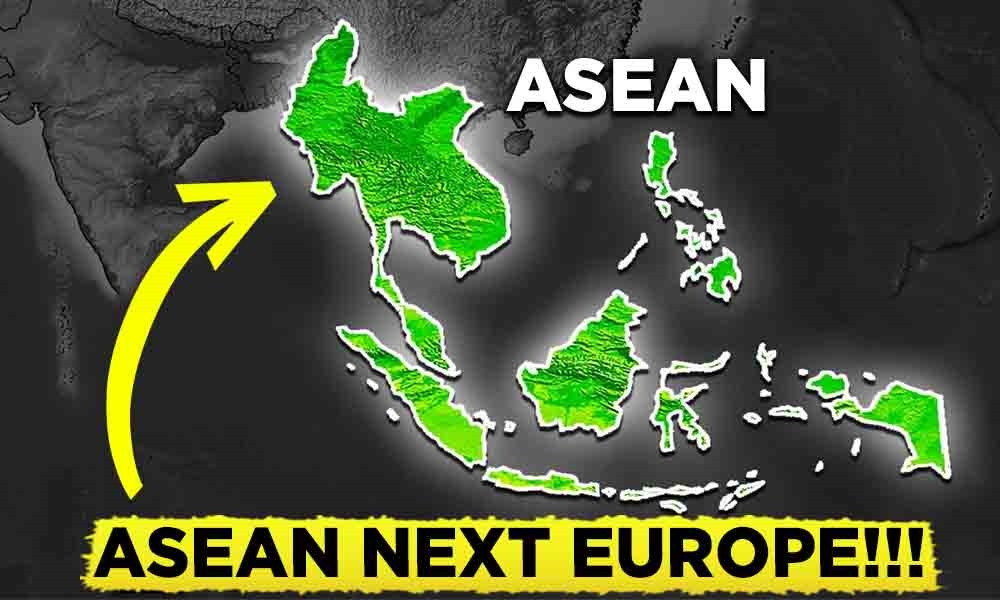
In 2024, the Association of Southeast Asian Nations (ASEAN) comprises 10 member states in Southeast Asia, including significant economies such as Indonesia, Singapore, and Vietnam. The region has a combined population of approximately 685 million people. ASEAN’s collective GDP was about $3.8 trillion, reflecting its role as a dynamic contributor to global economic growth. The European Union (EU), established in 1993, is a political and economic union of 27 European countries. In 2024, the EU’s population is estimated at around 449 million people. The EU’s GDP is projected to be approximately $19.4 trillion in nominal terms for 2024, with a GDP per capita of about $43,194.
The EU and ASEAN are both essential to the dynamics of the world economy. The diversified economies of ASEAN, which include manufacturing giants like Thailand and Vietnam as well as digital hubs like Singapore, have contributed to the region’s economic success. Together, ASEAN has established itself as a key supply chain hub and an essential trading and investment partner for nations in Asia, Europe, and the Americas. In contrast, the EU is a pioneer in fields including financial services, renewable energy, and cutting-edge technology. Its economic might is simply one aspect of its worldwide impact; other factors include its diplomatic clout, soft power, and capacity to establish rules that influence international markets.
Economic progress for both areas depends on their capacity to manage issues like climate change, impact international trade, and uphold stable political ties. Their collaboration is essential to deciding the future distribution of power in the world economy as ASEAN grows and the EU aims to keep its position as the world’s leading nation.
Historical Context
The Association of Southeast Asian Nations (ASEAN) was founded on August 8, 1967, in Bangkok, Thailand, by five original members: Indonesia, Malaysia, the Philippines, Singapore, and Thailand. Its formation was driven by the need to promote regional stability and cooperation amid Cold War tensions, particularly the spread of communism in Southeast Asia. ASEAN’s primary goals were to accelerate economic growth, promote regional peace and stability, and encourage collaboration in various fields such as education, culture, and technology. As it evolved, ASEAN expanded to include Brunei (1984), Vietnam (1995), Laos (1997), Myanmar (1997), and Cambodia (1999).
The European Union (EU) traces its origins to the European Coal and Steel Community (ECSC) and the European Economic Community (EEC), established in 1951 and 1957, respectively, by six founding countries: Belgium, France, Italy, Luxembourg, the Netherlands, and West Germany. The EU was created to foster economic cooperation and prevent another major war in Europe by linking the economies of historically rival nations. Over the decades, the EEC grew in membership and scope, leading to the formation of the European Union in 1993 under the Maastricht Treaty. The EU’s early years were focused on creating a common market and establishing regulatory standards across its member states.
Key Milestones in Their Economic Development
ASEAN
ASEAN Free Trade Area (AFTA) – 1992 One of ASEAN’s first major economic milestones, aimed at creating a regional free trade zone to reduce tariffs and promote intra-ASEAN trade. ASEAN Economic Community (AEC) – 2015 A key step towards regional economic integration, the AEC was launched to create a single market and production base, free movement of goods, services, and skilled labor, and increased investment across the ASEAN region. Regional Comprehensive Economic Partnership (RCEP) – 2020: ASEAN played a central role in launching RCEP, a trade agreement that includes 15 countries, making it the largest trade bloc in the world.
European Union
Single European Act – 1986 This marked the first major revision of the EEC and laid the groundwork for a single market, removing barriers to the free movement of goods, capital, services, and people. Maastricht Treaty – 1993 Officially established the European Union and paved the way for the creation of the euro currency, which was introduced in 1999 and fully implemented by 2002, providing economic unity across the Eurozone. Enlargement of the EU The EU grew significantly in the early 2000s, with the addition of Eastern European countries like Poland, Hungary, and the Czech Republic in 2004, marking a significant economic and political expansion.
Current Economic Status
ASEAN and the EU are major economic powers. ASEAN, comprising ten Southeast Asian nations, is projected to achieve a real GDP growth rate of approximately 4.7% in 2024, with expectations of reaching 4.8% in 2025. This growth is underpinned by robust domestic demand and substantial foreign direct investment (FDI). Notably, Indonesia is anticipated to experience a GDP growth rate of 5% in 2024, reflecting its expanding economic activities. The region’s economic expansion is further bolstered by the Regional Comprehensive Economic Partnership (RCEP), which enhances intraregional trade and attracts FDI from major economies, including China, Japan, and the United States. In 2024, FDI inflows into ASEAN are expected to be significant, contributing to the region’s economic dynamism.
The EU faces a more modest economic trajectory. The European Commission’s Autumn 2024 Economic Forecast projects real GDP growth of 0.9% for the EU and 0.8% for the euro area in 2024, with an anticipated increase to 1.5% in 2025. This subdued growth is influenced by factors such as persistent inflationary pressures and elevated energy costs. The bloc continues to invest in key sectors, including renewable energy, pharmaceuticals, and automotive industries, aiming to strengthen its economic resilience and competitiveness on the global stage.
https://indopacificreport.com/2024/12/22/what-will-happen-if-china-attacks-taiwan/
Comparative Analysis
Population and Market Size
ASEAN holds a population of over 680 million, making it one of the largest markets in the world, characterized by a youthful demographic and a burgeoning middle class that drives consumption. In contrast, the European Union has a population of approximately 447 million, with a more aging demographic that impacts labor markets and consumption patterns. While the EU has a higher per capita income, ASEAN’s rapid population growth presents significant potential for expanding market size and economic opportunities.
Economic Policies and Integration Efforts
ASEAN’s economic policies focus on regional integration through initiatives like the ASEAN Economic Community (AEC), which aims to create a single market and production base. This integration facilitates trade, investment, and labor mobility among member states, enhancing competitiveness. Conversely, the EU has established deeper economic integration through its Single Market, allowing free movement of goods, services, capital, and people among member countries. This comprehensive framework enables coordinated economic policies, regulatory alignment, and shared standards across diverse economies.
Innovation and Technology Adoption
In terms of innovation and technology adoption, ASEAN is rapidly embracing digital transformation, with countries like Singapore leading in technology infrastructure and smart city initiatives. The region is witnessing a surge in startups, particularly in fintech and e-commerce, supported by a youthful population eager to adopt new technologies. The EU, also focusing on innovation, faces challenges in harmonizing regulations across member states. It excels in research and development (R&D) investments, especially in sectors like pharmaceuticals and renewable energy, promoting innovation through programs like Horizon Europe.
Sustainability and Green Economy Initiatives
Both regions are increasingly prioritizing sustainability and green economy initiatives. ASEAN has committed to various environmental frameworks and partnerships, such as the ASEAN Green Bond Standards, aimed at promoting sustainable financing and investment in green projects. The EU leads globally in this regard, implementing comprehensive climate policies through the European Green Deal, targeting net-zero greenhouse gas emissions by 2050. The EU’s ambitious regulations and funding for renewable energy projects position it as a leader in sustainability, contrasting with ASEAN’s developing efforts that, while promising, often lack the same level of regulatory framework and investment.
https://indopacificreport.com/2024/12/19/why-resupply-missions-in-the-south-china-sea-by-the-philippines-generate-controversy/
Challenges and Opportunities
ASEAN
ASEAN faces several challenges that impact its growth trajectory. Political stability is crucial for fostering regional cooperation, as varying political systems and tensions among member states can hinder collaborative efforts. Additionally, infrastructure development and connectivity remain pressing issues, with many ASEAN countries requiring substantial investments in transportation, energy, and communication networks to support economic growth and regional integration. The disparity in development levels among member states exacerbates these challenges. Furthermore, addressing income inequality and poverty is essential for sustainable development; while some nations like Singapore thrive economically, others struggle with significant poverty rates. This inequality can undermine social cohesion and stability, necessitating targeted policies to lift marginalized communities. Despite these challenges, opportunities abound in ASEAN’s young demographic, digital economy growth, and potential for deeper regional integration, which can drive investment and innovation.
EU
The European Union is confronted with significant geopolitical risks and economic uncertainties, particularly in light of ongoing tensions with Russia and shifts in global trade dynamics. These factors create a complex environment that can impact economic stability and growth. Additionally, the aging population presents challenges for the EU’s labor market, as a shrinking workforce may strain social welfare systems and reduce economic productivity. This demographic shift necessitates policies that promote higher labor force participation and attract skilled migrants to fill gaps in the economy. Moreover, the need for digital transformation is pressing, as the EU seeks to enhance its competitiveness in a rapidly evolving global landscape. Embracing new technologies and fostering innovation will be crucial for maintaining economic strength and addressing the challenges posed by globalization. Despite these hurdles, the EU’s strong regulatory framework, emphasis on sustainability, and commitment to innovation present opportunities for growth and collaboration, positioning it to navigate the complexities of the 21st-century economy effectively.
Future Projections
Future projections for ASEAN and the EU suggest divergent paths influenced by varying regional dynamics and global trends. Experts forecast that ASEAN could sustain its robust growth trajectory, with GDP growth rates potentially exceeding 4.5% through 2025, driven by increasing consumer demand, digital transformation, and greater intra-regional trade facilitated by agreements like the RCEP. In contrast, the EU’s growth is expected to remain modest, around 1.2%, as it grapples with demographic challenges and economic uncertainties exacerbated by geopolitical tensions. Potential scenarios for ASEAN include strengthening its position as a global manufacturing hub and a center for innovation, while the EU may focus on enhancing its green economy and digital infrastructure to remain competitive. Both regions will be significantly impacted by global trends such as climate change, which necessitates sustainable practices and investment in green technologies, and technological advancements, which will reshape industries and labor markets. These dynamics will influence how each region adapts and thrives in the evolving global landscape, highlighting the importance of strategic policies and collaboration to harness their respective opportunities.
End Note
In summary, ASEAN is poised for significant economic growth, driven by its youthful population, integration efforts, and burgeoning digital economy, while the EU faces challenges from an aging demographic and geopolitical uncertainties. As ASEAN continues to enhance its trade partnerships and infrastructure, its GDP growth rates could outpace those of the EU in the coming years. The potential for ASEAN to surpass the EU economically is contingent on its ability to address income inequality and invest in sustainable practices. This shift would not only reshape the economic landscape but also have profound implications for global economic dynamics, potentially redistributing influence and investment flows towards Southeast Asia. The interplay between these two regions will be crucial in determining the future balance of power in the global economy, underscoring the importance of strategic collaboration and adaptability in an increasingly interconnected world.
https://indopacificreport.com/2024/12/16/what-are-the-best-occupations-in-the-philippines/