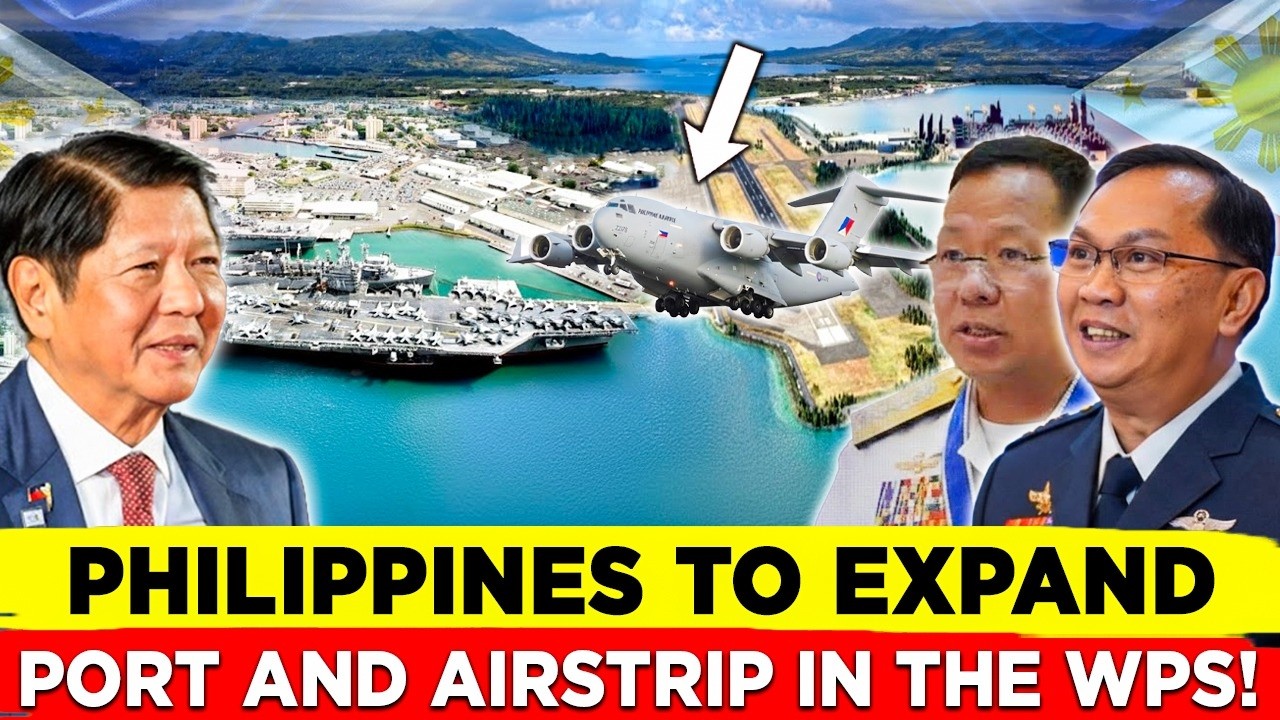
Philippines Eyes Port and Airstrip Expansion in West Philippine Sea Kalayaan Island Group
“We are not retreating from the West Philippine Sea. We are reinforcing our presence.” That line from officials in Manila hit differently this time. Because this isn’t just another statement for the press cycle. This is concrete. Asphalt. Steel. Dredgers. Expansion plans.
And here’s the real question that should stop you mid-scroll: What happens when a small runway in the middle of contested waters becomes the frontline of great-power competition?
That’s exactly what’s unfolding around Pag-asa Island, the Philippines’ most important foothold in the Kalayaan Island Group, a cluster of outposts inside the wider Spratly Islands. On paper, it sounds technical: port upgrades, runway extension, better logistics. Routine infrastructure. Boring even. But zoom out.
One-third of global maritime trade moves through these waters every year. Energy shipments. Semiconductor supply chains. The stuff that keeps modern economies breathing. And right in the middle of that flow is a small island with barely a few hundred residents, fishermen, soldiers, teachers, living at the edge of geopolitical tension.
I remember looking at photos of Pag-asa once. It didn’t look like a battlefield. It looked… ordinary. A modest runway. A few buildings. Children riding bikes near the coast. And yet analysts in Beijing, Washington, Tokyo, probably even in Canberra, are watching it like hawks. Because this isn’t about land. It’s about who can sustain presence.
If you can dock ships reliably, you control maritime tempo. If you can land aircraft consistently, you shape surveillance reach. If you can stay. when others try to pressure you out, you redefine the map without firing a shot. That’s positional geopolitics. Not loud. Not flashy. Just a steady, stubborn presence.
And here’s the uncomfortable truth: in the West Philippine Sea, absence gets interpreted as weakness. Infrastructure becomes strategy. A longer runway isn’t just concrete, it’s signaling. A reinforced port isn’t just logistics, it’s deterrence in slow motion.
Think about it like this. Imagine two neighbors arguing over a shared fence. One keeps showing up, fixing his side, installing lights, reinforcing the posts. The other complains but doesn’t reinforce anything. Over time, who looks more committed to that space?
That’s the dynamic playing out in the Kalayaan Island Group right now.
The Philippines isn’t trying to match anyone ship for ship. That’s not the play. The play is sustainability. Staying power. Making sure Pag-asa is not a token outpost but a functioning maritime node.https://www.youtube.com/watch?v=OxCcbCcK5c8
And honestly? It’s bold. Because expansion here doesn’t happen in a vacuum. Every dredger is noticed. Every supply convoy was tracked. Every new slab of concrete photographed by satellites. The move will be read in Beijing as strategic signaling. It will be welcomed quietly in Washington. It will make Southeast Asian neighbors watch closely. But for Manila, the logic is simpler and older. If you claim it, you maintain it. If you maintain it, you secure it. If you secure it, you shape what comes next. In a region where presence equals power, Pag-asa is no longer a remote island. It’s a statement.
Structural Context: The South China Sea as a Theater of Great Power Competition
Let’s be honest. You can’t understand what’s happening on Pag-asa without zooming out to the bigger chessboard. The South China Sea isn’t just blue water and shipping lanes. It has become one of the most strategically charged spaces on the planet. Every patrol, every runway extension, every coast guard maneuver sits inside a much larger rivalry, the structural contest between the United States and China.
And this is where it gets serious. For Beijing, the South China Sea is not optional. It is a strategic buffer. A forward shield. A maritime extension of homeland security logic. Control here pushes potential threats farther from its coastline. It protects submarine bastions. It secures energy imports. It reinforces the narrative that regional waters fall within its historic sphere of influence.
From Beijing’s perspective, losing strategic initiative here isn’t just embarrassing, it’s destabilizing. Now flip the lens. For Washington, the South China Sea is a credibility test. The United States has framed itself for decades as the guarantor of open sea lanes and freedom of navigation. If it cannot sustain access and reassure allies in these waters, the entire Indo-Pacific security architecture begins to wobble. Alliances are built on trust and trust is built on presence. This isn’t theoretical. It’s structural. One side sees encirclement risk. The other sees erosion of maritime order. And caught between those tectonic plates is Manila.
For the Philippines, this isn’t about abstract doctrines. It’s an existential sovereign space. Fishing grounds. Energy prospects. Jurisdictional rights. National pride. Domestic political legitimacy. The West Philippine Sea isn’t a policy debate, it’s part of the country’s identity. That’s why the expansion in the Kalayaan Island Group feels different now.https://indopacificreport.com/pag-asa-the-tiny-island-china-wants-but-filipinos-are-ready-to-die-for/
For years, Manila hedged. It is balanced. It is a calibrated language. It oscillated between engagement and resistance. There was caution, understandable caution, about provoking either side too sharply. But something has shifted. The Philippines is no longer hedging. It is repositioning.
Infrastructure expansion on Pag-asa isn’t a neutral development project. It is strategic signaling embedded in concrete. It communicates durability, not just to China, not just to the United States but to Southeast Asia as a whole. It says: we are not a passive theater of competition. We are an actor within it. And that changes the equation.
Because when a frontline state decides to reinforce rather than retreat, great power dynamics adjust around it. The South China Sea stops being merely a buffer or a credibility test. It becomes a proving ground for whether middle powers can assert agency in a contested order. That’s the deeper structural context behind a runway extension. It’s not just infrastructure. It’s alignment, posture, and the quiet reshaping of regional equilibrium.
The Infrastructure Move: From Symbolic Occupation to Strategic Entrenchment
There’s a quiet but decisive shift happening in the West Philippine Sea. For years, Pag-asa was proof that the Philippines had a foothold. A flag. A runway. A small community. It was a symbolic occupation, meaningful, yes, but still vulnerable, still limited. What Manila is doing now moves beyond symbolism. This is entrenchment.
On Pag-asa Island, the expansion of port facilities transforms the island from a remote outpost into a functioning maritime node. A larger and more capable port means naval and coast guard vessels can dock directly and more safely. That might sound technical, but in contested waters it is everything. When ships can berth securely instead of hovering offshore, resupply becomes routine instead of risky. The window of vulnerability narrows. Exposure decreases. Operational rhythm stabilizes.
And rhythm matters. Because whoever controls tempo shapes the strategic environment. Improved maritime logistics strengthen endurance. It allows the Philippines to sustain presence without dramatics, without scrambling under pressure. A reinforced port quietly communicates that this is not a seasonal commitment. It is a structural one. Infrastructure, in this sense, becomes deterrence by durability. The longer you can stay, the harder you are to dislodge. Permanence signals sovereignty more effectively than rhetoric ever could.
F-35s Arrive in the Philippines — Is This Checkmate for China?
The airstrip tells a similar story. Pag-asa’s roughly 1,300-meter runway has always been a strategic asset, but reliability changes the game. When the runway becomes consistently usable for military transport aircraft and intelligence, surveillance, and reconnaissance missions, the island shifts from being merely occupied to being operationally integrated. Air access compresses distance. It shortens response time. And in maritime disputes, response time often determines whether a situation stabilizes or escalates.
Faster deployment capability strengthens deterrence not because it invites confrontation, but because it reduces uncertainty. When you can respond quickly, you shape the escalation ladder before it spirals. Air reliability also expands the potential for joint training and rotational presence, further embedding Pag-asa into broader security networks without formally militarizing it in an overtly provocative way.
This is the strategic logic at work: move from symbolic occupation to sustained operational entrenchment. Concrete, asphalt, docking space, runway reinforcement, these are not mere construction projects. They are instruments of statecraft. In the contested geometry of the Kalayaan Island Group, the Philippines is no longer just showing up. It is settling in.
China’s Gray-Zone Strategy and the Philippine Counter-Shift
If you’ve been watching the Spratly Islands over the past decade, you’ll notice something. There’s rarely a dramatic invasion. No missiles flying. No formal declaration of conflict. Instead, it’s pressure. Constant. Measured. Incremental. Beijing’s approach has been textbook gray-zone strategy. Not war, but not peace either.
You see maritime militia vessels appearing in large numbers around disputed features. Fishing boats that don’t quite behave like fishing boats. They linger. They swarm. They create facts on the water. Then comes coast guard coercion, large white-hulled ships asserting administrative authority, shadowing, blocking, projecting presence in a way that stays just below the threshold of military confrontation.https://www.youtube.com/watch?v=eVEsMNWDS2s
And then there’s what people now casually call “water cannon diplomacy.” High-pressure blasts against Philippine resupply vessels. Aggressive maneuvering. Harassment designed to exhaust, intimidate, and normalize Chinese dominance without crossing into kinetic conflict.
Layered over all of this is legal narrative warfare, maps, historical claims, domestic legislation, diplomatic messaging. The idea is simple: repeat something long enough, enforce it physically but not explosively, and over time it starts to look like reality.
China’s objective has been clear, reshape the status quo without triggering a shooting war, especially not one that could pull in the United States under alliance commitments. It’s pressure without war. Control without formal conquest.
And for years, Manila’s response was largely tactical. Protest notes. Public exposure. Diplomatic complaints. Occasional joint patrols. Necessary moves, yes, but reactive ones. Each incident dealt with as it emerged. What’s happening now with infrastructure expansion in the Kalayaan Island Group is different. It’s structural.
Instead of contesting every individual swarming episode or water cannon incident in isolation, the Philippines is reinforcing its baseline. Strengthening ports. Improving runway reliability. Making presence less fragile. Less interruptible.
That shift is subtle, but strategically profound. When you harden logistics and air access on Pag-asa Island, you reduce the effectiveness of gray-zone pressure. Harassment works best against vulnerability. It’s harder to intimidate a position that can resupply efficiently, rotate personnel safely, and sustain operations over time.
In other words, Manila is moving from protest to persistence. And persistence changes deterrence dynamics. It signals that gray-zone tactics will not gradually erode control through attrition. It tells Beijing that normalization won’t come easy. Not through swarms. Not through water cannons. Not through legal repetition alone. That’s a serious pivot. Because once a frontline state decides to absorb pressure and reinforce instead of flinch, the entire gray-zone calculus becomes more complicated.
Alliance Geometry: External Balancing Intensifies
Here’s where the story widens again. The port and runway upgrades in the Kalayaan Island Group aren’t happening in isolation. They sit inside a much bigger alignment shift under President Ferdinand Marcos Jr. and that shift is unmistakable.
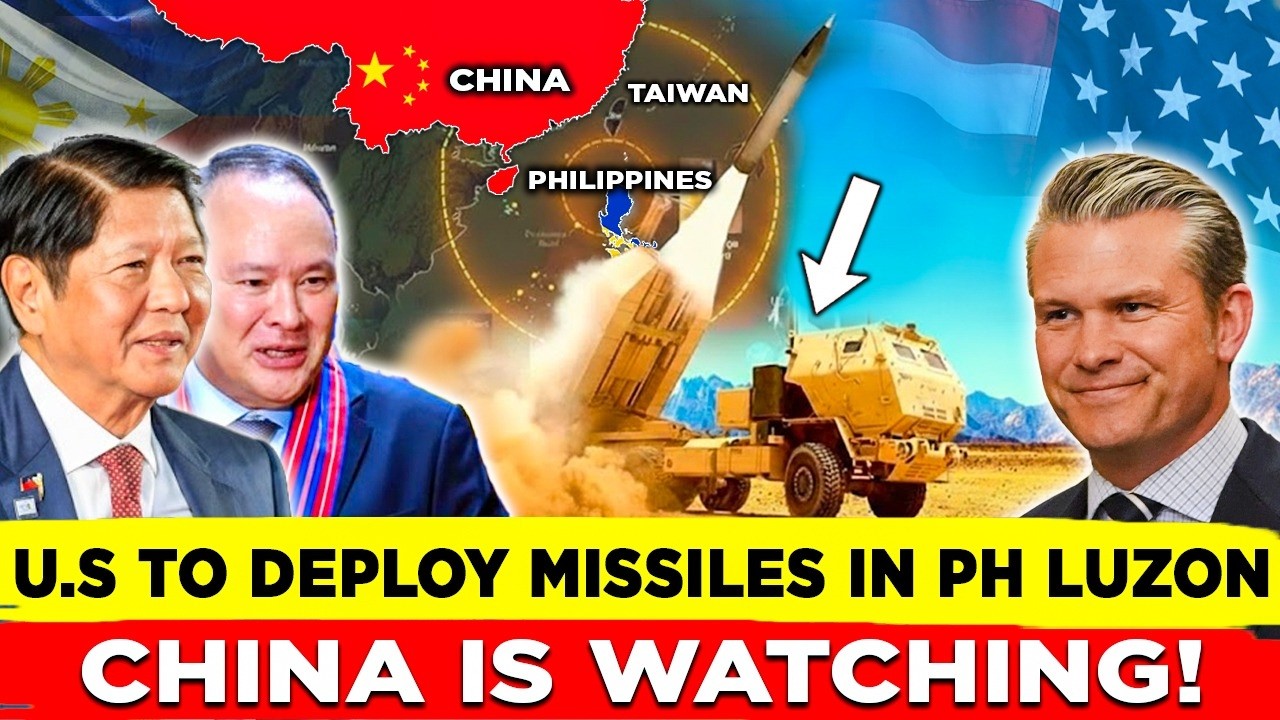
Since taking office, Marcos Jr. has expanded access to additional sites under the Enhanced Defense Cooperation Agreement with the United States. That move alone sent a signal. EDCA sites aren’t permanent U.S. bases, but they enable rotational presence, prepositioning of equipment, and faster interoperability. In strategic terms, they tighten alliance geometry.https://www.youtube.com/watch?v=QRyD9Fd5L68
Then came the joint patrols. Not just with Washington, but also with Japan and Australia. Maritime coordination that once felt occasional now feels patterned. Regular. Institutionalized. The optics matter, yes, but so does the muscle memory built through drills and shared operations.
Add trilateral and multilateral exercises into the mix, and you begin to see the architecture forming. It’s not just about one island. It’s about networked deterrence. That’s why the Kalayaan expansion cannot be read as a standalone infrastructure project. It’s nested within alliance reinforcement. The port and runway upgrades plug into a wider ecosystem of intelligence sharing, joint patrols, and strategic reassurance.
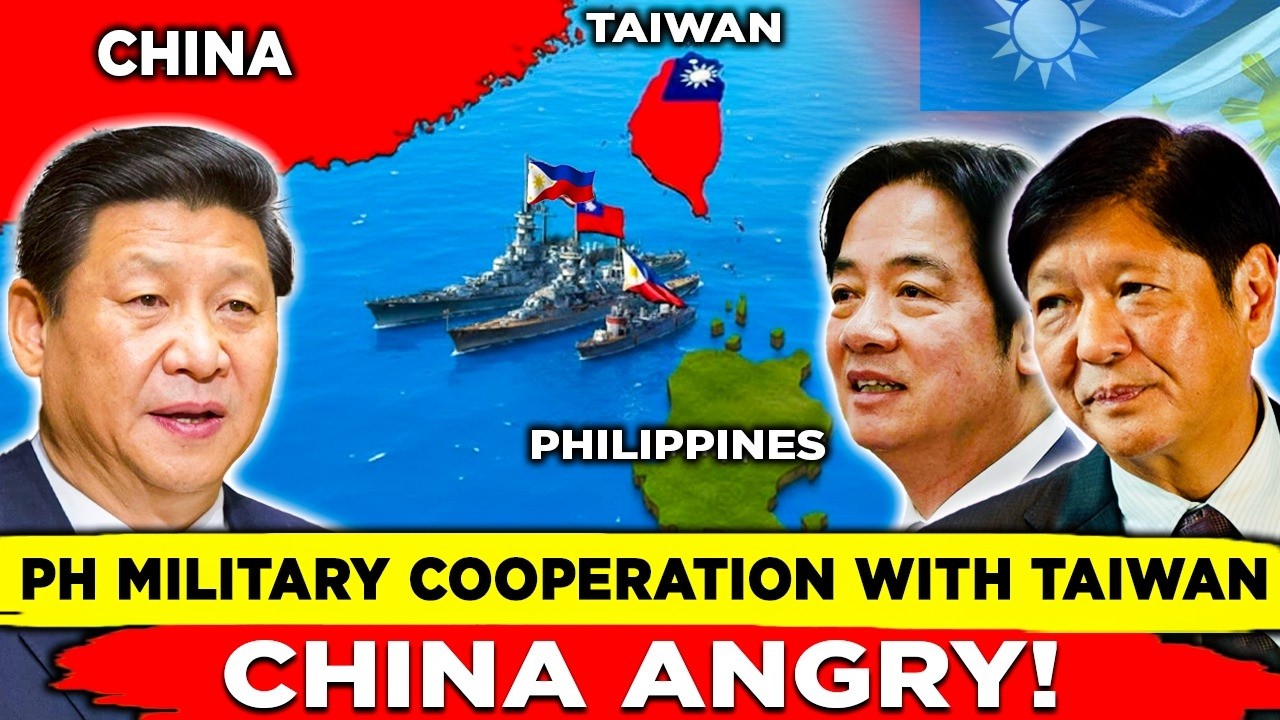
Philippines is moving toward military cooperation with Taiwan
And here’s the uncomfortable reality: Beijing does not view this as neutral development. From China’s perspective, infrastructure in the Kalayaan Island Group looks less like sovereign maintenance and more like forward positioning by the U.S.-aligned state. It reads as alignment consolidation. As containment pressure edged closer to China’s perceived buffer zone. Whether that perception is fair or not is almost secondary. Because in geopolitics, perception shapes reaction.
If Beijing interprets Pag-asa’s upgrades as part of a broader balancing coalition, its countermeasures will reflect that assumption. Increased patrols. Sharper rhetoric. Possibly more assertive gray-zone tactics. The action-reaction cycle tightens. And yet, from Manila’s vantage point, the logic feels defensive, even overdue. Strengthen alliances. Reinforce outposts. Reduce vulnerability. Build leverage before the next crisis emerges.
That’s external balancing in motion. The Philippines is no longer navigating cautiously between giants. It is embedding itself more firmly within a security network and reinforcing its own frontline position at the same time. That combination is powerful. And in a theater as tense as the South China Sea, powerful combinations always shift the strategic temperature.https://www.youtube.com/watch?v=_hIQvFPKTlg
Strategic Signaling: What This Move Communicates
Big infrastructure projects always speak louder than press briefings. And the expansion in the Kalayaan Island Group is speaking to multiple audiences at once. To China, the message is blunt. The Philippines will not abandon its outposts. Incremental coercion, whether through maritime militia presence, coast guard pressure, or water cannon incidents, will not produce retreat. The strategy of attrition meets a strategy of reinforcement. Manila is essentially saying: we’re still here, and we’re building.
To ASEAN neighbors, the signal is more subtle but just as important. Manila is stepping away from quiet hedging and leaning toward visible assertion. It’s not abandoning diplomacy, but it is no longer relying on diplomacy alone. The message is that middle powers can assert agency without waiting for consensus paralysis to clear.
To the United States, the expansion communicates responsibility. The Philippines is not free-riding under alliance guarantees. It is investing its own capital, political and financial, into deterrence. That strengthens credibility on both sides of the treaty equation.
And domestically, the signal may be the most powerful. Sovereignty is not being left to speeches. It is being poured into steel pilings and runway asphalt on Pag-asa Island. For citizens watching repeated incidents at sea, visible reinforcement matters. It turns abstract rights into physical proof of commitment.
Escalation Ladder and Risk Dynamics
That said, reinforcement is not friction-free. The expansion inevitably increases the density of interaction around Pag-asa. More patrols. More monitoring. More shadowing. The risk environment tightens.
Beijing’s likely responses fall within established gray-zone patterns. Intensified patrols near Pag-asa are plausible. China could expand or upgrade facilities on its own artificial islands elsewhere in the Spratly Islands as a counter-signal. Legal and diplomatic protests will almost certainly follow. Economic leverage, subtle or overt, may also enter the picture.https://www.youtube.com/watch?v=KnF1_utEdn8
However, direct military confrontation remains unlikely. Escalation to open conflict would carry enormous costs and risk activating U.S.-Philippine mutual defense commitments. Neither side benefits from crossing that threshold. So the contest remains in the gray zone. But the gray zone is getting crowded. And crowded spaces are inherently less stable.
Geoeconomic Layer: Energy and Fisheries
Beyond strategy and signaling lies the economic substrate. The waters surrounding the Kalayaan Island Group are resource-rich. Fisheries are critical to local livelihoods and national food security. There is also long-standing interest in potential hydrocarbon reserves beneath the seabed. These are not speculative interests; they are long-term national priorities.
Infrastructure consolidation strengthens the Philippines’ ability to enforce its Exclusive Economic Zone rights on a sustained basis. It enables patrol continuity, monitoring, and administrative presence. Over time, this translates into bargaining leverage, particularly in any future joint development negotiations. This is strategic patience in practice. Invest now. Build resilience. Shape the negotiating environment later.https://www.youtube.com/watch?v=VnjuZAyfNlQ
Power Balance Implications
Does the expansion materially alter the military balance in the South China Sea? In pure force-ratio terms, no. China’s naval and coast guard capacity remains vastly larger. The structural asymmetry persists. But geopolitically, the implications are meaningful.
Balance is not only about fleet size. It is about endurance, the ability to sustain presence over time. It is about legitimacy, the perception of lawful and consistent administration. It is about alliance density, the number and strength of security relationships. And it is about infrastructure durability, the physical capacity to remain embedded in contested space. On these variables, the Philippines is upgrading its position. Over time, that matters.
Strategic Assessment (2026 Outlook)
The Kalayaan expansion reflects a broader doctrinal evolution. Manila is moving from accommodation toward calibrated resistance. From episodic protest toward structural consolidation. Between 2013 and 2016, China reshaped the Spratlys through rapid artificial island construction. Airstrips, ports, fortified facilities, infrastructure as geopolitical transformation. The Philippine response is slower. Smaller in scale. But strategically intentional. This is infrastructure as statecraft. It is not dramatic. It is deliberate.
Final Geopolitical Judgment
The port and airstrip expansion in the Kalayaan Island Group is not tactical improvisation. It is strategic consolidation within an intensifying maritime rivalry. It signals firmer alignment with the U.S.-anchored Indo-Pacific security framework. It communicates refusal to concede incremental encroachment. And it reflects recognition that 21st-century sovereignty is sustained not only by legal claims, but by infrastructure, alliances, and persistent presence. The South China Sea is no longer primarily about who claims territory. It is about who endures. And Manila, clearly, is choosing endurance.https://youtu.be/LjZrz0x0Rig?si=oqaaQSqAmkX6518y