Japan Is Helping Philippines Build an Invisible Air Shield to Deter China in the SCS
The Philippines may be preparing to expand its air-surveillance capabilities with additional Japanese-built AESA radars from Mitsubishi Electric. If the reported procurement moves forward, it would represent more than another defense purchase. It would be another step toward building a wider air-defense and surveillance network across one of the world’s most geographically challenging archipelagos.
According to defense publication MaxDefense Philippines, the Department of National Defense has included additional Air Defense and Surveillance Radar Systems in procurement plans under the Re-Horizon 3 modernization program. Manila and Tokyo had not officially announced a new contract in the source material, but the reported plans point to possible repeat orders for Mitsubishi Electric radar systems, with support from Japan’s Ministry of Defense and the Acquisition, Technology and Logistics Agency (ATLA).
The Philippines already operates four Japanese radar systems: three FPS-3ME fixed AESA radars and one TPS-P14ME mobile radar. The question, therefore, is straightforward: why would the country need more? The answer is geography, coverage and the growing importance of early warning.
Why the Philippines Needs More Air-Defense Radars
The Philippines is an archipelago of more than 7,600 islands, stretching roughly 1,850 kilometers from north to south. Its Exclusive Economic Zone covers about 2.2 million square kilometers. Monitoring such a large and dispersed area is difficult even with advanced sensors.
Radar coverage is also limited by physical realities. Radar signals cannot simply pass through mountains, and the curvature of the Earth limits how far a radar can see. Low-flying aircraft, cruise missiles and drones can also exploit terrain and low altitude to reduce detection time.
That is why modern air defense depends on networks rather than a single powerful radar. According to the source material, current planning under Re-Horizon 3 calls for at least four additional fixed air-defense radars, along with around eight mobile radar systems, although the mobile systems could come from different suppliers. If implemented, these additions would expand surveillance coverage and help reduce gaps across the Philippine airspace. In practical terms, more radar stations can mean earlier warning, better situational awareness and more time for commanders to assess a potential threat.
How Radar Fits Into Modern Air Defense
A radar does not intercept an aircraft or destroy a missile. Its role is to provide the information that allows the rest of an air-defense system to act.
The sequence is simple: a threat must first be detected, then tracked and identified. Commanders can then decide whether fighter aircraft should be alerted, missile units should prepare, naval forces should be informed, or the contact is simply a normal civilian aircraft.
This makes detection the foundation of the wider system. Recent conflicts have reinforced the importance of early warning. The source material points to air-defense challenges in Ukraine, aerial threats in the Red Sea and missile exchanges involving Iran and Israel. Although the conflicts are different, they illustrate the same basic principle: an interceptor cannot engage a target that the defense network has not detected and tracked.
Modern air defense therefore depends not only on missiles and aircraft, but also on sensors, communications and command networks.
What Makes Japanese AESA Radars Important?
The Philippine Air Force’s Japanese systems use AESA technology, or Active Electronically Scanned Array.
A traditional radar can be imagined as a flashlight that sweeps across an area. AESA technology instead uses numerous transmit-and-receive modules to steer radar beams electronically. This allows the system to scan and update information rapidly.
For air-defense operations, that can be valuable because modern threats may arrive in different forms and from different directions. Fighter aircraft, drones, cruise missiles and electronic warfare can all complicate the picture.
China PANICS After Philippines Draws New Scarborough Baselines
The Philippines operates two complementary Japanese radar types. The FPS-3ME is a fixed, long-range surveillance radar intended to provide persistent coverage from a permanent location. The TPS-P14ME is mobile, giving the Philippine Air Force the ability to reposition radar coverage when operational requirements change. That combination matters for an archipelago. Fixed radars can provide persistent surveillance, while mobile systems can help extend or reinforce coverage where it is needed.
From a Radar Purchase to a Wider Defense Network
The larger significance of the Philippine-Japanese radar relationship is the network that can be built around these systems.
Modern integrated air defense is not simply a collection of radars. Sensors need to share information with command centers and other military assets so that decision-makers can develop a common picture of what is happening in the airspace.
The basic concept is similar to a large security network. Individual cameras monitor different locations, but their value increases when information is brought together at a central point. Air-defense sensors work in a comparable way: each radar contributes part of the picture, while command systems help turn those separate observations into a broader operational picture.
This is why additional radar coverage can have an effect beyond the number of radar stations purchased. It can improve awareness for fighter aircraft, surface-to-air missile units, naval forces and command centers. The goal is not simply to detect more aircraft. It is to detect earlier, share information faster and give decision-makers more time to respond.
Japan and the Philippines: A Growing Defense Relationship
The radar program also reflects a broader change in Japan’s security relationships.
The source material notes that Japan historically maintained strict limits on defense equipment exports. As the security environment in the Indo-Pacific became more uncertain, Tokyo began strengthening defense cooperation with regional partners.
The Philippines became an important partner in that process. In 2020, Mitsubishi Electric was selected to supply advanced air-surveillance radars to the Philippine Air Force. The deal marked Japan’s first export of a complete, newly manufactured defense system under its revised defense export policy, according to the source material.
The relationship has since expanded through radar deliveries, military exercises, Official Security Assistance and other forms of defense cooperation. The two countries have also pursued a Reciprocal Access Agreement intended to make it easier for their forces to train and operate together. This makes the radar relationship more significant than a conventional equipment sale. It is part of a broader effort to strengthen defense cooperation between Japan and the Philippines.
What Additional Radar Coverage Could Mean for the Philippines
The most immediate benefit of additional radar systems would be improved air-domain awareness.
Consider a hypothetical unidentified aircraft approaching an important Philippine air or maritime corridor. With multiple sensors contributing to the picture, the military could potentially detect and track the contact earlier than it could with a smaller number of isolated radar stations.
That information could then be shared with relevant command centers and military units. Fighter aircraft could be alerted, missile batteries could prepare, and naval forces could monitor the situation. None of this guarantees that a threat will be stopped. Radar is one component of a much larger defense architecture. But better detection gives decision-makers more information and, importantly, more time.
That is particularly relevant around areas such as the West Philippine Sea, Northern Luzon, the Bashi Channel, the Luzon Strait and the Philippines’ wider Exclusive Economic Zone. These areas include important air and maritime approaches where civilian and military activity can overlap. A larger surveillance network would not eliminate every blind spot. It would, however, give the Philippines a stronger foundation for monitoring its airspace and maritime approaches.
The Strategic Logic Behind More Radars
The reported push for additional Japanese AESA radars makes sense when viewed as part of a wider modernization effort rather than as an isolated procurement. The Philippines already has four Japanese radar systems, but four radars cannot provide continuous, comprehensive coverage of an archipelago spread across thousands of islands and a vast maritime area. Additional fixed radars could strengthen permanent surveillance coverage. Additional mobile systems could provide flexibility. Connected through command-and-control systems, these sensors could contribute to a more integrated air-defense picture.
The key point is that modern air defense is increasingly about information. A missile may provide the means to intercept a target. A fighter may provide the means to engage it. A command center may make the decision. But the entire process depends on the sensor that detects the threat in the first place. For the Philippines, that makes radar modernization a foundational part of defense modernization.
Conclusion: The Philippines Is Building the Ability to See First
The reported plan for additional Japanese AESA radars is not simply a story about buying more military equipment. It is about expanding the Philippines’ ability to detect, track and understand activity in its airspace.
The country’s geography makes that challenge particularly difficult. Thousands of islands, a vast Exclusive Economic Zone, mountainous terrain and important maritime approaches all create demanding surveillance requirements.
More radar systems could help close coverage gaps, improve early warning and give commanders a clearer operational picture. That does not mean radar alone can guarantee national security. Effective air defense requires sensors, communications, command systems, aircraft, interceptors and trained personnel working together. But every part of that system begins with information.
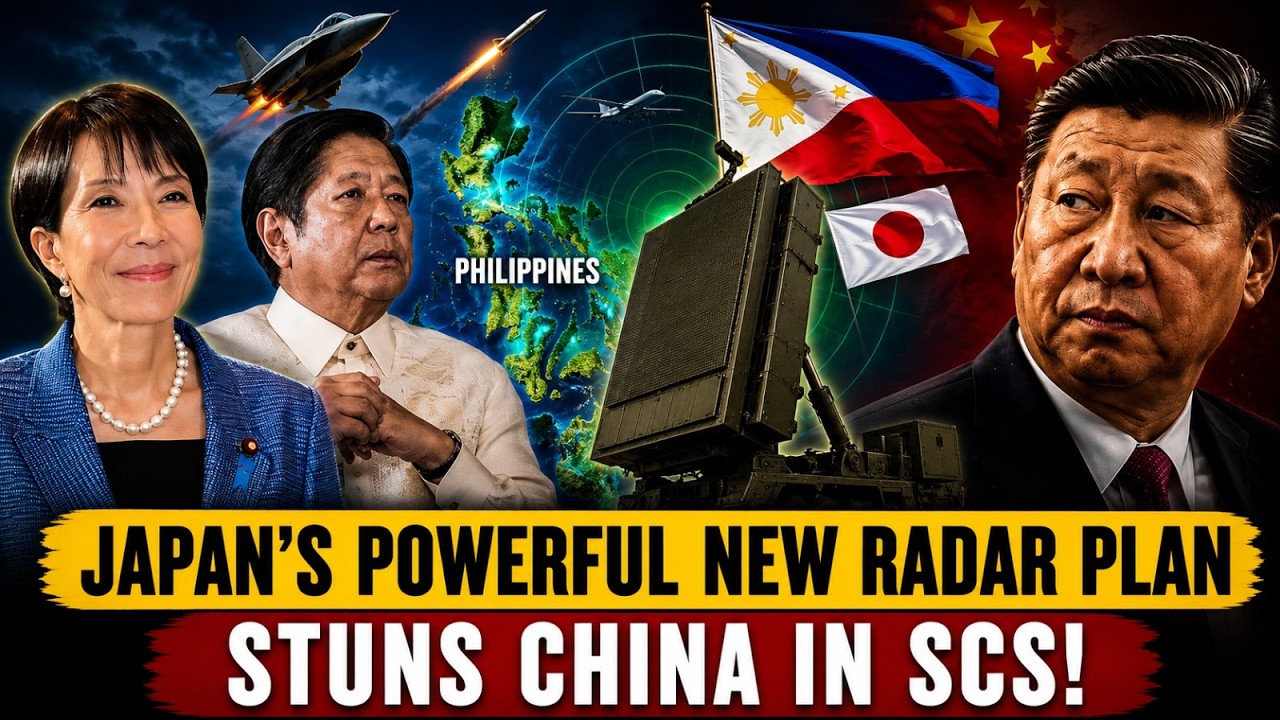
Before a fighter can scramble, a missile can engage or a commander can make a decision, a potential threat has to be detected. For the Philippines, the strategic value of additional radar coverage is therefore simple: more eyes, better awareness and more time to decide. In modern air defense, the ability to see first can be one of the most important advantages a country can build.
About Indo-Pacific Report
For more geopolitical analysis, strategy coverage, and Indo-Pacific security reporting, visit Indo-Pacific Report:
Website
Facebook
YouTube
Japan Is Helping Philippines Build an Invisible Air Shield to Deter China in the SCS