China Says It Can Easily Defeat the Philippines — Is Manila Ready For War?
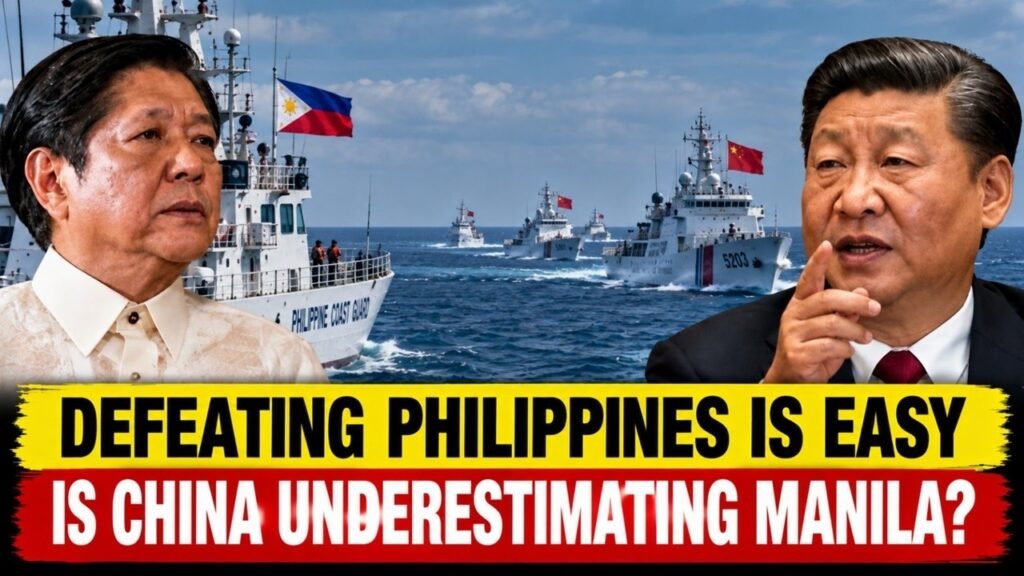
China’s military strength is far greater than that of the Philippines, but a potential conflict between the two countries would involve much more than ships, fighter jets, missiles, and military budgets. The real question is whether China could turn its military advantage into a lasting political victory in the South China Sea. Recent remarks by Chinese Ambassador Jing Quan have brought this question back into focus, raising concerns in Manila and attracting attention across the Indo-Pacific. The controversy intensified on October 16, 2026, after the Chinese ambassador responded to criticism from Philippine Defense Secretary Gilberto Teodoro Jr. by emphasizing China’s military superiority. Philippine officials viewed the remarks as a threatening suggestion that Beijing could use force against the Philippines and easily prevail. President Ferdinand Marcos Jr. also expressed concern over the language.
China, however, maintained that its position had been misunderstood and continued to present itself as a country that prefers peace over military confrontation. The exchange highlights a growing challenge for the Philippines as it attempts to defend its maritime interests against a much stronger neighbor. China has a larger navy, a more powerful air force, extensive missile capabilities, and a defense industry capable of supporting sustained military operations. The Philippines is modernizing its armed forces, but it cannot match China platform for platform. Yet military superiority does not automatically translate into political success. A country may win a military engagement without achieving its broader objectives, especially when a conflict involves disputed maritime rights, international law, economic interests, and the possibility of intervention by other powers. For China, the central question is whether military pressure could force the Philippines to change its behavior in disputed waters. For Manila, the challenge is how to resist that pressure without triggering a conflict it cannot afford. The answer will depend not only on military strength but also on diplomacy, geography, international partnerships, and the political consequences of using force.
What Did China’s Ambassador Say About Defeating the Philippines?
The controversy surrounding Ambassador Jing Quan began with an exchange involving Philippine Defense Secretary Gilberto Teodoro Jr. Following criticism of China’s conduct in the region, the ambassador emphasized Beijing’s military superiority while maintaining that China preferred peaceful relations. Philippine officials objected to the language because it appeared to suggest that China could use force against the Philippines and defeat it with little difficulty. The Chinese Embassy rejected Manila’s interpretation, arguing that the ambassador’s position had been misunderstood. This disagreement is important because diplomatic statements can serve different purposes. They may communicate confidence, warn another government against certain actions, strengthen a domestic political message, or attempt to influence an opponent’s calculations without committing a country to military action. China’s remarks should therefore be understood in the context of the broader South China Sea dispute rather than treated as definitive evidence that Beijing has decided to attack the Philippines.
There is a difference between threatening language, strategic signaling, and an actual decision to initiate armed conflict. One possible interpretation is that Beijing wants Manila to recognize the consequences of challenging Chinese activities in disputed waters. Another is that the statement reflects China’s frustration with the Philippines’ expanding defense cooperation with the United States and other regional partners. These interpretations are plausible, but the ambassador’s private intentions cannot be established from the remarks alone. The more important question is how such statements affect the relationship between the two countries. If military warnings encourage caution, they may temporarily discourage confrontation. However, if they convince Philippine leaders that China intends to use its strength to impose its preferred outcome, they could strengthen Manila’s determination to resist pressure and seek greater international support. This is why the ambassador’s remarks matter beyond the immediate diplomatic controversy. They expose the central issue in the relationship between China and the Philippines: whether military superiority can persuade a smaller country to accept another power’s demands.
Philippines Activates Pag-asa Island as China Faces a New Coast Guard Challenge
Why China and the Philippines Are Fighting Over the South China Sea
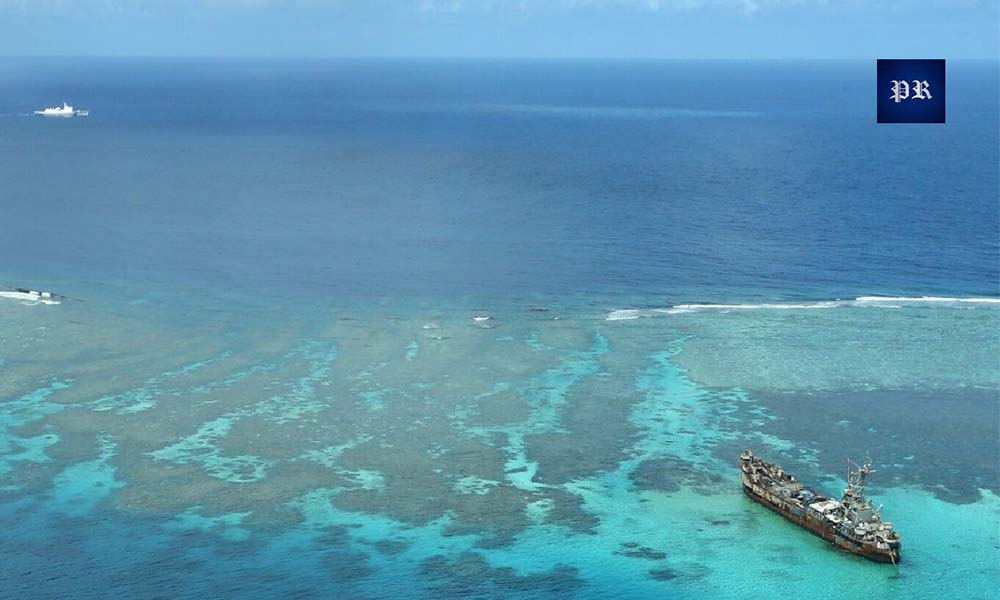
The South China Sea is one of the world’s most strategically important maritime regions. It carries major international shipping routes, supports fisheries and regional trade, and contains resources that contribute to the economic security of countries across Southeast Asia. Its importance also extends to military strategy because control of maritime access and the ability to operate across these waters influence the wider Indo-Pacific balance of power. The Philippines refers to relevant maritime areas on its western side as the West Philippine Sea. Manila asserts its maritime rights under the United Nations Convention on the Law of the Sea, while China maintains extensive claims in the South China Sea. The two countries disagree over maritime entitlements, access to resources, activities around disputed features, and the limits of their respective rights. These disagreements have repeatedly produced confrontations involving coast guard vessels, fishing boats, maritime militia, water cannons, dangerous blocking maneuvers, and Philippine resupply missions.
Such incidents can create serious pressure without either government formally declaring war. They also demonstrate how a maritime dispute can become a test of national credibility and regional influence. For Beijing, its activities are connected to its territorial and maritime claims and its opposition to what it considers challenges to its interests. For Manila, the same activities can threaten its maritime rights, personnel, vessels, and ability to operate in areas where it claims lawful entitlements. Each confrontation can therefore carry political significance beyond the immediate encounter at sea. The Philippines faces a particularly difficult challenge because its maritime responsibilities extend across a large archipelago. Protecting vessels, monitoring distant waters, maintaining a coast guard presence, and responding to incidents require considerable resources. China’s larger military and coast guard capabilities give Beijing important advantages in sustaining pressure over time. However, the dispute is not simply a contest over which country has more ships. It is also about whether one government can use its superior resources to influence the decisions of another. China may be capable of exerting substantial military pressure, but whether that pressure would produce lasting Philippine compliance is a separate question.
What the 2016 South China Sea Ruling Means for China and the Philippines
International law is an important part of the Philippines’ position in the South China Sea. On July 12, 2016, an arbitral tribunal constituted under the United Nations Convention on the Law of the Sea issued its award in the case brought by the Philippines against China. The tribunal addressed several major issues, including the legal basis for China’s historic rights claims within the nine-dash line, the maritime entitlements of certain features, and interference with Philippine rights under the law of the sea. Among its key findings, the tribunal concluded that China’s claims to historic rights within the nine-dash line were incompatible with the convention to the extent that they exceeded the maritime entitlements permitted under it. It also found that China had interfered with certain sovereign rights of the Philippines. The ruling did not resolve every aspect of the dispute. It did not determine sovereignty over every disputed island or settle all maritime boundaries between the two countries. These distinctions matter because the award addressed specific legal questions rather than providing a complete political settlement of the South China Sea. The Philippines considers the award final and binding, while China rejects it and maintains that the tribunal lacked jurisdiction.
Despite Beijing’s rejection, the ruling remains an important reference point for Manila’s diplomatic position and for countries examining the legal dimensions of the dispute. The significance of the award is straightforward: military power does not automatically create legal rights over another country’s maritime entitlements. A stronger navy cannot, simply because it is stronger, establish lawful ownership of disputed territory or acquire maritime rights that international law does not recognize. At the same time, international law does not enforce itself. A legal decision can strengthen a country’s diplomatic position, provide a basis for international support, and clarify the rights at issue, but changing a powerful state’s behavior may require sustained political and diplomatic pressure. For the Philippines, this creates a difficult balance. Its legal position provides an important foundation for resisting Chinese pressure, but it cannot independently protect every vessel or prevent every confrontation. Manila must therefore combine international law with credible defense capabilities, effective diplomacy, and cooperation with other countries.
Why China Has a Major Military Advantage Over the Philippines
China possesses a substantial conventional military advantage over the Philippines. Its navy operates a much larger force of surface combatants and submarines, supported by maritime patrol aircraft, logistics vessels, coastal infrastructure, and growing carrier capabilities. Its air force also fields a much larger combat-aircraft fleet, giving Beijing more options for surveillance, air operations, and the protection of military assets. China’s missile capabilities add another dimension to this imbalance. Land-based anti-ship missiles, precision-strike systems, and other weapons can threaten military vessels and facilities depending on the circumstances of a confrontation. Modern military operations also depend heavily on surveillance, communications, intelligence, and command systems, all of which help forces identify potential targets and coordinate their actions. China’s defense-industrial base provides an additional advantage. Its ability to manufacture, maintain, and replace military equipment at scale supports a level of force generation that the Philippines cannot currently match. In a prolonged confrontation, industrial capacity and logistics could become just as important as the number of ships or aircraft available at the beginning.
The Philippines faces a different set of constraints. Its armed forces must operate across thousands of islands and a wide maritime area while continuing to develop air defense, naval capabilities, surveillance, communications, and logistics. The country has been investing in military modernization, but building an effective force takes time, training, funding, and sustained political commitment. These differences make it unrealistic for Manila to expect to match China in every category of conventional military power. However, the size of the military imbalance does not establish that every possible operation would be easy for Beijing or that every confrontation would produce the same outcome. Military results depend on the objectives of an operation, its location, the forces involved, the readiness of each side, the duration of the confrontation, and the possibility of intervention by other countries. A country may possess a clear advantage in a direct engagement while still facing difficulties in achieving a broader strategic objective. China’s military superiority is therefore an important starting point for understanding the dispute, but it is not the only factor that determines what a conflict would mean for either country.
Could China Win a Battle but Lose the Strategic Objective?
The distinction between military victory and strategic success is central to understanding the China-Philippines dispute. Winning a battle means achieving a military objective in a particular engagement. Strategic victory requires something more: the ability to translate that success into a political outcome that serves the government’s longer-term interests. Suppose a serious confrontation caused extensive damage to Philippine military assets. China might emerge with a decisive advantage in the immediate engagement. However, the consequences would depend on what Beijing wanted to achieve afterward. Would it seek to discourage Philippine patrols, weaken Manila’s maritime claims, reduce its security cooperation with the United States, or secure greater acceptance of China’s preferred arrangements in the South China Sea? These objectives are related, but they are not identical. Inflicting military damage does not automatically persuade another government to abandon its policies. In some circumstances, a military setback can weaken a country’s ability to resist. In others, it can strengthen public opposition, increase political pressure on national leaders, and encourage the government to seek greater support from external partners.
The Philippines could respond to a serious confrontation by accelerating military modernization, improving maritime surveillance, strengthening coastal defense, and expanding cooperation with the United States and Japan. Such a response would not be inevitable, and a major conflict could also leave Manila with fewer military resources and less freedom of action. Nevertheless, the possibility of stronger resistance would have to be considered in any assessment of the political consequences. Geography would also influence the outcome. The Philippines is an archipelago, and maintaining an effective presence across its maritime areas requires reliable transport, communications, maintenance, and resupply. China’s greater resources provide major advantages, but sustaining operations, managing resistance, and securing long-term political compliance are different challenges. Economic costs would add another layer of uncertainty. A major conflict in the South China Sea could disrupt shipping, trade, investment, tourism, and regional supply chains. Because China is deeply integrated into the global economy, instability could impose significant costs on Beijing as well as on Manila and its partners. These economic risks would not necessarily prevent China from using force, nor would they guarantee a favorable outcome for the Philippines. They would, however, make it misleading to assume that a military victory would be inexpensive or that its political benefits would automatically outweigh the consequences. The real question is whether the use of force would deliver enough strategic benefit to justify the military, diplomatic, and economic risks. The answer depends partly on the role of the United States.
How the Philippines Is Strengthening Its Defense Capabilities
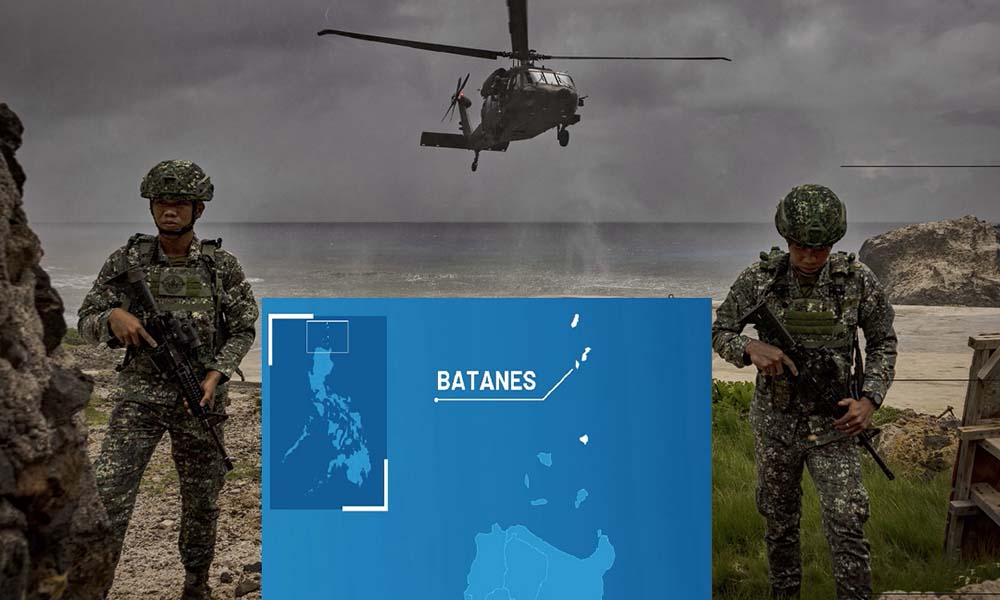
The Philippines does not need to replicate China’s entire military to make coercion more difficult. Instead, it can focus on capabilities that improve its ability to detect threats, protect its forces, maintain a maritime presence, and respond effectively during a crisis. Coastal defense is one part of this strategy. The Philippine Marine Corps’ BrahMos anti-ship missile capability gives Manila a means of threatening surface vessels from land. However, possessing a missile system does not automatically guarantee operational effectiveness. Targeting information, trained personnel, maintenance, logistics, and the conditions in which the system might be used all influence its practical value. Naval modernization is another important area. Newer frigates and patrol vessels can expand the Philippines’ ability to maintain a presence at sea, conduct surveillance, escort vessels, and respond to maritime incidents. Yet ships are only one part of a functioning naval force. Crews require regular training, vessels need maintenance, and operations depend on spare parts, fuel, communications, and sustained funding.
Air and missile defense also matter. Protecting military facilities and personnel requires the ability to identify incoming threats, share information quickly, and coordinate decisions under pressure. A joint US-Philippine missile and drone defense exercise reported by Stars and Stripes in October 2026 highlighted challenges associated with decision-making delays, limited defensive resources, and the possibility of confusing friendly aircraft with incoming threats. Because the exercise was a simulation, its findings should be understood as lessons about preparedness rather than evidence of an actual attack. Maritime domain awareness is equally important. Radar systems, coast guard patrols, aircraft, satellite information, and intelligence sharing can help Manila monitor activity across its maritime areas. Better surveillance can improve decision-making, support diplomatic protests, and provide evidence when dangerous encounters occur. The Philippines also needs reliable logistics and communications. Its forces must be able to move equipment between islands, maintain operational links, repair damaged systems, and sustain personnel over time. These practical capabilities can determine whether military equipment remains useful during a prolonged crisis. None of these measures will eliminate China’s military advantage. Their purpose is to improve the Philippines’ ability to protect its interests and reduce the likelihood that another country will assume military pressure can produce an easy political result.
What China’s Warning Means for the Wider Indo-Pacific
The dispute between China and the Philippines matters far beyond Southeast Asia. Governments across the Indo-Pacific are attempting to maintain economic relations with Beijing while protecting their sovereignty, maritime rights, and strategic independence. The Association of Southeast Asian Nations, or ASEAN, is not a unified military alliance. Its members have different relationships with China, different territorial concerns, and different approaches to regional security. Even so, developments in the South China Sea can influence how governments assess their own defense requirements and diplomatic options. Strong Chinese statements could discourage some governments from challenging Beijing by emphasizing the military imbalance. However, the same statements could encourage other countries to invest more in defense, strengthen surveillance, and expand security partnerships with the United States, Japan, Australia, and other regional partners. Both outcomes are possible, and the ambassador’s remarks alone cannot establish which response will dominate.
The Philippines’ growing defense cooperation with external partners illustrates how concerns about maritime security can influence regional relationships. China, for its part, has argued that external military deployments can increase tensions and that disputes should be managed through direct negotiations. This reflects a wider strategic disagreement about the role of alliances and military partnerships in the region. The difficulty is that actions intended to demonstrate strength can make neighboring countries feel less secure. Those countries may respond by strengthening their defenses, which Beijing could then interpret as evidence of containment or hostility. This can produce a cycle in which measures intended to discourage opposition instead deepen mistrust. That does not mean every defense partnership is directed against China or that all Southeast Asian governments share the same position. It means that the regional consequences of military signaling are difficult to predict and may differ from the intentions behind the original statement. For the wider Indo-Pacific, the central issue is whether countries can manage competing interests without allowing military superiority to become the only measure of whose rights and concerns deserve consideration.
Three Possible Scenarios for China-Philippines Relations
One possible outcome is diplomatic de-escalation. Manila could continue to express its objections, while Beijing clarifies its position and both governments maintain channels of communication. Maritime disputes would remain unresolved, but neither side would deliberately trigger a major armed confrontation. This scenario would allow both countries to defend their stated positions while limiting the immediate risk of conflict. A second possibility is continued pressure below the threshold of open war. Chinese and Philippine vessels could continue encountering one another in disputed waters, while both governments use patrols, diplomatic protests, military demonstrations, and security cooperation to protect their interests. This type of competition can remain persistent and dangerous even when neither government intends to initiate a full-scale conflict. The third possibility is a serious incident that develops into a wider crisis. A collision, the use of weapons, or a deadly confrontation could create intense domestic pressure on both governments to respond. Washington would then have to assess its treaty commitments in light of the specific circumstances, while regional partners would face difficult decisions about diplomacy and security cooperation. These scenarios are possibilities rather than predictions. There is no basis for claiming that any one of them is inevitable. The same military imbalance exists under all three scenarios, yet the political outcomes could be very different. Diplomatic de-escalation could preserve space for negotiations. Continued pressure could deepen mistrust and increase the likelihood of an accidental confrontation. A serious armed crisis could create consequences for trade, regional security, and relations between major powers. The most important factor is not simply whether one side possesses more military equipment. It is whether both governments can manage their competing interests without allowing a diplomatic dispute or maritime incident to develop into a conflict that becomes difficult to control.
Can China Defeat the Philippines but Still Fail to Win?
The question of whether China can defeat the Philippines depends on what the word defeat actually means. If it refers to winning a direct military engagement between Chinese and Philippine forces, China’s substantial advantages in naval power, air power, missiles, surveillance, and defense-industrial capacity strongly favor Beijing. If defeat means forcing Manila to abandon its maritime claims, reduce its cooperation with the United States, and accept China’s preferred arrangements in the South China Sea, the answer becomes much less certain. These are political objectives that cannot be measured simply by comparing the number of ships, aircraft, or missile systems each country possesses. The Philippines has several factors supporting its ability to resist pressure. The 2016 arbitral award provides an important legal foundation for its maritime position. Its military modernization program is intended to improve its ability to protect national interests, while its defense treaty with the United States raises the potential stakes of a serious armed confrontation.
None of these factors guarantees that Manila would prevail in a war. The legal ruling does not enforce itself, modernization cannot eliminate the military imbalance overnight, and the American alliance does not make escalation risk-free. China would retain substantial military advantages in a direct confrontation. Nevertheless, the consequences of using force would extend beyond the immediate battlefield. A major conflict could strengthen Philippine resistance, deepen regional security cooperation, disrupt economic activity, and create a wider crisis involving Washington. Whether those consequences would outweigh the potential benefits of military action would depend on the objectives Beijing was attempting to achieve. This is the central distinction between military superiority and strategic success. A country can possess the ability to inflict damage without possessing an equally clear path to securing lasting political compliance. The more ambitious the political objective, the more important the wider consequences become. For China, the challenge is whether its military advantage can change Philippine behavior at an acceptable cost. For the Philippines, the challenge is how to defend its maritime rights while reducing the risk of a conflict that could cause serious damage to its security and economy. The ambassador’s remarks have brought this dilemma into public view. China is militarily stronger than the Philippines, but strength alone cannot determine the full political outcome of a confrontation in the South China Sea.
Conclusion: Military Strength Is Not the Same as Strategic Victory
China’s military advantage over the Philippines is substantial, and Manila cannot realistically expect to match Beijing in every category of conventional power. However, the strategic consequences of a conflict would depend on more than the balance of ships, aircraft, missiles, and military resources. International law, Philippine defense modernization, the US-Philippines Mutual Defense Treaty, regional security partnerships, geography, and economic interdependence would all influence the choices available to both governments. None of these factors guarantees a particular outcome, but each complicates the assumption that military superiority automatically produces lasting political success. The most important question is whether China could use its military advantage to achieve its broader objectives without creating greater resistance, stronger regional partnerships, or an escalation that becomes difficult to control. A direct military victory and a durable political settlement are not the same thing. For the Philippines, the priority is to strengthen its defensive capabilities, maintain its legal position, improve maritime awareness, and preserve diplomatic channels. For China, the challenge is whether pressure and military signaling can advance its interests without increasing the very regional mistrust it seeks to manage.
About Indo-Pacific Report
For more geopolitical analysis, strategy coverage, and Indo-Pacific security reporting, visit Indo-Pacific Report:
Website
Facebook
YouTube
China Says It Can Easily Defeat the Philippines — Is Manila Ready For War?