US Awards Philippines $1.66M Boat Deal Here’s Why It Matters
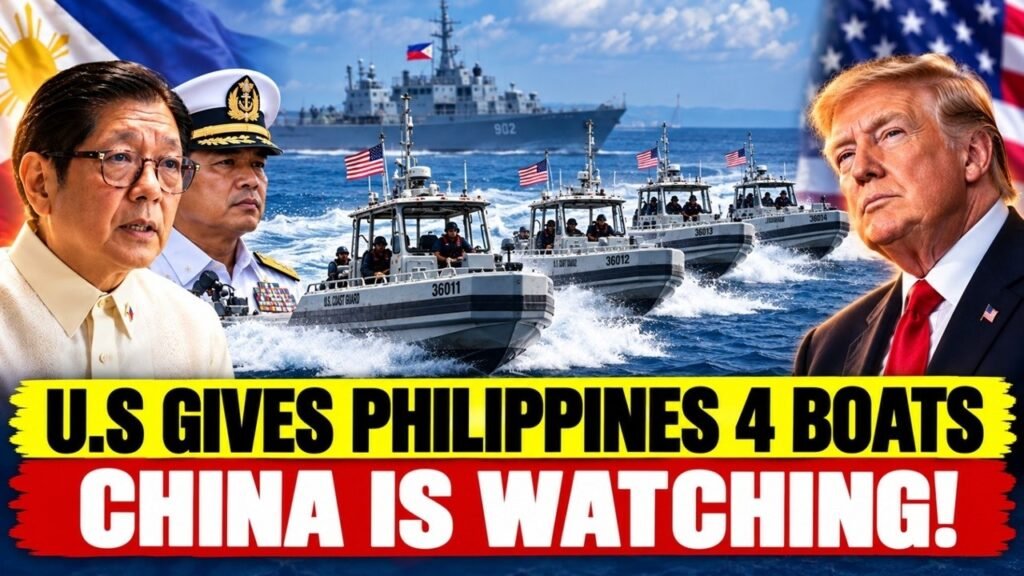
The United States has awarded a $1.66 million contract to supply four small boats to the Philippines, adding another development to the growing defense relationship between Washington and Manila. At first glance, the agreement may appear relatively minor compared with the advanced warships, missile systems, and military aircraft often associated with security competition in the Indo-Pacific. However, the project highlights an important part of maritime defense that receives far less public attention: the logistical support required to keep naval forces operating. According to a report published by Baird Maritime on October 13, 2026, Alabama-based boatbuilder Silver Ships has secured a US Coast Guard Foreign Military Sales project to deliver four 27-foot boats to the Philippines.
The boats are intended to transport personnel and equipment to visiting ships that require maintenance assistance, with initial deliveries expected in late 2027. The reported Philippine contract includes Suzuki outboard engines and Raymarine Axiom2 Pro navigation systems. The agreement does not represent the acquisition of a new combat fleet, nor does it establish a new weapons capability against China. Instead, it addresses a specific logistical requirement that could support the Philippine Navy’s wider maritime operations. Its practical importance will depend on how the boats are assigned, maintained, and integrated into the Philippines’ existing support arrangements. For a country managing extensive maritime responsibilities and persistent tensions in the South China Sea, even a relatively small procurement raises a larger question: how effectively can the Philippine Navy sustain the vessels and personnel needed to carry out its missions?
Four Small Boats Designed for Naval Maintenance Support
The $1.66 million agreement covers four boats measuring 27 feet, or approximately 8.2 metres, in length. Their stated purpose is straightforward: carrying personnel and equipment to visiting ships that need maintenance assistance. Unlike frontline patrol craft designed primarily for maritime security operations, these boats are intended to support a practical requirement within the wider naval maintenance process. Their equipment includes Suzuki outboard engines and Raymarine Axiom2 Pro navigation suites. These systems provide propulsion and navigation capabilities appropriate to their intended role, although the published contract details do not establish their full operational specifications, range, payload capacity, or precise operating locations. It would therefore be premature to draw conclusions about how frequently the boats will be used or how much they could improve the availability of Philippine naval vessels. The distinction between support craft and combat vessels is important. The announcement does not identify the boats as missile platforms, armed patrol craft, or assets intended to confront Chinese coast guard vessels. Their value should instead be assessed against the maintenance transportation requirement they are designed to fulfil. Moving technicians, tools, and other necessary equipment to a ship is a different task from conducting a patrol or engaging another vessel, but it can still form part of the process that sustains maritime operations.
Philippines’ New Frigates Face Missile Delays — China Is Watching!
Why the Delivery Date Matters
Initial deliveries are expected in late 2027, meaning the agreement does not provide an immediate increase in Philippine naval readiness. The contract represents a procurement commitment, while the operational capability will emerge only after the boats are delivered, accepted, assigned, and prepared for service. Training, spare parts, maintenance arrangements, and the availability of personnel will all influence how effectively the equipment can be used. This distinction matters because military announcements often focus on contract values and equipment specifications without examining what happens afterward. A procurement can be completed on schedule without automatically producing a measurable improvement in operational performance. To assess the actual outcome, observers will need to establish whether the boats enter service as planned and whether they make the intended maintenance-support tasks more efficient. The timeline also provides a clear point for future assessment. Reporting on delivery, assignment, and operational use will help determine whether the project meets the Philippine Navy’s requirements. Until those details become available, the most accurate description is that the United States has awarded a contract for a future support capability rather than delivered an immediate improvement to the Philippine fleet.
The wider Silver Ships announcement requires an important clarification. According to Baird Maritime, the combined initial orders for the Philippines and El Salvador are worth $4.33 million. The approximately $12.2 million figure refers to the broader arrangement involving both countries, including an El Salvador blanket purchase agreement valued at up to $10.54 million over five years. The Philippine project itself is valued at $1.66 million. Keeping these figures separate is essential for understanding the scale of the procurement. The Philippines is not receiving $12.2 million worth of boats under this particular project, and the wider agreement should not be interpreted as a single Philippine defense package. The four boats are a relatively modest purchase with a clearly defined logistical purpose. The procurement is being handled through the US Coast Guard’s Foreign Military Sales framework, which provides a government-to-government mechanism for supplying equipment to partner countries. This establishes the institutional route through which the purchase is being made, but it does not by itself demonstrate a new combat mission or a major change in the regional balance of power. The central issue remains whether the equipment will meet a practical requirement within Philippine maritime operations.
A Warship Is Only Useful When It Can Perform Its Mission
Modern naval power is often measured by the number of ships a country operates, the sophistication of its weapons, and the capabilities of its surveillance systems. These factors matter, but they do not provide a complete picture of military readiness. A vessel also requires trained personnel, fuel, spare parts, technical support, and access to suitable maintenance facilities. Without these supporting elements, even an advanced ship may struggle to remain available for its assigned missions. Maintenance is a continuous process rather than an occasional activity. Ships require inspections, repairs, equipment replacement, and technical attention throughout their service lives. Some tasks require specialised facilities, while others depend on personnel and equipment being able to reach the vessel at the appropriate time. The availability of a maintenance team, therefore, does not automatically mean that the team can reach the ship and complete the required work efficiently. This is where the four American boats may become useful. Their stated role is to transport personnel and equipment to visiting ships requiring maintenance assistance. If the Philippine Navy has a relevant requirement for this type of transport and the boats are integrated effectively, they could help connect maintenance personnel with the vessels they support. However, the published announcement does not quantify any expected reduction in maintenance delays or confirm that the project will increase the number of operational ships. The broader lesson is that naval readiness depends on the entire support system surrounding a vessel. A warship’s capabilities matter only when the ship, its crew, and the systems supporting it are available to perform the required task. Small logistical assets cannot replace major repair facilities or technical expertise, but they can address particular requirements within a larger maintenance process.
The Philippines Faces a Complex Maritime Operating Environment
The Philippines’ geography makes maritime transportation and logistics particularly important. As an archipelagic country, it must support operations across numerous islands and extensive coastal areas. Its maritime responsibilities include territorial defense, maritime surveillance, and other security tasks that require vessels and personnel to operate in different locations. The South China Sea adds another dimension to these responsibilities. The Philippines and China have competing maritime claims, and encounters involving Chinese and Philippine vessels have repeatedly drawn regional and international attention. Manila must manage these tensions while maintaining its own maritime capabilities and allocating finite resources among patrols, training, repairs, transportation, and other operational requirements. In this environment, the ability to sustain existing vessels matters alongside the acquisition of new platforms.
Purchasing additional ships can expand a fleet’s potential capabilities, but each new vessel also creates continuing requirements for personnel, training, fuel, spare parts, and maintenance. These costs and responsibilities remain after the initial procurement has been completed. The four boats should not be portrayed as a direct answer to a particular Chinese deployment or confrontation. Their stated mission is maintenance-related transportation, not frontline patrols in disputed waters. Their strategic relevance is more indirect: reliable maritime operations require an effective support structure, and improving one part of that structure may help the organisation carry out its assigned tasks.
How the Boats Could Support Operational Readiness
The potential benefit of the agreement lies in whether the boats make it easier to transport personnel and equipment to ships that require maintenance assistance. In practical terms, the value would depend on the distances involved, the availability of suitable transport, the number of maintenance tasks requiring this service, and the way the Philippine Navy organises its support operations. If the boats fill an identified gap, they may help improve the movement of personnel and equipment within the relevant maintenance process. If existing transport arrangements already meet the requirement, their additional contribution could be more limited. The available announcement does not provide enough information to determine which situation applies or to calculate the project’s expected operational benefit. It is also important not to confuse improved logistics with guaranteed increases in combat readiness. The boats cannot independently repair damaged warships, supply every required spare part, or replace the specialised skills needed for complex maintenance. Their function is narrower, and their effectiveness will depend on the wider system in which they operate. For readers following Philippine defense modernization, this makes the agreement worth watching without overstating its significance. The procurement illustrates how small support assets can form part of a country’s wider maritime capability development. Whether they produce a meaningful improvement, however, will become clearer only after delivery and operational use.
The Silver Ships contract is not the only recent example of American support for Philippine maritime maintenance. In July 2025, the Associated Press reported that the US Navy planned to establish two facilities for repairing and maintaining Philippine military boats at Oyster Bay and in Quezon town, both in western Palawan. The locations are relevant to Philippine maritime operations facing the South China Sea. Source: Associated Press. These planned facilities highlight a practical challenge in naval modernisation: acquiring a vessel is only the beginning of its operational life. A country also needs appropriate locations, equipment, technicians, and procedures to keep its vessels in working condition. Repair facilities can provide part of that support, although their actual contribution depends on implementation, staffing, equipment, and the maintenance requirements they are designed to handle. Another development came in September 2025, when USNI News reported that the US Coast Guard had issued requests for information concerning equipment intended to support Philippine Navy maintenance operations. The equipment under consideration included a mobile crane, an engine-testing system, forklifts, and trucks. The reported purpose was to support depot-level maintenance of Philippine Navy floating assets, including patrol boats and other small vessels. Source: USNI News. These initiatives are separate from the four-boat contract. The available reporting does not establish that all the projects belong to one formally integrated programme or that the Silver Ships boats will be assigned to Palawan. Nevertheless, the developments demonstrate that maintenance infrastructure and equipment have been areas of practical US-Philippines defense cooperation.
Support for the Philippine Coast Guard Adds Another Dimension
American assistance has also extended to the Philippine Coast Guard, which has maritime law-enforcement and safety responsibilities distinct from the Philippine Navy’s military role. In August 2025, the Philippine News Agency reported that the United States transferred approximately PHP1.9 million, or around $34,500, in equipment to the Coast Guard’s Fleet Maintenance and Repair Group Workshop at Sangley Point in Cavite. The assistance was intended to support vessel maintenance and repair. Source: Philippine News Agency. The workshop had been inaugurated in May 2024, with US support for its development. According to the Philippine News Agency, the facility is intended to improve maintenance and repair capabilities for small boats and systems aboard larger patrol vessels. These functions are relevant to the Coast Guard’s ability to maintain its maritime assets and support its law-enforcement operations. The Coast Guard initiative should not be confused with the Silver Ships procurement for the Philippine Navy. The two organisations have different responsibilities, and the available information does not establish that the four new boats will be operated by the Coast Guard. The value of examining these developments together is that they show how maritime capability depends on multiple types of support, including equipment, facilities, training, and technical expertise. For the United States and the Philippines, such projects represent practical forms of cooperation alongside more visible defense activities. They also demonstrate why military assistance should be assessed according to the specific requirement each project is intended to meet, rather than assuming that every agreement produces the same strategic effect.
The United States and the Philippines have a longstanding defense relationship, and maritime security has become an important area of their cooperation. The two countries work through a range of activities and assistance arrangements intended to support Philippine defense capabilities. The new boat contract adds another example of procurement focused on a defined logistical requirement. Its importance should not be exaggerated. Four small support boats do not establish a new combat capability against China, and the published contract details do not show that the project was designed for a particular future conflict. It would also be inaccurate to suggest that the boats alone will change the balance of power in the South China Sea. A more grounded interpretation is that the agreement supports one element of Philippine maritime capability development. Large warships and advanced weapons may attract more attention, but their long-term usefulness also depends on the systems that keep them maintained and available. Equipment that addresses a genuine logistical requirement can therefore have practical value even when it does not create a dramatic new combat capability. For Manila, the challenge is to integrate individual purchases into an effective and sustainable support structure. For Washington, the practical value of the assistance will depend on whether the equipment meets the intended requirement. Both questions can be assessed more accurately once the boats are delivered and there is evidence of how they are used.
What to Watch Before the Boats Enter Service
The next stage of the project will provide a clearer picture of its value. Initial deliveries are expected in late 2027, but the delivery schedule alone will not establish whether the boats improve maintenance support. Their assignment, operating arrangements, and integration with the relevant Philippine units will be important parts of the assessment. Future reporting should establish whether all four boats arrive according to schedule, which unit receives them, and whether trained operators and maintenance support are available. It should also examine how the boats are used, whether they reliably transport personnel and equipment to ships requiring assistance, and whether the intended maintenance process becomes more effective. The distinction between procurement and operational performance is essential. A contract can be awarded, equipment can be delivered, and personnel can be trained without necessarily producing a measurable improvement in the organisation’s overall readiness. Conversely, a modest purchase can be useful if it addresses a well-defined gap and is supported by appropriate procedures and resources. For that reason, the most meaningful evidence will come from the boats’ actual performance rather than the contract announcement alone. Their value should be assessed against their stated purpose, not against expectations that they will independently transform the Philippine Navy or resolve wider maritime security challenges.
Conclusion
The United States’ $1.66 million contract for four 27-foot boats highlights an often-overlooked part of Philippine naval readiness: the logistics required to support ships undergoing maintenance. The boats are intended to carry personnel and equipment to visiting vessels that require assistance, with initial deliveries expected in late 2027. They are not described as combat craft, and the available information does not establish that they will directly alter the military balance in the South China Sea. The project is best understood within the wider challenge of sustaining maritime forces. Ships need more than advanced weapons and sophisticated navigation systems to remain available for their assigned missions. They also require trained personnel, technical support, suitable facilities, spare parts, and reliable transportation.
The four boats address one limited part of that wider requirement, and their practical value will depend on how effectively they are integrated into Philippine operations. Earlier American-supported initiatives involving maintenance facilities and equipment provide useful context for understanding why sustainment matters. However, those separate projects do not guarantee that the new boats will improve readiness by a measurable amount. That conclusion must wait until the boats are delivered, assigned, and used in their intended role. Ultimately, the agreement is neither a transformative military development nor a purchase that should automatically be dismissed because of the boats’ size. It is a specific procurement with a defined logistical purpose. If the boats help the Philippine Navy move maintenance personnel and equipment more effectively, they could make a useful contribution to the support system behind its maritime forces. If they do not address a significant operational gap, their contribution may be more limited. The real measure of success will be what happens after delivery. For the Philippines, maintaining an effective maritime presence requires not only acquiring equipment but also ensuring that its forces can sustain and use that equipment reliably. That is the practical issue behind this small American boat deal, and it is the one worth following as the project moves toward delivery. Follow Indo-Pacific Report for More Defense and Maritime Security
About Indo-Pacific Report
For more geopolitical analysis, strategy coverage, and Indo-Pacific security reporting, visit Indo-Pacific Report:
Website
Facebook
YouTube
US Awards Philippines $1.66M Boat Deal Here’s Why It Matters