China Opens First Overseas Air Base in Southeast Asia — Philippines Paying Attention!
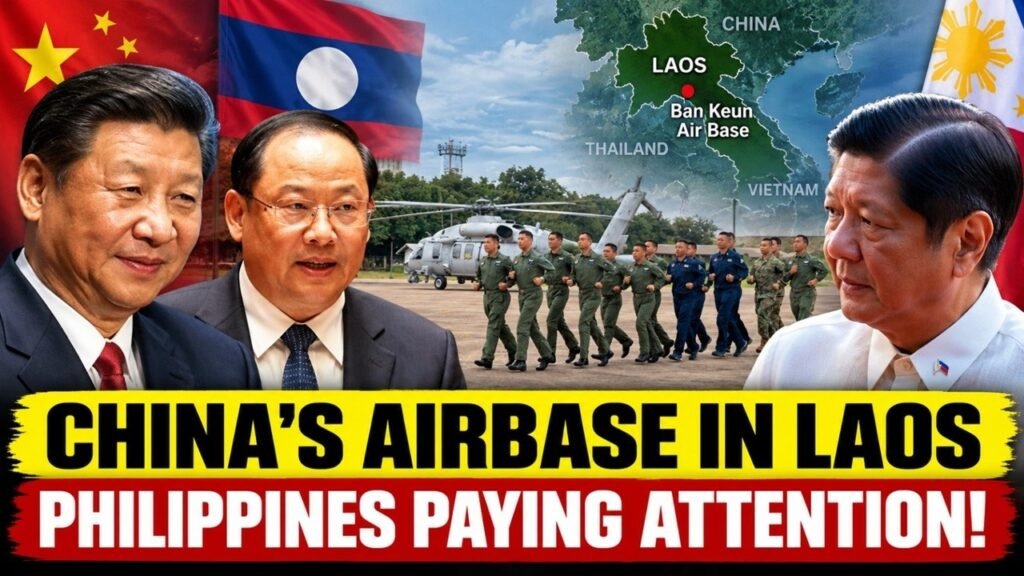
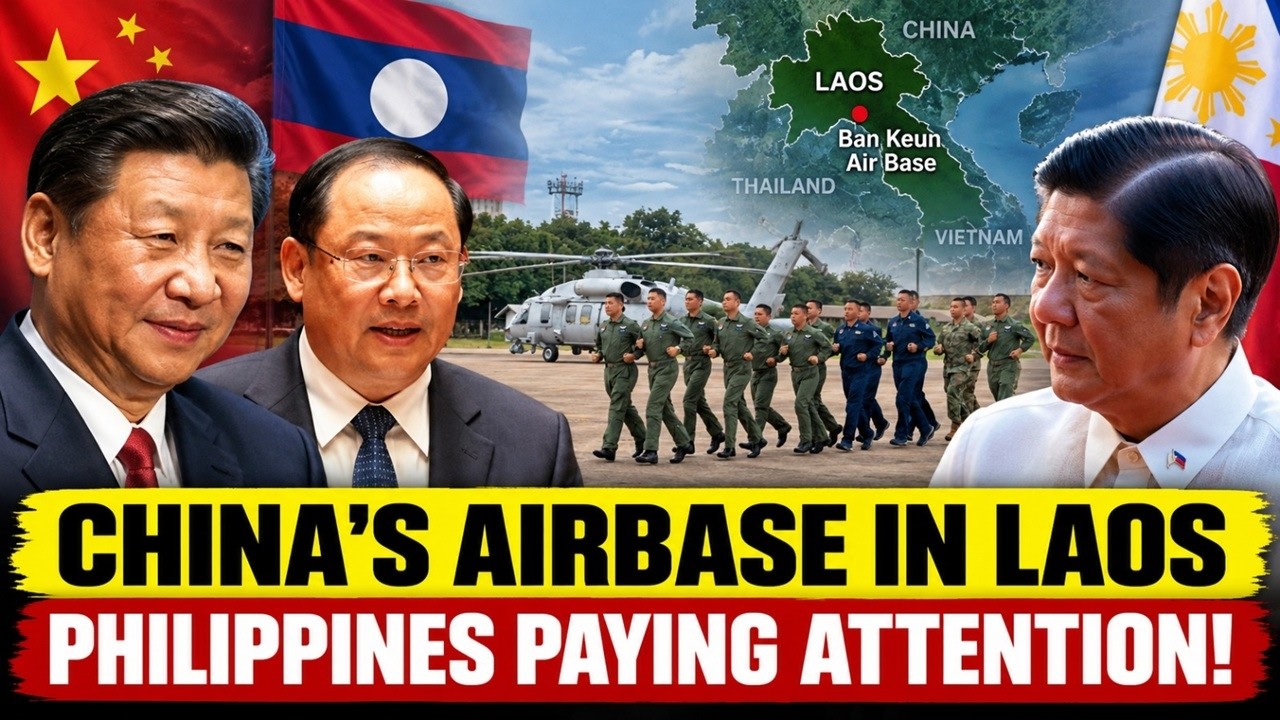
China’s new military support and aviation training facility in Laos is drawing attention across Southeast Asia, raising important questions about Beijing’s expanding regional influence and its potential implications for the Philippines. Located at Ban Keun Airport, approximately 50 kilometres north of Vientiane, the facility represents another step in China’s growing military cooperation with neighbouring countries. Although Beijing describes the project as a joint training and support center, its location and infrastructure have prompted wider discussion about China’s long-term strategic ambitions in the Indo-Pacific.
The facility was inaugurated on September 29 alongside the China–Laos Friendship Aviation Academy. Satellite imagery and reporting have identified a runway of approximately 2,000 metres, aircraft parking areas, taxiways, support buildings and eight Chinese-made JL-8 or K-8 aircraft. These aircraft are primarily designed for training, although certain variants can also perform light-attack missions. Construction was still underway in the latest reporting reflected in the source material, meaning the facility’s eventual capabilities may differ from what is currently visible.
For the Philippines, the development raises a broader strategic question: Is China gradually building a network of military access points across Southeast Asia that could increase its operational flexibility in the future? The answer requires a careful assessment of the available evidence. A joint military training facility is not automatically a fully operational Chinese combat base, and its existence does not mean Beijing can immediately project military power over Philippine territory. Nevertheless, the facility deserves attention because military influence can grow through training, logistics, infrastructure and long-term partnerships, even without the immediate establishment of a large overseas base.
What Is China’s New Military Facility in Laos?
The new facility at Ban Keun Airport is a joint military support and aviation training center associated with China and Laos. Its publicly described purpose is to strengthen bilateral military cooperation and help train Lao air force personnel. Satellite imagery has revealed a paved runway, aircraft parking areas, taxiways and several supporting structures. Reporting has also identified eight Chinese-made JL-8 or K-8 aircraft at the site, providing a visible indication of the aviation training activity associated with the project. The aircraft are an important part of the discussion, but their presence should not be exaggerated. The JL-8/K-8 family is primarily associated with pilot training, although certain versions can perform light-attack roles. These aircraft do not, by themselves, demonstrate that China has deployed a major combat force to Laos. Understanding the difference between training aircraft and a sustained combat aviation presence is essential when evaluating the facility’s actual military significance. The runway, estimated at approximately 2,000 metres, may accommodate various smaller military aircraft under suitable operating conditions. However, runway length alone cannot determine the types of operations an airfield can sustain. Aircraft weight, runway construction, weather, maintenance facilities, fuel availability and other technical requirements all influence operational capability. A facility suitable for training and limited aviation support may not necessarily be equipped to sustain intensive combat operations.
A fully developed military aviation base requires a much wider support system, including maintenance crews, spare parts, fuel storage, communications, trained personnel and dependable supply arrangements. Depending on its mission, it may also require additional security infrastructure and weapons-handling facilities. Available imagery, as described in the source material, does not establish that Ban Keun currently possesses the extensive infrastructure necessary to sustain large-scale combat aviation operations. Another important consideration is the question of control. The center is described as jointly maintained and operated by China and Laos, but the precise arrangements governing access, personnel, aircraft and operational permissions have not been fully disclosed. Laos remains a sovereign state, and the presence of Chinese equipment does not automatically mean Beijing has unrestricted authority to use the facility for military operations. For a reliable strategic assessment, the distinction between Chinese involvement and independent Chinese control must remain clear.
Why China Is Expanding Military Cooperation With Laos
Laos occupies a strategically important position in mainland Southeast Asia. It shares a border with China and maintains significant economic and political relationships with Beijing. Military aviation cooperation adds another dimension to those connections by creating opportunities for training, technical assistance and more regular contact between Chinese and Lao military personnel. China’s wider infrastructure links with Laos also provide important context. The China–Laos Railway connects Laos with China’s Yunnan province, improving transportation links between the two countries. Such infrastructure can strengthen economic integration and make travel and the movement of certain supplies easier. However, civilian transportation infrastructure should not automatically be treated as military infrastructure. Its potential military value depends on access permissions, capacity, security arrangements and the circumstances in which it might be used.
China Says It Can Easily Defeat the Philippines — Is Manila Ready For War?
Military training facilities can offer strategic benefits even when they do not function as major combat bases. Regular cooperation helps personnel develop familiarity with each other’s procedures, equipment and working methods. Technical exchanges can improve operational experience, while repeated engagement can make future cooperation easier to organize. Over time, these relationships may provide Beijing with greater experience in supporting military activities beyond its own territory. The facility’s location is therefore relevant, but it does not prove that China intends to use Laos as a launch point for military action against the Philippines. Laos is geographically separated from the Philippine archipelago, and an airfield there does not automatically give China the ability to control Philippine airspace or dominate the South China Sea. Its more plausible strategic value lies in strengthening China’s relationships and potentially expanding its options for military access and support across mainland Southeast Asia.
Is Ban Keun Already a Chinese Overseas Combat Base?
The term “military base” can describe facilities with very different capabilities, making it important to distinguish between a training center, a support facility and a permanent operational base. China’s officially acknowledged overseas military base in Djibouti, opened in 2017, supports military activities far from the Chinese mainland. Cambodia’s Ream Naval Base, meanwhile, has attracted international attention because of Chinese-supported infrastructure improvements and concerns about potential Chinese military access. Ban Keun is different from both examples. Its reported emphasis is aviation training and military support rather than the overseas logistics functions associated with Djibouti or the naval facilities at Ream. These sites should not be treated as interchangeable because airfields, naval installations and logistics facilities serve different purposes and provide different capabilities.
Nevertheless, the three developments illustrate why China’s military partnerships deserve continued attention. An overseas presence does not always begin with a large permanent deployment. It can develop through technical cooperation, training arrangements, infrastructure improvements and recurring access by military personnel. Such arrangements may increase a country’s practical options over time, although their value depends on the level of access granted and the capabilities actually available. At present, the available evidence does not establish that Ban Keun is a large, independently controlled Chinese combat base. It does establish the importance of monitoring how the facility develops. If future reporting confirms a substantial increase in Chinese personnel, recurring deployments of combat aircraft or the construction of extensive support infrastructure, its strategic significance would need to be reassessed. Until then, it is more accurate to describe Ban Keun as a joint military training and support facility with potential for future development.
How China’s Military Presence Could Affect Southeast Asia
China’s growing military cooperation with Laos may attract particular attention in neighbouring countries, especially Vietnam. Hanoi has longstanding political and military relationships with Vientiane and traditionally regards its relationship with Laos as an important part of its regional security environment. A deeper Chinese military presence in Laos could therefore raise questions about Beijing’s influence and future access to military facilities in mainland Southeast Asia. However, the existence of the facility does not demonstrate that China is preparing to use force against Vietnam. The current training role, the infrastructure visible in available reporting and the uncertainty surrounding operational permissions must all be considered. The central issue is not whether the facility automatically threatens Vietnam, but whether its role changes over time in ways that affect regional military calculations.
Thailand also has reasons to monitor developments in Laos. Bangkok maintains relationships with both China and the United States and has its own interests in preserving stability across mainland Southeast Asia. Thailand may recognize Laos’s sovereign right to enter military agreements while remaining attentive to whether those arrangements influence the regional balance of power. For both countries, the facility represents a development that merits observation rather than an automatic conclusion that a new security crisis is emerging. Governments must evaluate what the facility can actually do, how it is being used and whether its operations extend beyond the publicly described training mission. This evidence-based approach can help regional states avoid unnecessary escalation while remaining prepared for changes in China’s military posture.
ASEAN’s Strategic Challenge as China Expands Its Influence
The development also highlights a broader challenge for the Association of Southeast Asian Nations (ASEAN). Southeast Asian countries do not share identical views of China or the United States. Some place considerable importance on economic cooperation with Beijing, while others are increasingly concerned about military pressure, maritime disputes and the protection of their strategic independence. Many governments attempt to maintain working relationships with both major powers. These differences make a unified regional response difficult. Some ASEAN members may view the Laos facility primarily as a bilateral training arrangement that supports Lao military development. Others may pay greater attention to the possibility that the facility could eventually provide China with additional access or operational flexibility. Both perspectives can exist without establishing that the facility is already a major Chinese combat base.
For the Philippines, this means it should avoid assuming that every ASEAN member will interpret the development in the same way. Instead, Manila can promote regional dialogue, exchange verified information and encourage a practical discussion about military transparency. Sharing reliable assessments can help governments understand the facility’s development without requiring them to adopt identical political positions. ASEAN’s wider importance lies in its ability to preserve communication and reduce the risk of misunderstanding. Although regional cooperation cannot remove every strategic disagreement, regular dialogue can help governments identify developments that may affect their security. The Laos facility provides another reason to strengthen those channels and ensure that discussions about China’s military activities are based on credible information rather than assumptions.
What the Facility Reveals About China’s Regional Strategy
China’s military relationships across Southeast Asia are developing alongside its broader economic and diplomatic engagement. Infrastructure projects, military training, equipment cooperation and access arrangements can strengthen bilateral ties and create opportunities for more regular interaction between armed forces. These activities do not necessarily indicate an immediate plan for conflict, but they can influence the strategic environment over the longer term. The significance of Ban Keun therefore extends beyond the aircraft currently visible at the facility. Its long-term value to China could include greater experience in overseas military cooperation, closer institutional ties with Laos and additional opportunities for training and technical support. Whether these advantages develop into meaningful operational capabilities will depend on future decisions by both governments.
It is also important to avoid portraying China’s regional military presence as a fully integrated network of bases under Beijing’s unrestricted control. The facilities in Laos, Cambodia and Djibouti have different functions, locations and political arrangements. Evidence that China has access to one site does not automatically prove that it can use another in the same way or coordinate all of them as a single operational system. For regional governments, the most useful approach is to assess each facility individually while considering the wider pattern of China’s military partnerships. That means examining infrastructure, aircraft deployments, staffing levels, access agreements and the practical ability to sustain operations. Such analysis can reveal whether military cooperation remains limited or develops into something more consequential.
What Should the Philippines Do About China’s New Facility?
The Philippines’ most immediate security concerns remain much closer to home. The West Philippine Sea continues to be a major area of maritime tension, and Manila must maintain the ability to monitor activity near its maritime interests and respond to developments affecting its territorial security. Chinese vessels, aircraft and other military assets operating near Philippine territory have a more direct connection to the country’s day-to-day security requirements than a training facility located in Laos. For this reason, Ban Keun should not distract Philippine defense planners from the priorities that have the greatest immediate impact on the country. Maritime surveillance, air monitoring, reliable communications, sustainable logistics and the ability to maintain operations under pressure remain essential. These capabilities support the Philippines regardless of whether China’s facility in Laos remains limited or expands in the future.
At the same time, Manila should recognize that China’s military posture cannot be understood solely by tracking activity around Philippine waters. Developments elsewhere in Southeast Asia may gradually influence China’s access, logistics and relationships with other countries. A broader regional picture can help Philippine officials identify changes before they become directly relevant to a particular security situation. The facility therefore provides a reason to strengthen regional monitoring, not to assume that the Philippines faces an immediate new military threat from Laos. A measured response would allow Manila to understand the development while keeping its defense investments focused on clearly identified requirements. This balance between awareness and prioritization is important for a country that must manage limited resources while responding to multiple security challenges.
How the United States and Regional Partners Can Help
The United States and the Philippines can use their defense partnership to improve their understanding of China’s military access arrangements across the Indo-Pacific. Information-sharing, intelligence assessments and regular coordination can help identify whether Ban Keun remains a training facility or develops a wider operational role. The objective should be to establish a clearer picture of its actual capabilities rather than relying on speculation about its possible future use. Japan and Australia can also contribute to regional awareness through appropriate security cooperation and information exchanges. Engagement with Southeast Asian partners can help build a more complete understanding of military infrastructure and access arrangements across mainland Southeast Asia. This cooperation is particularly valuable when different governments have access to different information or interpret the same development from different strategic perspectives.
However, the existence of the Laos facility does not automatically require the Philippines to establish another military base, acquire a specific weapons system or change its defense posture immediately. Major defense decisions should reflect the Philippines’ own security requirements, available resources and the capabilities of the potential threat. An effective strategy depends on matching investment to demonstrated needs rather than reacting to every new development with an immediate countermeasure. The alliance also needs to maintain a distinction between monitoring a regional development and treating it as a direct threat to Philippine territory. Ban Keun does not, by itself, change the terms of the US–Philippines Mutual Defense Treaty. Its relevance to alliance planning would depend on whether the facility produces a meaningful change in China’s regional military capabilities or affects future operational calculations.
Five Priorities for Manila’s Security Strategy
The first priority should be systematic monitoring of Ban Keun’s development. Philippine officials and their partners can follow credible reporting, available satellite imagery, construction activity, aircraft presence and publicly documented changes to the facility’s operating arrangements. The purpose should be to distinguish confirmed developments from projections about what the facility might eventually become. Regular assessments would allow Manila to respond if the evidence indicates a substantial expansion. The second priority is strengthening maritime and air-domain awareness around Philippine interests. The country needs reliable ways to identify and track activity, especially in the West Philippine Sea. Monitoring developments in Laos should complement these efforts rather than divert attention or resources from immediate surveillance requirements. A broader regional perspective is useful only when it supports, rather than weakens, the country’s ability to protect its own interests. The third priority is sustainable defense investment. Surveillance systems, air defense, maintenance, logistics and operational resilience are important elements of a credible defense posture. Investments should be based on the Philippines‘ assessed requirements and the capabilities it needs to maintain reliable operations. The potential future expansion of Ban Keun can be included in strategic assessments, but it should not become the sole basis for major procurement decisions.
The fourth priority is coordination with allies and regional partners. Sharing verified information with the United States, Japan, Australia and appropriate Southeast Asian partners can improve the regional understanding of China’s military activity. It can also support diplomatic discussions about transparency and access arrangements. Such cooperation should respect the different positions of regional governments while encouraging a common commitment to accurate information and regional stability. The fifth priority is evidence-based reassessment. If Ban Keun develops into a facility with persistent Chinese military deployments, extensive support infrastructure and broader operational permissions, Manila should reassess its implications for regional security. If it remains primarily a training and support center, the Philippine response should reflect that reality. Preparing for possible changes does not require treating every potential development as an established threat.
Could China’s Laos Facility Change the South China Sea Balance?
The first scenario is that Ban Keun remains a limited training facility. Under this possibility, China and Laos continue using the site for pilot training, technical assistance and bilateral military cooperation. Chinese personnel may visit or support training activities, but the facility does not develop into a substantial forward operating base. In that case, its most important benefits for Beijing would likely involve closer military relations with Laos and additional experience in overseas cooperation. Its direct effect on the military balance in the South China Sea would remain limited. The second scenario is that the facility gradually becomes a more capable support and access hub. This could involve additional maintenance capacity, improved logistics, more support infrastructure and more frequent access for Chinese military aircraft. Such changes could provide Beijing with another location from which to support certain activities in mainland Southeast Asia. Even under this scenario, the facility’s usefulness during a would depend on aircraft availability, fuel supplies, maintenance capabilities, transport arrangements and permission from the Lao government.
The third scenario is that Ban Keun develops into a broader operational military base. This would represent a more significant change and require stronger evidence than the presence of training aircraft or the construction of ordinary support buildings. Indicators could include sustained deployments, a substantial and persistent Chinese military presence, extensive aviation support infrastructure and documented arrangements permitting wider operational use. If these changes occurred, the Philippines and its partners would have a stronger basis for reassessing the facility’s strategic significance. However, this remains a possible future scenario, not an established prediction. These scenarios demonstrate why the facility should be evaluated through observable developments. A runway alone cannot reveal the full range of operations an airfield can sustain. The types of aircraft present, the availability of maintenance and fuel, the number of personnel and the rules governing access all influence its military value. Changes in these factors would provide a more reliable basis for assessment than the facility’s name or location alone.
Why Geography Still Matters to Philippine Security
Ban Keun’s geographic position places it in mainland Southeast Asia, away from the Philippine archipelago and the most immediate areas of maritime tension in the South China Sea. China already has military facilities much closer to disputed maritime areas, including positions in the Spratly Islands. Any assessment of Ban Keun’s importance must therefore consider what additional advantage it might offer compared with China’s existing regional positions. The facility’s potential value may lie more in training, support and regional military cooperation than in serving as a direct launch point for attacks on the Philippines. Its location could become more relevant if China expands its activities across mainland Southeast Asia or develops more extensive arrangements for military access. But geographic proximity alone does not establish an operational capability, and the existence of a runway does not prove that the facility could sustain missions against Philippine territory.
The same principle applies to possible regional crises. The usefulness of Ban Keun would depend on the aircraft operating there, the available support systems, the time required to move personnel and supplies, and the permissions granted by Laos. Without these elements, it would be misleading to assume that the facility could make a decisive difference in a South China Sea confrontation. For Manila, the key issue is whether the facility’s development produces a measurable change in China’s regional capabilities. If the site remains focused on training, its immediate military effect may be modest. If it gains substantial operational infrastructure and broader access arrangements, its importance could increase. Geography, logistics and political permissions must all be considered before drawing conclusions about its role in a future conflict.
The Risks of Overreaction and Strategic Miscalculation
An exaggerated interpretation of Ban Keun could create unnecessary concern and encourage defense decisions that are not supported by the available evidence. If every Chinese military cooperation project is treated as proof of an imminent threat, policymakers risk losing the ability to distinguish between developments that require immediate action and those that warrant longer-term monitoring. This can weaken strategic planning by allowing dramatic headlines to replace careful assessments. Underestimating the facility would create a different problem. Military access arrangements can evolve, and infrastructure initially associated with training or support may acquire additional functions over time. Ignoring changes in aircraft deployments, maintenance capacity or operating permissions could leave policymakers with an incomplete understanding of the regional security environment.
The most effective approach lies between these extremes. Manila should acknowledge that China’s new facility in Laos could have long-term strategic value while recognizing that its current capabilities and future role remain subject to important limitations and uncertainties. The response should be proportional to the evidence, with reassessments whenever credible new information becomes available. This approach also supports regional stability. Clear communication and reliable assessments can reduce misunderstandings, while unnecessary speculation can increase mistrust. The Philippines can remain alert to China’s expanding military partnerships without assuming that every development is part of a single coordinated plan against Manila.
Final Assessment: Should the Philippines Be Concerned
China’s military support and aviation training facility at Ban Keun represents an important development in its military cooperation with Laos. It provides another setting for training, technical engagement and closer institutional ties between the two countries. Depending on how the facility develops, it could also give Beijing additional experience in overseas military access and support. However, the available evidence does not establish that Ban Keun is already a large, independently controlled Chinese combat base capable of transforming the military balance in the South China Sea. For Laos, the facility reflects its growing military relationship with China and its sovereign decision to pursue bilateral cooperation. For China, it offers an opportunity to strengthen regional partnerships and potentially broaden its future options. For Southeast Asia, it adds another development that governments must consider as they balance economic relationships, military cooperation and strategic independence.
For the Philippines, the facility is not, on the available evidence, a direct military emergency. It is a reason to look beyond immediate maritime disputes and pay closer attention to developments that could gradually influence China’s regional posture. Manila should continue monitoring the facility, sharing verified information with partners and strengthening its own defense capabilities, particularly those related to maritime awareness, air surveillance and operational resilience. The most important questions concern what happens next. Will Ban Keun remain primarily a training center, or will China and Laos expand its support infrastructure and operational role? Will Chinese military aircraft visit occasionally for training, or will the facility eventually host a more persistent presence? Will the operating arrangements remain limited, or will they permit broader access? Answers to these questions will provide a stronger basis for evaluating the site’s significance than speculation about its future. Ultimately, strategic awareness requires more than reacting to a headline. The Philippines must recognize potential changes in China’s military partnerships without confusing possibility with established fact.
About Indo-Pacific Report
For more geopolitical analysis, strategy coverage, and Indo-Pacific security reporting, visit Indo-Pacific Report:
Website
Facebook
YouTube
China Opens First Overseas Air Base in Southeast Asia — Philippines Paying Attention!