Ukraine Is Expanding the Battlefield Deep Into Russia
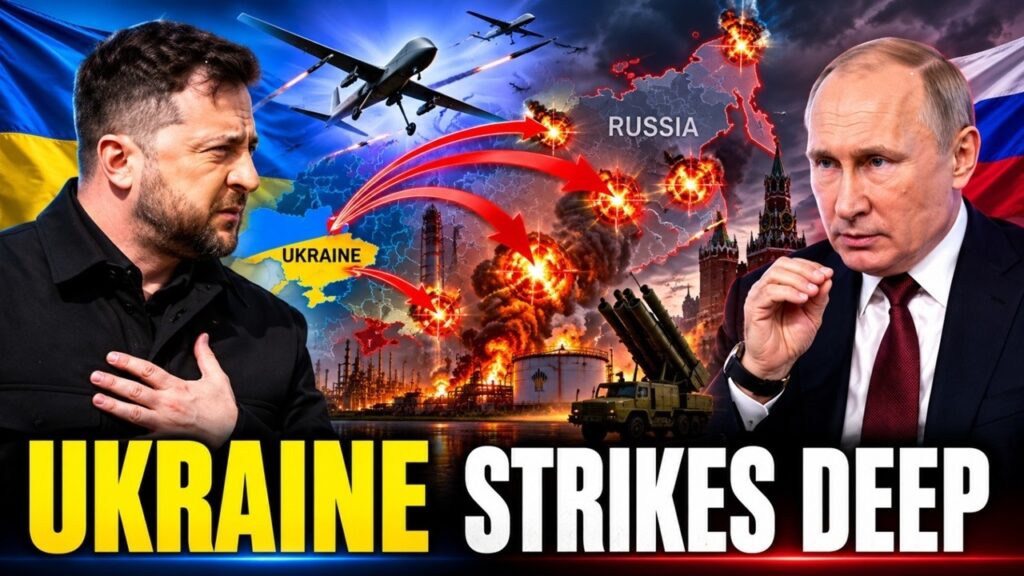
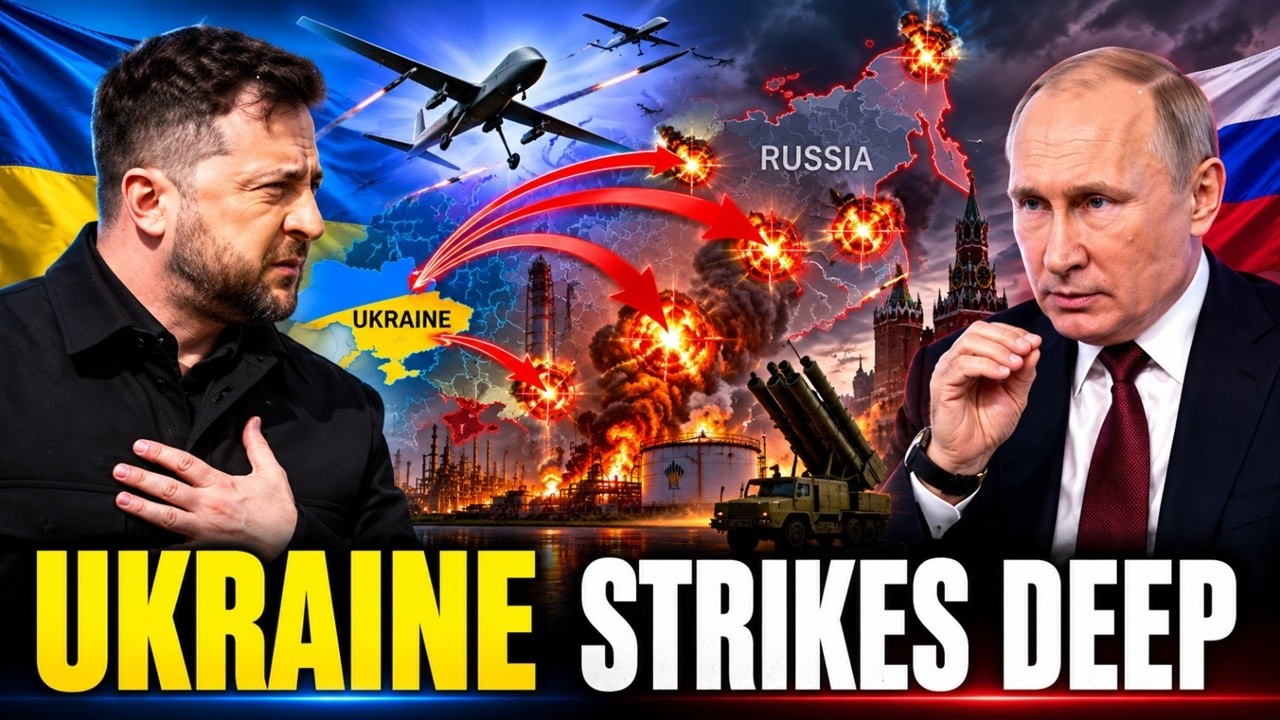
Ukraine has launched another major long-range strike targeting Russian oil infrastructure, military supply depots, and drone production facilities. Here’s why Kyiv is increasingly focusing on logistics, energy, and industrial targets deep inside Russian-controlled territory. Ukraine has carried out another significant long-range strike against targets linked to Russia’s military and industrial infrastructure, highlighting Kyiv’s growing focus on weakening the systems that sustain Moscow’s war effort.
According to Ukrainian officials, the operation targeted an oil refinery, military logistics facilities, drone production sites, and other strategic locations that play a role in supporting Russian military operations.
The attacks are part of a broader Ukrainian strategy aimed at increasing the economic and military costs of the war for Russia. Rather than focusing exclusively on front-line battles, Kyiv is increasingly directing resources toward disrupting fuel supplies, weapons production, transportation networks, and military logistics.
The message behind the operation is clear: no part of Russia’s military support network can be considered entirely out of reach.
Alinsky Oil Refinery Becomes a Key Target
One of the most significant targets in the latest operation was the Afipsky Oil Refinery in Russia’s Krasnodar region.
Ukrainian military officials reported that the overnight strike triggered a fire at the facility. Russian authorities acknowledged that a fire occurred but stated that it resulted from falling drone debris after air defense systems intercepted incoming threats.
Regardless of competing claims, the refinery’s strategic importance is difficult to ignore.
Modern military operations depend heavily on fuel. Armored vehicles, military transport, aviation assets, logistics convoys, and supply networks all require a constant flow of energy resources to remain operational.
By targeting oil infrastructure, Ukraine hopes to create additional pressure on Russia’s military logistics system while increasing the costs associated with sustaining prolonged military operations.
Ukraine Is Expanding Its Target List Beyond Energy Facilities
The latest operation extended beyond energy infrastructure.
Ukrainian officials stated that sites connected to drone production and military manufacturing were also targeted. Several locations in Russian-controlled Crimea were reportedly included in the operation as well.
According to Ukraine’s General Staff, some of the targeted facilities were linked to the production of drones and naval equipment used by Russian forces.
This reflects an increasingly sophisticated Ukrainian approach to long-range warfare.
Instead of concentrating solely on combat units near the front lines, Kyiv is focusing on the broader industrial ecosystem that enables military operations. The strategy aims to weaken production capacity, disrupt supply chains, and create logistical complications that may affect Russia’s ability to sustain operations over time.
Why Military Logistics Have Become a Central Battlefield
Military planners often describe logistics as the foundation of warfare.
Regardless of the size of an army, its effectiveness ultimately depends on its ability to move personnel, fuel, ammunition, equipment, and supplies where they are needed.
A tank without fuel cannot advance. A drone factory without components cannot manufacture weapons. Supply depots, transportation hubs, rail networks, energy facilities, and industrial plants all form part of the logistical framework that supports military power.
Ukraine’s recent operations reflect a clear understanding of this reality.
Over the past year, many Ukrainian strikes have targeted fuel depots, refineries, weapons plants, transportation corridors, and storage facilities. The objective is not necessarily to achieve immediate battlefield breakthroughs but to gradually erode Russia’s ability to sustain a long and resource-intensive conflict.
Russia Faces Growing Challenges Defending Strategic Infrastructure
For Russia, protecting front-line forces is already a complex task.
Defending a vast network of industrial sites, energy facilities, military depots, transportation hubs, and production centers spread across thousands of kilometers presents an even greater challenge.
Every successful Ukrainian strike forces Russian military planners to reassess defensive priorities. Additional air defense systems may need to be deployed to protect facilities far from active combat zones.
This creates a strategic dilemma.
Resources used to defend refineries, factories, and logistics centers are resources that cannot be concentrated elsewhere. As Ukraine expands its long-range strike capabilities, Russia may face increasing pressure to distribute defensive assets across a much larger geographic area.
This is one reason why Kyiv continues investing heavily in drones, missiles, and other systems capable of reaching targets deep behind the front lines.
The Battlefield Is No Longer Limited to the Front
The war has evolved far beyond traditional front-line combat.
Both Russia and Ukraine increasingly rely on drones, long-range missiles, and precision strike systems capable of hitting targets hundreds of kilometers from active battle zones.
Ukrainian attacks have targeted energy infrastructure, industrial facilities, ammunition depots, and transportation networks deep inside Russian territory. At the same time, Russia continues to conduct long-range strikes against Ukrainian infrastructure, military installations, and urban centers.
Advances in military technology are fundamentally changing the nature of the conflict.
Distance alone is no longer a guarantee of safety. Strategic targets once considered secure due to geography are now increasingly vulnerable to precision attacks.
As both sides expand their capabilities, the battlefield continues to grow in both size and complexity.
Can Long-Range Strikes Change the Course of the War?
The key question is whether Ukraine’s deep-strike strategy can significantly affect Russia’s war effort.
A single strike is unlikely to alter the overall course of the conflict. However, military analysts note that sustained pressure against logistics networks, industrial facilities, and energy infrastructure can gradually create operational challenges.
Repeated disruptions can increase costs, slow production, complicate supply chains, and force military planners to divert resources toward defensive measures.
Ukraine’s strategy appears designed to achieve exactly that outcome.
By targeting critical infrastructure repeatedly over time, Kyiv hopes to weaken Russia’s ability to efficiently sustain military operations while forcing Moscow to spend additional resources protecting rear-area assets.
Russia, meanwhile, continues adapting its air defenses and countermeasures in an effort to reduce the effectiveness of such attacks.
The result is an ongoing contest between offensive innovation and defensive adaptation.
Ukraine’s Focus Is Shifting Toward the Foundations of Russian Military Power
The broader significance of the latest strikes extends beyond any individual target.
Ukraine is increasingly concentrating on the foundations of Russia’s military capability: fuel production, logistics networks, weapons manufacturing, drone production, transportation systems, and military infrastructure.
These assets form the backbone of modern warfare.
Rather than seeking only tactical victories on the battlefield, Kyiv is attempting to place sustained pressure on the systems that allow Russia to maintain combat operations over the long term.
Whether this strategy ultimately alters the strategic balance remains uncertain. However, it highlights an important reality of the conflict: the war is no longer being fought solely along front lines.
It is increasingly a contest over logistics, industrial capacity, technology, and economic endurance.
As both sides continue extending the reach of their weapons and adapting their strategies, the battlefield is expanding into areas that once seemed far removed from the conflict itself.
Follow Indo-Pacific Report
For in-depth coverage of the Russia-Ukraine war, military strategy, defense technology, geopolitics, and Indo-Pacific security developments, visit: