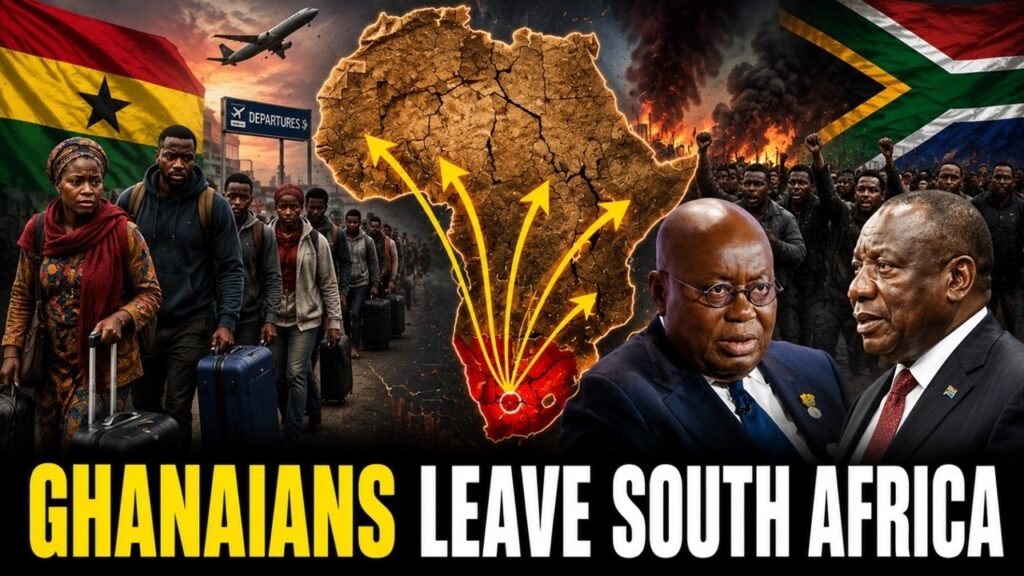
Hundreds of Ghanaians Leaving South Africa as Anti Immigration Protests Spread
South Africa is once again facing a challenge that has troubled the country for years: rising tensions over immigration.
In recent weeks, anti-immigration protests have spread across several communities, fueling concerns among foreign nationals and prompting growing diplomatic attention from neighboring African countries. Reports of harassment, threats, and attacks against migrants have created an atmosphere of uncertainty, leading some foreign residents to consider leaving the country.
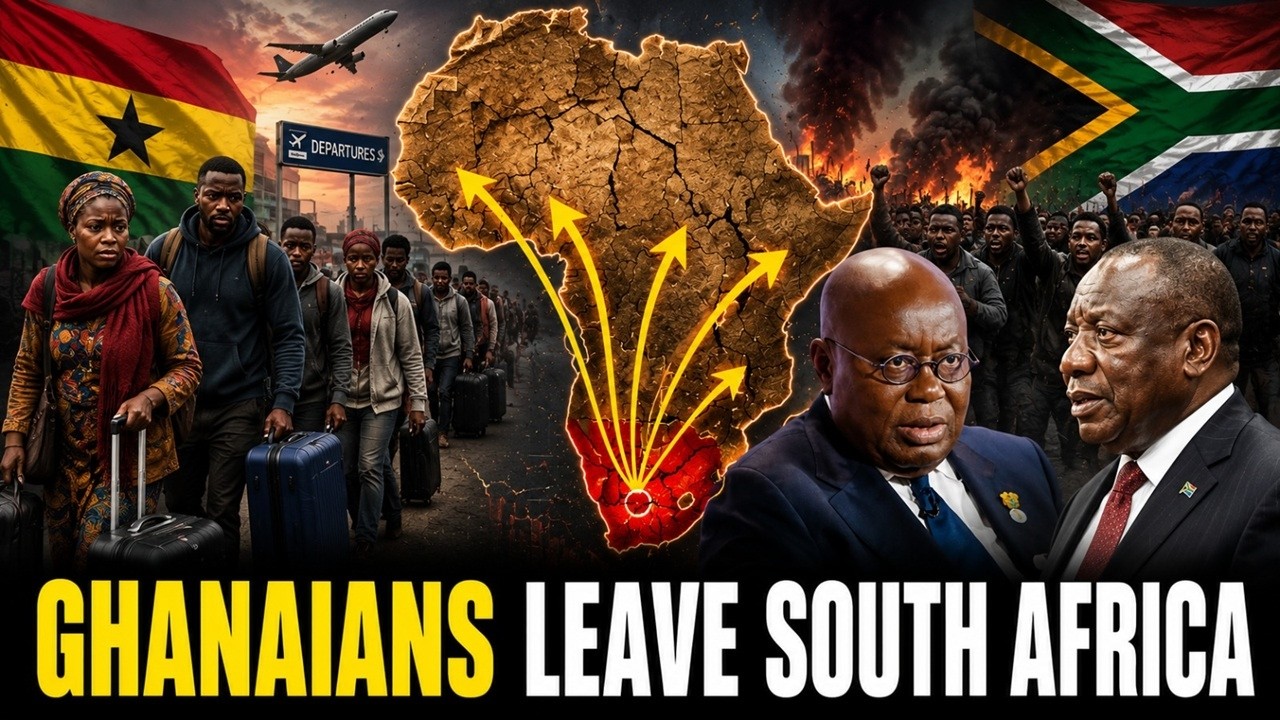
Among those responding to the situation are hundreds of Ghanaian nationals who have reportedly registered for voluntary return flights home, citing concerns about their safety and future prospects.
What began as a debate over illegal immigration is now evolving into a broader regional issue involving migration, diplomacy, economic stability, and social cohesion.
As the situation develops, governments across Africa are increasingly asking whether South Africa can effectively balance immigration enforcement with the protection of foreign nationals living within its borders.
Why Anti-Immigration Protests Are Growing
The protests are rooted in long-standing frustrations over economic and social challenges facing South Africa.
Many citizens argue that undocumented migration has intensified competition for employment opportunities, housing, and public services. These concerns come at a time when the country continues to struggle with high unemployment, persistent poverty, and one of the highest levels of income inequality in the world.
For many frustrated communities, immigration has become closely linked to broader economic grievances.
Protest organizers maintain that their primary goal is to push for stronger border controls and stricter enforcement of immigration laws. They argue that the government must do more to address illegal migration and protect local economic opportunities.
Critics, however, warn that some demonstrations have gone beyond policy concerns and have increasingly targeted migrants themselves. In several areas, foreign nationals have reported intimidation, harassment, and fears of violence. As tensions have grown, uncertainty has spread throughout migrant communities across the country.
Hundreds of Ghanaians Choose to Return Home
One of the most visible consequences of the unrest has been the decision by hundreds of Ghanaian nationals to leave South Africa voluntarily.
Ghanaian authorities have worked to facilitate return flights for citizens who no longer feel safe remaining in the country. Many migrants have expressed concerns that the protests could escalate further, potentially putting their businesses, livelihoods, and families at risk.
For many, the decision is not only about immediate security concerns but also about uncertainty regarding what may happen next.
Images of families preparing to leave South Africa have circulated widely across African media platforms, reviving memories of previous outbreaks of xenophobic violence that attracted international attention and criticism.
Ethiopia After the Tigray Peace Deal: Why Stability Remains Uncertain
The departures have become a powerful symbol of the anxiety currently being experienced by many migrant communities.
African Governments Increase Diplomatic Pressure
The situation is no longer viewed solely as a domestic South African issue.
Several African governments have become actively involved as concerns grow over the treatment and safety of their citizens living in South Africa.
Ghana has publicly raised concerns regarding the welfare of Ghanaian nationals, while countries such as Nigeria, Malawi, and Mozambique have also closely monitored developments. Some governments have begun preparing assistance programs and repatriation options for citizens who wish to return home.
As diplomatic engagement increases, pressure is mounting on Pretoria to demonstrate that foreign nationals can be protected while legitimate concerns about immigration are addressed through legal and institutional channels.
Many African leaders recognize that migration is a continent-wide reality, with millions of citizens living, studying, and working outside their countries of origin. As a result, the handling of this crisis is being watched closely throughout the region.
President Ramaphosa Condemns Violence Against Migrants
South African President Cyril Ramaphosa has strongly condemned attacks and intimidation directed at foreign nationals.
The president has emphasized that immigration enforcement must remain the responsibility of government institutions and law enforcement agencies rather than private groups or vigilante movements.
Ramaphosa has also warned that some individuals may be exploiting public frustrations for political or criminal purposes, potentially inflaming tensions for their own benefit.
At the same time, the government acknowledges that concerns surrounding immigration require attention. Officials have signaled a willingness to strengthen immigration enforcement measures while maintaining commitments to protect legal migrants and uphold the rule of law.
The challenge for South Africa’s leadership is finding a balance between responding to public concerns and preventing violence from undermining social stability.
Economic Risks Extend Beyond Immigration
The consequences of the current unrest may extend well beyond migration policy.
South Africa remains one of Africa’s largest and most influential economies, serving as a key trade and investment hub for the region. Business leaders have expressed concern that prolonged instability could damage investor confidence, disrupt commercial activity, and weaken economic relationships with neighboring countries.
Economic uncertainty often carries costs that affect both local citizens and migrant communities alike.
Business organizations have urged authorities to restore stability quickly, arguing that social unrest creates risks for economic growth, job creation, and regional integration.
Given the interconnected nature of African economies, tensions in one country can have broader consequences across borders.
The Deeper Challenge Facing South Africa
While immigration remains at the center of public debate, many analysts argue that the underlying issue is far more complex.
South Africa continues to face significant structural challenges, including unemployment, economic inequality, rising living costs, and limited opportunities in many communities.
These pressures have created frustration among citizens who feel left behind by economic growth and increasingly uncertain about their future prospects.
Experts caution that directing anger toward migrants may provide a visible target for public frustration but does little to address the deeper economic and social issues driving dissatisfaction.
Without meaningful progress on employment, economic development, and social inclusion, tensions are likely to persist regardless of immigration policies.
For many observers, the migration debate has become a reflection of broader concerns about opportunity, governance, and economic resilience.
What Happens Next?
The situation remains fluid, and much will depend on how effectively South African authorities manage the coming weeks.
The government faces a difficult task: addressing legitimate public concerns about immigration while ensuring the safety of foreign nationals and maintaining confidence in the rule of law.
At the same time, African governments will continue monitoring developments closely as they seek to protect their citizens and preserve regional stability.
If tensions can be reduced and constructive solutions pursued, South Africa may be able to prevent a deeper crisis. However, if violence continues or diplomatic concerns intensify, the consequences could extend far beyond the country’s borders.
This is no longer simply a debate about migration policy.
It has become a broader test of leadership, social stability, economic resilience, and regional cooperation across Africa.
Follow Indo-Pacific Report
For in-depth analysis of global affairs, geopolitics, migration trends, international security, and strategic developments, visit: