Why Warships From 9 Nations Are Gathering in Subic Bay
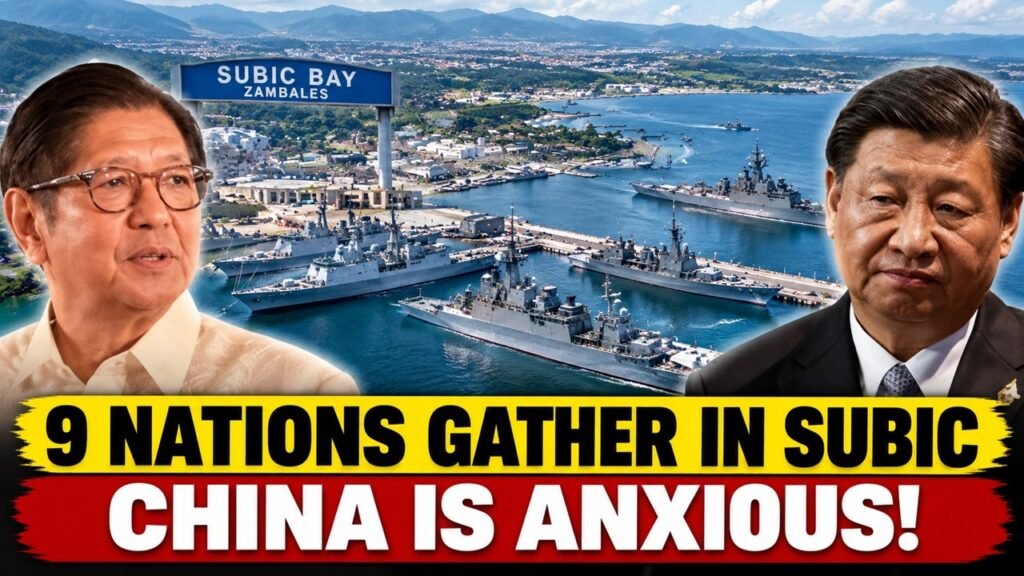
Something important is happening at Subic Bay in the Philippines as warships, aircraft and military personnel from across the Indo-Pacific come together for a multinational maritime-security activity. The gathering includes forces from India, the United States, Japan, Australia, Singapore, Brunei, New Zealand and the Philippines, bringing together countries with different strategic interests but a shared interest in maintaining effective maritime communication and cooperation. The activity officially opened on September 21, and participating forces are moving from the harbor phase toward practical maritime operations at sea. For anyone watching developments across the Indo-Pacific, the most important question is not simply why so many warships are sitting in one Philippine port. The bigger question is what these countries are trying to achieve by operating together and why Subic Bay has become the setting for this activity.
At first glance, the scene looks like a conventional multinational naval exercise. Warships arrive, aircraft participate, crews meet and maritime operations are conducted. But the deeper purpose is about developing familiarity between different forces before they face a situation in which rapid communication and coordination could become necessary. Modern maritime security is no longer limited to individual navies operating independently. Ships from different countries regularly encounter one another in busy sea lanes, while governments also have to deal with natural disasters, search-and-rescue operations, maritime accidents, commercial shipping and security incidents. In that environment, knowing how another country’s navy communicates and operates can become extremely important.
The gathering at Subic therefore represents something larger than a collection of ships. It demonstrates how countries across the Indo-Pacific are using multilateral frameworks to develop practical maritime cooperation. The ships are the most visible part of the story, but the relationships being developed between their crews, officers and commanders may ultimately be more significant.
This Is an ADMM-Plus Maritime Activity
The first thing to understand is that the countries gathering at Subic did not simply decide independently to organize a naval meeting. The activity is connected to the ASEAN Defence Ministers‘ Meeting-Plus, commonly known as ADMM-Plus. It is a regional defense framework that brings ASEAN member states together with eight dialogue partners: Australia, China, India, Japan, New Zealand, Russia, South Korea and the United States. The framework is intended to provide a platform for practical defense and security cooperation across the region.
The maritime-security activity taking place in Subic is being co-hosted by the Philippines and Japan, which are serving as co-chairs of the ADMM-Plus Experts’ Working Group on Maritime Security. The Joint Cooperative Activity is scheduled from September 21 to 25, while the Future Leaders’ Program began on September 22. The program involves personnel, naval vessels, aircraft and other maritime assets, allowing participating countries to move beyond diplomatic discussions and practice cooperation in an operational environment.

Why Subic Bay Matters
The location of the activity is another major part of the story. Subic Bay is situated on the western side of Luzon and faces the South China Sea, placing it within one of the most strategically important maritime environments in the Indo-Pacific. Geography alone does not determine the purpose of an exercise, but it helps explain why Subic is such a useful location for a multinational maritime activity. Subic also has a long naval history. The area was once home to the U.S. Naval Base Subic Bay, which remained a major American military facility until U.S. forces withdrew in 1992. Although the former base area later developed into a commercial and logistics center, the physical geography of the location did not change. Subic remains a major port environment with infrastructure and maritime access that can support large-scale activities That makes Subic an appropriate location for an exercise that focuses on maritime cooperation. The participating forces can operate in an environment where communication, coordination and maritime awareness have practical relevance beyond the exercise itself.
The presence of multiple navies also creates a more complicated operating environment. Ships have to understand one another, communicate effectively and operate safely around vessels from different countries. That makes the exercise useful as a practical test of coordination. Rather than looking only at the number of warships involved, it is more useful to consider the relationships being developed between the participating forces. Every interaction between officers and crews can contribute to greater familiarity with another country’s procedures and capabilities.
Look at Who Has Come to Subic
The participating countries also help explain why this activity is attracting attention. India has sent INS Sahyadri and INS Kulish. The United States is participating with USS Canberra and a P-8A Poseidon. Japan has brought JS Ise, while Australia is represented by HMAS Perth. The Philippines is participating with BRP Jose Rizal and BRP Tarlac. Singapore has RSS Justice, Brunei has KDB Darussalam, and New Zealand has HMNZS Te Mana and HMNZS Aotearoa. This is a diverse group of maritime forces. It includes Southeast Asian countries alongside major Indo-Pacific powers and countries with different defense relationships and strategic priorities. The participants do not have identical foreign policies, and they do not necessarily share the same position on every security issue affecting the region. That is precisely why practical cooperation is significant. Multinational maritime exercises do not require every participant to agree on every political question. Instead, they provide opportunities to identify areas where cooperation is possible. Communication, maritime safety, search and rescue, disaster response, professional training and operational coordination are examples of areas where countries can work together despite having different strategic perspectives.
Philippines Transforms Thitu Island in the South China Sea — China Is Watching!
India’s Arrival Adds Another Layer
India’s participation has particular importance because New Delhi has been expanding practical maritime engagement with Southeast Asia. INS Sahyadri and INS Kulish arrived in Subic Bay on September 20 to participate in the ADMM-Plus Joint Cooperative Activity. India’s Ministry of Defence linked the deployment with the country’s Act East Policy and MAHASAGAR vision, while also highlighting professional interaction with participating maritime forces. India’s involvement also comes against the background of growing India-Philippines relations. The Indian government linked the deployment to increased maritime engagement with the Philippines following the establishment of an India-Philippines Strategic Partnership in August 2025.
For India, naval engagement provides a practical way to strengthen relationships without requiring the creation of a new military alliance. Port visits, multinational exercises, professional exchanges and maritime deployments allow Indian personnel to work directly with regional partners. Over time, these activities can create familiarity and establish professional relationships between different navies. The Philippines is becoming increasingly relevant to this process. Its geographical position places it close to major maritime routes, while its relationships with countries across the Indo-Pacific make it an important location for multinational cooperation. The arrival of Indian warships in Subic is therefore not simply an isolated naval visit. It is part of a wider pattern of India’s maritime engagement with Southeast Asia and its efforts to strengthen practical relationships with regional partners.
What Does Interoperability Actually Mean?
One of the most important terms associated with multinational military exercises is interoperability. The word may sound technical, but the basic concept is relatively simple. Interoperability means that different military forces become better able to operate and communicate with one another. It does not mean that all participating navies have the same ships, weapons or military doctrines. Instead, it means they learn how to work together despite those differences. This can involve communication systems, operating procedures, maritime information, emergency responses, command relationships and coordination between ships and aircraft. Consider a situation in which several ships from different countries are operating in the same area. A vessel may suddenly experience mechanical problems, another ship may require assistance, weather conditions may deteriorate or an aircraft may need to coordinate with ships operating below it. In such circumstances, communication has to happen quickly.
If the personnel involved have never worked together, even basic coordination can become more complicated. Different terminology, procedures and command structures can create confusion. If they have trained together previously, some of that uncertainty can be reduced. This is one of the central purposes of exercises like the Subic activity. They allow countries to develop familiarity before they actually need it. Personnel can learn who to communicate with, how information is shared and how different forces coordinate their activities. Philippine Defense Secretary Gilberto Teodoro emphasized this practical aspect when discussing the activity, highlighting the importance of becoming familiar with procedures and developing networking, trust and cooperation among defense establishments and navies. The underlying idea is straightforward: the middle of a crisis is not the ideal time for different navies to discover how difficult it is to communicate with one another.
This Is Not Just About China
Because Subic Bay faces the South China Sea, it would be easy to interpret the entire exercise through the lens of China. However, that would make the activity appear narrower than the framework in which it is actually taking place. ADMM-Plus covers a broad range of defense and security issues. Maritime security itself also includes much more than military confrontation. Ships need to operate safely around commercial traffic, fishing vessels and other maritime users. Countries may need to cooperate during search-and-rescue missions, maritime accidents or natural disasters.
A damaged vessel does not become less of an emergency because the countries involved have political disagreements. Similarly, a typhoon does not distinguish between countries based on their strategic relationships. When a major disaster strikes, maritime forces may need to cooperate simply because they have ships, aircraft, personnel and logistical capabilities that can help affected communities. This broader purpose is important when interpreting the Subic activity. Participating countries can have different strategic interests while still finding practical reasons to work together. They do not need to resolve every regional disagreement before developing procedures for communication and emergency response. The activity should therefore be understood within a wider maritime-security context. Strategic competition exists in the Indo-Pacific, but so does practical cooperation. The two can exist at the same time.

The Disaster-Response Angle Matters
The humanitarian and disaster-response dimension is particularly relevant to the Philippines. Philippine Defense Secretary Gilberto Teodoro emphasized the importance of keeping sea lanes of communication open because maritime routes can provide fast access for relief operations following disasters. For an archipelagic country such as the Philippines, maritime access can become especially important when a natural disaster damages roads, bridges or airports. Ships can transport food, medical supplies, emergency equipment and personnel to communities that may otherwise be difficult to reach.
This means that maritime cooperation is not only about military preparedness. It can also have a humanitarian dimension. Navies and other maritime forces often possess capabilities that can be used during emergencies, including transport, communications, helicopters, medical facilities and logistical support. Training together allows countries to understand how they could coordinate those capabilities if they are needed. A multinational disaster response can involve complex communication because several governments, military organizations and civilian agencies may be working at the same time.
The South China Sea Still Changes the Context
The broader strategic environment cannot be ignored simply because the exercise has multiple purposes. Subic Bay is located on the western side of Luzon, facing the South China Sea, and several participating countries have significant maritime interests across the Indo-Pacific. The United States, Japan, Australia and India all maintain extensive maritime relationships in the region, while Southeast Asian countries have direct interests in the stability and security of nearby waters. This means that an exercise taking place at Subic naturally attracts strategic attention. At the same time, the exercise itself does not automatically create a new military alliance. The participating countries are operating within an established ASEAN-led framework. Their cooperation during the activity should therefore be distinguished from the creation of a formal collective-defense arrangement.
What the exercise can create are habits of cooperation. Philippine personnel can work with Japanese personnel. Indian sailors can interact with Southeast Asian navies. American forces can operate alongside regional partners. Australian and New Zealand personnel can develop experience working in the same multinational maritime environment. Repeated interaction can make cooperation more familiar. That may become useful in future emergencies, regardless of whether the situation involves disaster relief, maritime safety or a security incident.
Japan and the Philippines Are at the Center of the Activity
Japan and the Philippines have a particularly important role because they are co-hosting the maritime-security activity as co-chairs of the ADMM-Plus Experts’ Working Group on Maritime Security. That means Japan is not simply another country sending a warship to Subic. It is also helping organize the framework through which the participating forces interact. The Philippines, meanwhile, is providing the location and operational environment for the multinational activity.
The Philippines has been developing defense and maritime-security relationships with several countries across the Indo-Pacific, including the United States, Japan, Australia and India. Each relationship has its own background and purpose, and they should not automatically be treated as components of a single alliance. However, when several relationships intersect in the same location, they can create a wider network of cooperation. Subic provides a clear example of this process. Countries that normally interact through separate bilateral or multilateral channels are participating in the same maritime activity. This type of networking can be valuable because regional security does not operate through one institution alone. Countries maintain multiple partnerships, forums and professional relationships, and these connections can overlap during exercises and real-world emergencies.
The Bigger Picture Is a Network, Not a Single Fleet
It is easy to focus on the hardware when warships gather in one port. Photographs of large naval vessels, aircraft and crews provide an immediate image of military cooperation. But some of the most important parts of an exercise are much less visible. An Indian officer may establish a professional relationship with a Philippine counterpart. A Japanese crew may learn how another navy conducts a particular procedure. American personnel may work with regional partners they have not previously trained with. Commanders may develop contacts that could become useful months or years later.
These relationships do not create a new alliance overnight. What they can do is make communication between different forces more familiar. The Indo-Pacific does not have one single security structure that controls the entire region. Instead, there is a complicated network of bilateral agreements, multilateral organizations, military exercises, strategic partnerships and professional relationships. Countries can be partners in one area while having disagreements in another. That complexity makes communication especially important. If a disaster strikes, countries that have already trained together may have a better understanding of how to coordinate. If a maritime incident occurs, officers who already know one another may have established channels through which information can be exchanged. This is the quieter side of multinational military exercises. The ships may eventually leave, but the professional relationships developed during the exercise can remain.
So Why Are Nine Nations Gathering in Subic?
The answer becomes clearer when the different parts of the story are put together. The participating countries are gathering because an established ASEAN-led framework is providing their maritime forces with an opportunity to operate, communicate and train together. Subic matters because of its geography, infrastructure and maritime history. Its position on the western side of Luzon provides access to the South China Sea, while its port facilities make it suitable for multinational maritime activity. India’s participation reflects its expanding practical engagement with Southeast Asia and its developing relationship with the Philippines. Japan’s role is important because it is co-hosting the activity with the Philippines. The participation of the United States, Australia, Singapore, Brunei, New Zealand and the Philippines shows the broad range of countries interested in practical maritime cooperation.
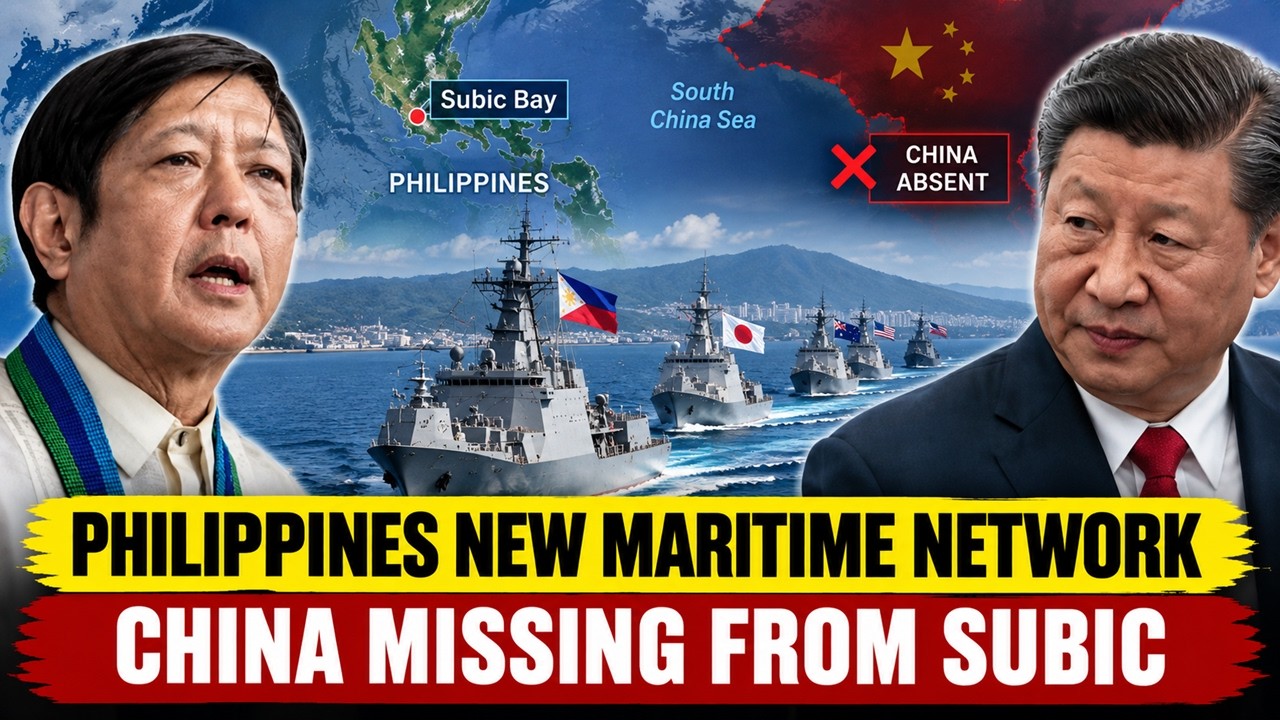
The exercise is therefore better understood as an example of network-based regional cooperation rather than simply as a gathering of nine navies. These countries have different strategic priorities, but they can still cooperate on maritime communication, coordination, disaster response and professional training. The wider Indo-Pacific environment is complicated because countries may compete in some areas while cooperating in others. They may disagree about territorial issues while still needing to coordinate during a natural disaster. They may have different defense relationships while their ships operate in the same maritime environment. That is why developing communication before a crisis can be important. An exercise provides a controlled environment in which countries can practice working together before circumstances force them to do so.
The Real Thing Leaving Subic
The warships will eventually leave Subic Bay. INS Sahyadri and INS Kulish will depart, JS Ise will leave, and the other participating ships and aircraft will return to their respective countries. The harbor will eventually return to normal. But the most important result of the exercise may not be something that can be photographed. The lasting elements can include professional relationships, familiarity with procedures, experience communicating with foreign forces and a better understanding of how other navies operate. These outcomes are difficult to measure, but they can become important when an unexpected event occurs at sea.
The Indo-Pacific contains some of the world’s busiest maritime routes. Commercial shipping, fishing, military activity, disaster response and territorial issues all exist within the same broad region. Governments therefore need ways to communicate even when their strategic interests are not identical. That is why the emphasis on trust, familiarity and cooperation matters. The exercise cannot eliminate regional competition or resolve every maritime dispute. What it can do is provide an opportunity for personnel from different countries to learn how to work together.
What the Subic Exercise Really Tells Us About the Indo-Pacific
The gathering at Subic Bay offers a useful window into how maritime cooperation is developing across the Indo-Pacific. Regional security is not being shaped only by major military alliances or formal defense agreements. It is also being shaped through exercises, port visits, professional exchanges and multilateral frameworks such as ADMM-Plus. The presence of nine nations demonstrates that countries with different strategic positions can still participate in a common maritime activity. Their cooperation does not mean that they share identical interests or policies. Instead, it shows that practical cooperation can exist alongside broader strategic differences.
For the Philippines, hosting the activity highlights the importance of its geographic position and maritime environment. For Japan, the exercise provides an opportunity to play a coordinating role within the ADMM-Plus maritime-security framework. For India, participation supports its expanding maritime engagement with Southeast Asia. For the other participating countries, the activity provides an opportunity to gain experience operating alongside regional partners. The most important lesson may therefore be relatively simple. Maritime security depends not only on ships and aircraft but also on communication between the people operating them. When countries train together before a crisis, they have an opportunity to understand one another before circumstances become urgent. That does not eliminate uncertainty, but it can reduce some of the communication challenges that arise when different forces suddenly have to work together.
About Indo-Pacific Report
For more geopolitical analysis, strategy coverage, and Indo-Pacific security reporting, visit Indo-Pacific Report:
Website
Facebook
YouTube
How 9 Nations Are Building a Naval Trap in Subic for China in the South China Sea