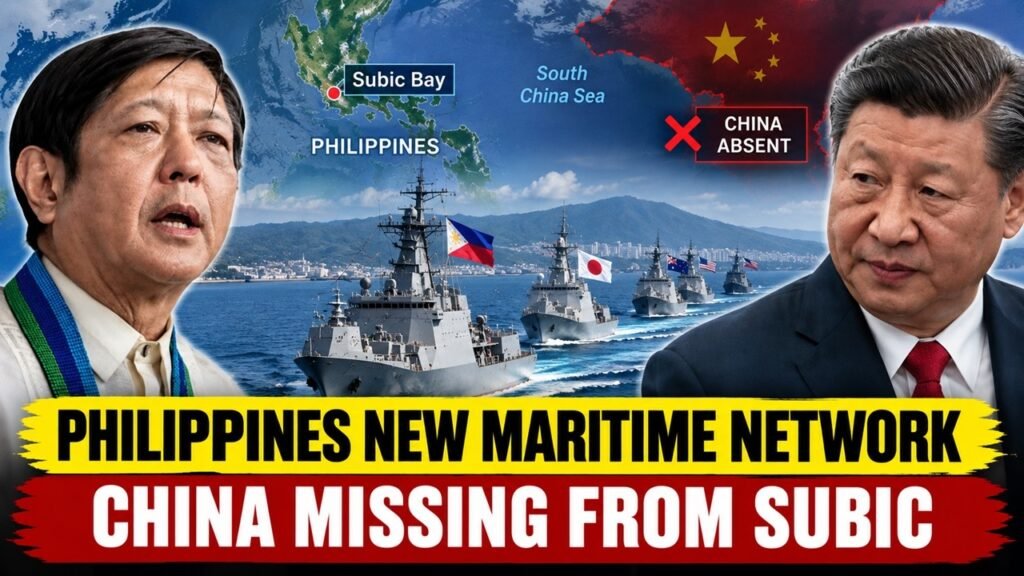
Teodoro Sends a Message as China Stays Away From Subic
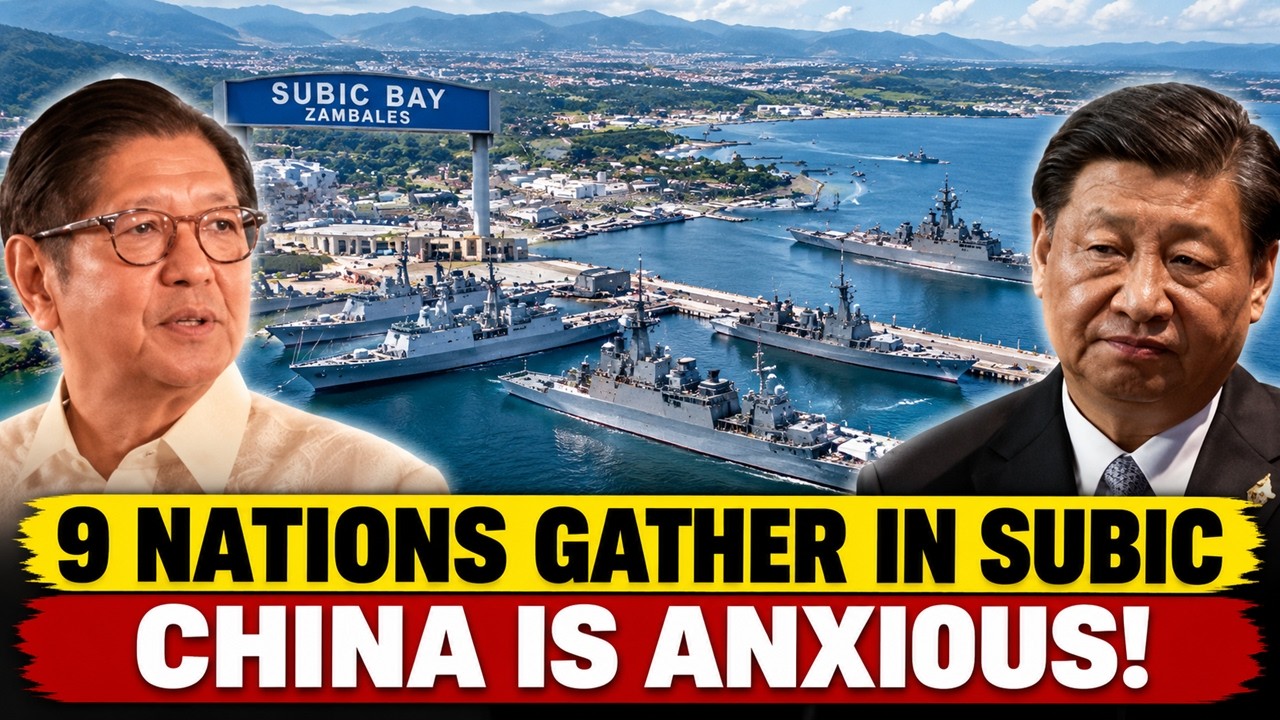
Something unusual is happening in Subic as regional navies gather in the Philippines for a maritime-security activity focused on communication, coordination and cooperation at sea. The exercise comes at a particularly sensitive moment for the Indo-Pacific, where naval and coast guard vessels from different countries increasingly operate in the same waters while governments continue to manage strategic disagreements and maritime disputes. Philippine Defense Secretary Gilberto Teodoro Jr. is using the gathering to make a practical argument: countries should build familiarity with one another before a crisis occurs rather than trying to establish communication for the first time during an emergency. The message is straightforward, but its importance becomes clearer when viewed against the current regional security environment.
China, one of the dialogue partners within the wider ADMM-Plus framework, did not send a representative to this particular activity, according to Teodoro. That absence does not establish why Beijing stayed away, and there is no evidence in the available material to conclude that it was caused by the Philippines, Japan or the latest maritime confrontation. However, the absence creates an important contrast. While regional countries are investing in exercises designed to improve communication and operational familiarity, one of the region’s most significant military powers is missing from this particular activity. The situation raises a broader question for the Indo-Pacific: how can countries strengthen practical maritime cooperation when strategic trust remains difficult to build?
What Is Gilberto Teodoro Asking Regional Navies to Do?
Teodoro’s message in Subic is not simply another general appeal for countries to cooperate. His focus is on something more practical: familiarity. During the opening of the ADMM-Plus Experts’ Working Group on Maritime Security Joint Cooperative Activity and Future Leaders’ Program, he emphasized the importance of learning procedures, understanding how other forces operate, developing professional networks and building trust before a crisis occurs. This matters because maritime emergencies can develop very quickly. Warships, coast guard vessels, aircraft, fishing boats and commercial ships may operate in the same maritime environment, and every country may have its own procedures, communication systems and assumptions about how other vessels are expected to behave. When those differences are not understood in advance, even a misunderstanding can become more difficult to manage.
The central idea behind Teodoro’s message is therefore preparation. A maritime crisis is not the ideal moment for countries to begin learning how to communicate with one another. By conducting exercises during peacetime, naval personnel can become familiar with the procedures and professional practices of other forces. Officers can learn whom to contact, how communications are handled and how multinational activities are organized. Sailors and other personnel can develop professional relationships with counterparts from other countries. These relationships may appear routine during an exercise, but they can become important if the same countries later face a search-and-rescue operation, a natural disaster or an unexpected encounter at sea.
This kind of cooperation does not require participating countries to agree on every major strategic issue. The countries involved in the Subic activity have different foreign policies, different defense priorities and different relationships with China and other major powers. Their participation does not automatically create a new alliance. Instead, the immediate purpose is more limited: improving the ability of different forces to operate around one another and communicate when necessary. In a region where maritime activity is becoming increasingly complex, even this limited form of cooperation can be significant.
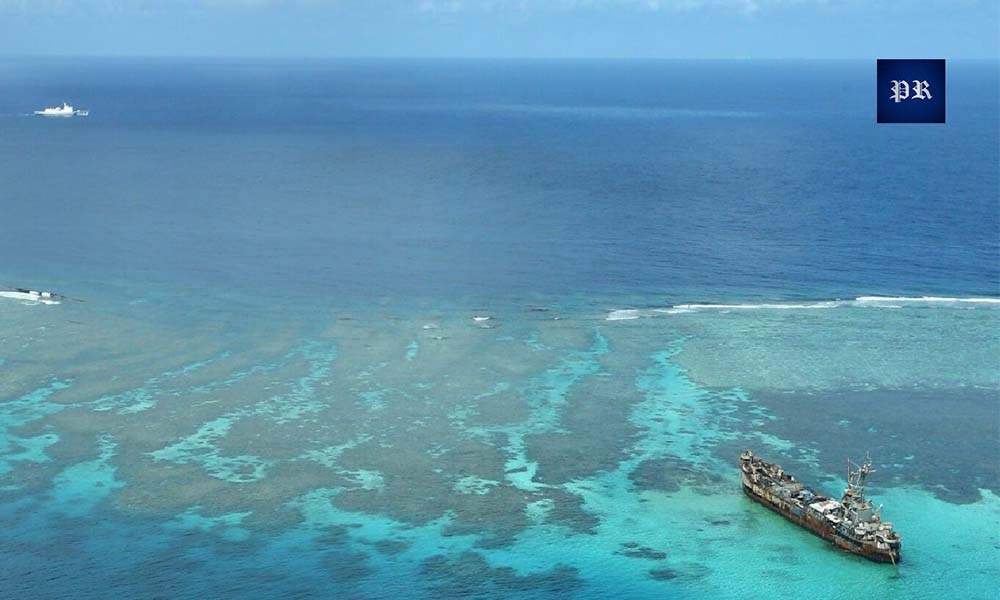
Philippines Transforms Thitu Island in the South China Sea — China Is Watching!
Why Familiarity Matters in a Maritime Crisis
At sea, communication can be as important as physical capability. A ship may have advanced equipment and trained personnel, but an unexpected encounter can still become dangerous if the crews involved do not understand one another’s intentions or procedures. This is particularly relevant in heavily trafficked waters where military vessels, coast guard ships, commercial shipping and fishing vessels operate relatively close to one another. The more crowded the maritime environment becomes, the more important predictable communication can become.
Repeated exercises provide one way of creating that predictability. When personnel from different countries meet during training, they gain an opportunity to observe how other forces work. They can become familiar with terminology, communication procedures and operational habits. These lessons are difficult to create through diplomatic statements alone because they depend on actual interaction. A government may publicly support maritime cooperation, but practical cooperation requires people and institutions to understand how that cooperation works.
This is also why professional relationships matter. Trust between governments can be affected by political disagreements, territorial disputes and changes in foreign policy. Professional familiarity operates at a different level. An officer who has previously worked with a counterpart may find it easier to establish communication during an emergency than someone who has never interacted with that person or institution. That does not eliminate political tensions, but it can provide an additional channel through which misunderstandings can be managed.
Teodoro’s emphasis on familiarity should therefore be understood as a form of crisis preparation. It is not a guarantee against confrontation, nor does it resolve the underlying disputes in the region. Instead, it attempts to reduce uncertainty and improve communication before an incident takes place.
Inside the Subic ADMM-Plus Maritime Security Exercise
The activity in Subic is part of the broader ADMM-Plus defense cooperation framework and is being co-hosted by the Philippines and Japan. According to the source material, the ADMM-Plus Maritime Security Experts’ Working Group Joint Cooperative Activity and Future Leaders’ Program includes harbor and sea phases involving naval personnel, ships and aircraft from eight ADMM-Plus countries. The ASEAN Defence Ministers’ Meeting calendar places the maritime-security Joint Cooperative Activity in Subic from September 21 to 25, while the Future Leaders’ Program begins on September 22.
The structure of the exercise is important because it moves cooperation beyond discussions and into practical activity. Defense officials can discuss maritime security during meetings, but an exercise allows personnel to practice communication and coordination in an operational environment. Ships and aircraft have to operate according to procedures, personnel have to communicate and participating forces have to manage the practical challenges of working alongside counterparts from different countries.
This distinction between discussion and practical experience is one of the most important aspects of multinational exercises. A policy statement can establish an intention to cooperate, but exercises provide an opportunity to test whether that intention can actually work in practice. Participants can identify differences in procedures and communication methods before those differences become relevant during a real emergency.
The Philippines and Japan are leading the activity, while personnel from other ADMM-Plus countries are participating. Observers from other ASEAN members and dialogue partners have also been invited. The broader participation demonstrates the multinational character of the activity and reflects the wider effort to improve cooperation among defense establishments in the Indo-Pacific.
At the same time, it is important not to exaggerate what the exercise represents. The participating countries do not suddenly have identical strategic interests because they are training together. The exercise does not create a single military command, and it does not establish a formal anti-China coalition. Its more immediate purpose is to create opportunities for communication, coordination and professional familiarity.
Why Maritime Cooperation Matters in the Indo-Pacific
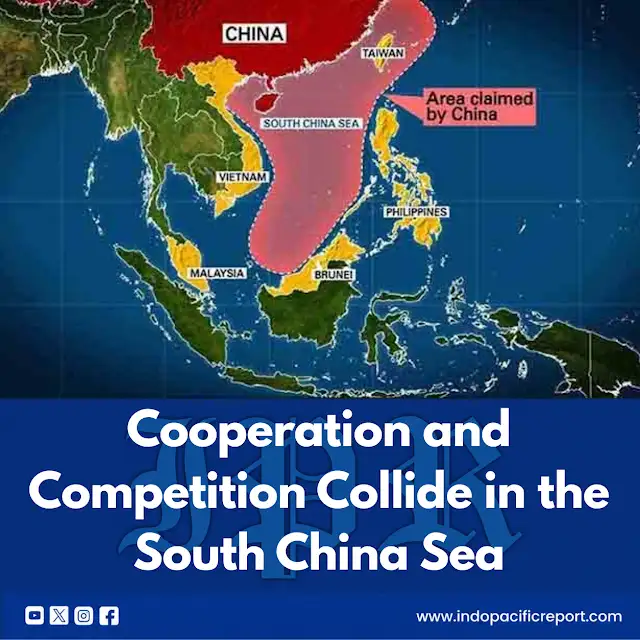
The importance of maritime cooperation becomes clearer when looking at the number of activities taking place in the waters of Southeast Asia. Major commercial shipping routes cross the region, while fishing fleets, coast guard vessels, naval ships and other government platforms operate in or near contested maritime areas. Offshore infrastructure and submarine communication cables also make the maritime environment economically and strategically important.
This creates a situation in which different countries may have to share the same maritime space even when their governments disagree about territorial claims or security issues. The objective of maritime cooperation is therefore not necessarily to eliminate disagreement. It can also be about managing disagreement without allowing individual incidents to become larger crises. There is another dimension to maritime security that is sometimes overlooked: disaster response. The Philippines is regularly exposed to typhoons, earthquakes and other natural disasters, and maritime routes can become extremely important when roads and airports are damaged or disrupted. Ships may be required to transport emergency supplies, fuel, rescue equipment and personnel to affected areas.
Teodoro connected maritime security with this broader humanitarian and disaster-response role. He emphasized the importance of keeping sea lanes of communication open for relief missions and referred to the importance of UNCLOS and international law. The point is that maritime cooperation is not limited to military competition. The same capabilities used for maritime security can also support humanitarian assistance and disaster response.
A navy or coast guard force that has previously trained with another country may already understand basic communication procedures when a disaster occurs. Personnel may have existing contacts and may be familiar with how another force organizes operations. This can reduce the time required to establish basic coordination during an emergency.
From Warships to Disaster Response
The disaster-response aspect of maritime cooperation gives the Subic exercise a wider significance. The Philippines is an archipelagic country, meaning that maritime transportation is essential to the movement of people, goods and emergency assistance. When severe weather or natural disasters damage roads, ports or airports, sea transportation can become a critical alternative.
International cooperation can become especially important when a disaster affects several areas at once or when local resources are insufficient. In such circumstances, foreign naval and coast guard forces may contribute ships, aircraft, medical resources, rescue teams or logistical assistance. Coordination becomes easier when participating forces already understand basic procedures.
This is one reason professional familiarity can be more important than it initially appears. Government relationships may change, but naval and coast guard organizations continue to perform practical functions. Officers who have met during previous exercises may already know how to communicate with counterparts. Personnel may already understand the basic structure of multinational operations.
Such cooperation does not remove political disagreements. A country can participate in disaster-response exercises with another state while maintaining very different positions on territorial disputes or defense policy. This is one of the strengths of practical maritime cooperation: it can focus on specific areas where countries share an immediate interest without requiring agreement on every broader issue.
However, cooperation also has clear limits. A disaster-response exercise cannot settle a territorial dispute. A naval exercise cannot guarantee that future encounters between competing vessels will remain peaceful. What these activities can provide is a stronger foundation for communication and coordination.
The Limits of Maritime Cooperation
The limits of regional exercises are important because it is easy to interpret multinational military activities as evidence of a much larger strategic transformation. The Subic exercise does not, by itself, create a new military alliance. It does not force participating countries to adopt the same policy toward China, and it does not eliminate their separate national interests.
Japan and the Philippines may cooperate closely while maintaining their own relationships with other regional powers. India can participate in maritime cooperation while retaining its independent foreign-policy priorities. The United States and Australia can conduct exercises with regional partners without every individual exercise becoming a commitment to participate in a future conflict.
This distinction is important when assessing the meaning of the Subic activity. The practical objective is to improve communication and familiarity. Those capabilities can support many different purposes, including maritime safety, humanitarian assistance, search and rescue and crisis management.
The exercise also demonstrates that regional cooperation does not have to depend on complete strategic trust. Countries can cooperate in one area while disagreeing in another. In fact, this limited form of cooperation can become more important precisely because disagreements exist.
The challenge is maintaining these channels when political relations become difficult. If countries stop communicating whenever tensions rise, the mechanisms created during peaceful periods may become less useful precisely when they are most needed.
Japan, India, the United States and a Wider Maritime Network
The participating countries also demonstrate the increasingly diverse nature of maritime cooperation around the Philippines. Japan is co-hosting the Subic activity, while other regional and external partners are involved through the wider ADMM-Plus framework. The source material also notes the participation of Indian naval assets, including INS Sahyadri and INS Kulish, along with U.S. naval participation and involvement from Australia and other countries.
These relationships should not automatically be described as a single strategic bloc. The exercise does not establish such a structure. Instead, it reflects the growth of a network in which countries have more opportunities to train, communicate and work together.
For the Philippines, this network has practical importance. Manila has developed defense and security relationships with several countries, with different relationships serving different purposes. Some focus on training and military exercises, while others involve maritime security, disaster response, equipment, strategic dialogue or broader defense cooperation.
Multinational exercises add an operational element to these relationships. Rather than cooperation existing only through diplomatic meetings, personnel have opportunities to work together directly. That can make relationships more familiar and provide experience that cannot be created entirely through official statements.
The wider network also reflects the complexity of the Indo-Pacific. Regional countries are not necessarily choosing between complete cooperation and complete confrontation. Many are attempting to maintain relationships with multiple partners while protecting their own national interests. Exercises such as the one in Subic form part of that broader environment.
Why China’s Absence Stands Out
China’s absence is one of the most notable details surrounding the Subic activity. China is part of the broader ADMM-Plus defense architecture, but Teodoro said Beijing did not send a representative to this particular maritime-security activity. That fact should be considered separately from assumptions about the reason for the absence.
The available material does not establish why China stayed away. It does not establish that Beijing’s absence was caused by the Philippines, Japan or the latest South China Sea incident. It also does not establish that China is permanently withdrawing from regional security cooperation.
What can be said is that China’s absence highlights a limitation of regional cooperation mechanisms. These mechanisms can provide opportunities for dialogue and practical coordination, but their effectiveness in any particular activity depends partly on who participates.
This is especially relevant because the purpose of the Subic exercise is to build familiarity before a crisis. If a major regional military power is not involved in a particular activity, participants can still gain useful experience with one another, but the exercise cannot create the same level of familiarity with the absent country. That does not make the exercise meaningless. Instead, it demonstrates the complicated nature of regional security cooperation. Countries can build networks among themselves while still facing difficulties in bringing every important actor into every activity.
The Timing of the September 18 Maritime Collision
The timing of the Subic exercise has attracted attention because it follows a recent maritime incident involving Philippine and Chinese vessels. On September 18, a Philippine Bureau of Fisheries and Aquatic Resources vessel, BRP Datu Magat Salamat, was involved in a collision with a China Coast Guard vessel off Palawan.
According to Philippine authorities, the Chinese vessel carried out dangerous maneuvers before making contact with the Philippine vessel, which was conducting a mission to deliver fuel assistance to Filipino fishermen. The reported collision damaged railings and other structures on the Philippine ship, while no injuries were reported.
That distinction is important for responsible reporting. A collision can be established as an event while responsibility for the collision remains disputed between the two governments. Presenting one side’s account as an independently established fact would go beyond the available evidence.
The timing, however, is clear. The collision occurred on September 18, while the Subic maritime-security activity began on September 21. The exercise therefore takes place only days after a fresh maritime confrontation involving Philippine and Chinese vessels.
There is no evidence in the source material establishing that the collision caused China’s absence from the Subic activity. Any direct connection between the two events would therefore be speculation. What can be said is that the recent incident gives additional context to Teodoro’s emphasis on communication, familiarity and crisis management.
The Real Challenge: Cooperation Without Full Strategic Trust
The wider regional security environment contains an important contradiction. Countries need to cooperate to manage maritime emergencies, natural disasters and safety risks, while their governments may simultaneously disagree over strategic interests and maritime claims.
This means that cooperation cannot always depend on complete political trust. Instead, countries may need practical mechanisms that continue functioning even when political relations are strained.
The Subic exercise demonstrates one approach to that challenge. Participants are not required to resolve every strategic disagreement before they can learn how to communicate with one another. They can focus on specific practical objectives such as maritime security, professional interaction and operational coordination.
That complexity means that multinational exercises should be examined according to what they actually do rather than what they might symbolically represent. In Subic, the immediate activity is about maritime cooperation and professional familiarity. Its broader significance comes from the fact that these capabilities may later be useful during emergencies or tense encounters.
The challenge remains that cooperation is most difficult when it is most necessary. It is relatively easy to communicate when relations are calm. The real test is whether channels remain available when a maritime incident creates political pressure.

Can Naval Cooperation Help Prevent the Next Maritime Crisis?
Teodoro’s message can be understood as a practical sequence: learn procedures, become familiar with other forces, build professional networks, strengthen trust and improve cooperation before a crisis occurs. The Subic exercise provides an environment in which those objectives can be practiced rather than simply discussed. However, no exercise can guarantee that the next maritime encounter will remain peaceful. Naval personnel can train together while their governments continue to disagree. Professional relationships can reduce some communication problems, but they cannot remove the strategic interests that place different countries in the same contested waters.
Similarly, multinational exercises cannot resolve the underlying disputes in the South China Sea. Those disputes involve broader political, legal and strategic questions that extend beyond any single military activity.
What exercises can do is create familiarity. If a crisis occurs, personnel who have previously interacted with one another may have a better understanding of communication procedures and organizational structures. That does not determine how a crisis will unfold, but it can provide additional channels for managing it.
Why the Subic Exercise Matters Beyond One Week
The significance of the Subic activity is therefore not simply the number of participating ships, aircraft or personnel. Its wider importance lies in whether regional defense establishments can develop habits of communication that remain useful during difficult circumstances.
The Indo-Pacific is a region where military and government vessels from different countries increasingly operate in the same maritime spaces. Those countries may interpret the same waters through very different strategic, political and legal perspectives. This makes communication increasingly important. The challenge is not simply encouraging countries to cooperate when relations are easy. The harder task is creating enough familiarity to keep communication functioning when relations become tense.
Subic provides one example of that effort. The Philippines and Japan are working with other ADMM-Plus participants to conduct a maritime-security activity focused on practical cooperation. The exercise does not eliminate competition, but it creates an opportunity for participants to gain experience working alongside one another.
China’s absence from this particular activity highlights another part of the regional picture. Cooperation mechanisms can exist without complete participation, and that means their practical reach can vary from one activity to another.
The recent Philippine-China maritime collision provides an additional reminder of why crisis-management mechanisms matter. The two sides have presented different accounts of the incident, making it important to distinguish established facts from disputed claims. Against that background, Teodoro’s emphasis on communication and familiarity takes on particular relevance.
Ultimately, the Subic exercise is part of a much larger regional effort to manage an increasingly complicated maritime environment. It does not solve the Indo-Pacific’s strategic disputes, nor is it designed to do so. Its purpose is more practical: to help countries understand one another’s procedures, develop professional relationships and create communication channels before they are needed.
What This Means for the Future of Indo-Pacific Maritime Security
The future of maritime security in the Indo-Pacific will depend not only on military capabilities but also on communication, crisis management and the ability of countries to operate around one another without unnecessary escalation. The region contains major commercial routes, contested waters, important infrastructure and a growing number of military and government vessels.
As activity increases, opportunities for misunderstanding can also increase. This makes professional familiarity an important part of maritime security. Exercises can help personnel understand one another before they encounter each other in a more difficult environment.
The challenge for regional governments will be maintaining these mechanisms while strategic competition continues. Cooperation does not require countries to abandon their national interests, but it does require them to maintain enough communication to manage disagreements.
The Subic exercise illustrates that approach. It focuses on practical cooperation rather than attempting to solve every strategic disagreement at once. At the same time, China’s absence demonstrates that regional cooperation remains incomplete and that important differences continue to shape participation.
For readers following the Indo-Pacific, the most important point is therefore not simply who attended the exercise or who did not. The larger issue is whether countries can build reliable communication mechanisms before the next maritime incident occurs. In a region where ships and aircraft from different countries increasingly operate in close proximity, the ability to communicate may become an important part of preventing individual incidents from developing into wider crises.
About Indo-Pacific Report
For more geopolitical analysis, strategy coverage, and Indo-Pacific security reporting, visit Indo-Pacific Report:
Website
Facebook
YouTubeTeodoro Sends a Message as China Stays Away From Subic