Why China and Russia Are Angry Over Venezuela
By Indo-Pacific Report | May 2026
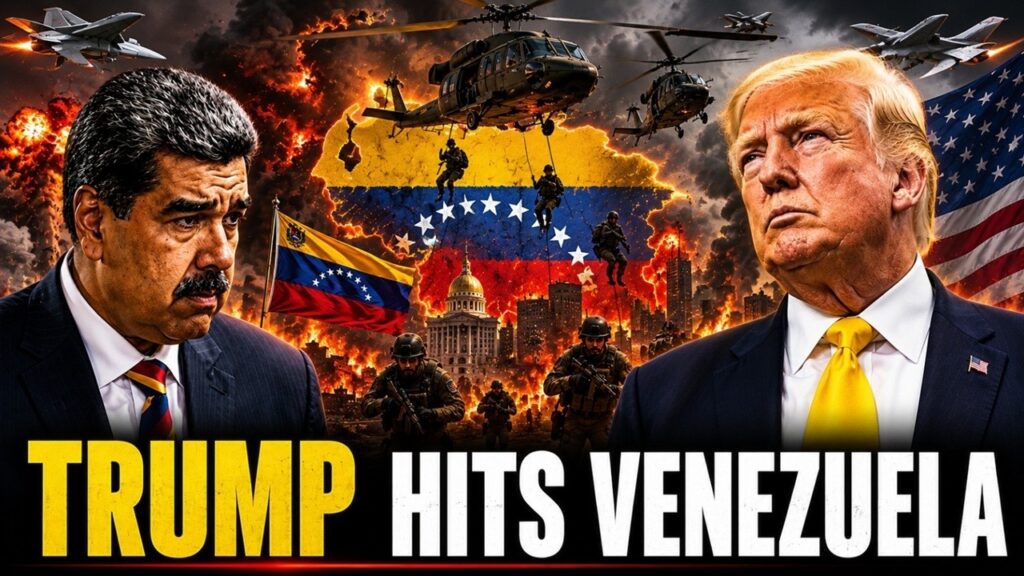
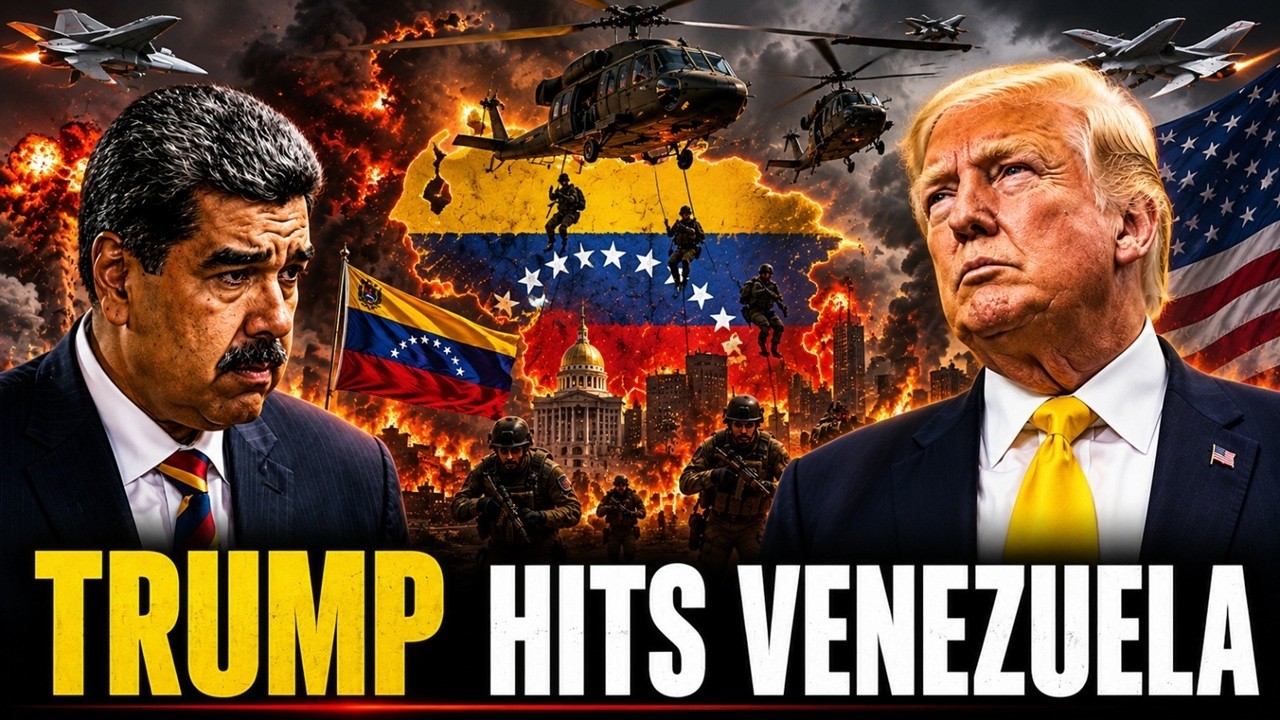
In the early hours of January 3, 2026, the United States carried out the most significant military intervention in Latin America since the invasion of Panama in 1989. Delta Force units entered Venezuela, conducted coordinated strikes across the country’s capital, and captured Venezuelan President Nicolas Maduro along with his wife, Cilia Flores.
The operation, officially named Operation Absolute Resolve, involved more than 150 US aircraft, CIA intelligence support, and cyber operations targeting Venezuelan air defenses and military infrastructure. It lasted only a few hours. By morning, Maduro was in US custody, bound for American courts, and Venezuela’s political order had been overturned overnight.
The geopolitical fallout has been immediate and wide-reaching. Latin America is divided. China and Russia are furious. Venezuela has an acting president with an uncertain mandate. And Washington has sent a message to the world that it is willing, under certain conditions, to use direct military force to remove a foreign head of state.
How Operation Absolute Resolve Unfolded
The operation began in the pre-dawn hours of January 3. US airstrikes hit Venezuelan air defense systems, military command infrastructure, and security positions protecting Caracas, the Venezuelan capital. The strikes were designed to clear the way for the ground element of the operation: Delta Force units moving into the city to locate and capture Maduro.
The aircraft involved included F-35 fighter jets, bombers, and helicopters operating across northern Venezuela. Cyber operations ran in parallel, targeting Venezuelan military communications. CIA intelligence support was central to the mission’s planning and execution, including the real-time tracking of Maduro’s location.
The timeline was tight and deliberately so. A prolonged operation would have increased the risk of Maduro escaping, given Venezuela’s other allies time to respond, and created a messier political situation. Instead, the mission was designed for speed: degrade Venezuelan defenses, move in, extract the target, and withdraw before any coherent military response could materialize. By all available accounts, it worked exactly as planned.
Maduro and his wife were taken alive. US forces also killed 32 Cuban military personnel who were present in Venezuela — a detail that carries its own strategic significance, given Cuba’s long history of providing security assistance to the Maduro government.
The Charges: Why Washington Called This a Legal Action
The Trump administration’s justification for the operation rested on existing US criminal indictments against Maduro. American prosecutors had charged Maduro with narcoterrorism, drug trafficking, and related weapons offenses, alleging that he had turned Venezuela into a state-sponsored narcotics network with connections to criminal organizations and armed groups across the Western Hemisphere.
Washington’s position was that Maduro was not simply a foreign head of government being removed by military force, but a criminally indicted individual being brought to justice under charges that had been filed through the US court system. The operation was framed as a law enforcement action backed by military capability rather than a conventional act of war.
That framing is legally contested and politically disputed. Maduro and his supporters describe the operation as an illegal kidnapping that violated Venezuelan sovereignty, international law, and the basic norms that protect heads of state from forcible removal by foreign powers. Several international legal scholars and foreign governments have made similar arguments, regardless of their views on Maduro himself.
Maduro was flown to the United States and is now facing the charges in a US federal court. His trial, whenever it proceeds, will itself be a significant geopolitical event — a sitting foreign leader in the dock of an American court on charges his government calls fabricated.
Who Is Running Venezuela Now
With Maduro in US custody, Vice President Delcy Rodriguez assumed the role of acting president. Rodriguez is a longtime Maduro loyalist and one of the most senior figures in the Chavista political movement that has governed Venezuela since Hugo Chavez came to power in 1999. The Venezuelan military publicly announced its support for her leadership in the immediate aftermath of the operation.

Whether that support holds over time is the central political question. The Venezuelan military is not a monolithic institution. It contains factions with different views on how to navigate the current situation, different assessments of whether continued resistance to the United States is viable, and different calculations about their own futures. Military loyalty to Rodriguez is currently intact. Whether it remains so depends heavily on what happens next.
President Trump stated that the United States would assist in managing Venezuela’s transition toward what he described as a safe and stable political process. That statement immediately generated international controversy, with critics accusing Washington of planning to install a pro-American government — effectively turning Venezuela into a client state under US supervision.
The question of what a legitimate post-Maduro political transition actually looks like in Venezuela, and who gets to define it, is unresolved. Opposition figures who have been in exile or suppressed for years are now positioned to return, but the country has no functioning independent institutions through which an election or genuine transition could be cleanly organized in the short term.
https://indopacificreport.com/if-cuba-is-attacked-will-it-fight-back/
How Latin America Responded
The regional reaction to Operation Absolute Resolve split largely along ideological lines, though even governments broadly sympathetic to Washington expressed discomfort with the method.
Brazilian President Luiz Inacio Lula da Silva delivered the sharpest condemnation from a major regional power. Lula said the United States had crossed an unacceptable line, framing the operation as a dangerous precedent that undermined the sovereignty of every nation in the hemisphere. Mexico, Colombia, and several smaller left-leaning governments made similar statements.
The concern is not simply about Venezuela. It is about what the operation signals for everyone else. If the United States is willing to conduct a military operation to capture a sitting head of state in a country with which it is not formally at war, then the sovereign immunity of other governments that Washington considers hostile becomes a genuinely open question. That anxiety is not limited to governments ideologically aligned with Maduro.
Anti-Maduro Venezuelan exile communities and some regional governments that have been frustrated by Maduro’s behavior — particularly his role in driving the Venezuelan migrant crisis that has affected much of South and Central America — responded with more measured or even quietly positive reactions. For them, Maduro’s removal, however it happened, may ultimately lead to an improvement in conditions inside Venezuela.
The region as a whole, however, is unlikely to reach consensus on how to view Operation Absolute Resolve. The lines between those who see it as a legitimate anti-narcoterrorism action and those who see it as an illegal violation of sovereignty reflect long-standing divisions about US power and Latin American independence that have existed for over a century.
China and Russia: What They Fear This Means
China and Russia condemned the operation in the strongest terms available through diplomatic language. Both governments called it a violation of international law, an assault on Venezuelan sovereignty, and a destabilizing act that undermined global order. Cuba, which lost 32 military personnel in the operation, had the most direct grievance and issued correspondingly sharp statements.
But the condemnation from Beijing and Moscow goes beyond Venezuela specifically. Both governments have invested substantially in Venezuela over the past two decades — China through loans and infrastructure investment that gave it access to Venezuelan oil, Russia through arms sales, military training, and political support that made Venezuela one of its few reliable partners in the Western Hemisphere.
More fundamentally, both governments are watching to understand what the operation’s logic implies for their own position. If the United States is willing to conduct a military operation to remove a foreign leader facing American criminal indictments, then any government that finds itself in similar circumstances — with American prosecutors building cases against senior officials, and a deteriorating relationship with Washington — has reason to recalibrate how much protection their sovereignty actually provides.
That concern is particularly acute for governments in regions where US military reach is real and where Washington has historical precedent for intervention. The Venezuela operation has not gone unnoticed in capitals across Asia, Africa, and the Middle East where governments maintain cautious or adversarial relationships with the United States.
The Monroe Doctrine, Revisited
The Monroe Doctrine, first articulated by President James Monroe in 1823, held that the United States considered the Western Hemisphere its sphere of influence and would resist the involvement of outside powers in the affairs of the Americas. For much of the twentieth century, that doctrine translated into a series of US interventions — some covert, some overt — across Latin America and the Caribbean.
After the Cold War, the doctrine receded. US intervention in Latin America became politically costly at home and abroad, China and Russia expanded their regional presence substantially, and Washington largely shifted toward economic and diplomatic tools rather than military ones. Venezuela under Chavez and then Maduro became a testing ground for that shift — a hostile government that deepened ties with Beijing and Moscow while Washington applied sanctions and rhetoric but not force.
Operation Absolute Resolve changes that calculation. Washington has demonstrated, for the first time in decades, that it is prepared to use direct military force inside Latin America to achieve a strategic objective. Whether this represents a one-time exception justified by Maduro’s criminal indictments, or the beginning of a more assertive regional posture, is the question now being debated across every capital in the hemisphere.
The answer to that question will shape Latin American politics for years. It will affect how regional governments calculate their relationships with both Washington and its rivals. And it will determine whether the Venezuela operation is remembered as an isolated event or as the opening move in a significantly more aggressive phase of US regional policy.
What Happens Next
Venezuela’s political future is genuinely uncertain. The Maduro government’s institutions remain in place under Rodriguez’s leadership, but their legitimacy is fragile. The opposition is fractured and has no clear unified leadership capable of managing a transition. The economy, already collapsed after years of mismanagement and sanctions, is not going to recover quickly regardless of who holds power in Caracas.
For the United States, the operation is a short-term success that creates long-term management challenges. Removing Maduro does not automatically produce a stable, democratic Venezuela. It produces a Venezuela in transition, with uncertain institutions, a military whose loyalty is contingent, and a population that has been suffering severe economic hardship for years. Building something functional out of that situation is harder than the operation itself.
For Latin America and the wider world, the lasting significance of January 3, 2026, is the precedent it sets. The United States has shown that it considers itself willing and able to conduct military operations to remove foreign leaders it has indicted under American law. What that means for global norms around sovereignty, for US relationships in the region, and for the behavior of governments that now have reason to reconsider how Washington views their own situations — those questions will be answered gradually, in the months and years ahead.
Follow Indo-Pacific Report for More Global Analysis
For ongoing coverage of US foreign policy, Latin America, Venezuelan politics, and the broader Indo-Pacific security picture, follow Indo-Pacific Report across all platforms:
Website
Facebook
YouTube