US Commits $144M to Strengthen Military Facilities in the Philippines
What does $144 million really buy in today’s world? A handful of fighter jets? A stretch of highway? A political headline that fades in 24 hours? Or something much bigger? This week, the United States quietly but unmistakably, committed $144 million to upgrade and expand military facilities across the Philippines. And no, this isn’t just construction money. It’s a strategy. It’s positioning. It’s a signal.
One senior U.S. defense official framed it simply: the investment is about “strengthening readiness and reinforcing alliance commitments in the Indo-Pacific.” That sounds bureaucratic. But behind those words is something more human, two countries tightening their grip on each other as the region grows more tense.
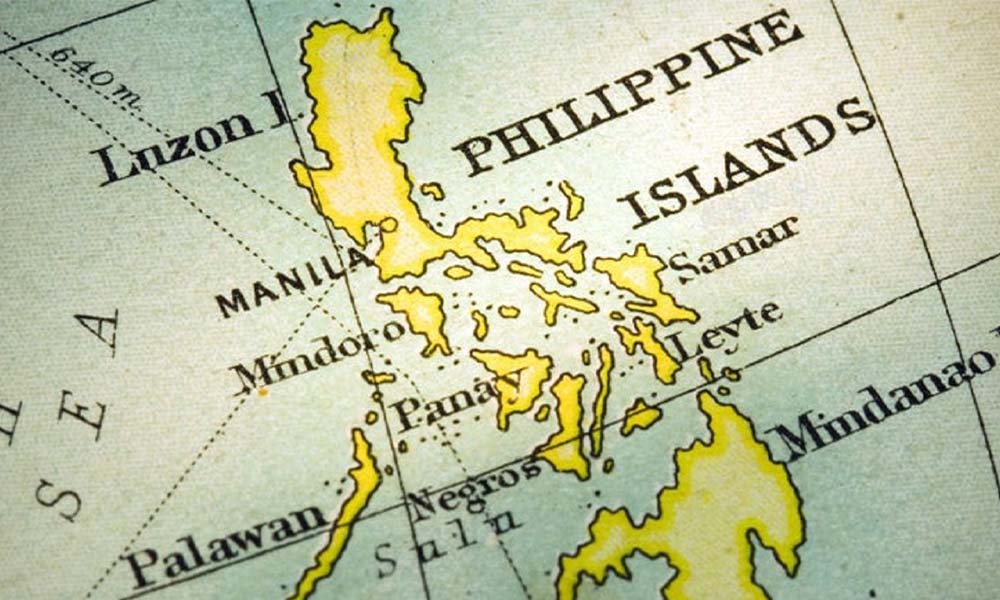
Because here’s the thing. When Washington invests nine figures into bases thousands of miles away, it’s not doing it for the weather. It’s doing it because geography still matters. And the Philippines sits at one of the most strategic crossroads on Earth, right along the fault lines of the South China Sea.
If you zoom out for a second, this moment feels bigger than construction projects and runway extensions. The U.S.–Philippines alliance isn’t new. It’s over 75 years old. It’s anchored in the 1951 Mutual Defense Treaty and reinforced by the 2014 Enhanced Defense Cooperation Agreement, EDCA, which allows U.S. forces rotational access to selected Philippine bases.
But lately, it feels different. More urgent. More real. Tensions in the South China Sea haven’t exactly cooled. Maritime encounters are sharper. The rhetoric is louder. And every time a coast guard vessel gets shadowed or a supply mission gets challenged, the question hangs in the air: Who shows up if things escalate?
This $144 million commitment isn’t abstract. It’s concrete, steel, fuel storage, airfields, and logistics hubs. It’s about being able to respond, whether that response is combat readiness or humanitarian assistance when the next typhoon hits. Because let’s be honest, the Philippines knows disasters as well as it knows geopolitics.
Think about it this way. If a powerful storm tears through Luzon tomorrow, upgraded facilities mean faster deployment of relief supplies. Better runways mean heavier aircraft can land. Stronger infrastructure means lives saved. And if the crisis isn’t natural but strategic? The same infrastructure suddenly becomes deterrence. That’s the dual-use reality of modern alliances. This investment aims to enhance operational readiness for both combat and humanitarian assistance and disaster response missions. It will modernize critical infrastructure across multiple Philippine military locations. And maybe most importantly, it deepens interoperability, the ability of U.S. and Philippine forces to operate seamlessly together under their mutual defense frameworks. Some people will see this as routine alliance management. Others will see it as a message to Beijing. Honestly? It’s both.

The Philippines sits astride vital maritime routes, including the South China Sea, waters that carry a huge share of global trade and sit at the center of rising great-power competition. In that context, $144 million isn’t just money. It’s positioning. It’s preparedness. It’s a reminder that alliances, when tested, are either reinforced or exposed. This time, Washington chose reinforcement. And in the Indo-Pacific right now, that choice speaks volumes.
Scope of the Investment
Let’s pause on that number again, $144 million. It sounds big, sure. But what makes it meaningful isn’t just the amount. It’s the spread. This funding isn’t going to one symbolic base or a single high-profile project. It’s being distributed across nine designated EDCA sites throughout the Philippines. That tells you this is about building a network, not a monument. It’s about coverage. Depth. Staying power.
US to Deploy Advanced Missiles in Philippines Amid South China Sea Tensions
The total U.S. commitment now stands at $144 million to upgrade military infrastructure under the Enhanced Defense Cooperation Agreement. And the intent is layered. Yes, it strengthens combat readiness. But it also improves humanitarian assistance and disaster response capabilities. That dual-use design matters. In the Philippines, where a super typhoon can reshape entire provinces overnight, military infrastructure often becomes the backbone of relief operations. So when runways are reinforced or warehouses are expanded, that’s not just defense policy, that’s disaster response planning too.
What’s particularly interesting is that this allocation exceeds an earlier pledge of $129 million under previous U.S. commitments to the same EDCA sites. It’s not a radical leap, but it’s an increase. And in strategic budgeting, increases are signals. They show sustained political will. They suggest that Washington is not simply maintaining the alliance framework, it is investing more deeply into it.https://www.youtube.com/watch?v=NyuNRV1Xnqw
On the ground, the upgrades are practical and structural. Construction and modernization will focus on barracks, logistics hubs, warehouses, and operational support buildings. These are not flashy assets, but they determine how fast units can mobilize and how long they can sustain operations. Infrastructure is what makes strategy real.

Airstrip and runway improvements are another critical component, particularly at facilities such as Lumbia Air Base and Basa Air Base. Reinforced and extended runways allow larger aircraft to operate safely, expanding lift capacity and response speed. That directly affects both military deployments and humanitarian airlifts during emergencies.
Communications and operational systems are also being enhanced to improve interoperability between U.S. and Philippine forces. Modernized networks and coordination infrastructure reduce friction during joint operations, whether in crisis response or security missions. And alongside that, dedicated humanitarian assistance and disaster response warehouses and staging areas will improve the speed and organization of relief logistics.
When viewed together, this is not simply a construction package. It is an effort to strengthen readiness across multiple contingencies. The facilities being built today are designed to serve both deterrence and disaster relief tomorrow.
Strategic Significance
Let’s be honest, infrastructure by itself isn’t dramatic. Concrete doesn’t trend. Runways don’t make headlines for long. But what do they enable? That’s where the real story lives. Upgraded facilities directly translate into military preparedness. And in alliance terms, preparedness is credibility. When U.S. and Philippine forces conduct large-scale annual exercises like Balikatan, involving thousands of troops, aircraft, naval assets, and complex joint maneuvers, they need infrastructure that can actually support that scale. Improved barracks, expanded logistics hubs, reinforced airstrips, these are the quiet multipliers that make those exercises smoother, faster, and more realistic.https://www.youtube.com/watch?v=QRyD9Fd5L68
And realism matters. Because exercises are not just drills. They are rehearsals. They test command structures, interoperability, and response times under simulated stress. If facilities are outdated or overstretched, readiness becomes theoretical. If they’re modernized, readiness becomes tangible. That’s the difference between signaling and substance.
But here’s something people sometimes overlook. In the Philippines, military infrastructure is just as critical for humanitarian assistance as it is for defense operations. This is a country hit regularly by powerful typhoons, vulnerable to earthquakes, and exposed to volcanic activity. When disaster strikes, it’s often air bases and military logistics hubs that become staging grounds for relief supplies. Improved warehouses, better runway capacity, and modern communications networks mean aid can move faster. Helicopters can deploy quicker. Supplies can reach remote areas without delay.
So yes, this investment strengthens deterrence. But it also strengthens disaster response, and that dual function is strategic in itself. It makes the alliance visible to ordinary citizens, not just defense planners.
US to Build Navy Repair Facilities in the Philippines (Palawan / near Second Thomas Shoal)
On the regional level, the implications extend even further. The Philippines sits along the First Island Chain, a critical geographic corridor stretching from Japan through Taiwan and down toward Southeast Asia. Strengthening facilities here reinforces deterrence architecture across the Indo-Pacific. It supports freedom of navigation operations in contested waters, particularly in and around the South China Sea, where maritime tensions remain persistent.
This is where strategy meets geography. By upgrading infrastructure in the Philippines, the United States is reinforcing its operational footprint within that strategic arc. It signals continuity of commitment to Indo-Pacific stability. And it reassures Manila that treaty language is backed by physical presence. Preparedness, humanitarian resilience, and deterrence, all layered into what might otherwise look like a simple funding announcement. That’s the real significance.
Political and Diplomatic Implications
Zoom out from the construction sites for a minute, and this $144 million starts to look less like infrastructure funding and more like diplomacy poured into concrete. From Washington’s perspective, the commitment fits neatly into its broader Indo-Pacific strategy: sustain a forward defense presence, but without re-establishing permanent U.S. bases. That distinction matters politically. Under the 2014 Enhanced Defense Cooperation Agreement, U.S. forces operate on a rotational basis. No permanent basing. No flags permanently planted. Just access, interoperability, and shared facilities.
That’s a very deliberate model. It reassures allies while managing domestic sensitivities, both in the Philippines and in the United States. It projects presence without the optics of occupation. A U.S. State Department spokesperson recently emphasized that the focus is on “enhancing readiness for both humanitarian and combat operations.” It’s careful language. Balanced. But the subtext is clear: this is about preparedness across the spectrum of contingencies.
From Manila’s side, the framing is equally strategic. Philippine officials consistently describe the funding as support for national defense modernization, not dependency, not escalation, but capability-building. And that distinction is important for a country that has historically been cautious about sovereignty issues tied to foreign military presence.

Recent joint strategic dialogues between the two governments have reaffirmed commitments under the 1951 Mutual Defense Treaty. That includes clarity that armed attacks on Philippine military forces in the Pacific including in the South China Sea, would trigger treaty obligations. That clarification isn’t abstract. It lands in a very specific regional context.https://indopacificreport.com/philippines-continues-to-signal-interest-in-acquiring-f-16-block-70-72-fighters/
Naturally, reactions across the region vary. China has criticized the expansion of U.S. military engagement in the Philippines, framing it as destabilizing and part of a broader containment posture. That narrative is predictable. Beijing views increased U.S. access within the First Island Chain as a constraint on its own strategic maneuverability.
At the same time, many ASEAN partners see enhanced interoperability differently. Quietly, several Southeast Asian states prioritize stability through balance. They may not say it loudly, but improved alliance coordination can contribute to a more structured regional security architecture, one where deterrence reduces the likelihood of miscalculation.https://www.youtube.com/watch?v=TTOoTFgBRXs
So politically, this isn’t just about funding. It’s about calibration. Washington signals commitment without permanent basing. Manila strengthens modernization without surrendering sovereignty. The region watches closely, calculating what this means for the balance of power. And in the Indo-Pacific right now, balance is everything.
U.S. Navy Secures Philippines’ $26 Trillion Gas Field, Blocking Outside Interference
Operational Impact
If you strip away the policy language, what this really changes is tempo. How fast forces can move. How smoothly they can operate. How confidently commanders can plan.https://www.youtube.com/watch?v=Ev3P5aWe8Co
Enhanced facilities immediately raise the ceiling for joint exercises and training. Large-scale drills like Balikatan aren’t just symbolic gatherings of troops for photo opportunities. They are complex, multi-domain rehearsals involving air, land, sea, and increasingly cyber components. When barracks are modernized, when logistics hubs are expanded, when airfields can handle heavier aircraft, the scale and realism of those drills increase. And realism builds credibility.
There’s also the matter of rapid response. Upgraded airfields and reinforced runways mean aircraft can deploy faster and carry heavier payloads. Expanded warehouses mean equipment and relief supplies are pre-positioned and organized. In a combat contingency, that compresses mobilization timelines. In a disaster scenario, it shortens the gap between impact and assistance. Minutes matter in both contexts.
Infrastructure also underpins technology integration. Advanced systems require proper maintenance facilities, secure communications networks, and trained personnel operating in coordinated environments. These upgrades create the conditions for smoother interoperability, which, in modern joint operations, is not optional. It is foundational. Without compatible systems and standardized procedures, even well-equipped forces struggle in complex operational theaters. In short, this funding increases readiness not just in theory, but in execution.
Budget Breakdown and Timeline
Precise line-item allocations have not been publicly detailed by the U.S. government, but the broad structure is clear. The $144 million is expected to fund construction and facility upgrades, including warehouses, barracks, and dedicated humanitarian assistance and disaster response hubs. A portion will also support logistics modernization and communications systems designed to strengthen operational coordination. Additional funding underpins expanded joint deployment readiness, ensuring that infrastructure improvements translate into practical capability.
Implementation will proceed in phases. The first stage involves planning and design, during which both U.S. and Philippine defense authorities finalize engineering specifications and operational requirements. This is followed by construction and renovation, the most visible phase, where physical upgrades take shape across designated sites. The final stage centers on operational integration and handover, ensuring facilities are functional, interoperable, and aligned with alliance standards.
Timelines are being coordinated bilaterally, with oversight mechanisms established to maintain transparency and accountability. Given the strategic sensitivity of the project, structured supervision is as important as speed.
Conclusion
The benefits are substantial. The investment strengthens bilateral military cooperation and raises readiness levels for both countries. It enhances disaster response infrastructure in a nation frequently exposed to natural hazards. And it reinforces deterrence within a contested regional security environment.
More broadly, this funding supports a long-term strategic vision. It deepens interoperability between U.S. and Philippine forces, sustains a forward-leaning but rotational posture in the Indo-Pacific, and reinforces alliance credibility under evolving geopolitical pressures. Infrastructure is rarely dramatic. But in security affairs, durability matters more than spectacle. Concrete poured today can shape strategic balance for decades.https://youtu.be/r7K2qvGzluY?si=kDMx3941U7hc5c02