Ukraine Joins First Drone Warfare Summit in Subic Bay
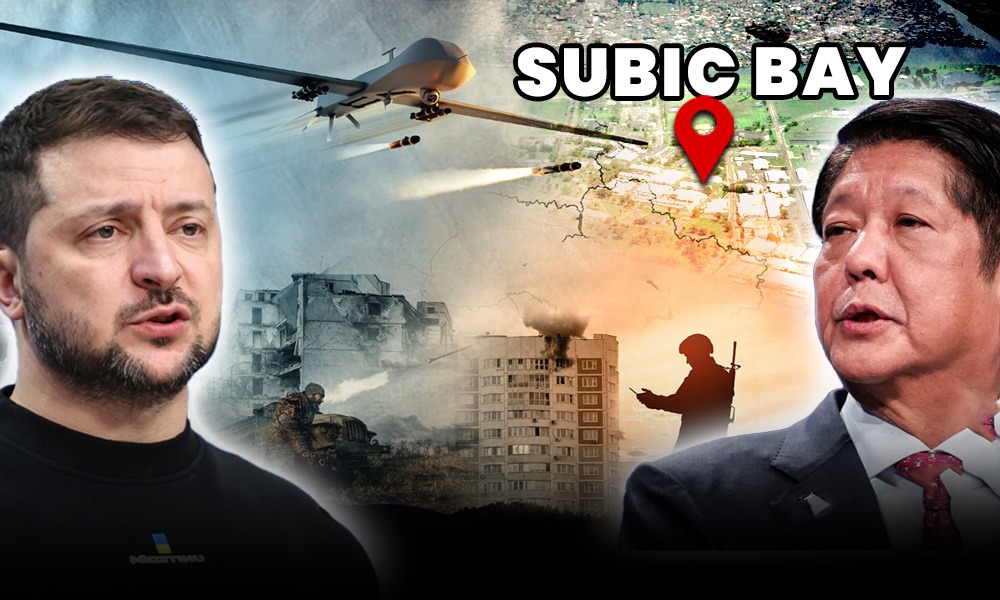
The Drone Warfare Summit 2025, held from October 27–29, 2025, at the Subic Bay Exhibition and Convention Center in the Philippines, marked a significant milestone for the Indo-Pacific region and for the Philippines’ growing role in defense technology diplomacy. Hosted by the Philippine Navy, the event was the first of its kind, a multinational summit focused entirely on the use, innovation, and regulation of unmanned systems in modern warfare. With the rapid evolution of drone technology reshaping how wars are fought and deterrence is defined, Subic Bay became the stage where global military leaders, strategists, and defense industries gathered to exchange insights on what many are calling the “next frontier” of warfare.
One of the most notable participants was Ukraine, whose delegation drew intense attention throughout the summit. Far from being a passive observer, Ukraine shared firsthand lessons from its ongoing conflict with Russia, where drones have become the defining feature of modern combat. From reconnaissance and logistics to strike operations, Ukraine’s experience has transformed it into an innovation hub for unmanned systems, giving its military and defense industries unique credibility. Ukrainian experts presented case studies on drone swarms, counter-drone systems, and rapid battlefield adaptation, topics that resonated strongly with Indo-Pacific nations facing their own security challenges.
Rear Admiral Joe Anthony Orbe, commander of the Philippine Fleet, underscored the summit’s broader purpose: “This event will serve as a platform for strategic discussions with our partners and an opportunity to build partnerships with other nations.” His statement captured the essence of the gathering, not merely a technological showcase, but a strategic dialogue on cooperation, interoperability, and resilience in a region where maritime and aerial domains are becoming increasingly contested.
In hosting this summit, the Philippines positioned itself at the crossroads of innovation and security collaboration, transforming Subic Bay once again into a hub of strategic engagement. The presence of Ukraine, with its real-world combat insights, elevated the discussions beyond theory, turning the Drone Warfare Summit 2025 into a defining moment for both the Philippines’ defense diplomacy and the global evolution of drone warfare.
Ukraine’s Showcase: The Fighter Aircraft FA v1 Concept
At the Drone Warfare Summit 2025, Ukraine took center stage with the highly anticipated unveiling of its newest defense concept, the Fighter Aircraft FA v1, a jet-powered unmanned aerial vehicle (UAV) that represents the country’s rapid evolution in autonomous combat technology. The reveal marked a bold step for Ukraine, showcasing not just its resilience in the face of war, but also its growing capacity to innovate and export advanced defense systems. The FA v1 concept drew strong attention from both military delegates and private defense firms attending the summit, positioning Ukraine as a rising power in the global drone industry.
According to Ukrainian defense officials, the FA v1 was developed as part of an effort to bridge the gap between reconnaissance drones and manned fighter aircraft, using lessons learned from the ongoing conflict with Russia. Unlike many small surveillance drones, the FA v1’s design embodies a hybrid philosophy, combining agility, speed, and light combat capability within a compact airframe. The presentation emphasized that Ukraine’s defense sector has moved from rapid wartime improvisation to structured innovation, with the FA v1 serving as a proof of concept for the nation’s next-generation unmanned combat aviation program.
The technical specifications shared during the summit offered a glimpse into the system’s ambitious design goals. The FA v1 is capable of reaching speeds exceeding 250 kilometers per hour, allowing it to perform fast reconnaissance, intercept, or light strike missions. It boasts an operational range of 30 kilometers and a flight ceiling of up to 5,000 meters, making it suitable for mid-altitude operations and tactical surveillance over contested areas. Most notably, its onboard sensors enable it to detect aerial targets at ranges up to 15 kilometers, suggesting the potential for air-to-air engagement or guidance in coordinated missions.
Observers noted that the FA v1’s twin-tail configuration and streamlined jet-powered fuselage resembled experimental unmanned jets being developed in Western and Asian research programs, a sign that Ukraine is closely tracking global trends in UAV design. The aircraft’s modular frame and digital avionics suite were designed to allow for rapid configuration changes, from surveillance payloads to small precision munitions, giving it flexibility across different mission types.
Ukrainian defense representatives described the FA v1 as a symbol of innovation born out of necessity. After years of conflict that forced rapid adaptation, Ukraine is now channeling battlefield experience into technological progress, aiming not just to survive, but to lead in the global drone revolution. The Subic Bay summit offered the perfect platform to demonstrate that transformation, with the FA v1 standing as both a technological statement and a diplomatic tool, signaling that Ukraine’s defense industry is ready to partner, collaborate, and compete on the world stage.
Hegseth’s Daring Strategy to COUNTER China in Southeast Asia
Battlefield Experience and The Drone Revolution
At the Drone Warfare Summit 2025, Ukraine’s delegation captivated audiences with hard-earned insights from the battlefield, lessons forged through three years of relentless conflict that have redefined how the world understands modern warfare. Ukrainian officials explained that the drone revolution has transformed their defense doctrine from traditional combined-arms warfare into a dynamic, multi-domain, technology-driven strategy, where air, land, and cyber operations blend into a single integrated battlefield. As one Ukrainian defense representative put it, “Autonomous systems have reshaped our defense strategy, they are now as vital as tanks or artillery.”
Ukraine’s experience has shown that drones are not merely support assets but primary tools of warfighting and deterrence. Frontline data shared at the summit revealed the emergence of what Ukrainian analysts now call a “contested grey zone” , an approximately 15-kilometer-wide stretch of no-man’s-land where neither side can safely advance. This zone is continuously patrolled by thousands of small, armed UAVs conducting reconnaissance, precision strikes, and electronic warfare missions. The airspace has become so saturated that even conventional armored maneuvers have become nearly impossible without detection or destruction within minutes. This drone-saturated environment, Ukrainian experts emphasized, is the future of warfare, decentralized, digital, and deadly.
U.S. Missiles in Philippines Can REACH China Faster Than You Think
The economic and operational impact of drones has also been staggering. Ukrainian briefings cited 2025 data suggesting that up to 80% of Russia’s battlefield equipment losses were inflicted by drones, a statistic that highlights the disruptive power of unmanned systems. But beyond their tactical success, the cost dynamic tells an even more compelling story. While advanced Western UAVs, such as the U.S.-made Altius, can cost upwards of $1 million per unit, Russia’s Shahed-style loitering munitions are produced for just $35,000 to $60,000 each. In contrast, Ukraine’s strategy has leaned heavily on low-cost, mass-produced FPV (First-Person View) drones, often assembled for a fraction of that price. This democratization of drone warfare, the ability to produce effective systems cheaply and at scale, has allowed Ukraine to match and often outperform a superior adversary through creativity, adaptability, and volume.
Ukraine’s battlefield innovation has not only been defensive. The country has increasingly demonstrated offensive drone capabilities that have extended deep into Russian territory. Independent intelligence analyses presented at the summit noted that by August 2025, Ukrainian long-range drone strikes had disrupted between 17% and 20% of Russia’s oil refining capacity, hitting targets hundreds of kilometers from the frontlines. These operations showcased Ukraine’s ability to combine precise intelligence, extended-range UAVs, and swarm tactics to achieve strategic-level economic and psychological effects, all without deploying traditional airpower.
In essence, Ukraine’s experience paints a vivid picture of the drone as the new decisive weapon, affordable, scalable, and transformative. From small FPV strike drones to long-range autonomous systems, the lessons shared at Subic Bay underscored a new reality: future wars will not necessarily be won by those with the largest armies, but by those who innovate fastest, adapt quickest, and command the skies, even with machines the size of a backpack.
Geopolitical and Future Implications
The Drone Warfare Summit 2025 in Subic Bay was more than a showcase of technology, it was a strategic gathering that carried deep geopolitical and forward-looking implications for the Philippines, Ukraine, and the wider Indo-Pacific region. For the host nation, the Philippines, the event highlighted how unmanned systems have become indispensable in its evolving archipelagic defense posture. With over 7,600 islands and one of the world’s longest coastlines, the country faces unique surveillance challenges in the West Philippine Sea. Philippine defense leaders emphasized that drones are now considered “critical tools for enhancing surveillance, rapid response, and overall situational awareness”, key to protecting territorial waters from encroachment and illegal activity. The summit, therefore, reinforced the Philippines’ goal of integrating drone technology into both civilian and military domains, from maritime patrols to humanitarian disaster response.
Will China ESCALATE Tensions with Philippines at Scarborough Shoal?
On a global scale, the discussions in Subic reflected growing concern over the AI arms race and the absence of clear international norms governing autonomous weapon systems. President Volodymyr Zelenskyy’s warning, referenced during the summit, captured the sentiment: “It’s only a matter of time, not much, before drones are fighting drones, attacking critical infrastructure, and targeting people all by themselves, fully autonomous.” His statement underscored an urgent call for global rules and ethical frameworks to manage the rise of AI-powered weaponry. The convergence of autonomy, machine learning, and warfare presents both unprecedented potential and peril, a future where machines could make split-second life-and-death decisions without human oversight. The summit thus became a forum not only for innovation but also for reflection on the moral and regulatory responsibilities that come with technological power.
For Ukraine, the event symbolized the next stage in its transformation from a nation under siege to a defense technology exporter and innovation hub. During the summit, President Zelenskyy announced that starting November 2025, Ukraine would begin controlled exports of domestically produced weapons, including naval and combat drones. This marks a significant milestone in Ukraine’s defense industrial policy — one that seeks to translate wartime ingenuity into sustainable economic and diplomatic strength. By sharing battlefield-tested drone technologies with trusted partners, Kyiv aims to deepen its international defense cooperation, generate revenue for postwar recovery, and establish itself as a key supplier in the global unmanned systems market.
Ultimately, the Subic Bay summit showcased how drone warfare is reshaping global geopolitics. For the Philippines, it strengthens maritime security and strategic partnerships; for Ukraine, it opens new industrial horizons; and for the world, it raises difficult but necessary conversations about the future of autonomous conflict. The message was clear: the age of drones has fully arrived and with it comes a new race not just for technological dominance, but for the rules and ethics that will define the wars of tomorrow.
Will China ESCALATE Tensions with Philippines at Scarborough Shoal?
Conclusion
In the end, the Drone Warfare Summit 2025 was not just a military technology conference, it was a clear sign of how the world is changing. From Subic Bay to Kyiv, nations are rethinking defense, innovation, and cooperation in an age where machines now shape the battlefield. For the Philippines, hosting this event marked a defining moment, signaling its rise as a hub for regional security dialogue and emerging technology. For Ukraine, it was proof that even amid war, resilience can transform into leadership and innovation.
Yet, beyond the hardware and strategies, the summit’s true message was about responsibility. As drones become smarter, faster, and deadlier, the challenge for the international community is not only to build them, but to govern them wisely. The conversations in Subic Bay reminded the world that while technology can protect, it can also endanger if left unchecked.
In this new era of drone warfare, the future will belong not to those with the most advanced machines, but to those who wield them with purpose, ethics, and foresight