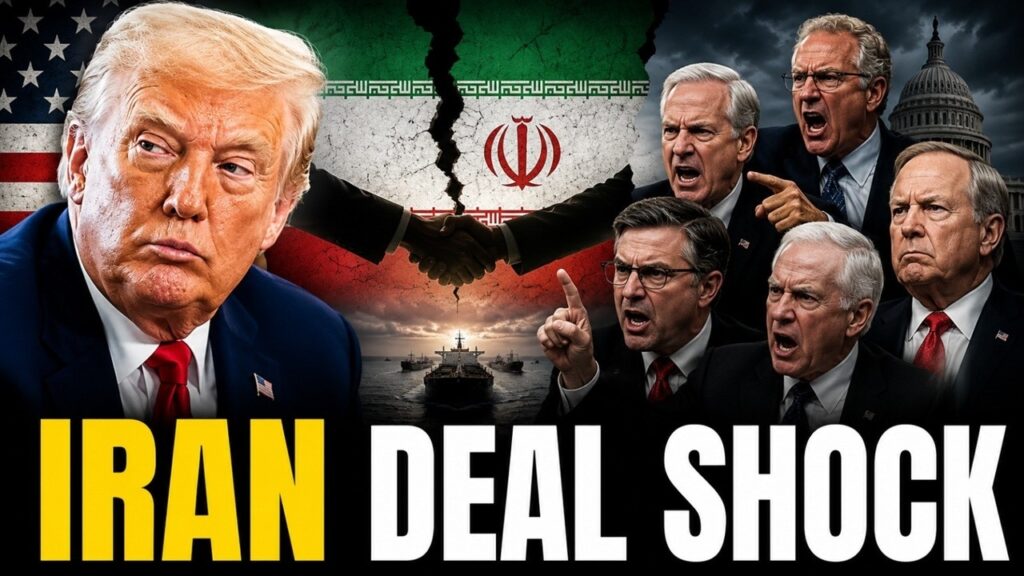
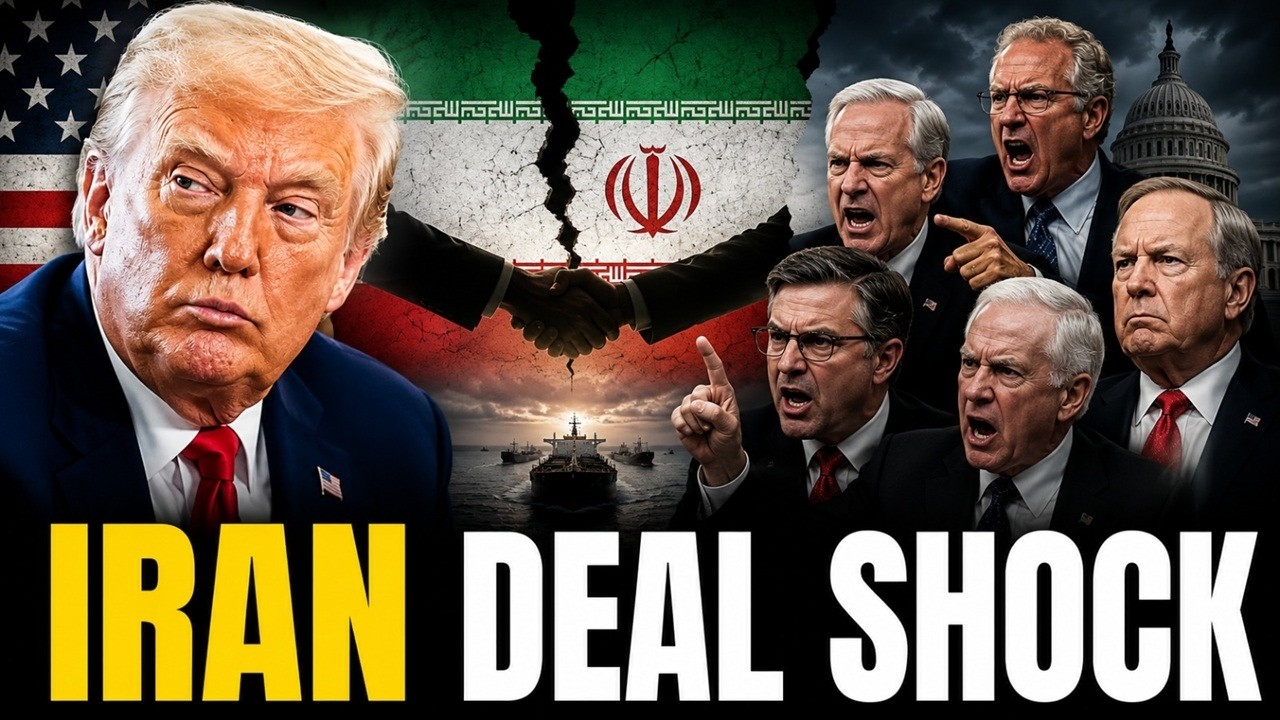
Trump’s Iran Deal Is Dividing Republicans and Could Reshape the Entire Middle East
Published by Indo-Pacific Report | Iran Nuclear Talks | US Middle East Policy | Republican Foreign Policy Divide | Strait of Hormuz
Donald Trump is doing something that almost no one in Washington predicted: he is cutting a deal with Iran. And the political explosion it has triggered — not from Democrats, but from within his own party — may be one of the most consequential foreign policy ruptures of his presidency.
The proposed agreement would include a ceasefire, the reopening of the Strait of Hormuz, new nuclear negotiations, and Iran’s access to as much as $20 billion in frozen assets. In exchange, Tehran would pause its nuclear escalation and return to the negotiating table.
On paper, it looks like a pragmatic attempt to prevent a wider Middle East war that is already damaging global energy markets and destabilizing the region. But the backlash from Republican hardliners has been fierce and immediate. Figures like Mike Pompeo, Ted Cruz, and Lindsey Graham are openly accusing Trump of abandoning the maximum pressure strategy they championed and giving Iran exactly the lifeline it needed.
The debate inside Washington is not just about Iran. It is about what American strategy in the Middle East is actually supposed to accomplish — and whether confrontation or diplomacy is the more effective path to achieving it. Here is where things stand, why the split is so deep, and what the outcome could mean for the region and the world.
What the Proposed Deal Actually Contains
Before evaluating the political arguments for and against it, it helps to be precise about what is actually being negotiated. The framework being discussed between Washington and Tehran reportedly includes several distinct elements.
A Ceasefire and De-escalation Agreement
The immediate priority is stopping active military hostilities. The proposed ceasefire would halt direct confrontations between US and Iranian forces and Iranian-backed proxies across the region. This includes the cessation of attacks on US military installations in Iraq, Syria, and the broader Gulf area that have been a persistent source of casualties and escalation risk.
Reopening the Strait of Hormuz
The Strait of Hormuz — the narrow waterway through which approximately 20 percent of the world’s traded oil passes — has been under severe tension throughout the conflict. The agreement would reportedly see the strait reopened and shipping restored to normal levels within 30 days of signing. This single provision has enormous economic implications for global oil markets, energy security in Asia, and the broader international economy.
Iran has reportedly agreed to enter 60 days of nuclear negotiations, during which it would pause further escalation of its enrichment activities. This is a time-limited window, not a permanent agreement. The actual substance of any nuclear deal — enrichment limits, inspection regimes, uranium stockpile disposal — remains entirely unresolved and would be the subject of the subsequent talks.
Sanctions Relief and Frozen Assets
Iran would receive access to up to $20 billion in frozen assets, some of which are currently held in Qatar, along with the ability to resume oil and petrochemical exports during the negotiation period. Washington reportedly wants Iran’s access to these assets tied to verified progress on enriched uranium transfers — a linkage that Tehran has pushed back against, creating one of the main sticking points in the current talks.
This deal is not a peace agreement. It is a structured pause — designed to stop the bleeding while the harder conversations happen. Whether those conversations produce anything durable is the real question.
The Republican Revolt: Why Trump’s Own Party Is Turning on Him
The most politically striking aspect of the current situation is not Iran’s position or Israel’s reaction. It is the depth and ferocity of the opposition coming from within the Republican Party itself.
Trump built much of his foreign policy credibility on a foundation of maximum pressure against Iran. In 2018, he unilaterally withdrew from the Obama-era nuclear deal, reimposed crippling sanctions, and ordered the assassination of Iranian General Qasem Soleimani in January 2020. Republican hawks celebrated each of these moves as a decisive break from what they saw as Obama’s appeasement of Tehran.
Now those same figures are watching Trump move toward an agreement that, in their view, contains many of the same structural concessions they condemned when a Democratic president offered them.
Mike Pompeo: “This Looks Like the Obama Deal”
Former Secretary of State Mike Pompeo, who was one of the architects of the maximum pressure campaign against Iran, has been among the most vocal critics. Pompeo’s argument is blunt: the proposed deal resembles the Joint Comprehensive Plan of Action — the 2015 Obama-era nuclear agreement — that Trump himself campaigned against and then canceled. If the current agreement gives Iran sanctions relief and asset access without permanently dismantling its nuclear infrastructure, Pompeo argues, it is functionally the same deal Trump once called the worst in American history.
Ted Cruz: Iran Emerges Stronger
Senator Ted Cruz has warned that the deal would allow Iran to emerge from the conflict stronger, richer, and still capable of developing nuclear weapons. Cruz’s concern is that sanctions relief and restored oil revenues would replenish the Iranian government’s financial resources without extracting any permanent constraint on its nuclear ambitions. In his view, a weakened Iran that faces continued maximum pressure is safer than an economically recovering Iran that retains nuclear capability.
Lindsey Graham: Iran Dominates the Gulf
Senator Lindsey Graham has raised a broader strategic concern: that any agreement which legitimizes Iran’s regional role risks establishing Tehran as the dominant power in the Gulf. Graham and other hawkish Republicans argue that the goal of American strategy in the Middle East should be Iranian containment, not Iranian rehabilitation. A deal that gives Iran economic recovery and diplomatic legitimacy, in their view, fundamentally undermines that goal.
What makes this revolt politically significant is that these are not marginal figures. Pompeo, Cruz, and Graham represent mainstream Republican foreign policy positions that were dominant in Washington just a few years ago. Their willingness to openly attack a sitting Republican president’s signature diplomatic initiative signals a genuine fracture within the party over the fundamental direction of American Middle East strategy.
Trump ran against the Iran deal in 2016 and won. Now he is making one himself. The Republicans attacking him are not wrong that this is a reversal. The question is whether the reversal is wise.
Why Trump Is Doing This Anyway: The Economic and Strategic Pressure
To understand why Trump is pursuing a deal that is fracturing his own coalition, you need to understand the pressure he is responding to.
Global Oil Markets Under Stress
Iran and the US Are Exchanging Proposals. Here Is Why a Deal Is Still Out of Reach
The conflict with Iran created immediate and severe disruption to global energy markets. The Strait of Hormuz carries approximately 17 to 18 million barrels of oil per day — a significant share of global supply. When tensions around the strait spiked, insurance costs for Gulf shipping surged, tanker operators began rerouting, and oil prices rose. For an American president who has consistently used energy prices as a measure of economic performance, a sustained energy crisis driven by Middle East instability carries real political costs at home.
Gulf Arab Pressure for De-escalation
American allies across the Gulf — Saudi Arabia, the UAE, Qatar, Kuwait — applied significant diplomatic pressure on Washington to pull back from further military escalation. These governments, along with Turkey and Egypt, made clear that expanded bombing campaigns inside Iran would risk destabilizing the entire region in ways that would damage their own economies and potentially trigger broader conflict. For these governments, the threat of prolonged regional instability outweighs the strategic case for continuing to pound Iran militarily. Their pressure was a significant factor in moving the White House toward a diplomatic path.
The Cost of Indefinite Confrontation
There is also a straightforward strategic calculation at play. The maximum pressure strategy, pursued consistently since 2018, succeeded in severely damaging the Iranian economy. But it did not stop Iran’s nuclear program. By the time the current conflict began, Iran had enriched uranium to near-weapons-grade levels and significantly expanded its missile capabilities. Seven years of maximum pressure produced economic pain for Iran without producing nuclear concessions. Trump’s decision to try a different approach reflects a recognition, at least implicitly, that the previous approach had reached its limits.
Watch our analysis of the Gulf energy crisis and US Iran strategy on the Indo-Pacific Report YouTube channel.
Israel’s Red Lines: The Variable That Could Still Break Everything
Even if Trump and the Republican establishment eventually find a workable position, there is a third actor whose decisions could fundamentally disrupt any agreement: Israel.
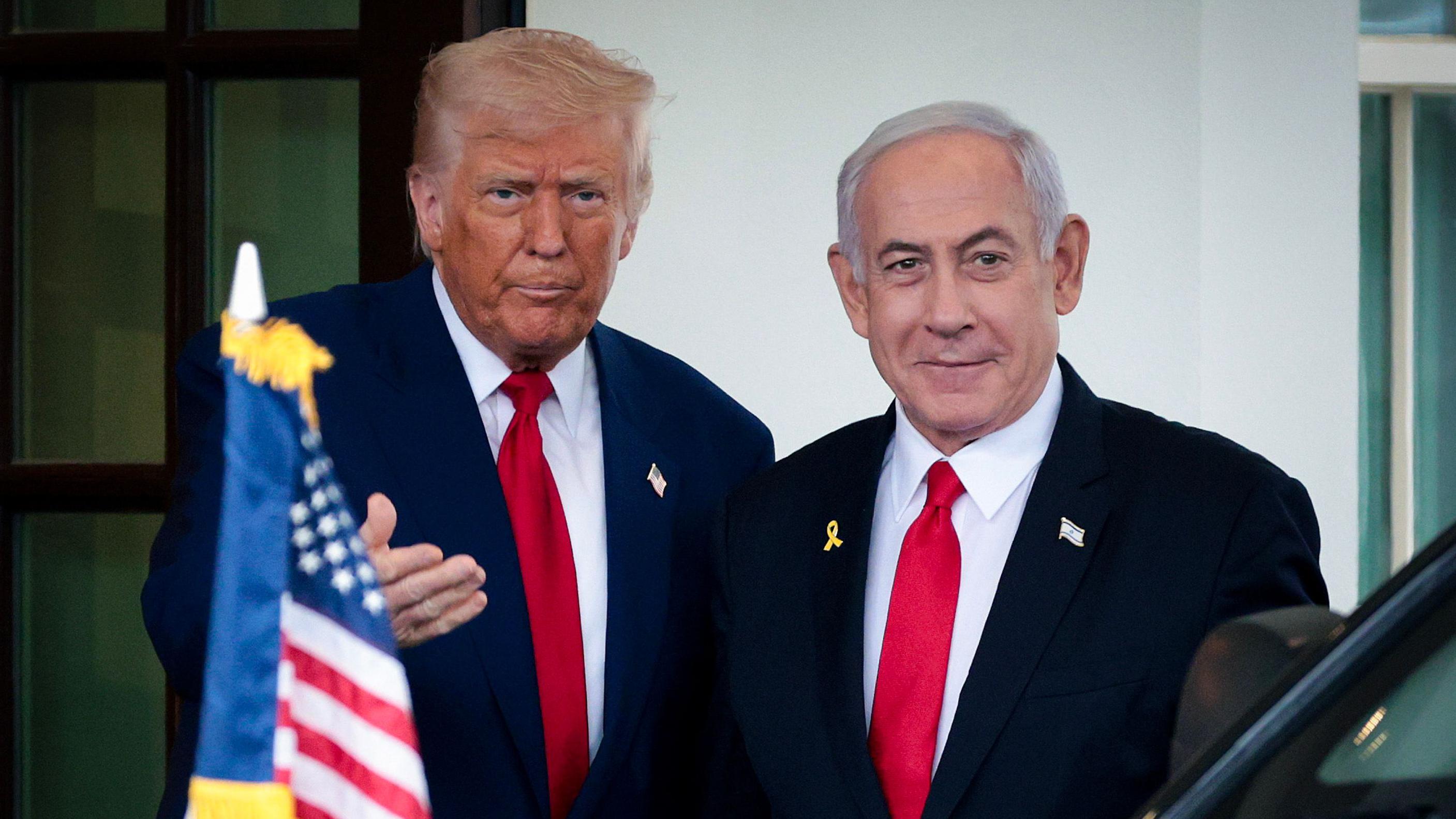
Trump spoke directly with Prime Minister Benjamin Netanyahu during the negotiation process. Netanyahu’s position has been consistent and unambiguous. Israel requires any agreement to completely eliminate — not merely limit — Iran’s nuclear threat. Israel also insists on preserving its operational freedom to continue military strikes against Hezbollah in Lebanon and Iranian assets across the region, regardless of what any ceasefire agreement says.
This creates a direct conflict with Tehran’s stated requirements. Iran has made clear that any ceasefire must apply across all fronts — including Lebanon. A deal that freezes US-Iran hostilities while Israeli operations in Lebanon continue would, from Tehran’s perspective, not be a genuine ceasefire at all. It would simply be a mechanism for the US to step back while its ally continues the fight.
The practical consequence of this gap is visible in real time. Even as negotiations between Washington and Tehran have advanced, Israeli airstrikes inside Lebanon have continued. The situation on the ground does not reflect a region on the verge of comprehensive de-escalation. It reflects a region where one track of diplomacy is moving forward while military operations on a parallel track continue uninterrupted.
If Israel conducts a strike — particularly against Iranian nuclear infrastructure — that Tehran views as a fundamental violation of the ceasefire framework, the entire diplomatic process could collapse within hours. Washington’s ability to manage that risk depends heavily on its leverage over Israeli decision-making, which has historically been significant but not absolute.
Iran’s Position: What Tehran Actually Wants
Iran enters these negotiations from a position that is simultaneously weakened and stronger than it appears.
On one hand, the Iranian economy has been battered by years of sanctions and the costs of the conflict. Inflation, unemployment, and currency depreciation have created real social pressure inside Iran that the government cannot entirely ignore. Access to $20 billion in frozen assets and the restoration of oil export revenues would provide significant economic relief.
On the other hand, Iran has demonstrated through this conflict that it can impose real costs on its adversaries. It has shown that closing or threatening the Strait of Hormuz affects global energy markets, not just the regional ones. It has demonstrated the reach of its missile and drone capabilities. And it has maintained its nuclear program despite years of maximum pressure.
Tehran’s negotiating position reflects this dual reality. Iran wants:
Comprehensive sanctions relief, particularly on oil exports and financial transactions
Access to frozen assets without conditions tied to nuclear concessions
Recognition of its right to maintain a civilian nuclear program
A ceasefire that covers all fronts, including Lebanon, preventing Israel from continuing operations while Iran stands down
Long-term security guarantees against future unilateral American military action
The gap between what Iran wants and what Washington is willing to offer — particularly on the linkage between asset access and uranium transfers, and on Israel’s operational freedom — represents the core challenge that the 60-day negotiating window is supposed to address. Whether 60 days is enough time to bridge gaps this large is, to put it diplomatically, unclear.
What a Deal Would Mean for the Middle East — And What It Would Not Fix
If the negotiations succeed and a broader agreement is eventually reached, the regional consequences would be substantial. But it is worth being honest about the limits of what any deal could realistically accomplish.
What a Successful Deal Would Change
Oil prices would fall as Strait of Hormuz risk premiums are removed from energy markets worldwide
Iran’s economic recovery would begin, reducing some of the internal pressure on the Iranian government
The immediate risk of a wider regional war involving the US, Israel, Iran, and proxy forces across multiple countries would decrease
Diplomatic channels between Washington and Tehran, broken for years, would partially reopen
Gulf Arab governments would gain economic and political breathing room to focus on their own development agendas
What a Successful Deal Would Not Fix
Iran’s regional ambitions would remain intact — Tehran would still seek influence across Iraq, Syria, Lebanon, and Yemen
The fundamental dispute over Iran’s nuclear program would not be resolved by a 60-day framework; it would merely be deferred
Israel’s security concerns would not disappear and could intensify if Iran’s economic recovery strengthens its ability to fund Hezbollah
The internal Iranian political dynamics that drive confrontational behavior would be largely unaffected by sanctions relief
The Republican opposition to the deal would not dissolve, creating ongoing domestic political pressure on any agreement that requires congressional cooperation
A deal that works in the short term can still fail in the long term if it does not address the structural issues underneath the immediate crisis. Middle East diplomacy is full of agreements that looked like breakthroughs and ended up as footnotes.
Follow our daily updates on the Iran negotiations and Middle East security on our Facebook page.
The Bigger Question: What Does American Strategy in the Middle East Actually Want?
The Republican revolt against Trump’s Iran deal exposes a question that American foreign policy has never fully answered: what is the actual strategic goal of US engagement in the Middle East?
The hawkish position — represented by Pompeo, Cruz, Graham, and Netanyahu — holds that the goal is Iranian regime change, or at minimum permanent Iranian weakness. From this view, any agreement that gives Iran economic recovery is a strategic failure because a recovering Iran is a more dangerous Iran.
The pragmatic position — apparently now held by Trump himself, under pressure from Gulf allies and economic reality — holds that the goal is regional stability and the prevention of a wider war. From this view, a deal that reduces immediate escalation risk and reopens shipping lanes is a strategic success even if it does not permanently solve the Iran problem.
These are not just different tactics toward the same goal. They reflect genuinely different visions of what American power in the Middle East is for and what it can realistically accomplish.
The debate between them is not going to be resolved by a 60-day negotiating window with Tehran. But the outcome of those negotiations will do a great deal to determine which vision shapes American strategy in the region for the years ahead.
The Negotiations Are Moving — But the Hard Part Has Not Started Yet
Trump’s Iran deal is the most significant diplomatic development in the Middle East in years. It is generating fierce opposition from within his own party, deep anxiety in Israel, and cautious optimism among Gulf Arab governments who want the conflict to stop.
The framework being negotiated — ceasefire, Hormuz reopening, 60-day nuclear talks, sanctions relief — is ambitious in scope but limited in what it actually resolves. The genuinely hard negotiations, over Iran’s nuclear future and the terms of any lasting regional security arrangement, have not happened yet.
What has happened is that two adversaries who were edging toward broader conflict have found a reason to step back from the ledge. That is not nothing. In a region where miscalculations have repeatedly produced catastrophic consequences, a structured pause is better than continued escalation.
But a pause is not a solution. And the forces driving tension in the Middle East — Iran’s nuclear ambitions, Israel’s security imperatives, Gulf Arab anxieties, American domestic politics, and the proxy conflicts across multiple countries — are all still in motion.
The biggest decisions are still ahead. And so is the biggest risk of the whole process falling apart.
Stay Informed on Middle East Geopolitics and Global Security
For sharp, clear analysis of the Iran nuclear deal, US Middle East strategy, and global energy security, visit Indo-Pacific Report — strategic intelligence from the world’s most critical regions.
► Subscribe on YouTube
► Follow us on Facebook