The Philippines’ Porcupine Strategy: How CADC Is Reshaping South China Sea Defense
By IndoPacific Report · Published May 2026 · 10-minute read
Published on IndoPacificReport.com · Follow us on Facebook and YouTube
In June 2024, a Chinese Coast Guard team boarded a Philippine Navy boat near Second Thomas Shoal — and a Filipino sailor lost his thumb. That moment did not start a war. But it started something just as significant: a fundamental rethink of how the Philippines defends itself against a more powerful neighbor.
What followed was the Comprehensive Archipelagic Defense Concept — known globally by its sharper nickname, the Porcupine Strategy. The name captures the logic perfectly. A porcupine cannot outrun a lion. But no lion wants a face full of quills. The Philippines cannot match China ship for ship. But it can make its waters painful enough that China thinks twice.
This article explains what the strategy is, how it works on the ground, who is helping pay for it, and why it matters far beyond the South China Sea.
KEY FACTS AT A GLANCE
✦ Strategy name: Comprehensive Archipelagic Defense Concept (CADC)
✦ Announced: January 23, 2024 — Defense Secretary Gilberto Teodoro Jr.
✦ Formally adopted: March 2024 by the Armed Forces of the Philippines
✦ Defense budget target: $35 billion over 10 years (Re-Horizon 3)
✦ Core missile system: BrahMos anti-ship missile (first batch: April 2024)
✦ Key US systems deployed: Typhon, NMESIS, HIMARS
✦ Primary alliance anchor: US–Philippines Mutual Defense Treaty (75th anniversary, 2026)
What Happened on June 17, 2024 — and Why It Changed Everything
For years, China’s approach to the South China Sea followed a consistent pattern. Apply pressure gradually. Use coast guard vessels, not warships. Push Filipino fishermen away from their own waters. Harass resupply missions with water cannons and lasers. Do enough to expand control — but stay below the threshold that would trigger a military response.
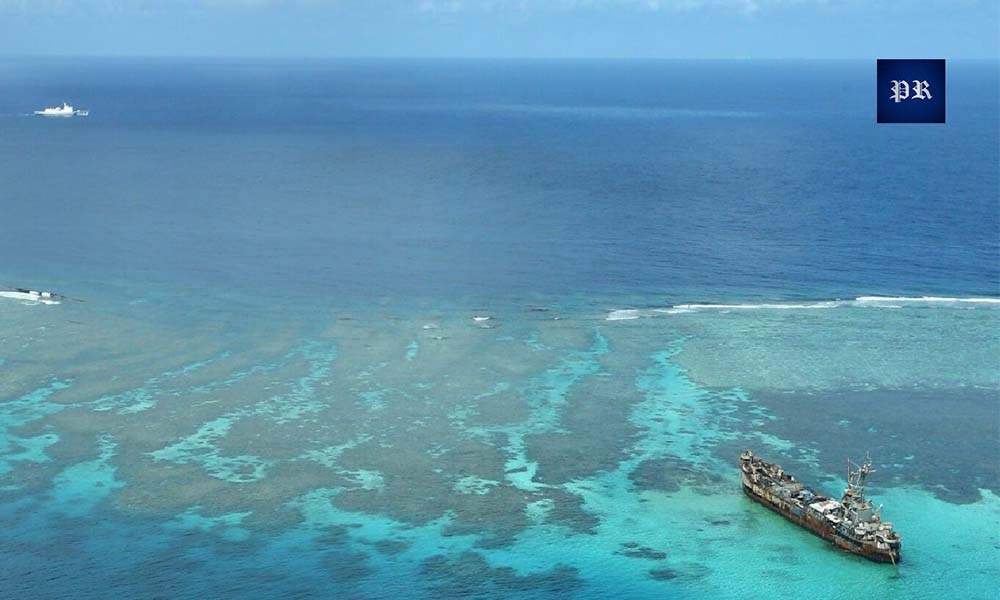
That calculus reached a breaking point at Second Thomas Shoal, a submerged reef inside the Philippines’ Exclusive Economic Zone that the Philippines calls Ayungin Shoal. A small contingent of Filipino troops lives aboard the BRP Sierra Madre — a deliberately grounded World War II-era ship Manila uses to maintain its legal claim to the area. Keeping those troops fed and supplied requires regular resupply missions.
On June 17, 2024, Chinese Coast Guard personnel intercepted one of those missions, boarded the Filipino vessel, smashed navigation equipment, confiscated seven rifles, and injured eight personnel. One sailor lost his thumb. General Romeo Brawner Jr., the Philippines’ top military officer, did not mince words. He called it piracy.
The incident was a turning point — not because it was the first act of Chinese aggression in these waters, but because it made undeniably clear that the old approach of diplomatic protest and restrained response was no longer sufficient. The Philippines needed a fundamentally different defense posture.
“We are developing our capability to protect and secure our entire territory and Exclusive Economic Zone in order to ensure that our people and all the generations of Filipinos to come shall freely reap and enjoy the bounties of the natural resources that are rightfully ours.” — Defense Secretary Gilberto Teodoro Jr., January 2024
What Is the Philippines’ Porcupine Strategy? The CADC Explained
The Comprehensive Archipelagic Defense Concept has three core pillars. They are simple in principle and far-reaching in implication.
1. See the Threat Early
The Philippines is investing in expanded radar networks, maritime patrol aircraft, satellite-linked surveillance systems, and drone reconnaissance across its 7,641 islands. The goal is complete maritime domain awareness — knowing where every vessel is, in real time, across the country’s EEZ. You cannot defend what you cannot see.
2. Hit the Threat Far From Shore
Rather than waiting for an enemy to reach Filipino beaches, the CADC shifts the defensive perimeter outward to the edge of the EEZ — 200 nautical miles offshore. Hostile ships are to be engaged before they ever reach Filipino land. This requires long-range, precision anti-ship weapons. And that is exactly what Manila is acquiring.
3. Fight as One — Not in Pieces
Land, sea, air, cyber, and space capabilities must operate as a single, integrated system. Real-time data sharing between services, and between the Philippines and its allies, is built into the architecture of the strategy from the start.
Renato Cruz De Castro, professor of international studies at De La Salle University, described it as the most serious shift toward external defense the Philippines had made in decades — a recognition that internal security concerns had for too long left the country’s maritime frontier unguarded.
https://indopacificreport.com/afp-commissions-two-new-naval-vessels-amid-maritime-security-push/
The Four Weapons That Make It Real
Doctrine without hardware is just a document. The Philippines is backing CADC with four specific weapons systems that collectively transform the country’s island chain into a layered, hostile environment for any aggressor.

BrahMos Anti-Ship Missiles
Acquired from India and now operated by the Philippine Marine Corps’ Coastal Defense Regiment, the BrahMos travels at nearly three times the speed of sound with a range of approximately 290 kilometers. Its truck-mounted launchers can relocate between jungle and coastline within hours — making them nearly impossible to pre-empt. The first battery arrived in April 2024. A third and final delivery is currently in progress. The BrahMos is the sharpest quill in the porcupine’s arsenal. For full analysis of this acquisition, visit IndoPacificReport.com.
NMESIS — The US Anti-Ship System
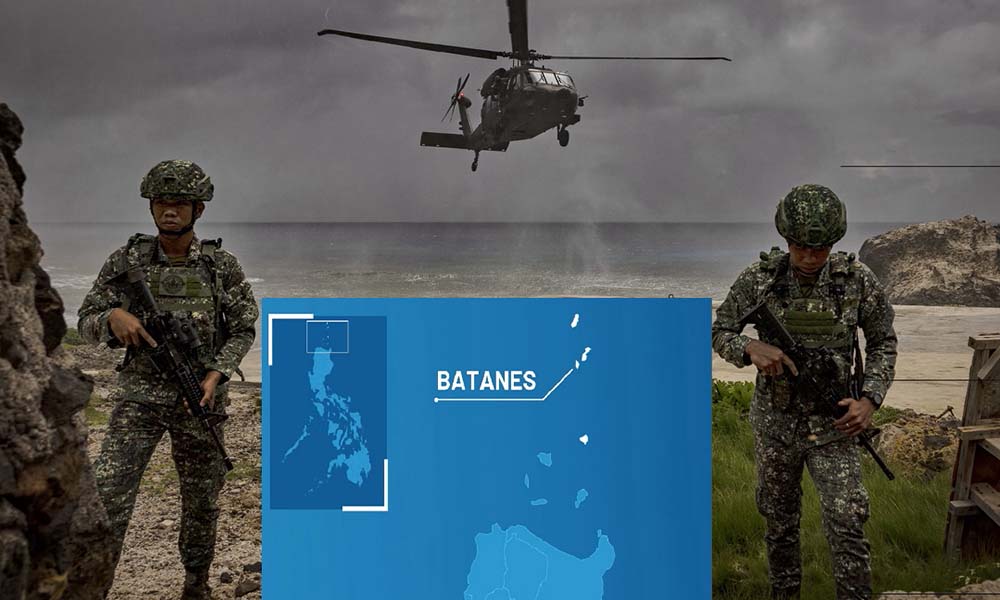
During Balikatan 2026, US Marines deployed the Navy/Marine Expeditionary Ship Interdiction System to Itbayat — the tiny northernmost Filipino island approximately 100 miles from Taiwan. NMESIS launchers can be transported by C-130 cargo aircraft, positioned rapidly, fire their anti-ship missiles, and displace before enemy targeting solutions can be completed. The message to any adversary: there is no safe approach corridor.
Typhon — The Long Arm
The US Army’s Typhon launcher fires Tomahawk cruise missiles with a range of approximately 1,600 kilometers. Positioned in the Philippines since 2024, it places a significant portion of the first island chain within strike range. Beijing has publicly and repeatedly demanded its removal — which, in strategic terms, is perhaps the most compelling evidence of how seriously China takes the deployment.
HIMARS — Mobile Precision Fires
The M270 High Mobility Artillery Rocket System, made internationally famous by its performance in Ukraine, was deployed to Filipino soil during Balikatan 2026. With ranges between 115 and 310 miles depending on the munition, HIMARS adds deep-strike rocket artillery to the island defense web.
AFP Commissions Two New Naval Vessels Amid Maritime Security Push
The Ukraine Lesson: Why Drones and Asymmetry Changed the Equation
The Philippines did not develop its Porcupine Strategy in a vacuum. It watched what happened in Ukraine — and drew direct lessons.
When Russia invaded in 2022, most observers expected a quick collapse. Instead, Ukraine demonstrated something that is now reshaping military thinking globally: a smaller, less-funded force can impose devastating costs on a larger one through asymmetric means. By 2025, Ukraine was producing approximately 4 million drones per year, according to the Atlantic Council. Some cost as little as $400 to $500. Battlefield analysts estimated drones now account for 70 to 80 percent of all losses on both sides.
The cost asymmetry is staggering. A Russian Pantsir-S1 air defense system costs around $20 million. The Ukrainian FPV sea drones that destroyed two of them in January 2025 cost a few thousand dollars each. On June 1, 2025, Ukraine’s Operation Spider Web smuggled 117 small drones into Russia concealed in cargo trucks. They destroyed or disabled roughly one-third of Russia’s long-range bomber fleet — assets worth an estimated $7 billion — at minimal cost.
Manila’s conclusion: you do not need to match your adversary’s inventory. You need to make the cost of aggression exceed any possible gain. Filipino marines and special operations units are already training with first-person-view drones. The April 2026 Aporawan beach exercise showed an FPV drone delivering a precision strike on a mock enemy vessel — a small drill that reflected the entire new architecture of Filipino defense thinking.
The math is the strategy. A country that cannot afford 50 fighter jets can acquire 50,000 drones. And the country that can see everything while remaining hard to find wins.
The Alliance Architecture: The Philippines Is Not Fighting Alone
No island defense strategy works in isolation. CADC was designed from the beginning with alliance integration as a core feature — not an afterthought.
The United States remains the anchor. Under the 2014 Enhanced Defense Cooperation Agreement, US forces now have rotational access to nine Filipino military installations across Luzon, Palawan, and the Batanes islands. The US–Philippines Mutual Defense Treaty celebrated its 75th anniversary during Balikatan 2026. American systems — Typhon, NMESIS, HIMARS — are not just sold to Manila. They are deployed alongside Filipino forces in live exercises.
Japan has moved with unprecedented speed. A Reciprocal Access Agreement entered into force in late 2025, followed by an Acquisition and Cross-Servicing Agreement in early 2026. During Balikatan 2026, Japan’s Self-Defense Forces fired a live Type 88 anti-ship missile in a foreign country for the first time in their history. The symbolism was unmistakable.
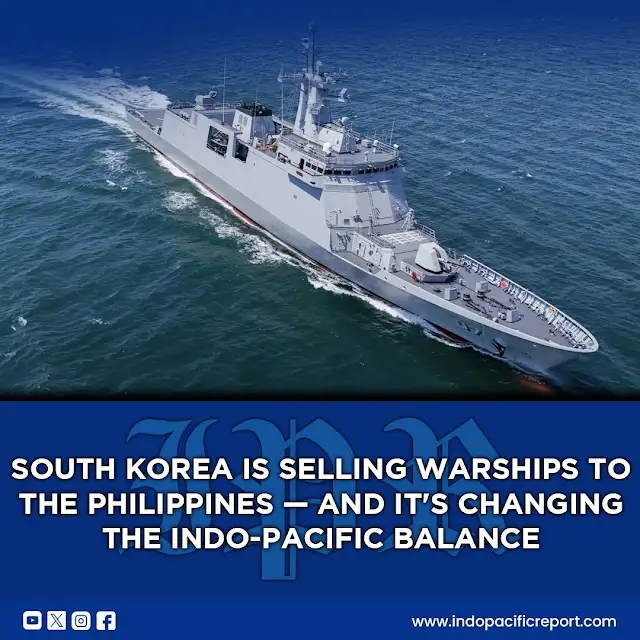
Australia, Canada, New Zealand, and France all participated as active partners — not observers — in Balikatan 2026. India supplies the BrahMos. South Korea is building six new offshore patrol vessels for the Philippine Coast Guard, due between 2026 and 2028.
This is not a bilateral relationship. It is a multi-layered web of interoperable defense partnerships — and it is precisely what the CADC’s architects intended. For ongoing coverage of Indo-Pacific alliance dynamics, follow IndoPacific Report on YouTube and Facebook.
The Funding Gap: $35 Billion and the Hard Reality
Strategy requires money. This is where CADC faces its most serious challenge.
In January 2024, President Ferdinand Marcos Jr. approved Re-Horizon 3 — the third phase of the Armed Forces’ modernization program, with a target of $35 billion or approximately two trillion pesos over ten years. The procurement list includes submarines, additional anti-ship missile batteries, modern frigates, and expanded coast guard assets.
The gap between ambition and execution is significant. According to the Manohar Parrikar Institute for Defence Studies and Analyses, actual Philippine defense modernization spending in 2024 was approximately 40 billion pesos — roughly $694 million. To meet the Re-Horizon 3 target, Manila would need to spend more than five times that figure every single year for a decade.
Defense Secretary Teodoro has been candid about the shortfall. The Philippines currently has no independent air defense system — no THAAD, no Patriot battery. American extended deterrence remains the ceiling above the archipelago. Budget competition from schools, hospitals, and disaster response is real and unavoidable in a country still developing its infrastructure.
This is exactly why the alliance dimension is not optional. Partner-funded exercises, foreign military financing, and pre-positioned allied equipment effectively multiply Philippine defense capacity beyond what Manila can purchase alone.
Why Beijing Is Watching — and What Deterrence by Denial Really Means
China’s grey-zone strategy in the South China Sea has worked for years because the cost of Filipino resistance was always higher than the cost of Chinese pressure. According to the Asia Maritime Transparency Initiative at CSIS, China used force at least ten times against Philippine resupply missions between 2021 and mid-2024 — water cannons, military-grade lasers fired at ship bridges, deliberate ramming, and the June 2024 boarding.
In September 2025, Beijing unilaterally declared Scarborough Shoal — located squarely within the Philippine EEZ — a “nature reserve.” None of these acts crossed into open war. All of them incrementally redrew the map.
The Porcupine Strategy is designed to reverse this cost calculus. Deterrence by denial does not require the ability to destroy China’s navy. It requires only that the cost of any operation into Philippine waters — in ships damaged, in missions aborted, in international exposure — exceeds what Beijing is willing to pay. A BrahMos battery on a jungle headland changes every risk assessment for every Chinese coast guard commander who approaches Filipino waters. A drone network that tracks every vessel in real time makes deceptive harassment impossible to sustain. An integrated alliance picture shared simultaneously by Filipino, American, and Japanese commanders makes denial of any incident impossible.
Filipino security analyst Chester Cabalza put it plainly in 2024: China is “showing its teeth” in the West Philippine Sea — and the Philippines must be ready. The gap the country is closing is not the gap between Philippine and Chinese naval tonnage. It is the gap between being merely annoying to harass and being genuinely costly to threaten.
What Comes Next: An Unfinished Strategy in a Worsening Environment
The Porcupine Strategy is a work in progress. The funding challenges are real. Bureaucratic procurement timelines are slow. And China is not standing still — Beijing is currently expanding Antelope Reef in the Paracel Islands into what could become its largest artificial island ever, and its coast guard fleet remains the biggest in the world.
But the direction of travel has fundamentally changed. Three years ago, a Filipino sailor lost his thumb because there was nothing between him and a far more powerful Chinese force. President Marcos, addressing the Australian Parliament shortly after that incident, drew the line clearly: “I will not allow any attempt by any foreign power to take even one square inch of our sovereign territory.”
Today, missile batteries occupy headlands that were empty before. Allied missile systems are deployed on islands closest to potential flashpoints. Joint patrols integrate Filipino, American, Japanese, and Australian assets in real time. Drone operators train weekly. And an allied web — not just a bilateral treaty — covers the archipelago.
Deterrence is not a single event. It is a sustained posture built island by island, system by system, partner by partner. The Philippines has begun that build in earnest. The porcupine has grown its quills. Whether that is enough to keep the lion at a safe distance is the defining strategic question of the Indo-Pacific over the next decade.
Frequently Asked Questions
what is the Philippines Porcupine Strategy?
The Porcupine Strategy is the informal name for the Philippines’ Comprehensive Archipelagic Defense Concept (CADC), adopted in early 2024. It shifts Philippine defense posture from reactive coastal defense to proactive deterrence through long-range missiles, drone networks, and integrated allied operations across the country’s Exclusive Economic Zone.
What is the CADC — Comprehensive Archipelagic Defense Concept?The CADC is the formal Philippine defense doctrine announced by Defense Secretary Gilberto Teodoro Jr. on January 23, 2024, and adopted by the Armed Forces in March 2024. It focuses on three pillars: early threat detection, engagement of threats at maximum distance from shore, and fully integrated joint operations across all military domains.
What weapons does the Philippines have under this strategy?
The Philippines has acquired BrahMos supersonic anti-ship missiles from India, with the first battery delivered in April 2024. US forces have deployed Typhon ground-based Tomahawk launchers, NMESIS anti-ship systems, and HIMARS rocket artillery to the Philippines. The country is also building drone capabilities modeled on lessons from the Ukraine war.
How is the United States involved in Philippines defense?
The US–Philippines Mutual Defense Treaty, now 75 years old, is the foundation. Under the 2014 Enhanced Defense Cooperation Agreement, US forces have rotational access to nine Philippine military bases. American missile systems are co-deployed and exercised annually during Balikatan drills, which in 2026 also included Japan, Australia, Canada, New Zealand, and France.
Can the Philippines really deter China?
The objective is not to defeat China in open war, but to raise the cost of grey-zone aggression high enough that Beijing’s calculus changes. This approach — called deterrence by denial — does not require military parity. It requires that the price of hostile action in Philippine waters consistently exceed any potential benefit. Early indicators suggest the strategy is being taken seriously: China has demanded the withdrawal of US Typhon systems, which analysts read as confirmation that the deployments are achieving their intended deterrent effect.
https://youtu.be/cHkDjo29wdA?si=CJ90dpb7vpFi8wJe
Follow IndoPacific Report for Expert Indo-Pacific Analysis
In-depth coverage of South China Sea, ASEAN security, and great-power competition.
🌐 IndoPacificReport.com 📘 Facebook ▶ YouTube
© IndoPacific Report 2026. All rights reserved. This article may be shared with attribution and a backlink to