Taiwan Fires HIMARS Towards China In Major War Drill
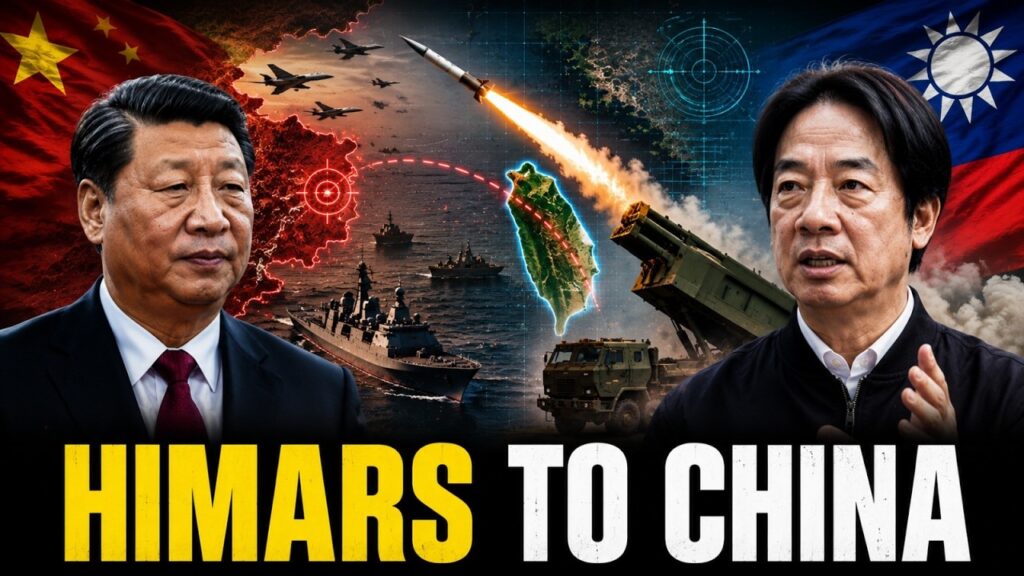
Taiwan has conducted its first major live-fire HIMARS exercise on the island’s west coast, signaling a stronger focus on invasion defense amid growing military pressure from China. Here’s why the drill matters for Taiwan Strait security and regional stability. Taiwan has carried out one of its most significant military exercises of the year, marking a major step in the island’s efforts to strengthen its defense capabilities against potential threats from mainland China.
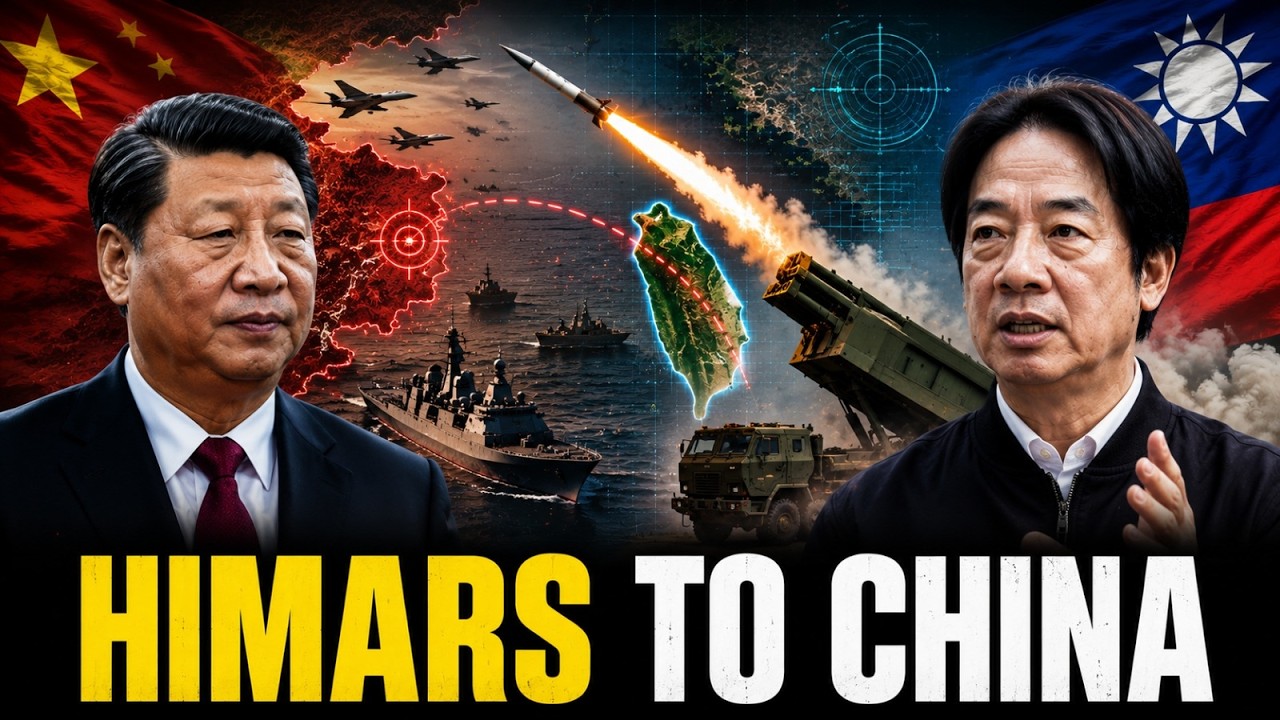
For the first time, Taiwan conducted a live-fire exercise using its American-supplied High Mobility Artillery Rocket System (HIMARS) from positions along the island’s west coast. The drill simulated defensive operations against a potential amphibious assault and highlighted Taiwan’s growing emphasis on mobile, precision-guided weapon systems.
The exercise comes at a time when military activity around Taiwan remains elevated. Chinese warships and military aircraft continue to operate near the island on a regular basis, while Beijing maintains pressure on Taipei through military exercises and strategic signaling.
Against this backdrop, Taiwan’s latest HIMARS drill serves as both a military training event and a broader statement about the island’s evolving defense strategy.
Taiwan Conducts First Major HIMARS Live-Fire Exercise
The exercise took place near Taichung on Taiwan’s western coastline, the section of the island that directly faces mainland China across the Taiwan Strait.
Taiwanese military units fired rockets from the High Mobility Artillery Rocket System, commonly known as HIMARS, a platform supplied by the United States as part of ongoing defense cooperation with Taipei.
Military officials stated that the drill was designed to simulate defensive operations during the early stages of a potential invasion scenario. Troops practiced rapidly deploying launchers, conducting strikes against simulated targets, and relocating before enemy forces could respond.
The exercise focused heavily on mobility, survivability, and operational speed—capabilities that have become increasingly important in modern warfare.
By testing these systems under realistic conditions, Taiwan’s military aims to improve readiness and ensure that forces can respond effectively during a crisis.
Why HIMARS Has Become One of the World’s Most Important Rocket Systems
The HIMARS platform has gained international attention in recent years due to its performance in modern conflicts.
Unlike traditional artillery systems that often remain in fixed positions, HIMARS is designed around mobility. Military crews can move into position quickly, launch precision-guided rockets, and relocate before enemy surveillance or targeting systems can identify their location.
This tactic, often referred to as “shoot-and-scoot,” significantly improves survivability on a modern battlefield.
The system has attracted global interest following its extensive use in the Russia-Ukraine war, where Ukrainian forces employed HIMARS to strike logistics hubs, command centers, ammunition depots, and other high-value targets far behind front lines. Taiwan sees similar advantages in the system.
Military planners believe highly mobile weapons can continue operating even under intense attack, making them particularly valuable for defending an island that could face sustained missile and air strikes during a conflict.
Why the Location of the Exercise Matters
The choice of location was highly significant.
Taiwan’s west coast directly faces mainland China and is widely viewed by military analysts as one of the most likely areas where an amphibious invasion would occur in a future conflict scenario. Many of Taiwan’s major population centers, transportation hubs, and industrial facilities are located along this western corridor. As a result, defending these areas remains a top priority for military planners. By conducting live-fire exercises in this region, Taiwan is practicing how it would respond during the critical opening stages of a potential cross-strait conflict.
While the rockets used during the exercise were reportedly training rounds, the broader HIMARS system offers substantial capabilities.
Certain variants of the system can engage targets at ranges of up to 300 kilometers, potentially allowing strikes against military infrastructure located across the Taiwan Strait, including targets in China’s Fujian Province.
Philippines is moving toward military cooperation with Taiwan
Such capabilities add another layer of deterrence to Taiwan’s defensive posture.
Taiwan’s Shift Toward Asymmetric Warfare
Taiwan’s defense strategy is increasingly built around a simple reality: it cannot compete with China in terms of overall military size.
The Chinese military possesses significantly larger numbers of personnel, warships, combat aircraft, and defense resources. Attempting to match Beijing platform-for-platform would be difficult for Taiwan.
Instead, Taiwan has embraced what military strategists describe as asymmetric warfare.
Rather than focusing on quantity, this approach prioritizes systems that are highly mobile, difficult to target, and capable of inflicting substantial costs on a larger adversary.
Weapons such as HIMARS fit perfectly within this framework.
Taiwan often refers to this concept as the “Porcupine Strategy.” The idea is that a smaller defender can deter aggression by becoming so difficult and costly to attack that potential adversaries reconsider the risks involved.
Under this strategy, mobility, precision, resilience, and survivability become more important than simply possessing large numbers of conventional platforms.
China Continues to Increase Military Pressure
Beijing considers Taiwan part of China and has consistently stated that reunification remains a national objective.
Chinese leaders have repeatedly emphasized that they prefer peaceful reunification but have never ruled out the use of force if necessary.
In recent years, the People’s Liberation Army (PLA) has significantly increased military activity around Taiwan. Fighter aircraft, bombers, surveillance platforms, and naval vessels frequently operate near the island as part of regular patrols and exercises.
China has also criticized growing military cooperation between Taiwan and the United States, particularly regarding arms sales and defense assistance.
As Taiwan strengthens its defenses, Beijing often responds with additional military demonstrations.
This dynamic has contributed to a cycle of strategic signaling across the Taiwan Strait. Taiwan enhances readiness and acquires new capabilities, while China increases military pressure and reiterates its opposition to foreign involvement.
The result is a security environment that remains tense and closely monitored by governments around the world.
What This Exercise Reveals About Taiwan’s Military Planning
The HIMARS drill was about much more than launching rockets.
At its core, the exercise reflected Taiwan’s broader effort to prepare for future security challenges and adapt to the changing nature of warfare.
Military planners are increasingly studying lessons from contemporary conflicts, particularly the war in Ukraine. These conflicts have demonstrated how smaller forces can effectively resist larger militaries by leveraging mobility, precision-guided weapons, intelligence networks, and advanced technology.
Taiwan is applying many of these lessons to its own defense planning.
The focus is not necessarily on defeating a larger military outright but on making any potential invasion so costly, complex, and risky that it becomes less attractive in the first place.
In this sense, deterrence remains the ultimate objective.
A Strategic Message Across the Taiwan Strait
Taiwan’s latest HIMARS exercise highlights one of the most important security challenges facing the Indo-Pacific region.
Cross-strait tensions remain elevated, military activity continues to increase, and both Taipei and Beijing are investing heavily in new capabilities designed to strengthen their positions.
Taiwan is preparing for worst-case scenarios by improving readiness, investing in mobile weapon systems, and refining its asymmetric defense strategy.
China continues to expand military pressure while emphasizing its long-term goal of reunification.
Meanwhile, the United States remains deeply involved through security cooperation and arms support for Taiwan.
The rockets fired during this week’s exercise were part of a training operation, but the broader message was unmistakable.
Taiwan wants to demonstrate that it is preparing for potential challenges ahead and that any future attempt to seize the island would face a determined, increasingly capable, and well-prepared defense.
Follow Indo-Pacific Report
For in-depth analysis of Indo-Pacific security, Taiwan Strait tensions, military modernization, defense technology, and global geopolitics, visit: