Subic Bay Returns to the Geopolitical Spotlight: Strategic Crossroads of US–China Rivalry in the Indo‑Pacific
What happens when a place the world once walked away from quietly becomes indispensable again? Three decades after the last U.S. warship sailed out, Subic Bay is no longer a footnote of Cold War history. It is back, this time not as a sprawling permanent base, but as a flexible, high-value node in a much sharper, more competitive Indo-Pacific chessboard. In an era defined by missile ranges, maritime chokepoints, and logistics speed, geography has returned with a vengeance, and Subic sits right where pressure converges.
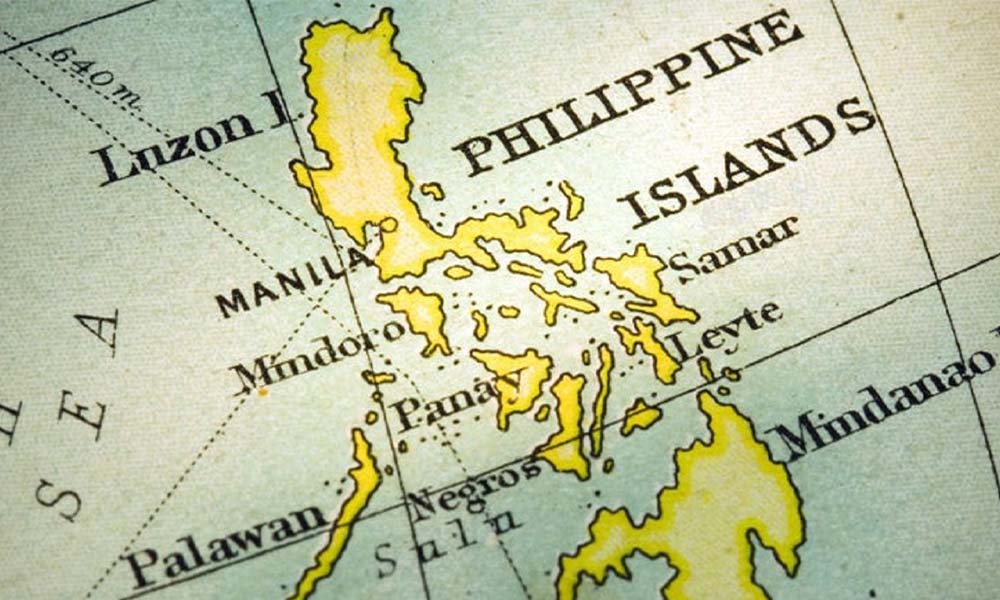
The revival of Subic Bay is not driven by nostalgia or symbolism. It is driven by math and maps. Facing the South China Sea, anchored on Luzon’s western coast, and positioned astride sea lanes that carry a third of global trade, Subic offers something modern deterrence demands: proximity without permanence. As competition between the United States and China intensifies, the bay’s deep harbor, industrial infrastructure, and access to northern and western Philippine approaches make it uniquely suited for distributed operations, rapid sustainment, and alliance interoperability.
To understand why Subic matters again, it helps to look beyond the Philippines. Across the region, states are repurposing old geography for new strategic realities. Japan is fortifying its southwestern islands. Australia is expanding northern ports for rotational access. Singapore has positioned itself as an indispensable logistics hub without hosting permanent foreign bases. Subic fits squarely into this pattern but with one crucial difference: it sits closest to the most contested waters in Asia, where gray-zone coercion, maritime lawfare, and near-daily confrontations have become the norm rather than the exception.
For the Philippines, Subic’s return marks a decisive shift in strategic posture. Manila is no longer treating its geography as a vulnerability to be managed, but as leverage to be activated. Defense modernization, expanded alliance access, and an emphasis on maritime domain awareness are turning former civilian and commercial spaces into dual-use assets. Subic is central to that shift, serving simultaneously as a logistics hub, an industrial base, and a strategic signal that Philippine territory will no longer be strategically hollow.
The core argument of this analysis is straightforward but consequential: Subic Bay’s resurgence is not accidental, and it is not temporary. It reflects the convergence of U.S. distributed deterrence strategy, China’s expanding gray-zone pressure in nearby waters, and Manila’s deliberate pivot toward alliance-enabled defense. In this new configuration, Subic is no longer a Cold War relic; it is a modern strategic linchpin, quietly reshaping how power is projected, sustained, and contested in the Indo-Pacific.
Historical Background — From Cold War Bastion to Strategic Vacuum
At its height, Subic Bay was not merely a base; it was the logistical engine of American power in the western Pacific. By the late Cold War, Subic supported 60,000+ U.S. military personnel and civilian workers, operated one of the world’s largest overseas naval repair complexes, and managed millions of barrels of fuel storage alongside expansive ammunition depots. Its deep-water harbor, naturally capable of accommodating aircraft carriers, allowed rapid turnaround for carrier strike groups and submarines, sustaining operations thousands of miles from the U.S. mainland.
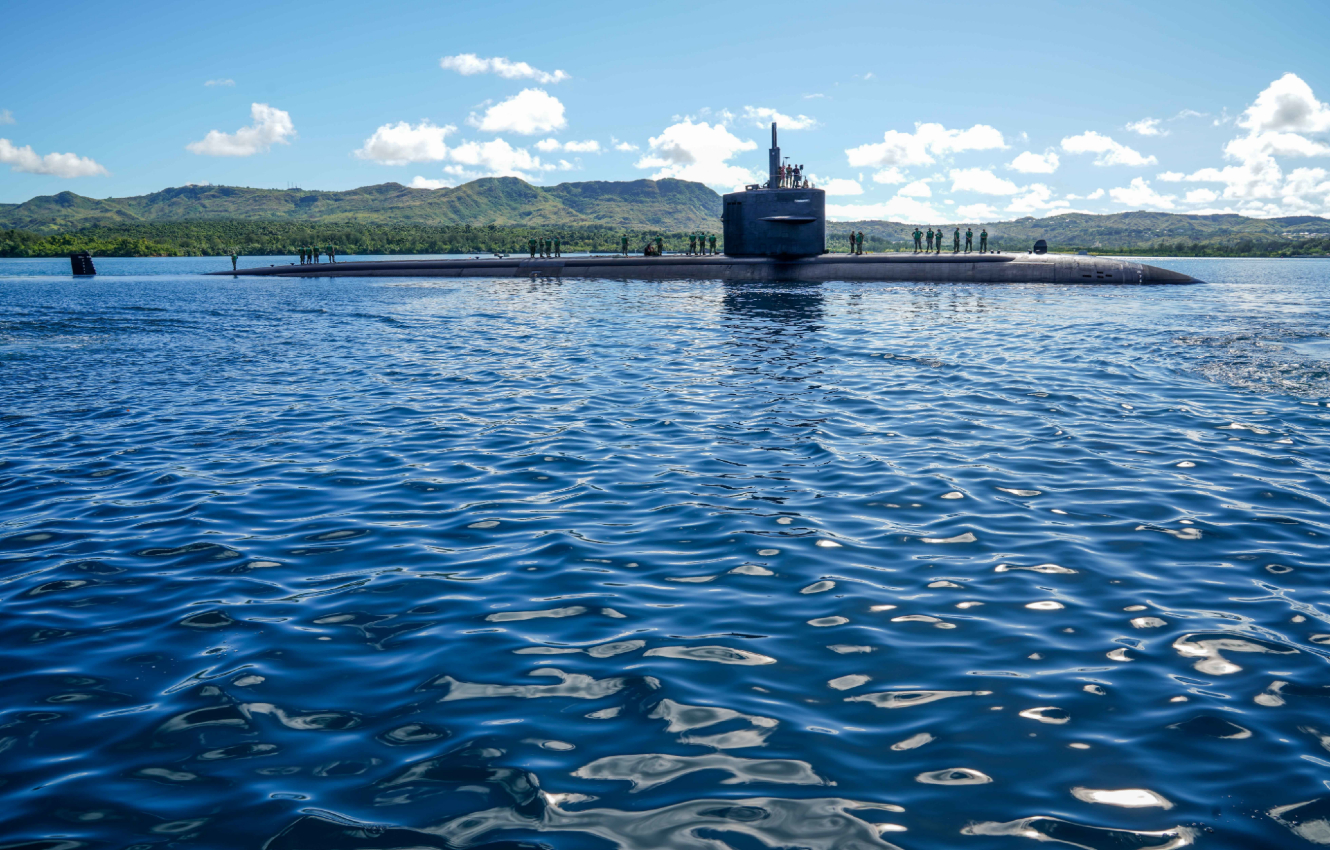
That capacity translated directly into wartime output. During the Korean War, Subic functioned as a rear-area logistics anchor supporting UN naval operations. In the Vietnam War, its tempo intensified: at peak periods, hundreds of U.S. Navy ships per year rotated through Subic for repair, replenishment, and crew rest. The base enabled a continuous U.S. naval presence in Asia for decades, compressing distance, reducing transit times, and lowering sustainment costs, turning geography into a strategic advantage rather than a constraint.
That system unraveled quickly in the early 1990s. In 1991–1992, after the bases agreement expired, the Philippine Senate rejected renewal amid sovereignty concerns, shifting domestic politics, and post–Cold War expectations of reduced great-power rivalry. By 1992, the U.S. Navy had fully withdrawn, ending nearly a century of American basing presence. What vanished was not only foreign troops, but a comprehensive maritime sustainment ecosystem, repair docks, fuel farms, supply chains, and trained local labor that had quietly underwritten regional stability.
Economically, the transition succeeded. Subic was converted into the Subic Bay Freeport Zone, attracting global manufacturing, logistics, and shipping firms and generating 150,000+ civilian jobs within two decades. Annual trade throughput and investment steadily climbed, and the conversion became a textbook case of post-base redevelopment. Strategically, however, the outcome was stark. As U.S. forces departed and regional maritime competition intensified, particularly after the 2000s, the Philippines lost a forward logistics anchor at the precise moment when persistent naval presence, rapid response, and sustainment depth were becoming decisive again. That strategic vacuum, largely underestimated at the time, would shape Philippine security choices for decades to follow.
Geography as Destiny — Why Subic Bay Is Strategically Unique
Some locations matter because of politics. Others matter because of promises. Subic Bay matters because of physics. Its strategic value begins with geography that cannot be replicated, relocated, or engineered elsewhere in the Philippines or easily countered by any adversary.
Subic is one of Southeast Asia’s finest natural deep-water harbors. Its depth, shelter, and approach channels allow aircraft carriers, large amphibious ships, and heavy logistics vessels to enter and operate without dredging or artificial expansion. That matters in wartime conditions, when ports must function under pressure, damage, and time constraints. Unlike many regional facilities that rely on long piers or constant maintenance, Subic’s harbor was shaped by nature for naval-scale operations. This is why it worked during the Cold War and why it works again today.
Geography amplifies that physical advantage. Subic sits roughly 220 kilometers from Scarborough Shoal, one of the most contested flashpoints in the South China Sea. It lies about 1,000 kilometers from Taiwan, a distance modern military aircraft can cover in roughly an hour. From Subic, forces can reach the northern Luzon corridor, the West Philippine Sea, and the approaches to the Luzon Strait without crossing chokepoints or relying on foreign territory. Few locations in the region offer that combination of access and flexibility.
This positioning turns Subic into leverage rather than just real estate. It sits directly adjacent to sea lines of communication that carry energy supplies, raw materials, and manufactured goods between Northeast Asia, Southeast Asia, and the Indian Ocean. In a crisis, whoever can support, protect, or disrupt these routes holds disproportionate influence over escalation dynamics. Subic does not need to host permanent combat forces to matter; its value lies in enabling movement, sustainment, and resilience under contested conditions.
That logic is increasingly reflected in how modern militaries think about basing. As one former U.S. Indo-Pacific Command planner put it, “Subic Bay is not about hosting forces, it’s about enabling forces to move, sustain, and survive in a contested environment.” In an era of precision missiles and surveillance saturation, static mega-bases are liabilities. Geography that supports dispersion, logistics depth, and rapid turnover is powerful. Subic Bay offers exactly that, and that is why, once again, the map is pulling it back to the center of Indo-Pacific strategy.
Geopolitical Context — Why Subic Is Back in Play
Subic Bay did not regain relevance because of nostalgia. It returned because pressure returned to Philippine waters and became permanent. Its revival reflects three converging forces: sustained Chinese maritime coercion, a fundamental shift in U.S. force posture, and Manila’s quiet but decisive strategic pivot. The immediate driver is China’s behavior at sea.
Vessels from the China Coast Guard and China’s maritime militia now maintain a near-continuous presence around Philippine-claimed features, transforming sporadic confrontations into a constant condition. The method is calibrated, persistent proximity, intimidation below the threshold of war, and normalization of control through repetition rather than force.
Japan Plans to Export Military Command & Control System to the Philippines
This pressure is most visible at Scarborough Shoal. Since 2012, the shoal has illustrated how quickly access can be lost when maritime presence cannot be sustained. Although it lies within the Philippines’ exclusive economic zone, effective control rests with China. That lesson reshaped Philippine planning on response time and logistics depth along the western seaboard, bringing Subic Bay back into strategic focus. U.S. strategy has simultaneously evolved.
The United States Navy and United States Marine Corps are shifting away from large, fixed bases toward distributed operations designed to survive inside China’s missile envelope. In this model, logistics nodes, ports that enable movement, repair, and sustainment without permanent basing, are as decisive as combat forces.
Subic fits this logic precisely. Under the Enhanced Defense Cooperation Agreement, expanded to nine sites in 2023–2024, U.S. access in the Philippines is rotational and modular. While Subic is not a formal EDCA base, it is increasingly treated as a high-value logistics and sustainment hub, supporting naval operations, humanitarian response, and rapid force flow without the political costs of permanent basing.
For the Philippines, this aligns with a broader strategic recalibration. Public confidence in the United States as a security partner now exceeds 80 percent, driven by concern over Chinese actions in the West Philippine Sea. Yet Manila remains economically exposed to Beijing. Subic offers a middle path: stronger deterrence through enablement, not escalation through permanent presence.
In short, Subic is back because the old equilibrium collapsed. China made sustained presence is unavoidable. U.S. strategy made flexible logistics essential. Philippine policy made alliance enablement politically viable. Subic Bay sits at its intersection, not as a relic of past alliances, but as a practical response to current realities.
Renewed Strategic Role of Subic Bay
Subic Bay’s return is not theoretical or rhetorical; it is being built, poured in concrete, wired with logistics systems, and quietly integrated into allied planning. What is emerging is not a “base” in the Cold War sense, but a modern enablement platform designed for speed, resilience, and political sustainability. At the center of this revival is U.S. logistics infrastructure deliberately shaped to fit Philippine constitutional limits.
A U.S. Navy–funded, climate-controlled storage and maintenance facility, valued at over $100 million and spanning roughly 25,000 square meters, is scheduled for completion by September 2026. Crucially, it is not intended to house permanent combat forces. How the Philippines Is Building a Missile Wall Against China
Instead, it will store vehicles, humanitarian assistance equipment, and maritime sustainment assets. The operational logic is clear: pre-position capability, not troops. In a crisis, forces can flow in quickly; in peacetime, the footprint remains low-profile. This model supports rapid reinforcement, disaster response, and allied sustainment while avoiding the political backlash historically associated with permanent basing.
Running in parallel is Subic’s industrial reawakening. The former Hanjin shipyard, now operating as Agila Subic under HD Hyundai Heavy Industries with U.S. investment, has reestablished Subic as one of Southeast Asia’s most capable naval-industrial hubs. The facility can repair and service destroyers, frigates, large amphibious ships, and potentially even aircraft carriers. In an era when forward repair capacity is as decisive as firepower, this matters enormously. Every day a ship does not need to sail back to Japan, Guam, or Hawaii for maintenance is a day gained in operational tempo.
Allies have taken notice. The French Navy has publicly identified Subic as a key Indo-Pacific support hub for its carrier strike group and amphibious deployments. That endorsement is telling. France operates globally and chooses its logistics nodes carefully. Subic’s selection signals that it is no longer just a Philippine or U.S. asset, but a shared enabler for coalition operations stretching from the Indian Ocean to the Western Pacific.
For the Philippines itself, Subic is once again becoming an operational anchor. The Philippine Navy has re-established forward facilities in the bay to support its expanding fleet of modern frigates and offshore patrol vessels. This shortens deployment cycles to the West Philippine Sea and improves sustainment for continuous maritime presence, an area where Manila has historically struggled. Portions of Subic’s former airfield are also being refurbished to support maritime patrol and surveillance missions, reinforcing the bay’s role as a joint sea-air node rather than a single-service enclave.
Exercises are binding all of this together. Multinational drills such as Exercise Sama Sama routinely bring together nearly 1,000 personnel from the Philippines, the United States, Japan, and other partners. These are not symbolic port calls. They integrate maritime warfare, logistics, command-and-control, and sustainment under realistic conditions, exactly the kind of coordination required in a contested environment.
Taken as a whole, Subic’s renewed role reflects a deeper shift in how power is organized in the Indo-Pacific. It is no longer about who flies the largest flag over a base. It is about who can move forces faster, fix ships closer to the fight, sustain partners under pressure, and do all of it without triggering political resistance. Subic Bay now does exactly that, and that is why it has quietly become one of the most consequential logistics and industrial nodes in the region.
Strategic Implications
Subic Bay strengthens deterrence in a distinctly modern way. By prioritizing sustainment over stationing combat units, it allows allied forces to operate closer to contested waters without presenting the fixed, high-visibility targets that adversaries plan against. This posture complicates coercion and shortens response timelines while remaining politically sustainable. Just as important, Subic improves alliance interoperability, shared logistics standards, faster intelligence handoffs, and rehearsed crisis-response pathways, turning coalition presence from episodic coordination into routine capability.
The renewed relevance of Subic reinforces the credibility of the Mutual Defense Treaty, which Washington reaffirmed in 2023 as covering armed attacks in the South China Sea. The emphasis on dual-use infrastructure, ports, storage, maintenance, and airfield support deepens operational integration while preserving Philippine control of territory and facilities. The alliance thus advances not through permanence, but through access, readiness, and shared enablement. China Fires Flares at Philippines Aircraft as EW Warfare Goes Live in the Spratlys
Beijing has reacted predictably. China has criticized expanded access arrangements as destabilizing and warned of “strategic consequences,” signaling that logistics nodes are now viewed as part of the deterrence equation. Domestically, debate persists in the Philippines over sovereignty, environmental impact, and the fear of becoming a frontline state. These pressures do not negate Subic’s value, but they shape how far and how fast integration can proceed.
Economic and Non-Military Dimensions
Policy reforms now encourage domestic defense manufacturing, and Subic is positioned to capture that upside. New facilities are projected to create 200–300 skilled technical jobs, with spillovers into logistics, engineering, and maritime services. Over time, this builds local capacity that supports readiness without relying exclusively on external supply chains. Subic’s deep harbor also serves a broader purpose: diversification. As congestion and geopolitical risk strain traditional hubs, Subic offers an alternative gateway to Manila for Indo-Pacific trade and repair services.
That redundancy matters in a region where disruptions, natural or political, are no longer rare. By hosting logistics infrastructure rather than combat units, Manila strengthens deterrence while limiting domestic backlash. The approach preserves flexibility: access can scale up in emergencies and scale down in peacetime, maintaining public consent without sacrificing preparedness.
Constraints, Trade-Offs, and Counterpoints
The Philippine Constitution restricts permanent foreign bases absent Senate approval. This cap is real and enduring, and it deliberately bounds the scale of foreign presence, forcing innovation toward rotational access and pre-positioning rather than permanence. Historical memory of U.S. bases continues to shape public skepticism, especially among nationalist groups.
Transparency, environmental safeguards, and visible Philippine command over facilities are therefore not optional; they are prerequisites for legitimacy. Subic enhances deterrence, but it also raises exposure in a regional contingency involving Taiwan or the South China Sea. That risk is inherent to geography; the policy choice is whether to manage it with capability and partners, or absorb it without leverage.
Conclusion — Subic Bay as a Strategic Barometer
Subic Bay’s resurgence captures the essentials of 21st-century Indo-Pacific security: logistics, geography, and alliances matter as much as firepower. No longer a monolithic Cold War base, Subic has become a flexible sustainment and industrial node aligned with distributed deterrence. More broadly, Subic shows how legacy geography adapts to new competition, how ports once built for permanence are repurposed for resilience.
Russia and China Deploy Drones and Submarines as the Philippines Faces New Sea Threats
As rivalry between the United States and China deepens, Subic will continue to signal how the Philippines balances sovereignty, alliance commitments, and regional stability, making it one of the most strategically revealing ports in the Indo-Pacific today.