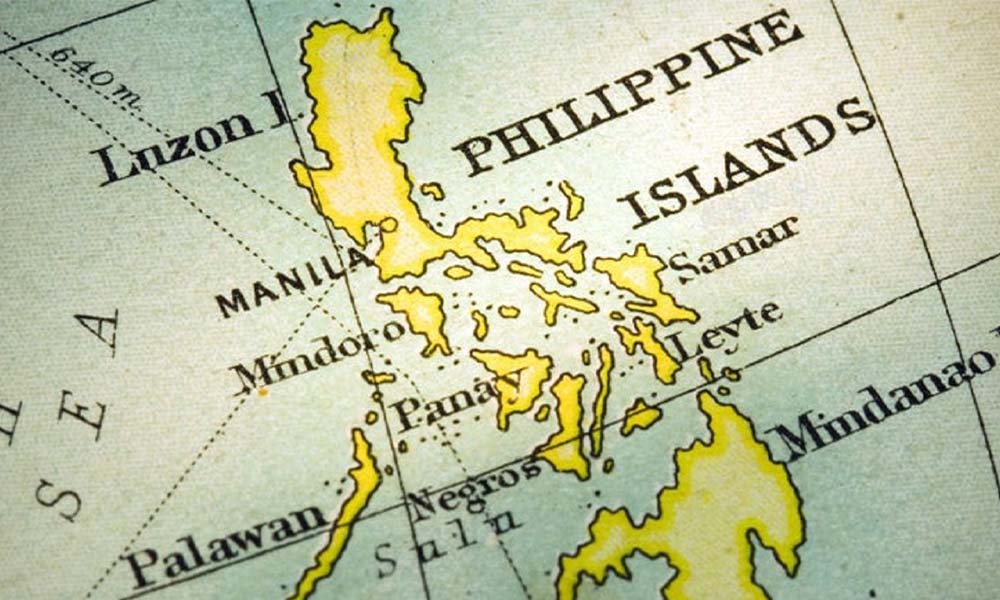
Perched at the very crossroads of the Indo-Pacific, the Philippines is more than just a cluster of islands, it is a gatekeeper to sea lanes that carry over a third of the world’s maritime trade and a cornerstone of the “first island chain” that shapes U.S. and allied defense strategy. Beneath these same contested waters lies staggering wealth: fisheries that feed millions, vast deposits of nickel and cobalt critical for green technologies, and oil and natural gas reserves potentially worth trillions of pesos. Yet this fortune sits inside waters increasingly claimed by China’s sweeping nine-dash and now ten-dash line, despite a 2016 international ruling that flatly rejected those claims.
The stakes could hardly be higher. Should Manila invite joint development with Beijing to tap this treasure, risking dependency and political leverage? Or should it go it alone, asserting its rights and investing heavily to keep every peso of profit, while bracing for pushback from the region’s largest power? Supporters of independent exploration point to the 1.52 % of GDP already generated by fisheries, the 3.5 Tcf of proven natural gas, and more than $1 trillion in untapped critical minerals as proof that the country can fuel its own growth if it defends its maritime backyard.
But the questions multiply: can the Philippines marshal the billions in capital and the technology required, given constitutional ownership limits and a volatile security environment? Will global demand for clean-energy minerals like nickel and cobalt create a once-in-a-generation opportunity, or a scramble that draws even sharper foreign interest? In the end, the nation faces a defining choice between partnership and self-reliance, compromise and confrontation. What course it sets now will determine not only the fate of its natural riches but its standing as a sovereign power in an Indo-Pacific order still up for grabs.
The Philippines’ Natural Resources
The Philippines possesses a remarkable portfolio of natural resources whose economic and strategic value extends far beyond its shores, resources that are concentrated in, or closely linked to, the West Philippine Sea (WPS). These include world-class fisheries, energy reserves of natural gas and oil, and a largely untapped wealth of rare earth and other critical minerals.
Marine and fisheries resources form the foundation of coastal livelihoods and food security. The fishing industry contributes about 1.52 percent to national GDP, sustaining millions of jobs in capture, aquaculture, and processing. The WPS alone accounts for roughly 7.2 percent of national fisheries production (2018-2022), making it indispensable for the national seafood supply. Key commercial species such as galunggong (round scad) and tuna are sourced heavily from these waters; a significant share of the fish consumed in Metro Manila is caught here. Biodiversity studies underscore its ecological importance: a National Fisheries Research and Development Institute (NFRDI) survey documented 71 reef fish species in the WPS, identifying it as both a rich feeding ground and a vital spawning and nursery area. But these gains are vulnerable to overfishing and to the “gray zone” tactics of foreign maritime forces that harass Filipino fishing boats, endangering food supplies and household incomes.
Natural gas deposits provide the country’s most important indigenous source of cleaner energy. The Philippines’ proven reserves are about 3.5 trillion cubic feet (Tcf), dominated by the Malampaya gas field off Palawan. Gas from Malampaya has supplied as much as 20–30 percent of Luzon’s electricity and remains central to the country’s power mix. Yet the field is expected to decline sharply and may be largely depleted by 2027, creating an urgent need for exploration and development of new reserves in the WPS and other basins to avoid heavier dependence on imported liquefied natural gas and coal.
Oil resources add further strategic weight. The Philippines has proven reserves of roughly 139 million barrels, but current output is minimal. Geological assessments suggest far greater potential in contested offshore zones: Spratly Island areas within the WPS could hold up to 17.1 billion barrels of oil and large associated gas fields. Unlocking these resources would require not only technical investment but also the assertion of sovereign rights to ensure uninterrupted exploration and production.
Rare earth and critical minerals represent an underdeveloped but potentially transformative opportunity. The Philippines is already among the world’s top five countries for nickel and cobalt reserves, essential for batteries, electric vehicles, and renewable-energy storage. Government data valued the country’s combined gold, copper, nickel, and chromite reserves at about PHP 481.45 billion as of 2024, and broader geological surveys estimate that untapped critical and rare-earth mineral reserves could exceed $1 trillion in value. Promising sites include Palawan and other regions where rare earth elements (REEs) can be recovered as a byproduct of existing mining operations.
Together these sectors, fisheries, natural gas, oil, and rare earth minerals highlights why the West Philippine Sea and adjacent territories are at the heart of the Philippines’ economic future and strategic autonomy. They provide food and energy security, support industrial modernization, and strengthen the country’s leverage in regional diplomacy. Yet realizing their full potential depends on effective governance, sustainable management, and above all the defense of the Philippines’ internationally recognized maritime rights.
China’s Aggressive New Ten-Dash Line Claims
China’s aggressive new ten-dash line is far more than a cartographic tweak, it is a bold geopolitical challenge. In August 2023, Beijing quietly released a revised national map that added an extra dash east of Taiwan to its long-standing nine-dash claim. The new line now wraps almost the entire South China Sea, from the Paracel Islands down to the Spratlys and across the West Philippine Sea (WPS), and even pushes closer to Taiwan and Japan’s Okinawa chain. This shift signals an expanded appetite for control, effectively rewriting maritime geography to suit China’s ambitions.
International law, however, tells a different story. The 2016 Permanent Court of Arbitration (PCA) ruling in The Hague, initiated by the Philippines, was explicit: China’s historic “nine-dash line” has “no legal basis” under the United Nations Convention on the Law of the Sea (UNCLOS). The arbitral tribunal affirmed that waters within the Philippines’ 200-nautical-mile Exclusive Economic Zone (EEZ) are sovereign to Manila, giving it exclusive rights to fish, drill for oil, and tap natural gas. By simply redrawing the map with an extra dash, China is not only defying this binding judgment but also testing whether international law can restrain a great power bent on expanding its reach.
Beijing’s behavior at sea underscores that this is not an academic debate. Over the last decade, China has built and militarized at least seven artificial islands in the Spratly chain, complete with 3-km runways, deepwater ports, advanced radar systems, and surface-to-air missile batteries. Chinese Coast Guard and maritime militia vessels have swarmed traditional Filipino fishing grounds like Scarborough Shoal and Second Thomas Shoal, using water cannons, ramming tactics, and dangerous close passes to drive out Philippine boats. These so-called “gray zone” operations stop short of open warfare but create permanent facts on the water, slowly eroding Philippine rights and deterring economic activity through intimidation.
Manila has responded with growing firmness. The Philippine Department of Foreign Affairs has repeatedly stated that China’s ten-dash line is “contrary to the convention and without lawful effect,” and that only UNCLOS and the 2016 arbitral award define legitimate maritime entitlements. President Ferdinand Marcos Jr. has framed the award as “beyond compromise and beyond the reach of passing governments to dilute, diminish, or abandon.” These declarations highlight that Beijing’s ten-dash line is not just a bilateral quarrel over reefs; it is a direct challenge to the rules-based maritime order, with implications for every nation that relies on free navigation and respect for international law.
Seen in this light, China’s ten-dash map is a strategic instrument, part psychological warfare, part legal sleight of hand, and part military pressure, aimed at normalizing control over waters that the world’s courts say are not China’s at all. The stakes are profound: whether smaller nations like the Philippines can hold fast to internationally recognized rights, and whether the global community will enforce the principles that keep critical sea lanes open and secure.
Why Should the Philippines Explore Resources on Its Own?
The Philippines has compelling economic, legal, and security imperatives to explore and develop its vast maritime and mineral resources on its own, without sharing control or profits with China or any other outside power. At stake is not only a potential economic windfall worth trillions of pesos but also the country’s ability to translate paper sovereignty into physical control over its exclusive economic zone (EEZ) in the West Philippine Sea and across its mineral-rich archipelago.
Economically, the potential is enormous and largely untapped. Government and industry studies estimate that the Philippines possesses over $1 trillion in undeveloped mineral wealth, including nickel, cobalt, copper, gold, chromite, and rare earth elements critical for batteries and high-tech manufacturing. Yet only about 5 percent of these reserves have been explored to date, leaving an immense reservoir of growth untouched. Offshore oil and natural gas represent another major prize: the Malampaya gas field alone supplies up to 30 percent of Luzon’s electricity needs, but it is projected to decline sharply by 2027. Geological surveys point to potential oil deposits of more than 17 billion barrels and natural gas reserves of at least 3.5 trillion cubic feet in the West Philippine Sea. Developing even a fraction of these reserves could transform the national energy mix, ease dependence on imported fuel, and generate billions of dollars annually in royalties, taxes, and foreign-exchange savings.
Independent exploration ensures that these profits flow directly to the Philippine economy. Rather than splitting earnings with foreign concessionaires or entering joint development schemes with China, arrangements that often carry unequal bargaining power and hidden political costs, Manila can direct revenues into infrastructure, education, healthcare, and green energy projects. Such reinvestment would create high-quality jobs, upgrade industrial capacity, and reduce long-term reliance on foreign loans or aid. By keeping control at home, the Philippines can maximize fiscal independence and inclusive growth, strengthening its overall economic resilience.
National security considerations make the argument even stronger. In contested waters like the West Philippine Sea, control over exploration and production means control over territory in practice. Every Philippine-operated drilling rig, research vessel, or fisheries patrol is a visible assertion of jurisdiction, reinforcing the country’s rights under international law. This presence deters coercion, complicates any effort by outside powers to seize or intimidate, and assures that the nation, not foreign companies or rival governments, sets the rules for environmental safeguards, safety standards, and revenue management. By reducing dependence on foreign operators, the Philippines also lessens the risk that vital energy supplies or mineral exports could be disrupted during a geopolitical crisis.
International law gives Manila a powerful shield for such a strategy. The 2016 Permanent Court of Arbitration (PCA) award in The Hague categorically rejected China’s “nine-dash line” (now “ten-dash line”) and affirmed the Philippines’ exclusive sovereign rights to exploit fisheries, oil, and gas within its EEZ. Legal scholars stress that this ruling is final and binding: “The PCA ruling provides the Philippines with a powerful legal tool to defend its sovereign rights and maritime entitlements against China’s expansive claims,” notes one expert. By actively exploring and developing these resources itself, the Philippines converts that legal victory into concrete facts on the ground and at sea, demonstrating to both allies and rivals that its EEZ is neither abstract nor negotiable.
In sum, independent resource development is both economic strategy and statecraft. It unlocks massive domestic wealth, strengthens national security, and turns international law into living practice. By investing in its own exploration technology, financing, and skilled workforce, the Philippines can ensure that every barrel of oil, cubic foot of gas, and tons of critical minerals extracted under its flag reinforces its sovereignty and benefits its people, now and for generations to come.
China WARNS Philippines as U.S. Japan Enters South China Sea
Future Output and Conclusion
Looking ahead, the Philippines must navigate a complex mix of challenges and opportunities as it seeks to unlock the full potential of its maritime and mineral wealth. On the one hand, constitutional rules such as the 60 percent Filipino-ownership requirement for resource development limit how foreign investors can participate, which can complicate financing and technology transfers. Large-scale offshore oil, gas, and rare-earth mineral projects also demand billions of dollars in up-front capital and long time horizons to reach commercial production. These factors require a careful blend of domestic investment, technology acquisition, and strategic partnerships that preserve sovereignty while ensuring operational success.
On the other hand, global market trends strongly favor Philippine resources. The worldwide shift to renewable energy and electric mobility has created a surging demand for nickel, cobalt, and other critical minerals used in batteries and clean-energy infrastructure. With some of the world’s largest nickel and cobalt reserves and promising rare-earth element (REE) prospects, the Philippines is well positioned to become a key supplier for the green economy. Likewise, growing regional energy needs and the potential for undiscovered oil and gas reserves offer major incentives to accelerate responsible exploration in the West Philippine Sea and beyond.
In conclusion, the Philippines’ rich natural resources and strategic Indo-Pacific location make it a pivotal player in future energy and mineral supply chains. Its long-term prosperity and security depend on asserting full sovereignty over these resources and managing them sustainably. By leveraging the 2016 Permanent Court of Arbitration ruling, building domestic exploration and production capacity, and enforcing environmentally sound practices, Manila can convert legal victories into tangible economic gains. Ultimately, to secure its future the Philippines must turn natural wealth into national strength, on its own terms and for the enduring benefit of its people.