Russian Drone Attack Near Chernobyl Raises Nuclear Danger Fears
Nearly four decades after the world’s worst nuclear disaster, Chornobyl is once again making global headlines.
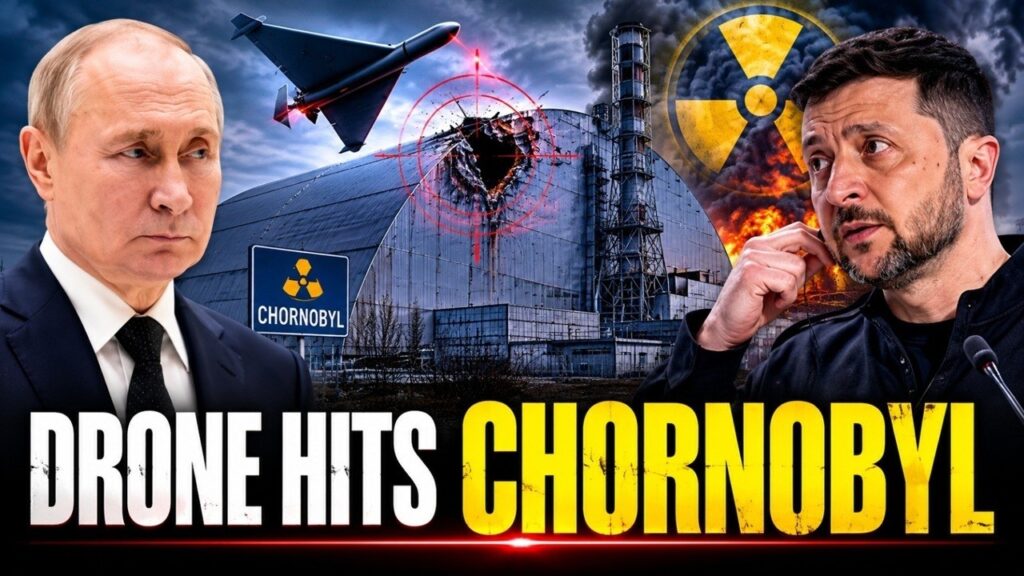
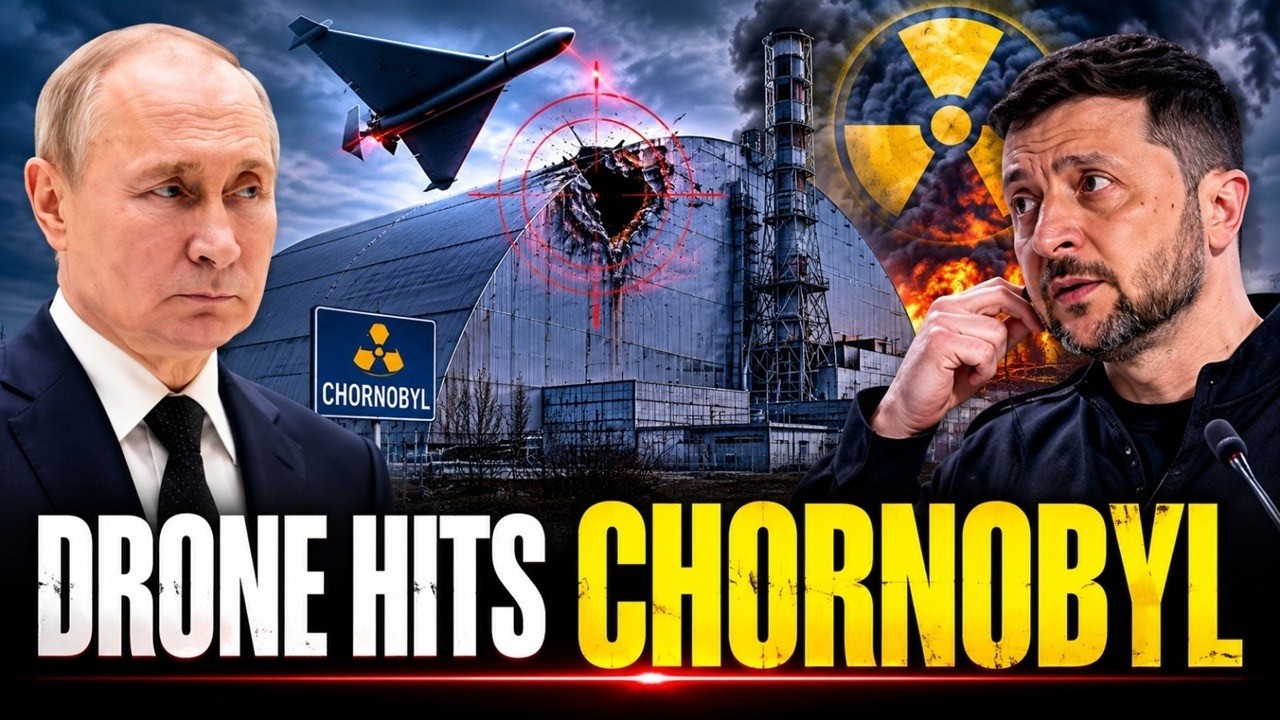
A Russian drone strike has damaged part of the protective structure covering Reactor No. 4 at the Chornobyl Nuclear Power Plant in northern Ukraine.
The attack has triggered international concern, prompted strong reactions from Ukrainian President Volodymyr Zelenskyy, and renewed fears about the risks of military activity near nuclear facilities.
While officials say radiation levels remain normal, the incident serves as a reminder that the war in Ukraine continues to create risks far beyond the battlefield.
WHAT HAPPENED AT CHORNOBYL?
According to Ukrainian authorities, a Russian drone struck the New Safe Confinement structure, the giant steel shelter built over the remains of the reactor that exploded in the 1986 Chornobyl disaster.
The impact reportedly damaged part of the protective shield and caused a fire. Emergency crews responded quickly and managed to contain the situation.
Ukraine’s government stated that radiation levels remained stable and there was no immediate danger to nearby communities or neighboring countries.
The International Atomic Energy Agency, or IAEA, also reported no increase in radiation levels following the incident.
However, the damage itself immediately raised concerns because Chornobyl remains one of the world’s most sensitive nuclear sites.
ZELENSKYY ACCUSES RUSSIA OF ENDANGERING EUROPE
President Volodymyr Zelenskyy reacted strongly to the strike.
He accused Russia of deliberately threatening nuclear safety and described the attack as evidence that Moscow is willing to risk consequences far beyond Ukraine.
According to Zelenskyy, any attack involving nuclear infrastructure should concern the entire international community, not just Ukraine.
The Ukrainian president argued that the strike demonstrated why stronger international pressure on Russia remains necessary.
For Kyiv, the issue is not only military. It is also about preventing risks that could affect millions of people across Europe.
WHY CHORNOBYL STILL MATTERS TODAY
Many people associate Chornobyl with the catastrophic explosion that occurred in April 1986.
That disaster released radioactive material across large parts of Europe and became one of the defining nuclear accidents in human history.
Although the damaged reactor is no longer operational, the site still contains radioactive material and nuclear waste that require constant monitoring.
The massive protective shelter built over the reactor was designed to prevent further contamination and safely contain the remains of the disaster.
That is why even limited damage to the structure immediately attracts global attention.
Any incident involving Chornobyl carries both practical and symbolic significance.
THE IAEA IS WATCHING CLOSELY
The International Atomic Energy Agency has repeatedly warned about the dangers of military activity around nuclear facilities.
Since the beginning of the war, the agency has expressed concerns about attacks near nuclear infrastructure, including both Chornobyl and the Zaporizhzhia Nuclear Power Plant.
The IAEA’s main message has remained consistent.
Nuclear facilities should never become targets during military conflicts.
Even when radiation levels remain normal, attacks can create uncertainty, damage critical systems, and increase the risk of accidents.
That is why international inspectors continue to monitor developments closely.
THE STRIKE COMES AS THE WAR INTENSIFIES
The Chornobyl incident is taking place during a period of escalating military activity.
Russia has increased drone and missile attacks across Ukraine.
A Russian Drone Hit a Chinese Ship Near Ukraine. The Timing Could Not Have Been Worse for Moscow
At the same time, Ukraine has expanded long-range drone operations against military and infrastructure targets inside Russia.
Both sides are relying heavily on drones, precision strikes, and long-range weapons.
As the conflict evolves, strategic infrastructure is becoming increasingly vulnerable.
Power facilities, transportation networks, military bases, and now locations linked to nuclear safety have all become part of the wider battlefield.
WHY THIS INCIDENT MATTERS
The damage at Chornobyl may not have caused a radiation emergency.
But that does not mean the incident is insignificant.
The strike highlights how modern warfare can create risks that extend beyond immediate military objectives.
A drone attack near a nuclear facility instantly becomes an international issue because the consequences of any mistake could affect multiple countries.
This is why governments, international organizations, and nuclear experts reacted so quickly.
The concern is not only what happened.
The concern is what could happen if similar incidents occur again.
WHAT HAPPENS NEXT?
Several questions now remain.
Will Russia continue military operations near sensitive infrastructure?
Will Ukraine and its allies use this incident to increase diplomatic pressure on Moscow?
And will international organizations push for stronger protections around nuclear facilities?
For now, radiation levels remain stable and the immediate danger appears limited.
But the incident has once again exposed the risks of fighting a major war in a country that hosts critical nuclear infrastructure.