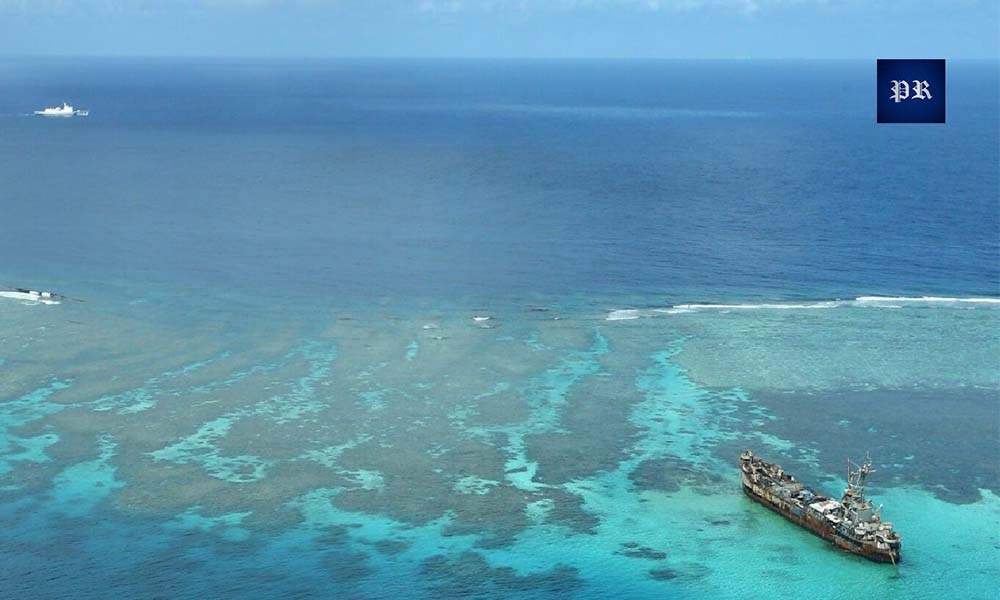
What if I told you the Philippines doesn’t need to match China’s warships one-for-one to defend its waters? What if the smarter play is turning into a porcupine, small, but too painful to mess with? That’s exactly the strategy the Philippines is adopting in the West Philippine Sea, and it’s shaking things up in the region.
The “Porcupine Strategy” is a military doctrine that flips the script on traditional warfare. Instead of trying to be bigger and stronger, a country makes itself hard to invade, hard to bully, and costly to fight. Like a porcupine’s quills, the tools don’t have to be massive, just sharp, quick, and everywhere. For the Philippines, this means investing in fast-attack boats, mobile missile units, coastal radars, and defensive alliances that make it incredibly difficult for China to gain ground without paying a steep price.
This idea isn’t new. It first gained traction as a way for Taiwan to defend itself against China’s threats. But now, Manila is making it its own, transforming its navy, upgrading its coastal defense, and forming new military partnerships that make China’s aggressive moves in the South China Sea riskier than ever. And guess what? It’s working.
By mid-2025, the Philippines has already documented over 650 incidents involving Chinese coast guard and militia vessels intruding into Philippine waters, nearly double the number from two years ago. From laser blinding to dangerous maneuvers near Filipino ships, the aggression has been real. But this time, the response isn’t just diplomatic, it’s tactical. The Philippines is now fighting smarter.
Take the Philippine Navy’s new fleet of Fast Attack Interdiction Craft. They’re small, agile, hard to detect, and pack missile systems that can target bigger Chinese ships in a heartbeat. These vessels can zip through island chains, hide in coves, and strike without warning. They’re not trying to win a full-scale war. They’re making it so costly and difficult for the enemy to advance that they’d think twice.
And it doesn’t stop with hardware. The Philippines is doubling down on strategic partnerships. Under the Enhanced Defense Cooperation Agreement, the U.S. is helping the Philippines upgrade nine critical military bases, including several near flashpoints like Taiwan and the South China Sea. In 2024 alone, the U.S. delivered $100 million worth of gear, from drones to surveillance radars to anti-ship systems, all meant to boost the porcupine’s sting.
This alliance isn’t symbolic. American and Filipino forces are now conducting regular joint patrols, facing down Chinese ships together. As U.S. Pacific Commander Admiral John Aquilino said, “An attack on the Philippines is an attack on all of us.” That line is different when you realize U.S. warships are just offshore, standing by.
Even countries like Japan and Australia are joining in. Japan recently signed a Reciprocal Access Agreement, allowing both nations to hold joint military exercises in Philippine territory, the first of its kind in Southeast Asia. Meanwhile, Australia is helping monitor the West Philippine Sea using long-range surveillance planes and joint maritime patrols. The porcupine doesn’t stand alone, it’s got a pack now.
And the people? They’re behind it. Fishermen in Zambales say they just want to work without being chased away by foreign ships. Students from UP say they feel proud that their country is finally standing up, not with loud threats, but with smart moves and real defense. The tone has shifted from fear to focus.
President Marcos Jr. has made defense modernization a cornerstone of his foreign policy. In 2025, the country raised its defense budget by 21%, focusing on naval and cyber capabilities. The message is clear: the Philippines isn’t looking for a fight, but it’s no longer afraid of one either.
So what’s the message to China? It’s this: You may be bigger, but this porcupine is sharper, faster, and backed by powerful friends. Try pushing us around, and you’ll walk away bleeding. The Porcupine Strategy isn’t just military theory, it’s a new identity. It’s a way for Filipinos to protect their territory without needing a superpower’s arsenal. And it’s a reminder to the world that courage and cleverness can go a long way, especially when you know how to use your quills.
If you’re proud of the Philippines for standing its ground, drop a comment below. Share this with someone who still doubts what a determined nation can do. And don’t forget to subscribe for more real stories that shape our region, our freedom, and our future.
The Philippines’ “Porcupine” Naval Tactics: Small, Smart, and Built to Bite Back
What if we told you the future of naval warfare doesn’t look like giant warships or billion-dollar destroyers but like a swarm of small, smart, and hard-to-kill machines? That’s exactly how the Philippines is redefining its sea defense with a bold, asymmetric strategy straight from the porcupine’s playbook.
In the face of a rising Chinese presence in the West Philippine Sea, the Philippines isn’t trying to match power with power. Instead, it’s making the fight unpredictable, costly, and downright dangerous, not through size, but through strategy. The Philippine Navy is moving away from massive, conventional ships and leaning into a new era of agile, distributed, and high-tech defense.
At the heart of this shift is something called Maritime Autonomous Systems, and they’re changing the game. These include Unmanned Surface Vessels (USVs) and Unmanned Aerial Vehicles (UAVs) that operate like a high-tech swarm, scouting, striking, and surviving in places that manned ships can’t. These systems form what military analysts call a “mesh fleet”, connected, mobile, and built for chaos.
Instead of a few big ships trying to do everything, this strategy uses distributed lethality, which means many small platforms, each carrying firepower, each hard to pin down, and all working together. USVs in the water, UAVs in the sky, and land-based missile batteries like India’s BrahMos system create a kill web that can strike from almost anywhere. No single target. No predictable pattern. Just risk everywhere for the enemy.
One of the key philosophies driving this transformation comes from former U.S. Air Force Secretary Michael Wynne: “Small, cheap, and independent.” The idea is to field dozens, even hundreds, of low-cost, high-impact systems. You can’t stop them all. And even a cheap drone or autonomous boat can threaten a much more expensive Chinese warship. That’s a trade China isn’t eager to make.
This isn’t just about survival, it’s about complicating enemy planning. With such a spread-out defense grid, there’s no obvious point to hit first. You attack one node, and five others pop up elsewhere. This strategy forces Beijing’s military planners to question everything: Where’s the threat coming from? Which asset is real? Which one is armed? It’s the ultimate mental chess game.
Even more impressive, systems like the U.S.-designed Devil Ray T-38 are expanding this reach even further. These autonomous boats can carry smaller vessels or drones with them, allowing the Philippine Navy to project power far from its shores, without ever putting sailors at risk. Think of it as a carrier group in miniature, unmanned and unpredictable.
So why does this matter? Because it turns the power dynamic upside down. In traditional naval warfare, big ships rule. But in the age of AI, drones, and autonomous weapons, being smaller and smarter is an advantage, not a weakness. With every cheap autonomous vessel the Philippines adds to its arsenal, it makes aggression against it more complicated, more expensive, and more dangerous.
The Porcupine Strategy isn’t a theory anymore. It’s real, it’s happening, and it’s giving the Philippines a fighting chance, not just to defend itself, but to do so in a way that outsmarts the bully instead of trying to overpower them.
If you’re proud of how the Philippines is turning the tide with innovation and strategy, hit that like, drop a comment, and share this with someone who needs to hear how smart defense can win big. The future of sea power might just look a lot like us, sharp, scrappy, and impossible to ignore.
Supporting Data, Facts & Figures: The Stakes Behind the Strategy
China’s military isn’t just growing, it’s evolving at breakneck speed. From 1992 to 2020, Beijing’s defense spending skyrocketed by a staggering 790%, transforming the People’s Liberation Army into one of the world’s most advanced and heavily equipped forces. That’s not just about more ships, it’s about smarter missiles, AI-guided systems, and full-spectrum dominance across land, sea, air, space, and cyber.
And that’s exactly why the Philippines is no longer waiting to play catch-up the old way. It’s shifting smartly, and fast. One of the biggest milestones? The acquisition of the BrahMos cruise missile system, a joint Indo-Russian platform that’s been dubbed “the fastest cruise missile in the world.” Under a $375 million deal with India, the Philippines became the first Southeast Asian country to receive it. With land-based launchers now deployed, the country can strike at sea targets over 290 kilometers away.
But the Philippines isn’t standing alone in this fight. It’s forging iron-clad partnerships through joint military exercises, intelligence sharing, and strategic agreements. From America’s EDCA and Balikatan drills, to Japan’s training programs, to Australia’s maritime surveillance, and even France’s Indo-Pacific push, the Philippines is now one of the most strategically connected countries in the region. Defense diplomacy has become a weapon all on its own.
Why is this region so contested? Just follow the money. The South China Sea is a superhighway of global trade, with over $3.36 trillion worth of commerce flowing through it every single year. That’s not just a regional concern, that’s the lifeblood of the world economy. And for China, the stakes are even higher: 80% of its energy imports and 40% of all its trade depend on these waters. That’s why China wants control, and why others are standing up to stop it.
And legally? The Philippines has the edge. In 2016, the Permanent Court of Arbitration in The Hague ruled in favor of the Philippines, saying China’s expansive “Nine-Dash Line” claim had no legal basis under international law. It was a landmark victory for smaller nations standing up to large-scale bullying. But China dismissed it as, in their own words, “nothing but a scrap of paper.” Since then, they’ve doubled down, militarizing reefs, swarming waters with “maritime militia,” and harassing Filipino fishermen.
This is why the Porcupine Strategy matters. It’s not just a military doctrine. It’s a national response to an aggressive neighbor, a regional crisis, and a global economic chokepoint. The numbers don’t lie, and neither does the resolve of a nation that refuses to back down.
Trump Sparks Global Trade War with Sweeping Tariffs on Canada, China, and Mexico
Voices Behind the Strategy: Quotes and Perspectives
When it comes to calling out China’s claims in the West Philippine Sea, Philippine Defense Secretary Gilberto Teodoro isn’t mincing words. He’s said it flat out: China’s so-called 10-dash line is “the biggest fiction and lie” in modern geopolitics. “No ASEAN country accepts it,” he added, and that collective rejection is growing louder every year.
The tone from the Armed Forces of the Philippines is just as resolute. General Romeo Brawner, the AFP’s Chief of Staff, made it crystal clear what the game plan is: “The Armed Forces of the Philippines has to be strengthened through modernization, and secondly, we need to partner with like-minded nations.” It’s not just about boosting defense, it’s about building friendships that defend freedom.
Meanwhile, China is pushing a very different narrative. Its Ministry of National Defense has labeled the Philippines a “troublemaker” for aligning with what it calls “foreign forces” a jab at the U.S., Japan, and others. In an official statement, they said: “China never wavers in its resolve… to safeguard national territorial sovereignty and maritime rights…” a reminder that Beijing sees control of the South China Sea not as a negotiation, but a national mission.
But zoom out, and experts see something different, a shift in the balance of power through smart tech. Chris Morton of the Institute for Future Strategy summed it up perfectly: “Simply the fact that we can hold at risk Chinese manned vessels with USVs and Starlink is mind blowing.” In other words, the ability of small, cheap, unmanned systems, combined with modern communications, could flip the script entirely.
These perspectives show just how high the stakes are. It’s not just hardware and sea lanes, it’s a war of narratives, of sovereignty, and of strategy. The Philippines isn’t just fighting to defend its waters, it’s defending the truth, international law, and the right to stand tall, even against giants.
Case Studies & Future Implications: How the Porcupine Strategy Is Shaping Conflict
The Porcupine Strategy wasn’t born in the Philippines but it’s finding a new home here. The idea was first proposed for Taiwan, as a way to counter the sheer scale of China’s military. Instead of trying to match Beijing ship for ship or jet for jet, Taiwan focused on small, mobile missile launchers, fast-attack boats, and autonomous drones, all designed to hide, move, and strike unpredictably. It’s David vs. Goliath, reimagined for the 21st century.
And the concept has already proven itself on land. Look no further than Ukraine. In the early days of the war, the world watched as a smaller, outgunned nation held off a superpower, not with tanks alone, but with portable missile systems, drone warfare, and international support. Ukraine’s use of asymmetric tactics, hiding in plain sight, targeting weak points, and stretching enemy logistics, is a masterclass in porcupine warfare, even if it’s not happening at sea.
Back home, the Philippines isn’t just talking theory, it’s building the infrastructure to make the porcupine real. New fast boat bases, like the one recently opened in Quezon, are being designed specifically to support rapid-response operations. These bases will host small, high-speed vessels, including future fleets of unmanned ships, that can be deployed in minutes to patrol contested waters or intercept intrusions. It’s a shift from big bases and long planning cycles to fast, flexible, on-demand readiness.
The bigger implication? The Philippines is not just adapting, it’s setting a model for other small and mid-sized nations facing maritime threats. In an age where massive war machines dominate headlines, the porcupine strategy proves that agility, tech, and smart partnerships can level the playing field. This isn’t just the future of Philippine defense, it could be the blueprint for modern deterrence across the Indo-Pacific. So whether it’s a reef in the West Philippine Sea, a cyberstrike in Taiwan, or a drone launch in Ukraine, one message is clear: In today’s world, the small but smart can and will stand their ground.
Conclusion: The Power of Smart Resistance
The Philippines isn’t just upgrading its military, it’s upgrading its mindset. By embracing the Porcupine Strategy, the country is making a bold pivot from traditional, hard-to-sustain military models toward something smarter, leaner, and far more effective for its unique geography and threats.
Instead of trying to match China’s military muscle pound-for-pound, Manila is choosing precision over power, speed over size, and unpredictability over predictability. A network of small, cheap, unmanned systems, backed by lethal tools like the BrahMos missile, now serves as a floating reminder that even a superpower will pay a high price for pushing too far.
This isn’t just about equipment, it’s about alliances. With the U.S., India, Japan, Australia, and others standing shoulder to shoulder, the Philippines is no longer isolated. These partnerships bring not only advanced technology, but something just as vital: credibility. They tell the world, and China, that defending Philippine sovereignty is a shared interest.
And while Beijing continues its pressure tactics, propaganda, and aggressive maneuvers, the Philippines is answering not with fear, but with strategy. Through innovation, modernization, and global cooperation, it’s showing that being small doesn’t mean being weak, especially when you’re armed with vision, courage, and a whole lot of quills.