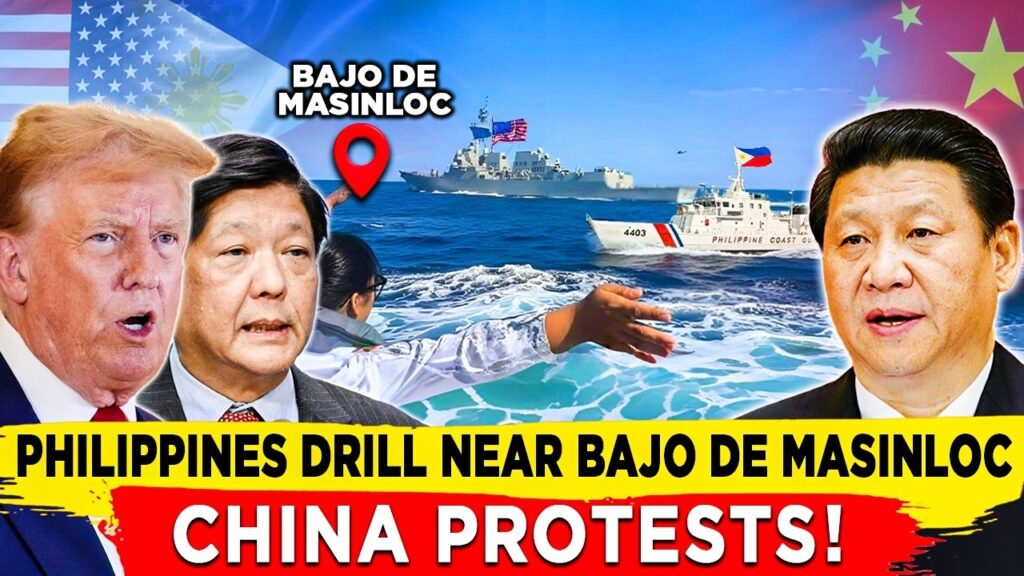
Philippines to Hold Military Exercises Near Bajo de Masinloc Despite Chinese Protests
So here’s the real question, how long can this go on before something slips? Because what’s unfolding near Bajo de Masinloc isn’t just about one set of drills or one angry protest note from Beijing. It’s about a region being pushed, slowly and steadily, toward a line no one openly admits exists. The ships keep coming. The warnings keep getting sharper. And the room, honestly, feels more crowded by the day.
If you’re watching the South China Sea and thinking this is distant, technical, or “just politics,” it might be time to look again. These waters carry global trade, regional stability, and real human lives, from fishermen trying to earn a living to pilots navigating restricted skies. What happens here won’t stay here. It never does. So stay alert. Follow the moves, not just the statements. Question the narratives being sold to you, from every side. And don’t scroll past the next update thinking it’s routine. In the South China Sea, routine is often how the biggest shifts begin.
Understanding Bajo de Masinloc: Why This Tiny Reef Matters So Much
At first glance, Bajo de Masinloc looks like just another speck on the map, a ring of rocks and water sitting quietly in the South China Sea. But don’t be fooled. This place carries more weight than its size suggests. Located roughly 120 to 124 nautical miles west of Zambales, it sits comfortably inside the Philippines’ 200-nautical-mile exclusive economic zone. In plain terms? It’s close to home for Filipinos, especially coastal communities that have relied on these waters long before geopolitics turned them into a battleground.
For local fishermen, Bajo de Masinloc isn’t a legal concept or a strategic talking point. It’s a livelihood. The surrounding waters are rich fishing grounds, the kind passed down through generations, where fathers taught sons how to read the tides and seasons. On top of that, experts have long pointed to the area’s potential hydrocarbon resources, quietly raising its value beyond fish alone. So when access is blocked or threatened, it’s not just sovereignty on the line, it’s food, income, and dignity.https://www.youtube.com/watch?v=XUW4hJOPhno
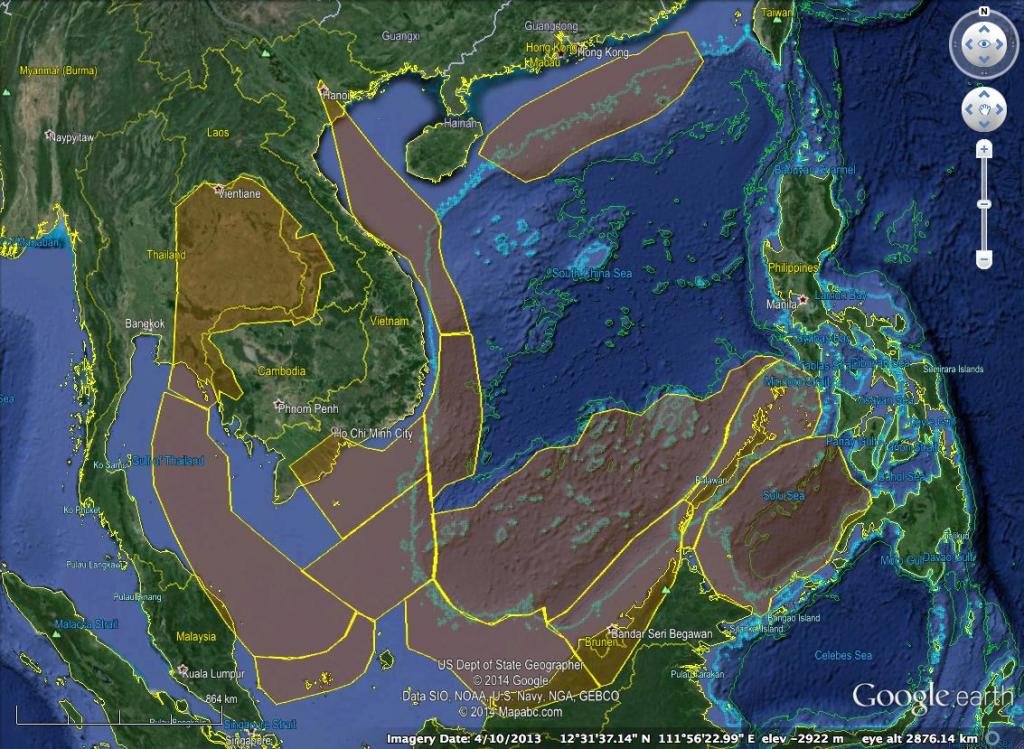
This is where the clash begins. The Philippines bases its claim on geography and international law, straightforward, textbook stuff under the United Nations Convention on the Law of the Sea. China, meanwhile, claims nearly the entire South China Sea using its so-called “nine-dash line,” recently expanded in 2023 to a “ten-dash line.” The problem? Those dashes don’t actually mean much under modern international law. Beijing insists they do anyway, leaning on historical narratives and power politics rather than legal consensus.
Back in 2016, the world briefly thought clarity had arrived. The Permanent Court of Arbitration in The Hague ruled decisively that China’s historic claims had no legal basis under UNCLOS. The tribunal was clear: Scarborough Shoal lies within the Philippines’ EEZ. Case closed, at least on paper. China rejected the ruling outright, dismissed it as meaningless, and carried on as before. And that’s the uncomfortable truth at the heart of Bajo de Masinloc: the law is clear, but enforcement isn’t. What should have settled the issue instead became another chapter in a long, uneasy standoff, one that keeps resurfacing whenever ships, flags, and now military exercises appear on the horizon.
Scope and Nature of the Military Exercises: What’s Actually Happening at Sea
So what do these exercises really look like and why is Beijing watching them so closely? This isn’t a one-week show of flags. The drills run from January 21 all the way to March 31, 2026. That’s more than two months of sustained military coordination in some of the most sensitive waters in Asia. Long enough to send a message. Long enough to test nerves.
At the center of it all is the Armed Forces of the Philippines, working shoulder to shoulder with U.S. Navy and Air Force units. And it doesn’t stop there. Australia, Canada, and Japan are all expected to plug in at various stages, a quiet but powerful reminder that Manila isn’t standing alone anymore. Earlier joint drills already set the tone: the U.S. destroyer USS John Finn (DDG-113) sailing alongside Philippine Navy assets like the BRP Antonio Luna. That image alone tells you this isn’t symbolic cooperation. It’s operational.

Out on the water, the focus is very real-world. Naval patrols and surface warfare drills will dominate the sea lanes, coordinated maneuvers, tracking exercises, response simulations. Think less parade, more muscle memory. Above the waves, aircraft and helicopters will be running air surveillance and reconnaissance missions, syncing movements, sharing data, and watching the same horizon. It’s the kind of coordination that only works if everyone knows exactly how the other thinks under pressure.
Then there’s interoperability, the unglamorous but critical backbone of modern alliances. Passing Exercises, or PASSEX, and joint tactical drills are designed to make different militaries operate like one unit. Same procedures. Same tempo. Same expectations. Because in a real crisis, confusion costs lives, and hesitation invites mistakes.https://indopacificreport.com/china-builds-a-military-base-on-scarborough/
Officially, the objectives sound calm and measured: strengthening deterrence, improving readiness, reinforcing a rules-based international order. But read between the lines and it’s clear what’s happening. These exercises are about reassurance, to allies, to fishermen back home, to a public tired of watching its waters contested. As one AFP statement put it, “This iteration highlighted the enduring U.S.–Philippines alliance and reaffirmed both forces’ shared commitment to strengthening maritime security.”
Translated into plain language? The Philippines is practicing how to stand its ground, not by shouting, but by preparing. And in the South China Sea, preparation is its own kind of message.
Notices to Airmen and Mariners (NOTAMs): The Quiet Warnings That Matter Most
Before a single warship fires up its engines or a fighter jet lifts off, something far less dramatic goes out into the world, a notice. Dry. Technical. Easy to ignore. NOTAMs and Notices to Mariners don’t make headlines, but they change behavior. They quietly tell pilots and ship captains: something serious is about to happen here, plan accordingly.
Whenever military exercises unfold in contested waters like those near Bajo de Masinloc, these notices become unavoidable. Airspace gets marked. Sea lanes are flagged. Civilian aircraft are warned to reroute or stay alert. Commercial vessels are told to proceed with caution or avoid specific zones altogether. On paper, it’s about safety. In reality, it’s also a signal of scale, proof that the drills aren’t small or symbolic, but large enough to interfere with normal traffic.
Philippines Teams Up With East Timor Against China in the South China Sea
And that’s where the tension spreads beyond the military. The South China Sea isn’t just a geopolitical chessboard; it’s one of the busiest commercial arteries on the planet. More than $3 trillion in global trade passes through these waters every year. Oil tankers. Container ships. Passenger flights. So even limited restrictions, even temporary ones, ripple outward. A slight detour here means higher fuel costs there. A delayed flight chain-reacts into missed connections, lost cargo windows, insurance recalculations.
What makes this especially uncomfortable is the location. These notices don’t go out over empty ocean. They hover over routes people depend on every day, routes that airlines, shipping companies, and coastal economies rely on to stay afloat. That’s why NOTAMs in the South China Sea are never just about safety. They’re a reminder of how quickly military activity can brush up against civilian life. No explosions. No shots fired. Just a warning that the margin for error is shrinking and that everyone, not just the navies involved, is now part of the equation.
China’s Response: Loud Protests, Quiet Signals, and a Very Clear Message
China didn’t take long to react and it didn’t whisper. Almost immediately, Beijing lodged formal diplomatic protests, accusing the Philippines of “provocations” and, more pointedly, of inviting outside powers to meddle in what China insists is a regional issue. The language was sharp, familiar, and deliberate. In Beijing’s telling, Manila isn’t defending itself; it’s destabilizing the neighborhood by letting Washington and other allies sail too close for comfort.

But the real response isn’t just happening on paper or at podiums. Chinese military sources have hinted, sometimes not so subtly, at increased naval and air patrols near Bajo de Masinloc. More ships. More aircraft. More eyes in the sky. Official statements frame these moves as necessary steps to “resolutely counter provocations and infringements by individual countries.” It sounds defensive. Calm, even. Yet on the water, it feels anything but.
This is where rhetoric and reality start to diverge. China consistently casts itself as the guardian of sovereignty and regional stability, the adult in the room trying to keep order. At the same time, its deployments tell a heavier story. Long-range bombers. Advanced Type 055 destroyers, among the most powerful surface combatants in the Chinese navy. From Manila’s perspective, this isn’t reassurance. It’s pressure. A show of force meant to remind everyone who has the bigger stick.https://www.youtube.com/watch?v=PRmJUz90jIs
Still, none of this is accidental. China’s messaging is tightly calibrated. Protest loudly, patrol visibly, but stop short of crossing a line that triggers open conflict. The goal isn’t war, it’s control of the narrative and the tempo. To signal resolve without escalation. To warn without firing. And above all, to make one thing unmistakably clear: Beijing is watching every move near Bajo de Masinloc, and it wants everyone else to feel that presence, constantly.
The Philippines’ Position: Standing Its Ground, Backed by Law and Friends
From Manila’s point of view, this isn’t about flexing muscle or poking a giant. It’s about something much simpler, the right to defend what it says is undeniably its own. Philippine officials have been clear and consistent: military exercises in the West Philippine Sea are a legitimate expression of sovereignty and a necessary step to enforce maritime jurisdiction. In other words, if you can’t operate freely in your own waters, what kind of sovereignty do you really have?https://www.youtube.com/watch?v=tAx-wKO5MYs
That belief shows up not just in drills, but in paperwork and persistence. The Philippines has filed protest after protest over the presence of Chinese ships it considers illegal under both Philippine law and international law. Some of these incidents barely make the news, a coast guard vessel lingering too long, a fishing boat shadowed, a water cannon fired. But taken together, they form a pattern Manila says it can no longer ignore.
At the heart of the Philippines’ argument is the 2016 ruling by the Permanent Court of Arbitration. For the government, this decision isn’t a historical footnote, it’s the legal anchor of everything it does in these waters. Officials cite it repeatedly, almost stubbornly, as proof that their position isn’t emotional or opportunistic, but grounded in international law. And on the ground or rather, at sea, that ruling matters deeply to ordinary people. Fisherfolk groups continue to speak out about lost income, shrinking access, and the fear that comes with operating under the watch of foreign vessels. For them, sovereignty isn’t abstract. It’s whether they can fish without being chased away.
This is where alliances come in. Manila openly acknowledges that partnerships, especially with the United States, are essential. Not because the Philippines wants confrontation, but because deterrence works best when you’re not standing alone. The language of a “free and open Indo-Pacific” may sound diplomatic, even rehearsed, but behind it is a hard-earned lesson: in contested waters, law needs backing. And for the Philippines, these alliances aren’t about choosing sides, they’re about making sure its own side doesn’t disappear.
Regional and Global Implications: When One Drill Echoes Far Beyond One Reef
What’s happening near Bajo de Masinloc doesn’t stay near Bajo de Masinloc. That’s the uncomfortable reality. These drills, and the reactions they trigger, are part of a much bigger contest playing out across the Indo-Pacific. ASEAN countries are watching closely, even if they’re not all saying the same thing out loud. Some lean into quiet diplomacy, careful not to anger Beijing. Others are slowly, visibly drifting closer to U.S.-led security arrangements, convinced that neutrality is getting harder to maintain.
U.S., Australia, Canada, Philippines Stage Military Exercises in Disputed South China Sea
And it makes sense. Stability in the South China Sea isn’t just a regional concern; it’s a global one. A massive share of the world’s maritime trade flows through these waters every single day. Energy shipments, food supplies, consumer goods, all of it passes through corridors now dotted with naval patrols and military warnings. When tensions rise here, insurers worry, shipping costs creep up, and markets take note. Beneath the calm surface, great-power competition is deepening, and every exercise, protest, or patrol adds another layer to that rivalry.
Risks of Escalation and Conflict Management: One Wrong Move Away
Officially, everyone insists these exercises are defensive. And maybe they are. But the sea doesn’t care about intentions, only proximity. With so many ships and aircraft operating in tight spaces, the risk isn’t some dramatic decision to start a fight. It’s a mistake. A misread maneuver. A radio call that comes too late. History already offers warnings: close encounters, aggressive shadowing, even collisions near the shoal. None planned. All dangerous.
That’s why hotlines, confidence-building measures, and ongoing diplomatic channels matter more than they sound. They’re not signs of weakness; they’re safety nets. Both sides know escalation would spiral fast and benefit no one. The challenge is keeping communication alive even when political rhetoric heats up and ensuring that a single tense moment at sea doesn’t snowball into something nobody can stop.
Historical Context: A Decade of Tension That Never Really Went Away
Scarborough Shoal didn’t become controversial overnight. The tension has been simmering for more than a decade. The 2012 standoff was the turning point, a prolonged face-off that ended with China maintaining control and the Philippines realizing just how exposed it was. The 2016 PCA ruling felt like a breakthrough, a moment when law finally spoke clearly. But the sea stayed crowded, and the pressure never eased.
Since then, the incidents have kept coming. Water cannons fired at supply boats. Fishing missions disrupted. Near-misses that made headlines for a day and then faded, until the next one happened. Each episode reinforces the same truth: this is not a frozen dispute. It’s a living, volatile one, constantly reshaped by power, presence, and persistence.https://www.youtube.com/watch?v=KnF1_utEdn8
Conclusion: A Test of Resolve in Contested Waters
The planned drills near Bajo de Masinloc are more than military exercises. They’re a statement. By training alongside the United States and other partners, the Philippines is signaling that it intends to uphold its sovereign rights and enforce maritime law, not someday, but now. Beijing’s response, loud and muscular, reflects its own strategic priorities and its refusal to back down from claims it considers core to its interests.
This is the tightrope both sides are walking: deterrence without disaster, firmness without fallout. The South China Sea remains one of the world’s most strategically sensitive waterways precisely because so much rides on how these moments are handled.
As tensions persist, the path forward won’t be simple. Stability will depend on sustained dialogue, respect for legal frameworks, and crisis-management mechanisms that actually work when pressure is high. The alternative, miscalculation in crowded waters, is a risk the region, and the world, can’t afford.https://youtu.be/7KIZVdxG9C8?si=F4ba3CSFCkJOkNAp