PhilippinesLockheed Martin Partnership
What if the real question is no longer which fighter jet the Philippines should buy, but whether it should still be buying at all? Across the Indo-Pacific, airpower is being redefined, not just by stealth, sensors, or missile range, but by who controls the technology behind them. In that environment, the growing calls for a Philippines–Lockheed Martin partnership on fighter development reflect a deeper shift: from procurement as consumption to defense as capability creation.
The timing is not accidental. Southeast Asia is in the middle of its fastest airpower modernization cycle in decades. According to the International Institute for Strategic Studies, regional defense spending has risen by more than 35 percent since 2015, with air and missile forces absorbing a growing share of that increase. From advanced trainers to fifth-generation fighters, regional air forces are no longer preparing for permissive environments; they are planning for contested airspace shaped by long-range missiles, electronic warfare, and integrated air defense systems.
Yet amid this surge, the Philippines stands out for what it lacks. It remains one of the few states in the region without a modern multirole fighter fleet capable of air dominance, deep strike, and networked operations. For years, this gap was framed as a budgetary or procurement problem. Increasingly, analysts argue it is something more structural: a question of industrial depth, technology access, and long-term strategic autonomy. Philippines and Taiwan maritime security cooperation
The contrast with regional peers is striking. South Korea leveraged partnerships with U.S. firms to co-develop the KF-21, transforming itself from an arms importer into a fighter-producing state. Japan moved beyond licensed production toward joint next-generation development with the UK and Italy. India, despite setbacks, insists on co-development and technology transfer as the price of access. In each case, the strategic logic is the same: buying jets solves today’s gap; building capability shapes tomorrow’s balance.
This is why the debate around Lockheed Martin matters. As the world’s leading producer of fifth-generation fighters, the company represents not just aircraft, but access to design philosophies, systems integration expertise, sustainment ecosystems, and global supply chains. A partnership model, even short of full co-development, could anchor Philippine airpower modernization to industrial participation rather than perpetual dependence.
Which brings the framing question into focus: should the Philippines remain a customer in an increasingly unforgiving fighter market, or evolve into a developmental partner in shaping its own airpower future? That choice will determine not only what the Philippine Air Force flies, but how strategically relevant it becomes in the decades ahead.
Philippine Air Force Reality Check — Capability Gaps and Operational Pressure
The challenge facing the Philippine Air Force is no longer abstract; it is operational and immediate. Today, the backbone of Philippine fighter aviation consists of FA-50PH light combat aircraft, with 12 operational units forming the country’s sole fast-jet capability. These aircraft have proven valuable for air policing, pilot training, and limited strike missions. They provide visibility, responsiveness, and a basic deterrent signal. But they were never designed to dominate contested airspace or survive in a high-intensity fight.
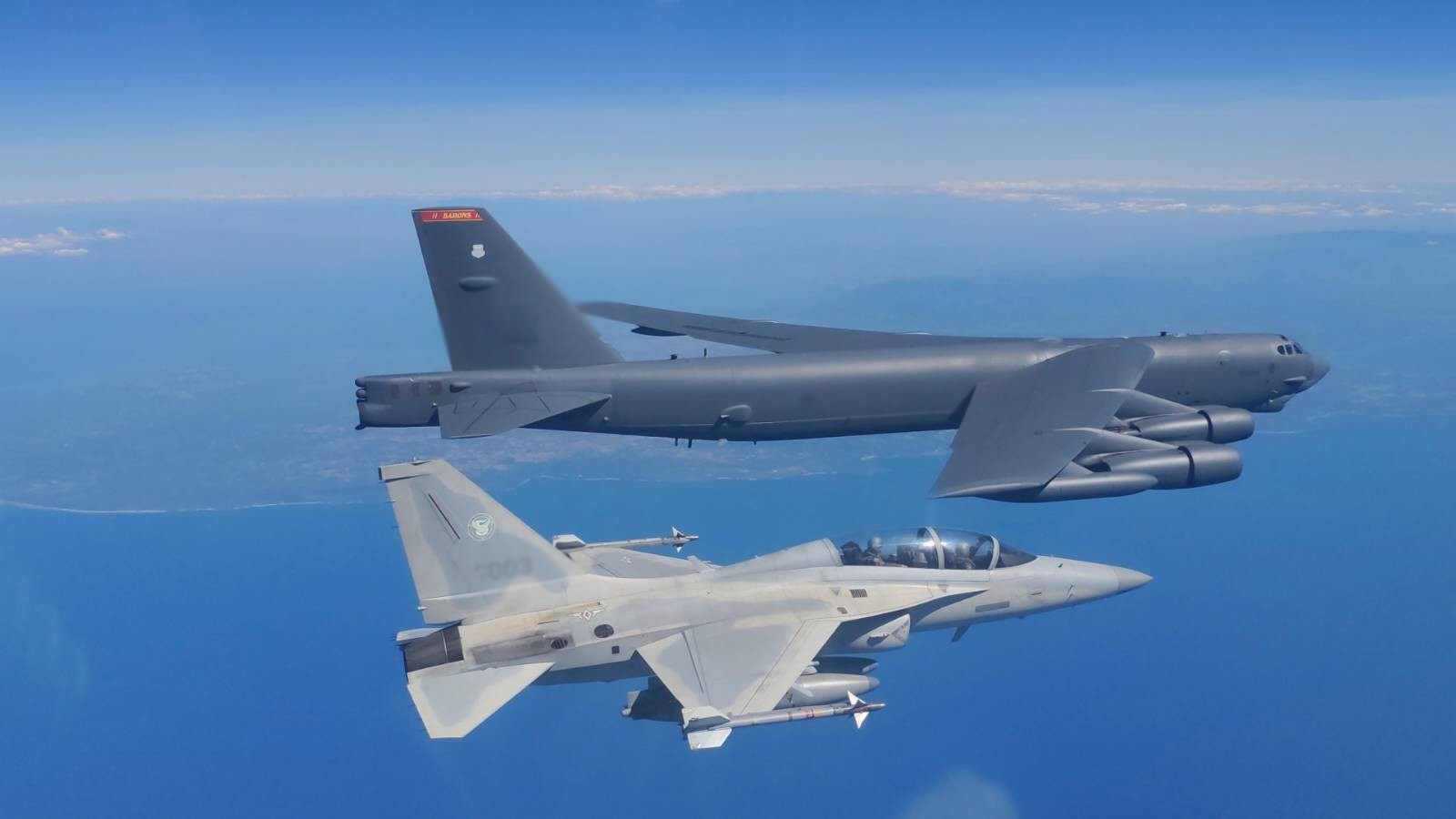
That distinction matters. The FA-50PH lacks the range, sensor depth, and payload flexibility required for sustained air superiority. It does not field long-range radar optimized for beyond-visual-range engagements, nor does it operate as a fully networked node within an integrated ISR and command architecture. In an environment shaped by advanced surface-to-air missiles, electronic warfare, and long-range strike platforms, these limitations translate directly into reduced deterrence value.
The resulting capability gap is stark. The Philippines has no true multirole fighter able to combine air-to-air dominance, deep strike, and networked operations across domains. This constrains not only combat options, but also crisis signaling. Airpower, especially fighters, is often the first tool states use to demonstrate resolve short of escalation. Without a credible multirole capability, Manila’s ability to influence adversary calculations in a high-end contingency remains limited.
Analysts increasingly warn that time is not a neutral factor. As regional air forces integrate AESA radars, long-range missiles, and data-linked battle networks, the relative gap widens even if the Philippines improves incrementally. As defense analyst Richard Heydarian has observed, “The Philippines is modernizing under pressure, but the pace must match the threat environment.” The implication is clear: incremental upgrades to light fighters may preserve relevance at the margins, but they do not resolve the core strategic deficit.
This is why the discussion is shifting away from whether the Philippines needs a multirole fighter toward how it acquires one and whether acquisition alone is enough. The operational pressure on the Philippine Air Force is forcing a more fundamental reassessment of capability, sustainability, and strategic leverage in an increasingly unforgiving air domain.
Why Lockheed Martin Is Central to the Discussion?
Lockheed Martin sits at the core of the global fighter ecosystem, not simply because it builds aircraft, but because it shapes how allied airpower is sustained over decades. It remains the prime contractor for the F-16 Fighting Falcon, still operated by 25+ countries more than 40 years after its first flight. More decisively, it leads the F-35 Lightning II program, the largest combat aircraft project in history, with 1,000+ aircraft delivered globally by 2024 and production planned well into the 2040s. This scale creates something rare in defense procurement: guaranteed long-term relevance.
What distinguishes Lockheed Martin is its lifecycle approach. Rather than one-off sales, its model emphasizes decades-long sustainment, upgrades, software evolution, and shared training pipelines, locking partners into a continuously modernized ecosystem rather than a static platform.
This approach is visible across Asia. Japan hosts a Final Assembly and Check Out (FACO) facility for the F-35, embedding domestic industry into advanced fighter production. South Korea tied industrial participation and technology access to broader missile, avionics, and sustainment cooperation alongside its indigenous fighter efforts. Singapore, despite its small size, is deeply integrated into U.S. training, logistics, and sustainment networks, maximizing combat effectiveness without large domestic fleets. As one U.S. defense industry executive summarized the logic succinctly: “Modern fighters are not products, they are ecosystems.” Lockheed Martin’s partnerships are designed around that premise.
From Buyer to Partner — What “Deeper Cooperation” Actually Means
The shift being discussed is not semantic, it is structural. Procurement delivers aircraft and maintenance contracts. It solves an immediate capability gap, but leaves technology, sustainment depth, and upgrade authority offshore. Partnership, by contrast, redistributes roles along the fighter lifecycle. It can include local assembly or component manufacturing, shared maintenance-repair-overhaul (MRO) hubs, and defined responsibilities in systems integration and long-term sustainment. The difference is simple: buyers consume capability; partners help produce and preserve it.
For the Philippines, this does not imply full fighter co-development or access to sensitive stealth technologies. Practical cooperation models are narrower and realistic. These include licensed production of non-sensitive components (structures, wiring, ground support equipment), establishment of a Philippine-based MRO hub serving Southeast Asia, and joint ecosystems for avionics testing, simulators, and pilot training. Each element builds industrial depth without breaching security constraints.

There is precedent. Indonesia leveraged structured offsets tied to defense acquisitions to grow its aerospace base through PT Dirgantara Indonesia, expanding its role in aircraft manufacturing, maintenance, and export support. The result was not instant self-sufficiency, but durable industrial capacity and regional relevance.
The implication is clear. Moving from buyer to partner does not mean overreach; it means anchoring airpower modernization in domestic capability. For the Philippines, deeper cooperation would convert fighter acquisition from a recurring expense into a strategic investment, one that compounds operational, industrial, and alliance value over time.
Technology Transfer — Strategic Value Beyond Hardware
The real payoff of deeper cooperation lies in people, not platforms. Technology transfer would focus on training Filipino engineers and technicians in advanced composites, avionics maintenance, and digital flight-control systems, the skill sets that define modern aerospace. These are not marginal jobs. According to global industry benchmarks, defense aerospace positions rank among the highest-value manufacturing jobs, often paying 2–3× national industrial averages and anchoring long-term technical expertise.
Aerospace capability does not stay siloed. Skills and tooling migrate into civil aviation, UAV development, and space and satellite support industries. World Bank studies consistently show that aerospace clusters generate 3–4× multiplier effects across adjacent sectors, particularly in electronics, precision manufacturing, and software. In short, fighter-related know-how became the national industrial capital.
Economic and Industrial Impact on the Philippines
Aerospace manufacturing has a unique anchoring effect. It drives STEM education pipelines, supports advanced manufacturing zones, and plugs domestic firms into export-oriented supply chains that operate to global standards. Countries that succeed in this space rarely do so accidentally; they align defense demand with industrial policy.Philippines KF-21 Boramae Acquisition
The strategic economics are equally clear. Local sustainment reduces lifetime fighter ownership costs, improves availability during crises, and limits exposure to external supply shocks. More importantly, participation, however limited, creates entry points into global defense production networks that persist long after initial aircraft deliveries.
Alliance and Strategic Signaling
Deeper industrial cooperation would materially strengthen the Mutual Defense Treaty by translating political commitments into operational depth. Shared sustainment, training, and systems integration expand interoperability in ways that routine exercises alone cannot. When paired with expanded access and joint activities under the Enhanced Defense Cooperation Agreement, this approach signals an alliance built on shared capability and long-term alignment rather than transactional arms sales.
At the regional level, the signaling effect is deliberately calibrated. Industrialized airpower modernization enhances deterrence credibility without the escalatory optics of permanent deployments or offensive basing. It communicates resolve through readiness and resilience, not rhetoric. As a former U.S. Pacific commander summarized, “Airpower credibility is not declared. It is demonstrated.” The emphasis is on capability that can be sustained under pressure, which shapes adversary calculations without forcing symmetrical responses.
Regional Security Implications
Modern Philippine fighters, backed by domestic sustainment and allied integration, would materially improve air defense over critical sea lanes and maritime approaches. They would also sharpen Manila’s ability to respond quickly to gray-zone coercion, where speed, presence, and signaling matter more than mass. Just as important, credible fighter capability enables meaningful participation in multilateral coalition operations, reinforcing regional norms without triggering destabilizing arms races. The net effect is higher costs for coercive behavior paired with greater crisis stability.
Risks, Constraints, and Realistic Limits
The constraints are real and structural. Fighter programs are generational commitments, with lifecycle costs typically spanning 30–40 years, requiring consistent budget discipline rather than headline-driven acquisitions. Technology access is also bounded by export controls and ITAR restrictions, making phased, trust-based cooperation essential and limiting exposure to non-sensitive domains. Finally, industrial partnerships demand institutional maturity: continuity beyond election cycles, credible oversight of offsets, and reforms that ensure sustainment and industrial participation are governed transparently and professionally.
Policy Roadmap — What Manila Can Do Next
The path forward begins with clarity and sequencing. Manila should commission a formal fighter–industry feasibility study to define realistic partnership scopes and costs. Industrial offsets should be codified in defense procurement law to provide predictability and leverage. Engagement with Lockheed Martin should be structured and multi-year, focused on sustainment and workforce development rather than headline announcements. Education, defense, and industry ministries must be aligned to build the required talent pipeline, and fighter acquisition should be embedded within a coherent airpower doctrine that links platforms, people, and sustainment into a single strategic framework.
Conclusion — Redefining Philippine Airpower for the Long Term
Fighter jets are not just platforms; they are ecosystems. A deeper partnership would not only strengthen deterrence but also build domestic industry and anchor long-term strategic autonomy. The central question is no longer whether the Philippines should modernize but how deeply it intends to shape its own defense future.
China Is Watching the 9th U.S.–Philippines Patrol Very Closely!