Philippines is moving toward military cooperation with Taiwan, which could further destabilize the already tense dynamics in the South China Sea
“Any attempt to expand military cooperation in areas surrounding Taiwan will be met with firm opposition,” a spokesperson from China’s Ministry of Foreign Affairs of the People’s Republic of China warned just days ago. And now here we are.
Because the Philippines, long seen as a frontline state in the South China Sea, is reportedly considering deeper security coordination with Taiwan. Naval transits through the Luzon Strait. Possible joint patrol discussions. Quiet conversations that are not so quiet anymore. Let’s pause for a second.
What happens when two of Asia’s most combustible flashpoints, the Taiwan Strait and the South China Sea, start overlapping? This isn’t just another routine defense dialogue. This feels different.
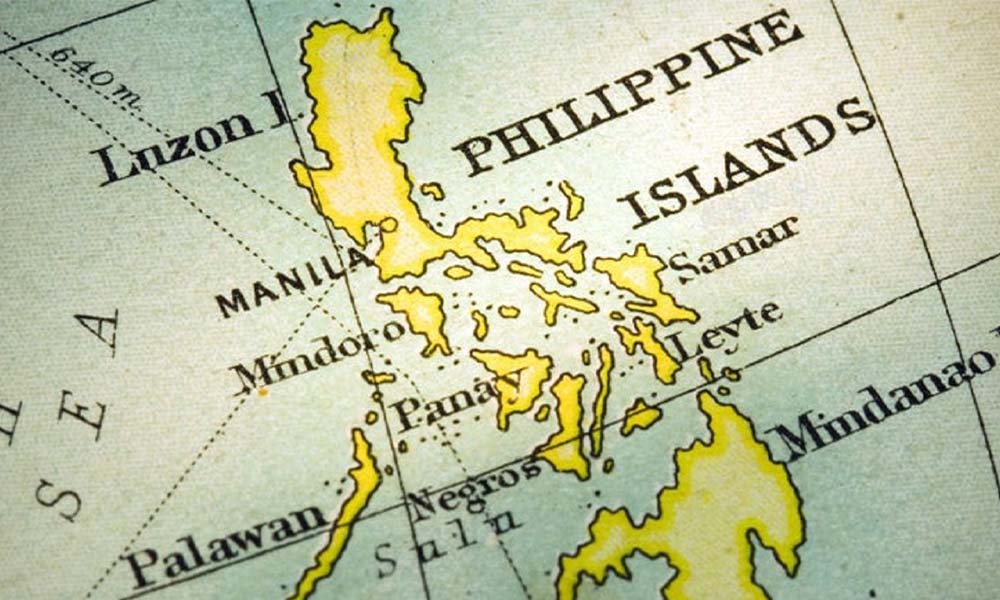
The Luzon Strait, that narrow stretch of water between northern Philippines and Taiwan, has always been strategically important. But lately it feels like it’s becoming the hinge of the entire Indo-Pacific chessboard. I keep thinking about geography, how sometimes a simple line on the map can change the fate of nations. Batanes is just a few hundred kilometers from Taiwan. Close enough that in a crisis, distance almost stops mattering.
For years, Manila focused on the South China Sea disputes, Scarborough Shoal, Second Thomas Shoal, constant maritime standoffs with Chinese vessels. Now, if cooperation with Taipei moves forward, the Philippines would no longer be dealing with just one pressure point. It would be stepping into the Taiwan equation too. And that equation is far more explosive.
On paper, this can be framed as defensive preparedness. It makes sense in one way. The Philippines wants contingency planning. It wants to avoid being caught off guard if conflict erupts near its northern waters. That’s rational. Any sovereign state would think the same. But strategy isn’t just about logic. It’s about perception.
Beijing views Taiwan as a core interest, not just another territorial issue, but a red line tied to sovereignty and national identity. The moment Manila is seen coordinating militarily with Taipei, even under the banner of “humanitarian drills” or “maritime safety,” the optics shift. The Philippines stops being just a South China Sea claimant. It becomes part of the Taiwan deterrence architecture.
And that’s a serious escalation. I can’t help but think about how quickly tensions have already been rising. Water cannon incidents. Close naval encounters. Public accusations. Add Taiwan into that mix and the security environment doesn’t just become tense, it becomes layered. More actors. More miscalculations. More room for accidents
This potential shift intersects directly with broader U.S.–China rivalry. Washington would likely welcome stronger Manila–Taipei coordination as part of regional deterrence. Beijing would interpret it as alignment against its strategic core. ASEAN states? They would watch carefully, some quietly anxious, others recalibrating their own hedging strategies.
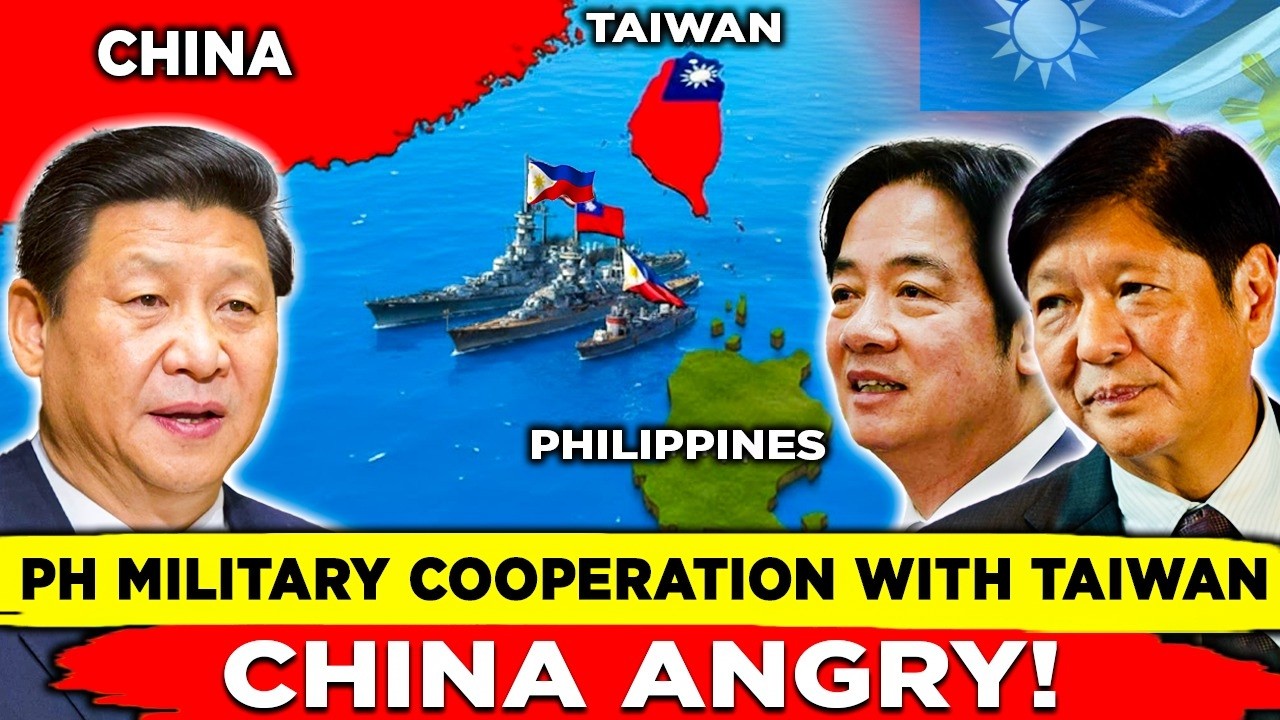
And here’s the uncomfortable truth: small moves in sensitive theaters often trigger disproportionate reactions. The Philippines may believe it is strengthening its security buffer. But it is also increasing its exposure. Economically. Diplomatically. Militarily. China remains one of its largest trading partners. The region is already stretched thin by great-power competition. The margin for error is shrinking.
So the question isn’t whether Manila has the right to coordinate with whom it chooses. It does. The real question is this:
Is the Philippines prepared for the strategic gravity that comes with stepping into the Taiwan equation? Because once the Taiwan Strait and the South China Sea begin to merge in operational terms, there’s no clean separation anymore. No tidy diplomatic firewall. Just a tighter, more dangerous strategic knot in one of the world’s most contested regions.
Strategic Geography: Why This Matters
If you pull up a map and really look at it, not just glance, the Luzon Strait almost jumps out at you. It’s not wide, not dramatic like some massive ocean basin. But it connects the South China Sea to the western Pacific. And that connection is everything.
This narrow waterway functions like a valve in the Indo-Pacific system. Commercial ships move through it. Naval vessels move through it. Submarines slip beneath it. Energy shipments pass quietly in the night. Roughly one-third of global maritime trade flows through the broader South China Sea region, valued somewhere between $3 to $5 trillion annually. That’s not abstract economics. That’s supply chains, oil tankers, food imports, semiconductor shipments, the invisible arteries of modern life. Whoever influences this corridor influences movement. And in geopolitics, movement is power.
In peacetime, it’s a shipping route. In a crisis, it becomes a choke point. Militaries understand this instinctively. Control the strait, or at least monitor it closely, and you gain leverage over both the South China Sea and access to the open Pacific. That’s not a theory. That’s geography doing what geography has always done, shaping strategy whether states like it or not.
Proximity to Taiwan
Now zoom in further. The northernmost islands of the Philippines, especially Batanes, sit roughly 120 to 200 kilometers from Taiwan. That distance is so small it almost feels uncomfortable when you think about it in military terms. In a Taiwan contingency, that gap is not a buffer. It’s a bridge.
I sometimes feel people underestimate how physical this reality is. We talk about “regional stability” in abstract language, but the map is brutally clear. If tensions escalate across the Taiwan Strait, Philippine territory could suddenly matter in ways that go far beyond diplomacy. Logistics hubs. Surveillance points. Air and naval staging areas. Even humanitarian evacuation corridors. Geography does not wait for political neutrality.
And this isn’t speculation pulled from thin air. The expansion of U.S. access to Philippine bases under the Enhanced Defense Cooperation Agreement has already highlighted this shift. Several of the newly accessible sites are in northern Luzon. That decision was not random. It reflects a recognition that the Luzon Strait sits at the intersection of two security theaters, the South China Sea and the Taiwan Strait.
When defense planners look at northern Luzon, they don’t just see provincial towns and coastlines. They see range arcs. Air corridors. Sea lanes. Early-warning possibilities. That’s why potential military coordination between Manila and Taipei feels so consequential. It doesn’t just add another diplomatic layer. It activates geography. And geography, unlike politics, doesn’t compromise.
China’s Red Line: The Taiwan Question
There are disputes in Asia that are complicated. And then there is Taiwan. For Beijing, Taiwan is not just another territorial disagreement. It is tied to history, legitimacy, national identity, the unfinished chapter of civil war and reunification. When Chinese officials talk about it, the tone changes. It becomes sharper. Less flexible. Almost existential.
The government of the People’s Republic of China considers Taiwan a core sovereignty issue and a non-negotiable national interest. Under what Beijing calls the “One-China principle,” Taiwan is viewed as part of China’s territory, and any form of foreign military engagement with Taipei is framed as interference in internal affairs.
This is not rhetorical window dressing. It is a red line that has been repeated across administrations and decades. Chinese leadership has often used a stark warning when addressing foreign involvement in Taiwan-related matters: “Those who play with fire will perish by it.” It’s dramatic. It’s blunt. And it’s designed to leave no ambiguity about the stakes as Beijing sees them.
.https://indopacificreport.com/philippines-strategic-military-build-up-on-its-north-coast-amid-china-taiwan-tensions/
From Beijing’s perspective, military coordination between the Philippines and Taiwan would not be interpreted as routine security dialogue. It would be read through a sovereignty lens. And once something is categorized as a sovereignty issue in Chinese strategic thinking, the tolerance threshold narrows dramatically.
If we look at past behavior, China has shown a willingness to respond economically and diplomatically when it believes the One-China policy is being challenged. Take Lithuania. After Vilnius allowed Taiwan to open a representative office using the name “Taiwan” rather than “Taipei,” Beijing responded with trade restrictions and diplomatic downgrades. The message was clear: symbolic gestures can carry material consequences.
Or consider South Korea during the deployment of the U.S. THAAD missile defense system. Beijing opposed the system, arguing it threatened Chinese security interests. What followed was a period of informal economic retaliation, restrictions on tourism, pressure on Korean businesses operating in China, and broader commercial strain.
These cases are different from Taiwan itself, but they reveal a pattern. When Beijing perceives encroachment on core interests, it does not limit its response to diplomatic statements. It uses leverage. That’s why any visible military alignment between Manila and Taipei would almost certainly trigger a strong reaction. Not necessarily immediate escalation but pressure. Economic signals. Political messaging. Possibly maritime assertiveness. For China, Taiwan is not one issue among many. It is the issue that reshapes all the others.
Manila’s Strategic Calculus
If you sit in Manila and look west, you see Chinese vessels. If you look north, you see Taiwan. And if you look east, you see the United States. That’s not just geography. That’s pressure.
The Philippines has been facing increasing maritime friction in the South China Sea for years now. Chinese Coast Guard ships have operated within 50 nautical miles of Philippine-claimed features. There have been water cannon incidents. Dangerous maneuvers. Even ramming episodes that felt less like accidents and more like signaling.
At some point, repeated “gray zone” actions stop feeling gray. They start feeling deliberate. From Manila’s perspective, this isn’t about provoking anyone. It’s about preventing further erosion of its position. Philippine defense officials have framed enhanced security cooperation, whether with the United States or potentially others, as necessary to “strengthen maritime domain awareness and regional stability.” That language matters. It signals deterrence, not aggression.
And honestly, deterrence logic is simple: if pressure increases, you reinforce. You build partnerships. You complicate an adversary’s calculations. Small states have always done this. History is full of it.
US Commits $144M to Strengthen Military Facilities in the Philippines
At the core of Manila’s security architecture sits the 1951 Mutual Defense Treaty with the United States. It’s old. Cold War era. But still very alive. American officials have repeatedly clarified that an armed attack on Philippine armed forces, public vessels, or aircraft in the South China Sea would trigger Mutual Defense Treaty obligations. That reassurance is not symbolic. It’s operational. In recent years, the Philippines and the U.S. have conducted over 500 joint military activities, exercises, patrols, training rotations. That’s not a casual partnership. That’s integration.
The expansion of base access under EDCA in northern Luzon adds another layer. It quietly connects South China Sea contingencies with Taiwan-related scenarios, whether anyone openly says it or not. So when Manila explores deeper coordination near the Luzon Strait, it’s not operating in isolation. It’s acting within an alliance framework that has been tightening, not loosening.
Here’s where it gets complicated.
The Philippines formally adheres to the One-China policy. Officially, it recognizes Beijing, not Taipei. That position hasn’t changed.
But exploratory military coordination with Taiwan, even limited or contingency-based, introduces dual signaling. To Washington, it reassures: Manila is aligned, proactive, prepared. To Beijing, it risks looking like quiet alignment with a containment strategy.
That’s the tightrope. Manila likely believes it can maintain balance, deter without provoking, prepare without escalating. But ambiguity cuts both ways. It creates flexibility, yes. It also creates suspicion.
And in an environment already thick with mistrust, even subtle shifts can feel seismic. For the Philippines, this isn’t about choosing sides in theory. It’s about surviving in a neighborhood where the stakes keep rising and where doing nothing carries its own risks.
Military Escalation Scenarios
The danger isn’t always in the big dramatic moves. Sometimes it’s in the ripple effects. If Manila deepens coordination with Taiwan, Beijing may not respond in the Taiwan Strait first. It could respond where it already has leverage, the South China Sea.
That means intensified maritime pressure around contested features like Second Thomas Shoal. More coast guard patrols. More aggressive shadowing. Possibly tighter blockades of resupply missions. We’ve already seen water cannons and near-collisions. It doesn’t take much imagination to see how that pattern could escalate.
The logic would be simple: signal costs without crossing into open conflict. China wouldn’t need to declare retaliation. Increased presence alone would shift the operational environment. The Philippines would feel it immediately. Every resupply run would become heavier. Every maneuver is riskier. And with more vessels operating in tight proximity, the chance of miscalculation rises. History shows that escalation rarely starts with missiles. It starts with friction.
Now imagine a cross-strait crisis. Even if Manila insists it is not a party to the dispute, geography complicates neutrality. Northern Luzon sits close enough to Taiwan that its airfields and ports become strategically relevant whether the Philippines intends it or not. If U.S. forces utilize facilities under existing agreements, those sites could be perceived as forward operating platforms in a U.S.–China confrontation.
Philippines Opens New Luzon Strait Base to Bolster Deterrence Against China
That’s where the concept of entrapment enters the conversation. Security scholars often warn that middle powers located near flashpoints face entrapment risks when aligning too closely with great-power strategies. The fear is not abandonment, it is being pulled into a conflict whose timing and intensity are determined elsewhere. The Philippines could wake up one day to find that its territory, though sovereign, has become a critical node in someone else’s war plan. And that’s a sobering thought.
ASEAN Centrality and Regional Neutrality
Within the Association of Southeast Asian Nations, caution is practically doctrine. ASEAN has historically avoided formal positioning on Taiwan sovereignty. The emphasis has always been dialogue, non-interference, and maintaining regional stability. That approach may frustrate external powers, but it has helped preserve a delicate balance in a diverse region.
The Philippines, as an ASEAN member, has traditionally operated within that framework. Even when tensions in the South China Sea flare, Manila’s language often returns to multilateralism and legal process.
Overt military cooperation with Taiwan could complicate that posture. Other Southeast Asian states might worry that Manila is stepping beyond ASEAN’s informal consensus on avoiding entanglement in cross-strait politics.
The risk isn’t formal expulsion or open criticism. It’s quieter than that. Subtle diplomatic distance. Reduced cohesion. A perception that the Philippines is aligning more clearly with bloc politics rather than maintaining regional neutrality.
And in Southeast Asia, perception shapes diplomacy more than public statements ever admit.
Competing Strategic Interpretations
There are two ways to read Manila’s potential shift. The first interpretation is strategic prudence. Geographic proximity makes preparedness unavoidable. Ignoring the Taiwan dimension would be strategically naïve. Limited coordination enhances deterrence and reduces the risk of miscalculation. It signals resolve against coercive pressure in the South China Sea and communicates that Manila will not be strategically isolated.
From this perspective, doing nothing would be the greater risk. The second interpretation is strategic overreach. It provokes China unnecessarily. It increases economic exposure. It risks transforming the Philippines into a frontline state in a superpower confrontation that it cannot control.
From this angle, restraint is strength. Both interpretations contain truth. That’s what makes the debate so intense.
US to Deploy Advanced Missiles in Philippines Amid South China Sea Tensions
Policy Dilemmas Ahead
Manila now faces difficult questions that cannot be answered with slogans. Can it maintain formal adherence to the One-China policy while expanding practical military coordination in ways that Beijing will inevitably scrutinize? Does enhanced deterrence genuinely outweigh the risks of economic retaliation or maritime escalation? Is the Philippines reinforcing its sovereignty or inadvertently increasing its strategic vulnerability by tying its security posture more closely to a great-power rivalry? These are not abstract policy seminar questions. They are choices with material consequences.
Conclusion
The Philippines’ movement toward military cooperation with Taiwan represents a consequential recalibration of foreign policy. It emerges from real security pressures in the South China Sea. It reflects alliance dynamics that have been strengthening for years. And it is rooted in geography that cannot be changed. Yet it also intersects directly with China’s most sensitive red line.
The outcome will not depend solely on intent. It will depend on calibration, how carefully Manila balances sovereignty, alliance commitments, economic exposure, and regional diplomacy. The margin for miscalculation is thin. The region is already tense. In one of the world’s most combustible geopolitical theaters, even incremental shifts can carry strategic weight far beyond their immediate appearance. And that is why this moment matters.
https://youtu.be/A40FNkeA9Pk?si=rA8A-dfQXGX7tsbH