Philippines’ Archipelagic Defence Strategy Explained Amid Rising Tensions with China
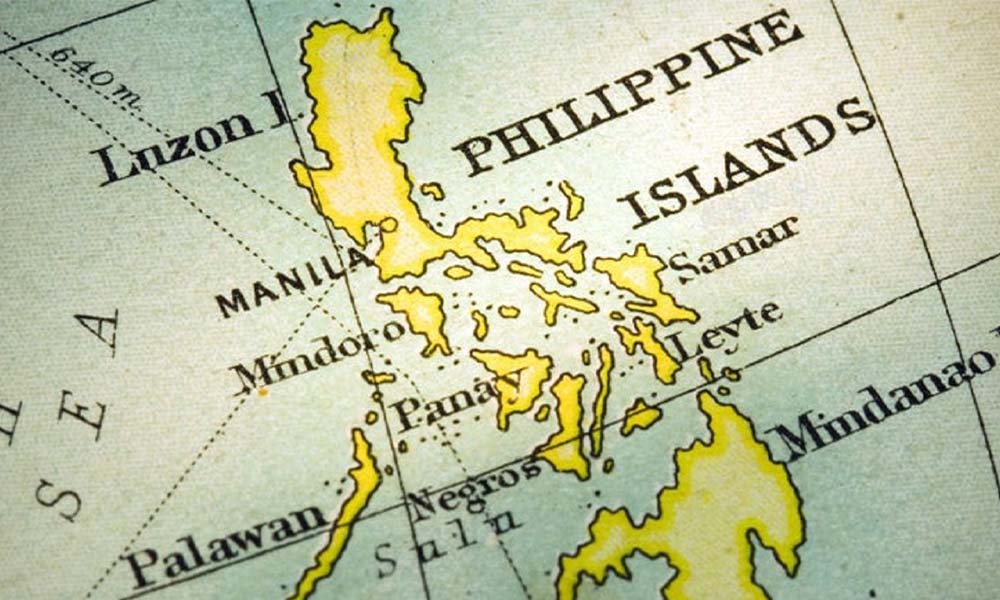
The Philippines sits at the heart of one of the most contested maritime regions on the planet. Comprising 7,641 islands and straddling critical sea lanes linking the South China Sea to the broader Western Pacific, the country’s geography has always been both its greatest asset and its deepest vulnerability. Nearly two million square kilometers of the exclusive economic zone surround the archipelago, encompassing vital fisheries, energy prospects, and underwater infrastructure, much of which overlaps with competing claims by China and several Southeast Asian neighbors.
What has changed is the intensity of pressure. In recent years, confrontations in the West Philippine Sea have shifted from diplomatic disputes to persistent, on-the-water coercion: coast guard blockades, water-cannon attacks, ramming incidents, and the steady normalization of foreign presence inside areas Manila considers sovereign. These encounters have made clear that traditional, centralized defense concepts, built around defending territory as if it were contiguous land, are ill-suited for a fragmented maritime nation facing a gray-zone challenge at sea.
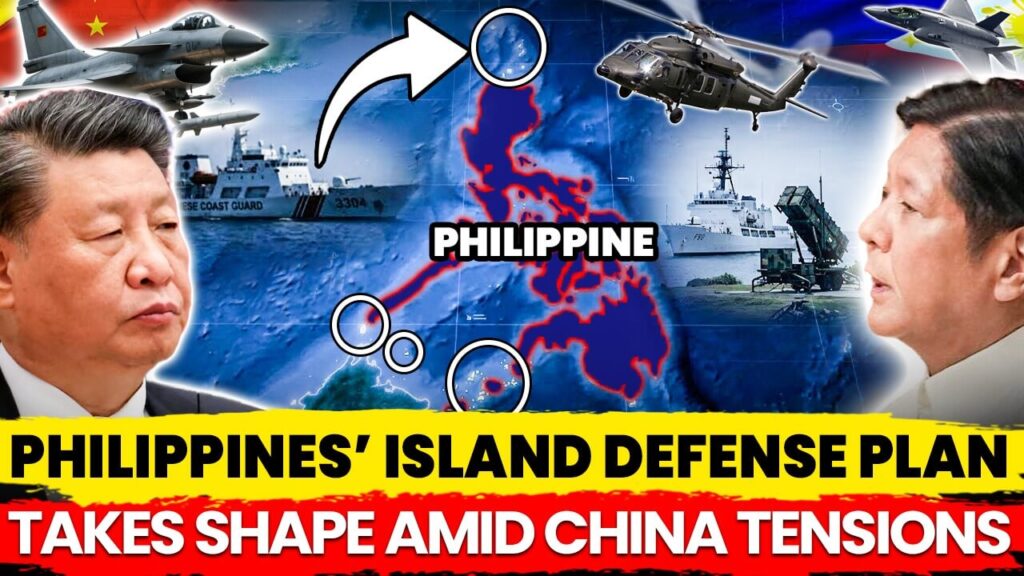
It is against this backdrop that Manila has articulated an Archipelagic Defence Strategy (ADS). Rather than attempting to mirror the force structures of continental powers, the ADS rethinks defense through the logic of geography: islands as defensive nodes, sea space as maneuver terrain, and maritime awareness as the foundation of deterrence. The strategy seeks to protect sovereignty not by matching adversaries ship-for-ship, but by denying easy access, raising operational costs, and leveraging the natural complexity of the archipelago itself.
This explains the Archipelagic Defence Strategy, why it emerged, how it is designed, and what it means for Philippine security at a time of rising regional tension. More importantly, it asks a deeper question now confronting many maritime states: in an era where control is asserted without war, can geography still be turned from a vulnerability into a strategic advantage?
Understanding the Archipelagic Defence Strategy (ADS)
The Archipelagic Defence Strategy represents a fundamental shift in how the Philippines conceptualizes national defense, moving away from a historically land-centric posture toward a framework centered on maritime security and deterrence. For decades, Philippine defense planning was shaped primarily by internal security challenges and the protection of major population centers on land. The ADS departs from this legacy by starting from geography rather than tradition. It recognizes that the country’s true frontiers are overwhelmingly maritime, with contested zones located hundreds of kilometers from the main islands, and that sovereignty in the modern Indo-Pacific is contested not on borders but across sea space.
Under the ADS, defense priorities are reoriented toward protecting sea lines of communication, securing islands and maritime features, and safeguarding the Philippines’ exclusive economic zone and sovereign rights. This approach reflects the reality that control of surrounding waters is inseparable from national survival for an archipelagic state. Sea lanes are not just commercial arteries but strategic lifelines; isolated islands are not peripheral outposts but forward defensive nodes; and the EEZ is not abstract legal space but a zone of food security, energy potential, and strategic depth. In this sense, the ADS treats the ocean not as a buffer to be crossed, but as the primary domain in which deterrence must be established.
Crucially, the Archipelagic Defence Strategy is anchored not only in military logic but in law. Its foundations rest on the Philippines’ domestic constitutional mandate to protect territorial integrity, which explicitly includes maritime domains. This is reinforced by the Archipelagic Doctrine, which affirms Philippine sovereignty over the waters connecting and surrounding its islands, treating the archipelago as a single, coherent political and geographic unit rather than a collection of disconnected landmasses. At the international level, the strategy draws legitimacy from the United Nations Convention on the Law of the Sea, which provides the legal basis for the Philippines’ maritime entitlements and rights.
The legal dimension gained particular weight following the 2016 arbitral tribunal ruling, which invalidated China’s expansive “nine-dash line” claims over most of the South China Sea. While enforcement of the ruling remains contested, it provides Manila with a powerful normative foundation for resisting coercion and framing disputes within a rules-based order. The ADS leverages this legal strength by pairing it with a defense posture designed to uphold rights on the water through presence, awareness, and denial rather than escalation.
The Archipelagic Defence Strategy reflects a sober recognition that law without capability invites pressure, while capability without legal legitimacy invites isolation. By integrating maritime geography, operational deterrence, and international law into a single framework, the ADS seeks to ensure that Philippine sovereignty is defended not only in principle but in practice, across the seas that define the nation itself.
Why the Strategy Matters Now: The China Factor?
The urgency behind the Archipelagic Defence Strategy is inseparable from the China factor and the accelerating pattern of coercion in the South China Sea. Beijing’s expansive claims under the so-called nine-dash line overlap extensively with the Philippine maritime zones, including waters rich in fisheries and potential hydrocarbon resources. To enforce these claims, China has relied not on overt naval warfare but on a calibrated mix of coast guard deployments, maritime militia swarms, artificial island construction, and the militarization of outposts, methods designed to assert control while staying below the threshold of armed conflict.
Recent incidents highlight how this pressure has intensified. In December 2025, the Philippine Coast Guard reported that Chinese vessels used high-pressure water cannons and deliberately cut anchor lines of Filipino fishing boats near Sabina Shoal, injuring three fishermen and damaging two vessels. Manila condemned the actions as dangerous, unlawful, and in violation of basic maritime safety norms, but the episode showed a sobering reality: coercion at sea has become persistent, physical, and normalized.
Around the same period, Philippine defense officials disclosed that they tracked as many as forty-nine Chinese navy and coast guard ships operating in disputed waters in a single month, an unusually high concentration that exceeded previous averages and demonstrated China’s growing ability to sustain presence at scale.
These developments expose the Philippines’ structural vulnerabilities as a maritime state. Geography is both a blessing and a constraint: long coastlines, thousands of islands, and vast sea space complicate surveillance, coordination, and rapid response. Defense resources further compound the challenge. The Philippines’ naval and air forces remain modest in size compared to China’s expanding fleet and aviation assets, creating an imbalance that cannot be corrected through platform parity alone. Even more critical are capability gaps, persistent shortfalls in maritime domain awareness, limited long-range fires, and logistics constraints that reduce Manila’s ability to enforce sovereignty independently across distant waters.
It is precisely these asymmetries that make the Archipelagic Defence Strategy relevant. The ADS does not assume the Philippines can outbuild or outnumber China; instead, it accepts the imbalance and seeks to manage it. By emphasizing surveillance, denial, island-based defense, and the protection of sea lanes, the strategy aims to complicate coercion, raise operational costs, and prevent gray-zone pressure from translating into uncontested control. In this context, the China factor is not merely a backdrop; it is the defining condition that has forced Manila to rethink defense through the logic of geography, resilience, and sustained maritime presence rather than traditional notions of dominance.
Core Pillars of the Archipelagic Defence Strategy
At the heart of the Archipelagic Defence Strategy is the recognition that deterrence in a maritime environment begins with awareness. Maritime Domain Awareness is therefore the foundational pillar of ADS, aimed at ensuring the Philippines can see, understand, and respond to activity across its vast surrounding seas before situations escalate into crises. This involves expanding radar coverage, leveraging satellite-based surveillance, and integrating intelligence shared by allied partners.
Maritime patrol aircraft and unmanned systems extend reach over distant waters, allowing Philippine forces to track vessels, identify patterns of behavior, and distinguish routine movement from coercive activity. In a gray-zone environment, early detection is decisive: the ability to document and respond quickly often determines whether pressure is resisted or normalized.
Building on awareness, the strategy emphasizes island defence and denial rather than outward power projection. ADS is not designed to contest control of distant seas but to make hostile action within and around the archipelago prohibitively costly. This is achieved by fortifying key islands and maritime chokepoints while avoiding large, static bases that are vulnerable to precision strikes. Instead, the strategy favors mobile, asymmetrical force packages that can be dispersed, repositioned, and sustained under pressure.
Denial capabilities, particularly coastal defense and anti-ship missile systems, form the backbone of this approach. Often described as a “porcupine” model, the logic is straightforward: even a stronger adversary must think twice if entry into contested waters carries high operational risk without decisive gain.
Naval and air force modernization provides the muscle that enables these concepts to function in practice. The Philippine Navy’s commissioning of modern frigates under the Horizon modernization program has already enhanced patrol, surveillance, and deterrence capacity, while missile drills and upgraded fast attack craft strengthen rapid-response and coastal defense roles. Looking ahead, plans to acquire additional patrol vessels, maritime patrol aircraft, and eventually submarines are intended to add depth and persistence, particularly in underwater and long-range surveillance.
Submarines, in particular, would introduce a powerful deterrent dimension by complicating adversary planning and expanding the Philippines’ strategic options without requiring surface dominance.
Crucially, the Archipelagic Defence Strategy extends beyond the military domain into a whole-of-nation and whole-of-government approach. Effective maritime defense requires coordination not only among the armed forces but also with the coast guard, civilian agencies, and local governments. Coastal communities are envisioned as early observers and reporting nodes, contributing to situational awareness and resilience at the grassroots level. This integration reflects an understanding that in an archipelagic state, national defense is not confined to bases or fleets—it is distributed across geography, institutions, and society itself.
Together, these pillars form a coherent defensive architecture. Awareness enables response, denial raises costs, modernization sustains credibility, and national integration ensures resilience. The Archipelagic Defence Strategy does not promise dominance; it promises endurance. In a region defined by persistent pressure rather than decisive battles, that endurance may be the Philippines’ most powerful strategic asset.
Role of Alliances and Strategic Partnerships
Alliances and strategic partnerships play a critical enabling role in the Archipelagic Defence Strategy, reinforcing national capability while compensating for structural limitations inherent to an archipelagic state. At the core of this network is the United States, with the 1951 Mutual Defense Treaty remaining the cornerstone of Manila’s external security assurances. While the treaty provides the legal and political foundation for mutual defense, its operational relevance today is shaped by more recent mechanisms.
The Enhanced Defense Cooperation Agreement enables rotational U.S. force presence, prepositioning of equipment, and access to agreed locations across the archipelago, directly supporting the ADS logic of rapid response, logistics resilience, and forward deterrence. Frequent joint exercises, including increasingly complex maritime and multi-domain scenarios, enhance interoperability and signal deterrence credibility in contested waters without requiring permanent foreign basing.
Beyond the United States, the Philippines has deliberately diversified its security partnerships to avoid overreliance on any single actor while reinforcing its maritime posture. Japan has emerged as a particularly important partner, providing patrol vessels, maritime surveillance equipment, and capacity-building assistance aligned with Manila’s needs in maritime law enforcement and domain awareness. Australia, South Korea, and several European states have similarly expanded cooperation through training, joint exercises, defense financing, and technical support.
Philippines Set to Receive Historic $1.5B in U.S. Military Assistance
These relationships strengthen the ADS by improving surveillance coverage, operational standards, and sustainment capacity, all while remaining consistent with a defensive, non-escalatory posture.
Within the Association of Southeast Asian Nations, collective security mechanisms remain limited by consensus-based decision-making and divergent threat perceptions. As a result, Manila has adopted a pragmatic approach: sustaining diplomatic engagement and regional dialogue while ensuring that defense readiness does not depend on ASEAN-wide action. This balance reflects a clear-eyed assessment that while regional diplomacy is essential for stability, deterrence in contested maritime spaces ultimately rests on national capability supported by reliable partners.
In strategic terms, alliances under the Archipelagic Defence Strategy are force multipliers rather than substitutes. They provide intelligence sharing, logistics depth, training realism, and political signaling that amplify Philippine capabilities without undermining sovereignty or strategic autonomy. By embedding its defense posture within a web of partnerships while retaining control over national strategy, the Philippines seeks to ensure that its archipelago is not defended in isolation, but anchored within a broader, rules-based security architecture, one that raises the costs of coercion while preserving regional stability.
Challenges and Limitations
Despite the progress embodied in the Archipelagic Defence Strategy, its implementation is constrained by structural, political, and strategic limitations that Manila must carefully manage. Budgetary pressure remains the most immediate challenge. While recent defense allocations, including notable increases in the 2025 budget aimed at naval and maritime modernization, signal growing political recognition of external threats, defense spending continues to compete with pressing domestic priorities such as social services, infrastructure, and economic development. Philippines and Taiwan maritime security cooperation
For an archipelagic state with vast maritime responsibilities, sustaining long-term investment in ships, aircraft, sensors, and personnel places a persistent strain on limited fiscal space.
Capability gaps further complicate execution. Building maritime awareness and denial forces is not solely a matter of acquiring platforms; it requires resilient logistics networks, trained personnel, maintenance capacity, and sustained operational readiness across dispersed islands. These enablers are often less visible than ships or missiles, yet they determine whether strategy translates into real deterrence. Without consistent investment in human capital, sustainment, and command-and-control integration, the risk is that capabilities remain uneven or episodic rather than persistent.
There is also an inherent escalation dilemma. Strengthening defenses under the ADS is designed to deter coercion, not provoke confrontation, but in a tense maritime environment, even defensive measures can be misinterpreted. Manila must therefore balance capability development with careful diplomacy, clear signaling, and adherence to international law to avoid unintended escalation. This balance is particularly delicate given China’s sensitivity to military developments in contested waters and the Philippines’ desire to avoid being portrayed as destabilizing the region.
Finally, domestic political debate shapes the pace and direction of the strategy. Questions over defense spending levels, the role of foreign partners, and alignment choices influence public support and policy continuity. In a democratic system, sustained execution of a long-term defense strategy depends not only on threat perception but on political consensus and public confidence. The Archipelagic Defence Strategy is thus as much a test of institutional endurance and political will as it is of military planning, requiring steady commitment to navigate constraints while preserving credibility and restraint in an increasingly contested maritime environment.
Strategic Implications for Regional Security
The Archipelagic Defence Strategy carries implications that extend well beyond Philippine borders, reshaping the strategic environment in the South China Sea and the wider Indo-Pacific. By prioritizing maritime awareness, denial, and legal legitimacy, the strategy contributes directly to the preservation of freedom of navigation and the practical upholding of international law. More significantly, it demonstrates that smaller and middle powers are not condemned to passivity in the face of coercion.
Through calibrated deterrence rather than confrontation, the Philippines signals that sovereignty can be asserted within a rules-based order even when power asymmetries are stark. As a result, Manila is increasingly viewed not merely as a claimant state but as a frontline actor within the Indo-Pacific security architecture, one whose posture reinforces the resolve of allies and partners while complicating unilateral attempts to alter the status quo. 10 Chinese Ships vs 1 Philippine Vessel How Beijing Turns Aggression Into “Routine Patrols”
Looking ahead, the success of the Archipelagic Defence Strategy will depend less on any single platform or acquisition than on sustained political and institutional commitment. Maritime defense is a long game. It requires stable funding across decades, continuity in modernization and force posture development, and steady investment in personnel, logistics, and command-and-control systems.
Equally critical will be the ability to manage crises effectively. In an environment defined by gray-zone pressure and close encounters at sea, deterrence must be paired with communication channels, escalation control, and disciplined decision-making. Under ADS, the Philippines is not seeking dominance, but manageability, an approach that aims to deter coercion while preventing competition from tipping into conflict.
Ultimately, the Archipelagic Defence Strategy reflects a strategic truth shaped by geography. For a nation defined by the sea, defense cannot be conceived from the mainland outward; it must be built within and across the maritime domain itself. By centering defense on the ocean, grounding policy in law, modernizing forces realistically, and embedding national efforts within a network of partnerships, Manila is crafting a posture aligned with its constraints and ambitions.
Defence by the sea, not from it, is both necessity and choice. In an era of contested waters and great-power rivalry, the ADS represents the Philippines’ effort to turn geography from vulnerability into leverage, protecting sovereignty while contributing to regional stability in one of the world’s most strategically vital maritime theaters.