Philippine Senator Urges Stronger Defense Against China on Pag-asa Island
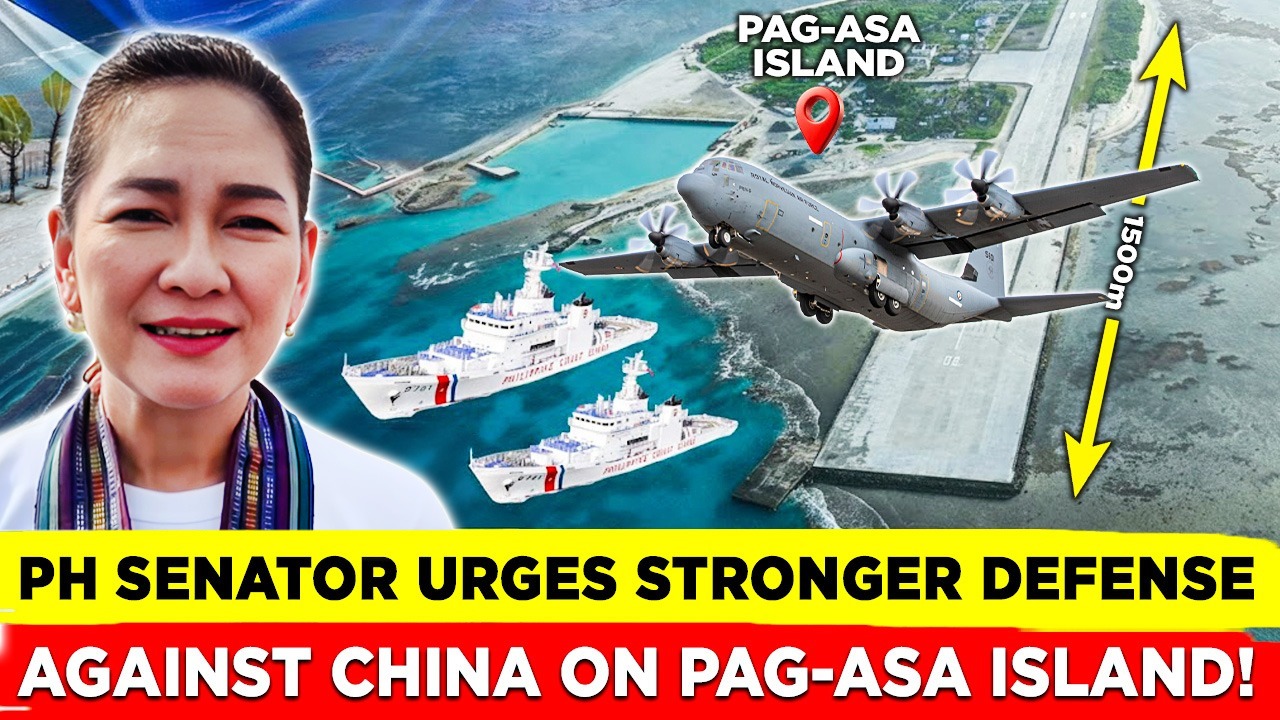
She stood on a small wind-beaten island in the middle of contested waters and said it plainly: “We must assert our sovereign rights consistently and without fear.” — Risa Hontiveros
That wasn’t a speech delivered in an air-conditioned hall in Manila. It was delivered on Pag-asa Island itself. And that detail matters. Because when a senator flies out to the largest Philippine-occupied feature in the Spratlys and calls for “continuous diplomatic, political, and military pushback,” it’s not just rhetoric. It’s positioning. It’s signaling. It’s domestic politics meeting frontline geography. And you can feel the shift.
Strategic Flashpoint: Why Pag-asa Matters Now
Pag-asa is not symbolic in the abstract. It’s inhabited. It has a runway. A small civilian community. Municipal officials. Fisherfolk. It sits in waters that carry roughly $3 to $3.5 trillion in global trade every year. Around 30% of global maritime commerce flows through the South China Sea. Energy shipments. Supply chains. The quiet machinery of globalization. That scale changes how you look at one island.
If nearly a third of global maritime trade passes nearby, then control, access, and presence in these waters aren’t local issues. They’re systemic ones. And here’s the hard truth: the Philippines already won the legal argument. In 2016, the ruling issued by the Permanent Court of Arbitration invalidated China’s sweeping “nine-dash line” claim and affirmed Manila’s maritime entitlements under UNCLOS. On paper, that was decisive.
But paper doesn’t patrol sea lanes. Despite the ruling, Chinese coast guard and maritime militia activity has continued in contested areas, including near Philippine-occupied features and resupply routes. The friction hasn’t stopped. It’s normalized.
That’s why Hontiveros’ visit lands differently. She’s not just invoking sovereignty in theory. She’s responding to a sustained pattern of gray-zone pressure, water cannons, blocking maneuvers, shadowing at sea. The message from her side is clear: passive endurance is no longer enough. There needs to be consistent pushback, diplomatically, politically, and yes, militarily.
She also emphasized strengthening defense cooperation with the United States and other “like-minded nations.” That’s not subtle. It signals alignment. It signals willingness to lean into partnerships rather than hedge.https://www.youtube.com/watch?v=1CI3OfHngQs
And this is where the moment becomes critical. Because this isn’t a fresh legal dispute. That chapter was written in 2016. This is a strategic contest unfolding in slow motion. A battle of presence. Of persistence. Of who shows up tomorrow, and the day after, and the year after that.
When a sitting senator goes to Pag-asa and calls for stronger defense measures, it reflects something deeper, growing impatience within parts of the Philippine political establishment. The debate has shifted from “Are we legally right?” to “Are we operationally secure?” That’s a different question. And once a country starts asking that, the strategic temperature rises, even if no one fires a shot.

Pag-asa Island: A Strategic and Symbolic Asset
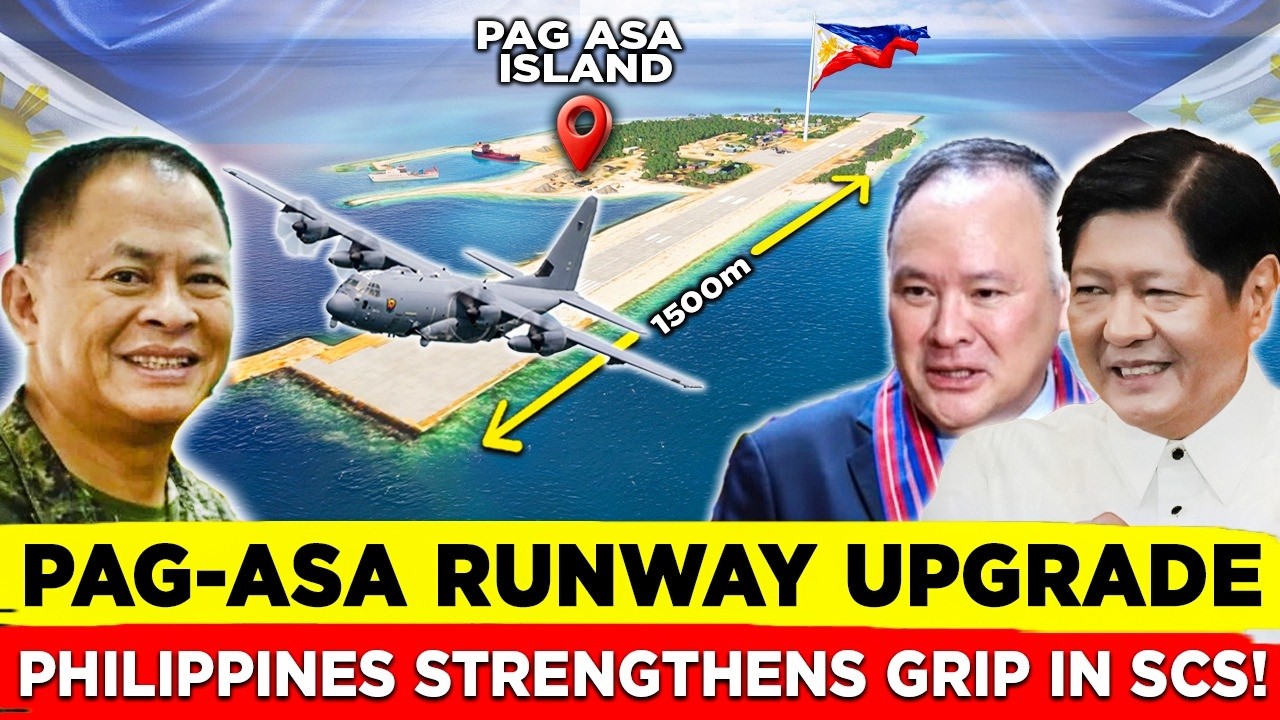
If you zoom out on a map, Pag-asa looks tiny. Almost forgettable. Just a speck in blue water. But geopolitics has this strange habit, the smallest dots sometimes carry the heaviest weight. Pag-asa, internationally known as Thitu Island, is the largest Philippine-occupied feature in the Spratly Islands. It sits roughly 480 kilometers west of Palawan, isolated but not insignificant. On paper, it has a 1,300-meter airstrip. In reality, it has something far more powerful: permanence.
Around 200 civilians live there. Families. Local officials. Teachers. Fisherfolk. Kids who grow up knowing that the horizon around them is politically sensitive. That detail matters more than people realize.https://indopacificreport.com/philippines-launches-massive-anti-invasion-drills-northern-luzon-4409/
Because unlike many outposts in the South China Sea, Pag-asa isn’t just a military foothold. It’s a functioning civilian community. There’s a town hall. There’s governance. There’s daily life. That strengthens Manila’s legal and political claim in a way that concrete alone cannot. Under international law, civilian administration carries weight. It signals effective occupation, not just symbolic control.
And in territorial disputes, symbolism backed by people is stronger than symbolism backed by empty structures.
Geographically, the island is positioned in a way that amplifies its value. From Pag-asa, surveillance coverage extends across key maritime routes. Aircraft operating from its airstrip can monitor surrounding waters. Coast guard vessels have a staging point. Logistics chains shorten. Awareness improves.
Now look at what surrounds it. Nearby features like Subi Reef and Mischief Reef have been transformed into heavily developed artificial island bases. Long runways. Radar systems. Hardened structures. Those installations dramatically expanded China’s operational reach in the area.
Pag-asa sits within that environment. Which is why control of the island isn’t about prestige. It’s about staying visible in a crowded, militarized space. Presence is the currency here. You can win arguments in court and the Philippines did in 2016. But presence determines who shapes daily reality. Who patrols. Who documents. Who responds first? Who stays.
Pag-asa gives Manila a foothold in a region where footholds are scarce and contested. It anchors Philippine visibility in waters that carry roughly a third of global maritime trade. And it reminds everyone watching that sovereignty isn’t just declared, it’s lived. In maritime disputes, absence creates vacuum. And vacuums get filled. Pag-asa prevents that vacuum. That’s why it matters.
Philippines Eyes Port and Airstrip Expansion in West Philippine Sea Kalayaan Island Group
China’s Expanding Operational Footprint
Let’s zoom out for a second. Because you can’t understand why Pag-asa feels tense right now without understanding the scale of what surrounds it.
China claims nearly 90% of the South China Sea under what’s known as the nine-dash line. It’s a sweeping maritime boundary that cuts deep into waters also claimed by Southeast Asian states. In 2016, the Permanent Court of Arbitration ruled that China’s “historic rights” argument had no legal basis under UNCLOS. It also determined that features like Mischief Reef are legally low-tide elevations, meaning they cannot generate sovereign territorial seas of their own. On legal grounds, the ruling was decisive. Beijing rejected it outright. And that’s where law and power part ways.
Since 2013, China has reclaimed more than 3,200 acres of land across the Spratly Islands. What were once submerged features or small reefs are now large artificial islands with military-grade infrastructure. Runways exceeding 3,000 meters were built on major features like Fiery Cross Reef and Subi Reef. That length matters. It allows fighter aircraft, heavy transports, and surveillance planes to operate far from mainland bases. Radar arrays. Missile systems. Hardened shelters. Deep-water ports. These installations extend China’s anti-access/area denial, A2/AD, envelope deep into Southeast Asia. Aircraft range expands. Sensor coverage stretches. Reaction times shorten. This isn’t a theoretical capability. It’s embedded infrastructure. And infrastructure doesn’t blink.
South China Sea Skirmishes 2025 Between China and the Littoral States, Month by Month
But here’s the thing, none of this has unfolded as open warfare. Instead, Beijing has leaned heavily on gray-zone tactics. Maritime militia swarms. Coast guard shadowing. High-pressure water cannons. Laser incidents targeting bridge crews. Blocking maneuvers during resupply missions.
You’ve seen the footage. In 2023 and 2024, Philippine supply boats heading to Second Thomas Shoal were repeatedly confronted by Chinese Coast Guard vessels. Water cannons at close range. Dangerous maneuvers. Slow-motion brinkmanship designed to intimidate without crossing the threshold into armed conflict.
This is pressure without war. It’s calibrated. It’s undeniable. It stays just below the line that would trigger collective defense obligations, but it steadily tests resolve. And that’s what makes it exhausting.
No single incident is catastrophic. But the accumulation shifts the operational environment. It normalizes friction. It forces Manila to respond again and again, often under public scrutiny. So when a Philippine senator calls for stronger defense on Pag-asa, it’s not happening in isolation. It’s happening against a backdrop of expanded airfields, reclaimed land, layered sensors, and relentless gray-zone pressure. The legal debate may be settled in The Hague. The strategic contest is unfolding on the water, every single week.https://www.youtube.com/watch?v=A40FNkeA9Pk
Hontiveros’ Strategic Framework
When Senator Risa Hontiveros speaks about Pag-asa, she isn’t just reacting to headlines. She’s laying out a blueprint for how the Philippines can operate in contested waters, a framework that combines diplomacy, alliances, and defense upgrades.
At its core, Hontiveros’ approach is about refusing to let pressure become normal. She advocates filing diplomatic protests consistently, amplifying incidents internationally, and repeatedly reaffirming the 2016 arbitral ruling. The logic is simple: if coercive actions are allowed to fade into routine, sovereignty erodes not in a single dramatic event, but quietly over time. It’s a doctrine of normalization resistance, a reminder that sometimes staying present is more important than striking back. Concrete and statements, side by side, reinforce one another.
Philippines Expands Patrol Zone in West Philippine Sea | China Shocked!
Hontiveros also emphasizes partnerships. Under President Ferdinand Marcos Jr., Manila has expanded security cooperation significantly. The EDCA framework has increased access for U.S. forces, joint maritime patrols were conducted in 2023 and 2024, and coordination with Japan and Australia is deepening.
The annual Balikatan exercises now involve over 17,000 troops, making them the largest in history. That sends a clear signal: deterrence is no longer just national, it’s multilateral. Presence is multiplied by allies, and gray-zone pressure becomes riskier when confronted by visible coalitions.
Hontiveros’ framework also ties closely to tangible military capabilities. The Armed Forces of the Philippines is advancing its Revised AFP Modernization Program, prioritizing anti-ship missile systems, coastal radar networks, new patrol vessels, and fighter aircraft procurement.https://www.youtube.com/watch?v=cy3WsliZdJI
The 2024 defense budget exceeded ₱280 billion, roughly $5 billion, its largest to date. Modest compared to China’s $225+ billion annual spending, yes, but the political significance is huge. Every peso spent strengthens Manila’s ability to sustain presence, respond quickly, and operate credibly in contested waters.
The framework is clear: resist normalization, deepen alliances, and modernize defense. It’s a three-pronged approach designed not for immediate confrontation, but for strategic endurance. In the South China Sea, that endurance is often the decisive factor.
Domestic Political and Strategic Context
You can’t talk about Pag-asa without looking at the Philippine home front. Because public sentiment and politics shape strategy almost as much as geography does.
Recent surveys show a clear trend: most Filipinos distrust China and back stronger defense of maritime rights. These are not abstract numbers. Social media amplifies every maritime incident, coast guard confrontations, water cannon standoffs, resupply missions. Clips go viral. Comment threads flare. Each event reinforces a sense that defending the country’s claims isn’t optional; it’s urgent. Public pressure matters. Politicians notice when videos of tension in the South China Sea dominate feeds. It creates both political incentive and strategic urgency to act.
Under President Ferdinand Marcos Jr., Manila has pivoted toward a firmer stance. Security cooperation with Washington has been reopened and expanded, signaling alignment with a longtime ally. Confrontations are now publicized more aggressively, and the administration’s diplomatic tone has hardened.
This marks a contrast with previous periods of softer engagement, when Manila often prioritized quiet diplomacy and risk mitigation over visibility. Today, the message is clear: Philippine sovereignty will be defended openly, and deterrence is not merely symbolic.https://www.youtube.com/watch?v=VnjuZAyfNlQ
In short, domestic politics, public sentiment, and leadership choices converge. The result: a Philippine posture that increasingly matches the operational reality on the ground or rather, on the water, near Pag-asa.
Strategic Risks and Escalation Dynamics
When you talk about Pag-asa, it’s not about imagining full-scale war. The real danger lies in miscoordination, misjudgment, and miscalculation, small incidents that spiral.
Close encounters at sea are almost routine now, but routine doesn’t mean safe. Collisions between vessels, accidental injuries to personnel, or even misinterpreted maneuvers can quickly trigger diplomatic tension. A water cannon today is just that. Tomorrow, it could escalate into a serious confrontation.
The South China Sea is a pressure cooker. Every patrol, resupply, and gray-zone maneuver adds fuel. And in a contested maritime space where multiple actors operate in close proximity, friction is inevitable.
Adding another layer, the 1951 Mutual Defense Treaty between the Philippines and the United States explicitly covers armed attacks on Philippine public vessels in the Pacific. U.S. officials have repeatedly confirmed that this extends to the South China Sea.
That means stakes are higher than just Manila versus Beijing. Any incident involving Philippine ships could activate broader obligations, drawing in a major power with global reach.
The combination of routine gray-zone pressure and alliance commitments makes the operational environment around Pag-asa sensitive, a place where even minor miscalculations carry strategic weight. It’s a chessboard where every move must be measured, because the consequences can escalate far faster than any single actor expects.
The Broader Geopolitical Stakes
Pag-asa isn’t just about one small island or a bilateral tiff between Manila and Beijing. It sits at the heart of something much larger. The South China Sea is a core artery of Indo-Pacific trade, carrying trillions of dollars in energy, goods, and commodities. It’s a fisheries hub sustaining millions of livelihoods across Southeast Asia. And it’s a proving ground for international law, where rulings like the 2016 arbitral decision are tested not in courtrooms, but on the water.
If coercion goes unchecked, the precedent spreads. Other states may be tempted to push the limits of law and custom. If deterrence holds, regional stability strengthens. Every maneuver, patrol, and upgrade sends a message far beyond Manila or Beijing.
Key Strategic Questions Going Forward
As Manila navigates this increasingly tense environment, a few pressing questions come into focus. Can the Philippines maintain sustained deterrence without provoking economic or diplomatic retaliation from Beijing? The challenge isn’t just about presence at sea; it’s about balancing assertiveness with the potential costs that come from Beijing’s economic leverage and political influence.
Another question revolves around alliances. Will partners move beyond symbolic gestures, like joint patrols, toward deeper, more integrated security cooperation? Exercises like Balikatan have grown in scale, but sustained deterrence may require closer operational coordination, intelligence sharing, and real-time logistical support — steps that carry both strategic benefits and political sensitivities.
“Cease Its Farces”: China’s Warning to the Philippines Ignites South China Sea Crisis
Finally, there’s the broader operational reality. Are we entering a prolonged “gray-zone equilibrium” where friction is constant, but outright war is avoided? In this scenario, pressure tactics, harassment, and shows of force become routine tools of influence. Pag-asa, in this context, isn’t just an island, it’s a pressure gauge for Southeast Asian sovereignty, measuring how far countries are willing to go to assert their rights while managing risk and avoiding escalation.
Conclusion: A Test of Resolve
Senator Risa Hontiveros’s call for stronger defenses reflects a larger shift in Philippine strategic thinking. The debate has moved beyond whether to respond to one of how forcefully to defend national interests. Pag-asa now functions as both a symbol and a frontline. Its significance stretches to alliance credibility, the regional balance of power, and the future of international maritime law. The waters may look calm on the surface. But underneath, the South China Sea is one of the most consequential geopolitical fault lines of our time and every decision on Pag-asa ripples far beyond its tiny shores.https://youtu.be/0yMz6fX01Ls?si=GYxcRm6ONvRtDsrX