
PH Air Force Could Get Deadly New Turkish Attack Helicopters — What This Means for the South China Sea
Could the Philippines finally tilt the balance in the South China Sea?” That’s the question defense analysts and regional watchers are buzzing about after news broke that the Philippine Air Force may soon field deadly Turkish T‑129 ATAK attack helicopters. One senior AFP officer reportedly described the move as “a game-changer for our aerial strike and maritime defense capabilities.” And in a region where every reef, shoal, and shipping lane is hotly contested, that’s not an exaggeration.
A fleet of sleek, multi-role attack helicopters patrolling the skies over contested waters, armed with precision missiles, rockets, and modern sensors that can detect and engage threats long before they reach Philippine shores. For decades, the PAF relied mainly on transport and light observation helicopters, good for mobility, but limited in hard-hitting firepower. The T‑129 ATAK changes that. Suddenly, Manila can project deterrence in ways it never could before, sending a very clear message to anyone thinking about testing Philippine sovereignty in the West Philippine Sea.
This development doesn’t just matter for Manila. China, the U.S., and ASEAN neighbors are all watching closely. For Beijing, it’s a subtle but unmistakable signal that the Philippines is upgrading its defensive reach. For Washington, it strengthens a partner in a flashpoint region. And for neighboring Southeast Asian countries, it’s proof that smaller states are finding ways to close capability gaps without depending solely on superpower backing. In a region where perception often matters as much as actual firepower, a few dozen helicopters could shift strategic calculations overnight.
The arrival of T‑129s isn’t just another arms acquisition, it’s a potentially transformative move in the chessboard of the South China Sea, where every new capability sends ripples through the skies, seas, and diplomatic halls of Asia.
The T‑129 ATAK: A New Predator in Philippine Skies
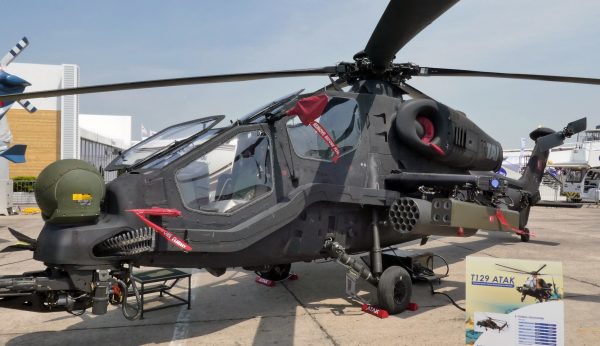
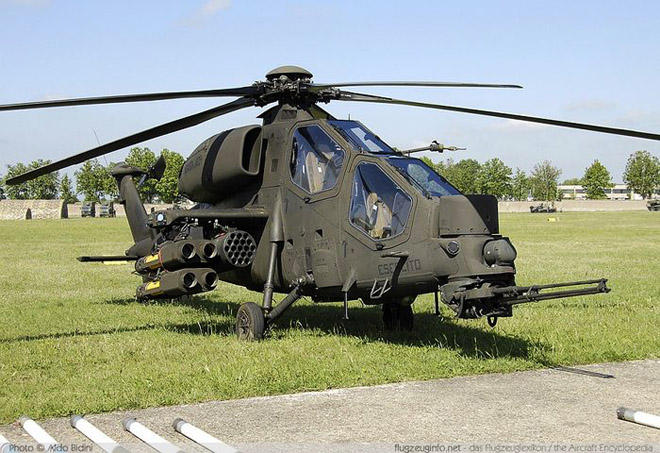
If you thought the PAF’s helicopters were mostly for transport or reconnaissance, think again. Enter the T‑129 ATAK, a twin-seat, twin-engine attack helicopter that turns the Philippine skies into a high-tech warning zone. With a maximum cruise speed of nearly 280 km/h and a ferry range stretching up to 1,000 km, these helicopters can cover disputed areas quickly, linger over critical zones for hours, and deliver precision firepower exactly where it’s needed.
Lethal, precise, and versatile, that’s how experts describe its armament. The T‑129 carries a 20 mm M197 three-barrel cannon with 500 rounds, capable of shredding light armor and fortified positions. It can also launch UMTAS and L‑UMTAS anti-tank missiles at targets up to 20 km away, fire laser-guided CIRIT rockets, and even engage enemy aircraft with Stinger air-to-air missiles. Advanced avionics, including FLIR/optical sensors, helmet-mounted displays, and digital mission computers, allow pilots to strike with surgical accuracy, day or night, in hot, high-altitude conditions, or over coastal waters.https://youtu.be/F8wcKvWPBrM?si=ZWx8eKOxNv0YS4wL
Operationally, the T‑129 is a Swiss Army knife of combat aviation. It’s built for armed reconnaissance, close air support, and precision strike missions. For the PAF, that means the helicopters can engage internal insurgents, support ground troops, and even act as a limited maritime strike platform, a first for Philippine rotary-wing assets.

Before the T‑129, the PAF’s helicopter fleet was mostly light utility and transport types, lacking significant attack capability. The T‑129 changes the calculus: it adds credible deterrence, extends operational reach, and signals to both insurgents and external actors that Philippine airpower is no longer just defensive, it’s assertive, precise, and ready to respond. In a tense maritime environment like the South China Sea, a handful of these helicopters could make an outsized strategic impact.
Strategic Implications for the Philippines
The arrival of T‑129 ATAK attack helicopters is more than just a new piece of hardware, it’s a potential game-changer for Philippine defense posture. For Manila, these helicopters offer a flexible tool to enhance regional deterrence. While they don’t carry the strategic reach of long-range missiles, their ability to rapidly respond to incursions over the country’s archipelagic waters and contested South China Sea features sends a clear signal: violations of Philippine sovereignty won’t go unanswered. In tense encounters, even a small but well-equipped helicopter detachment can alter the risk calculus for intruding forces.https://indopacificreport.com/why-does-china-see-pete-hegseths-manila-visit-as-an-escalation/
Mobility is another game-changer. The T‑129 can quickly lift and strike across islands, supporting littoral operations, expeditionary missions, or maritime patrols. This rapid-response capability isn’t just theoretical, it’s a practical way to project force where fixed-wing aircraft or ships might take longer to arrive. Additionally, these helicopters improve interoperability with key allies like the U.S., Japan, and Australia during joint exercises, showcasing Manila’s ability to operate alongside partners in maintaining regional security. That visibility alone can act as a deterrent, demonstrating that the Philippines isn’t acting in isolation but within a network of strategic cooperation.
Philippines vs. Malaysia: A Tale of Two Militaries – From Sabah to the South China Sea
The T‑129s aren’t only about external threats. Internally, they strengthen the PAF’s counter-insurgency and security operations, filling capability gaps highlighted in past operations such as Marawi. But their usefulness goes beyond combat: these helicopters are equally capable in disaster response, search-and-rescue missions, and medical evacuation, making them indispensable for a nation spread across over 7,000 islands. In short, the T‑129 gives the Philippines a versatile, rapid, and credible tool, one that can protect sovereignty, support allies, and serve the people when crises strike.
Geopolitical and Diplomatic Considerations
The potential addition of T‑129 ATAK helicopters to the Philippine Air Force isn’t just a military upgrade, it’s a signal to the region and the world. In the context of rising tensions in the South China Sea, Manila’s move shows a clear intent: to strengthen defensive capabilities and assert sovereignty amid China’s increasingly assertive maritime claims. At the same time, the acquisition shows the Philippines is diversifying its defense partnerships, no longer relying solely on traditional suppliers like the United States and exploring new avenues with countries such as Türkiye. This strategic flexibility adds another layer of credibility to Manila’s deterrence posture.
The deal also reflects deepening Philippine‑Türkiye relations. Defense cooperation now goes beyond the purchase itself, encompassing maintenance, training, and potential technology transfers, which could expand into broader logistics support networks. For both countries, the T‑129 deal acts as a foundation for long-term collaboration, signaling that Manila is looking to build sustainable, modernized capabilities rather than just one-off acquisitions.
Regional reactions are already shaping up. Beijing is likely watching with caution, aware that even a small fleet of attack helicopters enhances strike and reconnaissance capability, potentially prompting diplomatic maneuvering or public warnings. ASEAN neighbors may see the development as part of a wider modernization trend, balancing the desire to strengthen their own militaries with the need to maintain dialogue and prevent escalation. For the United States and allied partners, the upgrade is welcome: it aligns with shared goals of freedom of navigation, maritime security, and regional stability, while demonstrating that Philippine forces are becoming more capable and interoperable in joint operations.
The T‑129 acquisition is more than hardware; it’s a strategic statement, a blend of diplomacy, deterrence, and capability signaling that resonates far beyond Philippine shores. It tells allies and potential adversaries alike: Manila is modernizing, adapting, and preparing to defend its interests in a volatile region.https://youtu.be/F8wcKvWPBrM?si=abaRcD8_BjagmYCS
Challenges and Considerations
Upgrading to a fleet of T‑129 ATAK helicopters is exciting on paper, but real-world implementation comes with significant challenges. First and foremost are budgetary constraints. The helicopters themselves are a major investment, but acquisition costs are just the tip of the iceberg. Training pilots, maintaining the fleet, securing spare parts, and providing long-term sustainment all require substantial funding. Manila must carefully balance this investment against other defense priorities, from naval modernization to internal security operations, making every peso count.
Then there’s the human factor. Attack helicopters aren’t plug-and-play systems. They require highly trained pilots and technicians, and building that expertise takes time. Doctrine development, standard operating procedures, and integration with existing platforms including communications, surveillance, and command-and-control systems, are essential for safe and effective operations. Without this foundation, even the most advanced hardware can fall short of its potential.
Finally, there are strategic and operational risks. Introducing new offensive capabilities, even for defensive purposes, can be misread by regional actors, raising the stakes for escalation. Every patrol or drill carries the possibility of being interpreted as a provocation, especially in tense areas like the West Philippine Sea. Dependence on foreign suppliers also creates vulnerabilities: delays in spare parts, technology access, or maintenance could affect readiness unless local support infrastructure is developed alongside the fleet.
In short, while the T‑129 helicopters promise to enhance Philippine deterrence and operational flexibility, their effectiveness depends on careful planning, sustained investment, and strategic communication, turning advanced firepower into credible capability rather than just a flashy addition to the hangar.
Conclusion
The potential addition of T‑129 ATAK attack helicopters to the Philippine Air Force marks more than just a hardware upgrade, it represents a quantum leap in tactical capability. For Manila, these helicopters strengthen the ability to deter threats both within its borders and across contested waters in the South China Sea, sending a clear message that Philippine sovereignty is backed by credible, rapid-response firepower.
Of course, the T‑129s are not a silver bullet for the complex great-power competition playing out in the region. They cannot replace long-range missiles, naval assets, or multilateral diplomacy. What they do offer is a tangible demonstration of credible deterrence, a visible tool that complements broader defense modernization and reinforces the Philippines’ role as a responsible, capable actor in regional security.
In the bigger picture, this acquisition reflects a strategic shift: Manila is no longer just reacting to challenges; it is proactively shaping its security environment. By diversifying defense partnerships, investing in modern platforms, and enhancing operational readiness, the Philippines is quietly signaling that it can defend its interests, support allies, and contribute meaningfully to Southeast Asia’s fragile balance of power. In a region defined by contested waters and rising ambitions, these helicopters may be small in number, but their impact on deterrence, diplomacy, and strategic credibility could be outsized.https://youtu.be/F8wcKvWPBrM?si=LrIitfXWdndrshCn