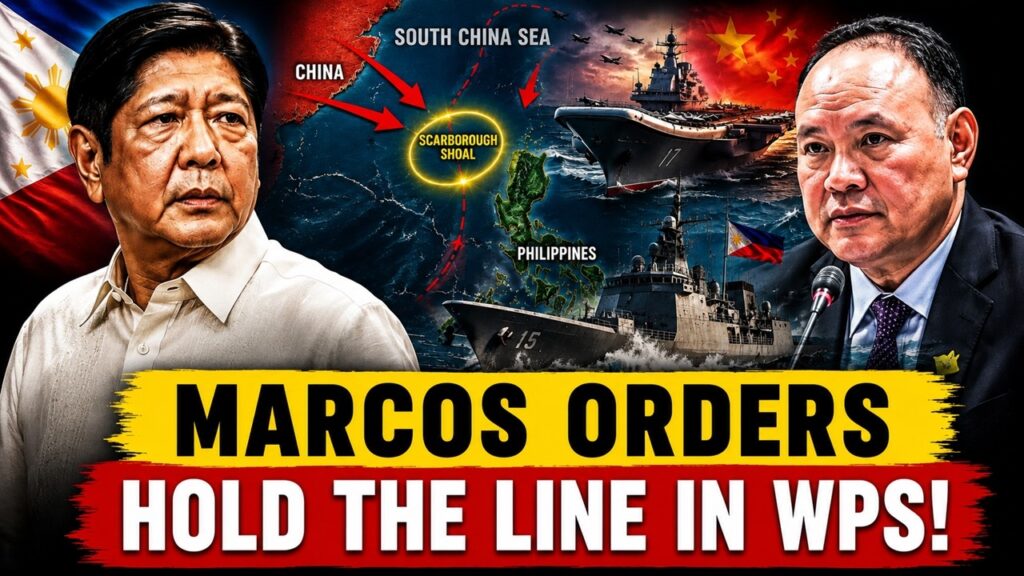
Marcos Orders AFP to “Hold the Line” in West Philippine Sea To Deter China
President Ferdinand Marcos Jr.’s order to ‘hold the line’ marks a major shift in the Philippines’ strategy in the West Philippine Sea. Learn what it means, why it matters, and how it could reshape regional security.
Defense Secretary Gilberto Teodoro Jr. said President Marcos has directed the Armed Forces of the Philippines to stay focused on defending the country’s territorial and maritime interests. At the same time, he made it clear that Manila will continue adjusting its strategy to meet an evolving security environment—but without revealing exactly how those plans will be carried out.
Because this order comes as China continues to maintain a strong Coast Guard and maritime militia presence across disputed waters, from Scarborough Shoal to Second Thomas Shoal, while pressure on Philippine vessels has become a regular feature of life in the West Philippine Sea.
This also marks a noticeable evolution in Manila’s approach. Just a few years ago, the Philippine government focused heavily on diplomatic protests and legal arguments. Even in 2024, President Marcos instructed the military to avoid unnecessary escalation while continuing resupply missions and protecting freedom of navigation. Today, the message is broader. The focus is no longer just on preventing incidents—it is on maintaining a continuous and credible presence in Philippine waters.
President Ferdinand Marcos Jr. has instructed the Armed Forces of the Philippines (AFP) to ‘hold the line’ in the West Philippine Sea. While the phrase appears simple, it represents one of the strongest strategic messages of his administration. Rather than reacting to individual incidents, the government is signaling a long-term commitment to defending Philippine maritime rights, maintaining a continuous presence, and strengthening deterrence while avoiding unnecessary escalation.
Why the Order Matters
China has maintained a persistent Coast Guard and maritime militia presence around disputed areas such as Scarborough Shoal and Second Thomas Shoal. Philippine resupply missions and patrols have increasingly faced pressure. The new directive indicates that Manila intends to maintain a credible and enduring presence rather than relying solely on diplomatic protests.
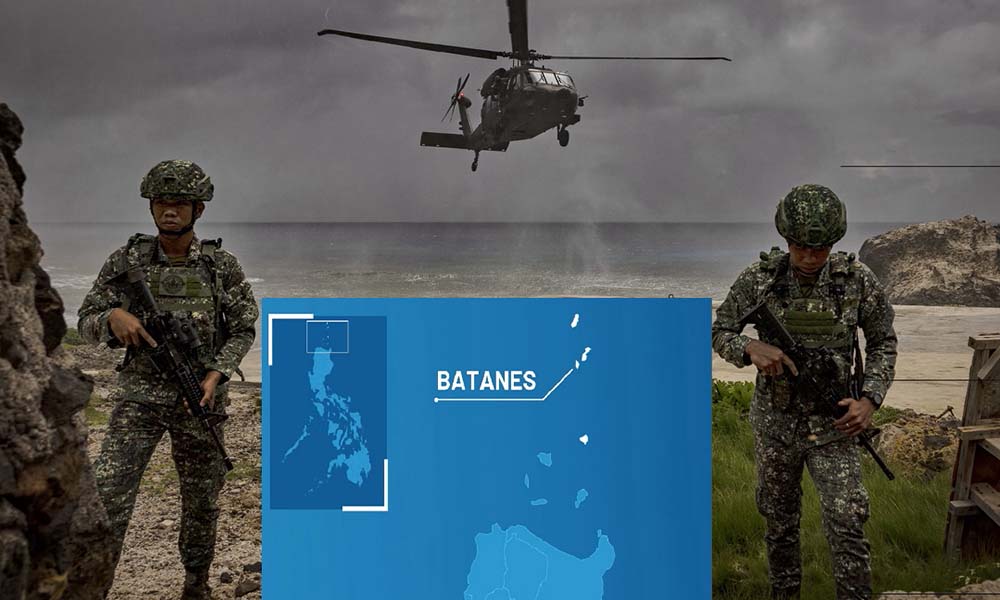
It reflects a much bigger change inside the Philippine military. For years, the Armed Forces of the Philippines focused mainly on internal security. Fighting insurgencies and maintaining domestic stability were its primary missions. Today, that focus is shifting outward. The priority is now external defense—protecting the country’s territory, maritime rights, and national interests in the West Philippine Sea.
That is exactly what Defense Secretary Gilberto Teodoro Jr. was referring to when he said the government will continue to “constantly recalibrate” its strategy to meet changing security challenges. That word—recalibrate—is important. It doesn’t mean reacting to every Chinese move. It means preparing for a long-term competition. Instead of responding only after an incident happens, the Philippines is building the ability to remain present, patrol its waters, and raise the cost of coercion over time.
That is also the thinking behind the Comprehensive Archipelagic Defense Concept, or CADC. Rather than protecting only key military bases, the strategy treats the entire Philippine archipelago—its islands, surrounding seas, airspace, cyber networks, and critical infrastructure—as a single defensive system.
This transformation is already becoming visible. The AFP is accelerating its modernization program, expanding joint patrols, strengthening defense cooperation with allies, and acquiring new capabilities designed for maritime security. Stratbase Institute argues that the next phase of defending the West Philippine Sea requires exactly this kind of technologically advanced, multidomain force backed by credible deterrence and stronger partnerships. In other words, “hold the line” is not about standing still. It is about making sure the Philippines can stay in the fight for as long as it takes.
From Diplomacy to Deterrence
The Philippines continues to support international law and the 2016 Arbitral Award, but leaders increasingly argue that legal victories alone cannot protect sovereign rights. Military modernization, joint patrols, EDCA cooperation, BrahMos missile deployment, and the Comprehensive Archipelagic Defense Concept (CADC) are all designed to strengthen deterrence while preserving peace.
Those efforts achieved an important milestone in 2016, when an international arbitral tribunal ruled that China’s sweeping claims in the South China Sea had no legal basis under international law. The ruling changed the legal debate. But it did not change what was happening at sea.
Chinese Coast Guard ships and maritime militia vessels continued operating in disputed waters, while confrontations with Philippine vessels became increasingly frequent.
44 Chinese Ships Are Sitting in Philippines Waters. Is This China’s New Strategy?
That is why Manila’s strategy is evolving. The Philippines is not abandoning diplomacy or international law. It is strengthening them with credible deterrence. That means modernizing the Armed Forces, expanding joint patrols, deepening defense partnerships, and building a more persistent presence in the West Philippine Sea. Capabilities such as the BrahMos anti-ship missile system, larger Balikatan exercises, and closer cooperation with allies are all part of that broader shift.
Defense Secretary Gilberto Teodoro Jr. captured this change in a single sentence: Legal, without hardening and without deterrence… will result in accommodation and abuse. That is more than a policy statement. It reflects a new way of thinking. The goal is no longer just to prove the Philippines is legally right. The goal is to ensure those legal rights can be exercised without being pushed aside by coercion. That is a significant change in Philippine defense policy.
Scarborough Shoal
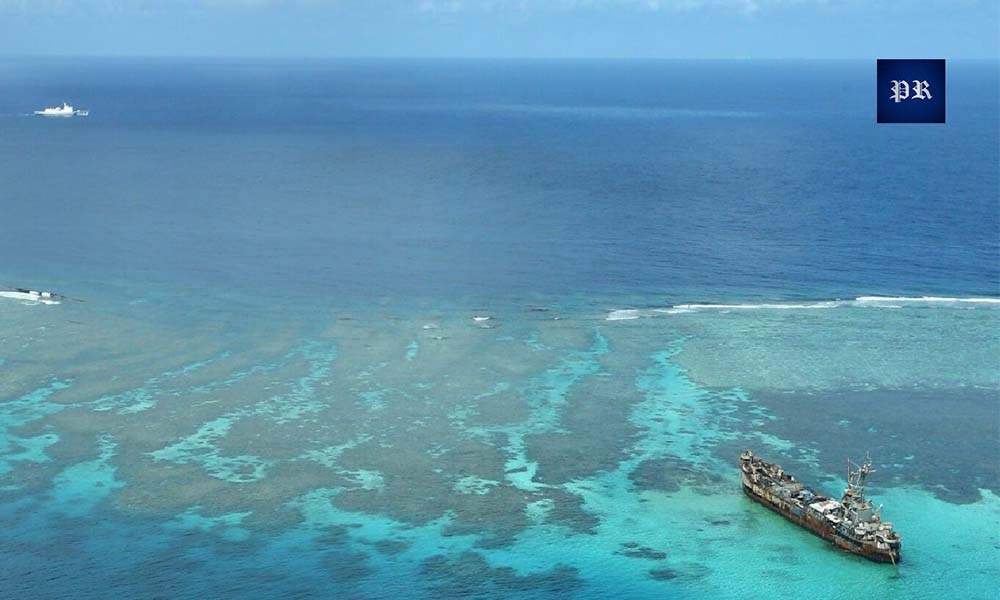
Scarborough Shoal remains strategically important because it lies within the Philippines’ Exclusive Economic Zone and is located near valuable fishing grounds and potential energy resources. The dispute therefore affects food security, energy security, and national economic interests in addition to territorial claims.
If the West Philippine Sea is becoming the center of this competition, then one place explains why better than any other. At first glance, it looks like a small group of rocks in the middle of the sea. But its importance goes far beyond its size.
The shoal lies inside the Philippines’ Exclusive Economic Zone, giving Manila the right under international law to explore resources and manage fishing activities there. Nearby is Reed Bank, an area believed to contain significant natural gas reserves that could help strengthen the Philippines’ long-term energy security.
So this is not just about territory. It is about food, energy, and economic security. That is why the 2016 arbitral ruling was so important. The tribunal rejected China’s sweeping claims in the South China Sea and affirmed the Philippines’ maritime rights under international law.
But there is another side to the story. Winning a legal case is not the same as enforcing it at sea. Former Supreme Court Associate Justice Antonio Carpio has repeatedly argued that while the ruling gave the Philippines a strong legal foundation, it did not automatically stop Chinese vessels from operating inside waters that Manila considers part of its Exclusive Economic Zone. That challenge became clear again when reports emerged that China had suggested treating Scarborough Shoal as a common fishing ground. Carpio rejected the idea outright.
He argued that if the area were ever to be jointly managed, all claimant states would first have to agree on clear rules—when fishing is allowed, how much fish can be caught, and how marine resources would be protected. Without those rules, such a proposal would risk weakening the Philippines’ sovereign rights rather than protecting them. This brings us back to President Marcos’ order to “hold the line.” Because in the West Philippine Sea, the challenge is no longer proving who is right. The challenge is making sure those rights can actually be exercised. And that is exactly why China continues to maintain its presence in these waters—and why the Philippines is preparing to do the same.
China’s Strategy
Beijing continues maintaining Coast Guard ships, maritime militia vessels, and infrastructure around disputed waters. Philippine officials argue that this steady presence gradually changes realities at sea. Consequently, Manila believes maintaining its own presence is essential.
According to Philippine Coast Guard spokesperson Rear Admiral Jay Tarriela, China recently removed one platform at Scarborough Shoal.
At first, that sounded like a positive step. But the bigger picture tells a different story.
Tarriela said seven Chinese structures and objects still remain around the shoal, including communication towers, navigation buoys, and other installations. At the same time, China Coast Guard ships and Chinese maritime militia vessels continue to operate in the area, while Philippine authorities closely monitor their activities.
That is why Philippine officials remain cautious. Removing one structure does not change China’s overall posture. Its presence at Scarborough Shoal remains largely intact. And that is consistent with Beijing’s broader strategy.
Rather than making dramatic moves, China applies steady, continuous pressure. Coast Guard ships remain on station. Maritime militia vessels maintain their presence. Infrastructure stays in place. Each individual action may appear limited, but together they reinforce China’s claims and gradually reshape the situation at sea.
That is exactly why President Marcos has instructed the Armed Forces to “hold the line.” Because if one side maintains a constant presence while the other does not, the balance on the water can slowly begin to change. For Manila, maintaining that presence is no longer just about responding to individual incidents. It is about ensuring that China’s actions do not become the new normal.
International Partnerships
The Philippines has deepened defense cooperation with the United States, Japan, Australia, and Canada. These partnerships enhance maritime awareness, military interoperability, and support for a rules-based Indo-Pacific while stopping short of seeking conflict.
Over the past few years, the Philippines has steadily expanded its security partnerships with countries that share an interest in keeping the Indo-Pacific stable and open. The United States remains Manila’s treaty ally, while Japan and Australia have deepened defense cooperation through joint exercises, maritime patrols, and military training. Even European countries are taking a more active role by joining regional exercises and publicly supporting international law in the South China Sea.
During President Marcos’ recent visit to Vancouver, he thanked Canada for consistently supporting the 2016 South China Sea Arbitral Award and the United Nations Convention on the Law of the Sea, or UNCLOS. More importantly, both countries agreed to deepen defense and maritime security cooperation under their newly established Philippines–Canada Strategic Partnership.
Canadian Prime Minister Mark Carney also announced that Canada is moving toward ratifying a Status of Visiting Forces Agreement, which would allow the armed forces of both countries to train and operate together more closely. Canada has already helped improve the Philippines’ maritime awareness through its Dark Vessel Detection Program, strengthening Manila’s ability to monitor activities in the West Philippine Sea.
Taken together, these developments point to a broader trend. The challenge facing the Philippines is no longer seen as a purely bilateral dispute with China. It has become part of a wider effort by like-minded countries to uphold freedom of navigation, international law, and a rules-based order across the Indo-Pacific. That does not mean these countries are seeking confrontation with China. But it does mean that pressure on the Philippines is increasingly drawing the attention—and in some cases the support—of a much broader coalition.
Conclusion
President Marcos’ directive is not about preparing for war but about preparing for a prolonged strategic competition. Success will depend on sustained modernization, resilient institutions, strong alliances, and continued political commitment.
For the Philippines, holding the line does not mean seeking conflict with China. It means refusing to let intimidation or constant pressure determine where it can sail, patrol, fish, or exercise its sovereign rights under international law.
Whether this strategy succeeds will depend on more than new ships or new missiles. It will depend on whether Manila can continue modernizing its armed forces, deepen cooperation with trusted partners, and maintain the political will to defend its interests year after year.
The challenge facing the Philippines is not measured in days or even months. It is likely to be measured in decades. And that is perhaps the most important message behind President Marcos’ order.
About Indo-Pacific Report
For more geopolitical analysis, strategy coverage, and Indo-Pacific security reporting, visit Indo-Pacific Report:
Website
Facebook
YouTube