Malaysia Is Securing Sabah’s Border as the Philippines Expands Its Military
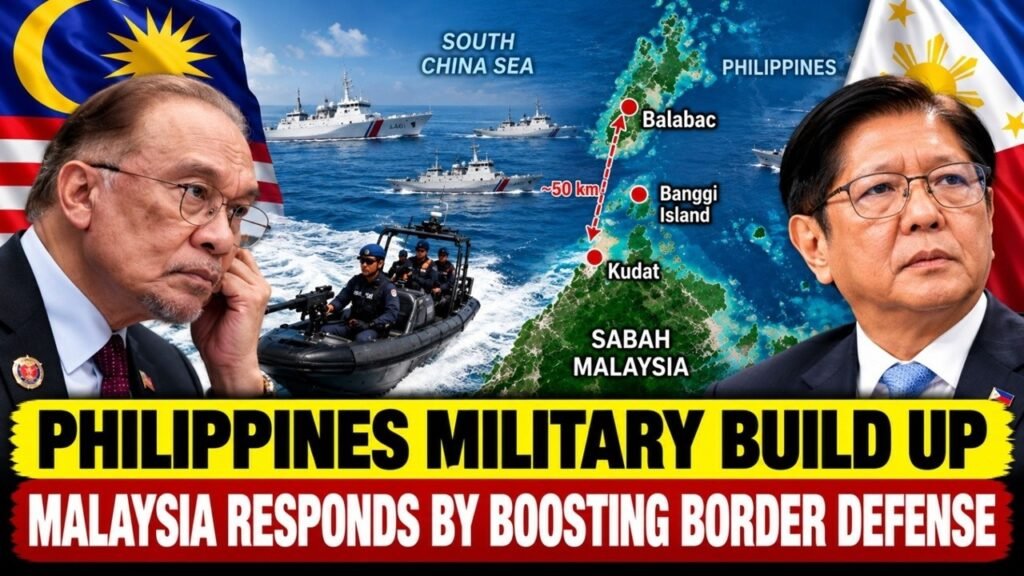
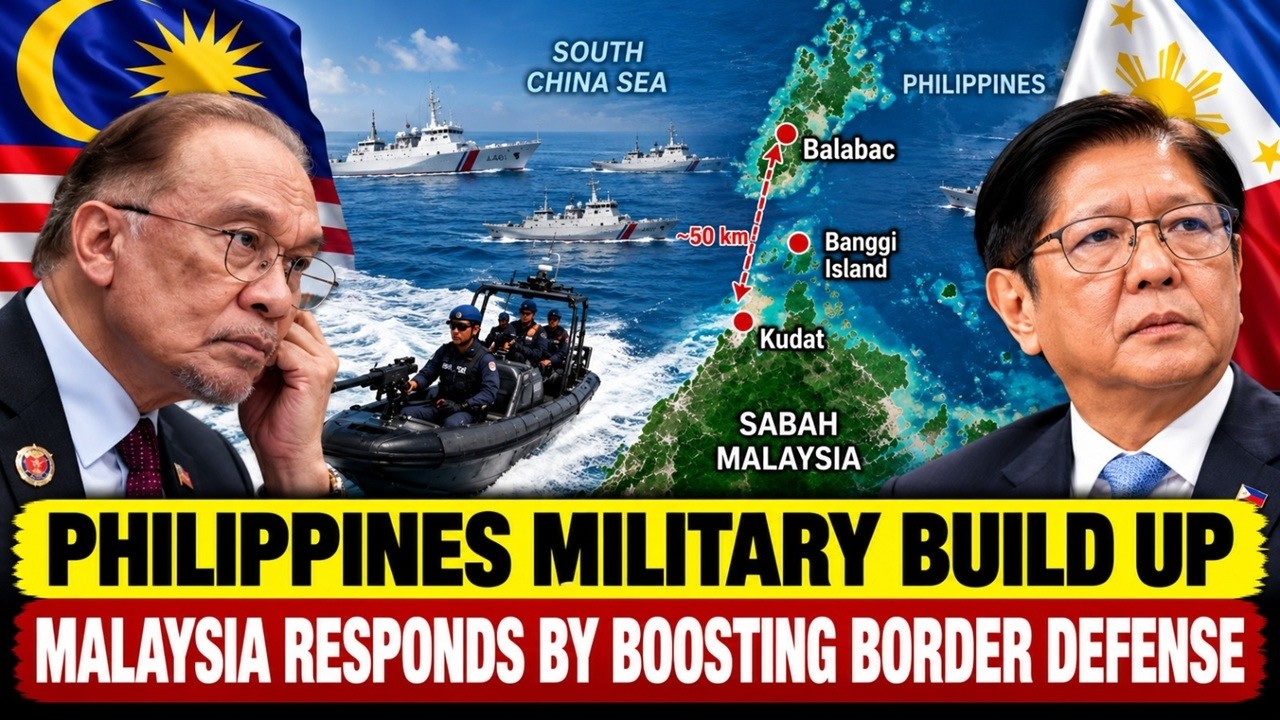
Malaysia is preparing to strengthen maritime security in northern Sabah as the Philippines continues to develop its defence infrastructure on Balabac Island, close to Malaysia’s Pulau Banggi and the waters around Kudat and Balambangan. The development has attracted attention because of its location near important maritime routes in the southern South China Sea, where tensions involving China, the United States and regional countries could have consequences beyond the countries directly involved.
The proposed measures reflect Malaysia’s need to monitor its maritime approaches more effectively. Northern Sabah has a long coastline and borders waters where fishing, commercial movement, migration and cross-border security operations take place. For Malaysian authorities, improved surveillance can help identify unusual activity and support a more timely response to incidents at sea.However, Malaysia’s decision to strengthen border security should not be interpreted as a declaration that the Philippines is an enemy. The available reporting does not establish that Philippine facilities on Balabac are intended to threaten Sabah. The central issue is geographical proximity and the need to prepare for possible regional instability without assuming that a neighbouring country has hostile intentions.
Balabac Island: Why Its Location Matters to Sabah
Balabac Island lies at the southern end of Palawan in the Philippines, near the maritime approaches to northern Sabah. Its position gives the Philippine military a location from which it can support defence activities, logistics, training and maritime awareness. At the same time, its proximity to Malaysia means that developments on the island are relevant to Kuala Lumpur’s security planning. For the Philippines, improving military infrastructure is part of a wider effort to strengthen national defence amid continuing tensions in the South China Sea. Better facilities can help move personnel and supplies, support training and improve the ability to sustain operations. These capabilities can serve defensive purposes even when no military confrontation is taking place.
Malaysia must consider a different but related question: how could these facilities affect the regional security environment if a confrontation involving China, the United States or other regional actors escalated? A military facility may become more strategically important during a crisis than it is during peacetime. Its location can create operational possibilities, but it does not automatically reveal the intentions of the government operating it. The distinction between capability and intent is essential. The development of infrastructure near a border can justify closer monitoring, but proximity alone does not prove an offensive plan. Malaysia and the Philippines share interests in regional stability, secure maritime routes and cooperation against transnational crime. Their governments therefore have reasons to improve their respective defences while maintaining communication and avoiding unnecessary suspicion.
What the EDCA Agreement Means for Balabac
Balabac is one of nine Philippine locations covered by the Enhanced Defense Cooperation Agreement, commonly known as EDCA. The agreement provides a framework for US forces to access designated Philippine military facilities for agreed activities, including construction, training and the pre-positioning of equipment and supplies. EDCA does not transfer Philippine sovereignty over these locations to the United States, nor does it establish unrestricted permanent American basing. The facilities remain under Philippine sovereignty, while the agreement allows defence cooperation under agreed arrangements.
The strategic significance of Balabac lies in the additional options that infrastructure and access can provide. Improved facilities may support logistics, personnel movements, exercises and other agreed defence activities. However, the exact use of the site depends on the equipment present, the activities undertaken and the decisions made by Manila and Washington. Infrastructure alone cannot establish which missions will take place during a future crisis. For Malaysia, Balabac’s location makes it relevant to security planning even if the facility is not intended to threaten Malaysian territory. The island could become more important during a regional emergency because of its position near the southern approaches to the South China Sea. This possibility deserves careful assessment, but it should not be presented as proof that the Philippines is preparing for conflict with Malaysia.
The Sabah Dispute and Its Historical Sensitivity
The Philippines continues to maintain a claim to Sabah, which Malaysia administers as part of its sovereign territory. This longstanding dispute adds political and historical sensitivity to relations between the two countries, particularly when security developments occur close to Sabah’s maritime borders. For Malaysian policymakers, the territorial dispute forms part of the wider context in which regional developments are assessed. However, the Philippine claim to Sabah, the development of military infrastructure on Balabac and Malaysia’s response to strategic competition are separate issues. They may influence public perceptions, but one does not prove the purpose of another. There is no established evidence in the reporting cited here that Balabac’s development is intended to advance the Philippine territorial claim. A more direct explanation is that Manila is strengthening its defence infrastructure amid tensions in the South China Sea and expanding defence cooperation with the United States. Any assessment of the island’s role should distinguish documented developments from speculation about future intentions.
The 2013 Lahad Datu incursion is another important part of Sabah’s security history. Armed individuals linked to the self-proclaimed Sultanate of Sulu entered eastern Sabah, leading to a major Malaysian security operation. The incident was not a Philippine government military operation and should not be treated as evidence of a current plan by Manila Nevertheless, the episode helps explain why territorial narratives and cross-border security remain sensitive issues in Sabah. Malaysia has legitimate reasons to protect its territory and improve its ability to respond to incidents. The challenge is to address those responsibilities through evidence-based security planning rather than treating every Philippine defence development as a direct threat.
Malaysia’s Response: AI Radar, Long-Range Cameras and More Personnel
Malaysia’s immediate response focuses on surveillance, enforcement and readiness. On October 14, 2026, Bernama reported that the government planned to acquire AI-powered radar systems and long-range cameras for the Kudat maritime border in 2028 under the Third Rolling Plan of Malaysia’s 13th Plan. The waters around Kudat, Pulau Banggi and Pulau Balambangan were identified as areas requiring continuous monitoring because of their geography and the potential for illegal entry and cross-border criminal activity. These systems could help authorities detect vessel movements, monitor activity over wider areas and identify patterns that require further investigation. AI-supported technology may assist with processing information and highlighting unusual activity, but it cannot replace trained personnel, reliable communications or operational resources. Detection is only the first stage of maritime security; authorities must still assess the information and decide whether a response is necessary. Additional security personnel are also being considered. Hajiji said he had raised the need for more personnel in Kudat’s waters with the prime minister. His statement indicates a positive response to the request, but it does not establish a final number of additional personnel or confirm that a new deployment has already occurred.
The effectiveness of these plans will depend on implementation. Malaysia will need to ensure that surveillance equipment is properly integrated with existing systems, that personnel are trained to interpret the information collected and that agencies can respond when incidents are identified. Procurement, maintenance, communications and coordination are all important parts of the process. The wider border-management challenge also includes illegal crossings, smuggling and other transnational criminal activity. These concerns should be distinguished from the possibility of a regional military crisis. Stronger maritime surveillance can support both routine enforcement and national security, but enforcement statistics alone do not prove that a neighbouring country poses a military threat.
How US–China Rivalry Could Affect Malaysia’s Security
Balabac’s strategic importance extends beyond relations between Malaysia and the Philippines because of the wider competition between the United States and China. The Philippines has expanded defence cooperation with Washington as tensions in the South China Sea continue. Under EDCA, designated Philippine facilities can support agreed defence activities, giving the two countries additional options for training, logistics and operational coordination. Balabac’s location may make it useful during a regional emergency, particularly if maritime tensions intensify. However, its location does not mean that conflict is inevitable or that the island is specifically designed to attack China. The facilities may support a range of activities, and their future use will depend on decisions made by the governments involved. Malaysia faces a delicate strategic situation. It must protect its territory while maintaining relations with China, the United States and the Philippines. If a major-power confrontation escalated, Malaysia could face disrupted maritime traffic, greater pressure on security agencies and difficult diplomatic choices, even if it did not participate directly in the conflict.
These are risks that policymakers may reasonably consider, not predictions that a confrontation will occur. Malaysia’s goal is to preserve its ability to make independent decisions while ensuring that developments near Sabah do not leave its security agencies unprepared. This is why improved surveillance and military readiness should be understood as part of Malaysia’s broader national defence responsibilities. Kuala Lumpur does not need to match the military capabilities of the Philippines or the United States platform for platform. It needs reliable awareness of activity around its maritime approaches and the ability to respond proportionately when necessary.
Can Malaysia and the Philippines Avoid a Security Dilemma?
The situation illustrates a familiar security dilemma. One country strengthens its defences to improve its security, while a neighbouring country becomes concerned about how those new capabilities might be used. The neighbour then strengthens its own security arrangements, potentially creating further suspicion. This cycle can develop even when neither government wants a confrontation. In the case of Sabah and Balabac, the Philippines can argue that stronger defence infrastructure supports its sovereign responsibility to protect its territory. Malaysia can equally argue that its proximity to Balabac requires it to consider the possible consequences of regional military activity. These positions are not automatically incompatible.mThe risk increases when governments or the public interpret defensive measures as evidence of hostile intentions without sufficient information. The unresolved Sabah claim and wider US–China rivalry can make this interpretation more likely, particularly during a period of heightened regional tension.
Direct military communication can help reduce that risk. Malaysian and Philippine officials can use established channels to clarify unusual movements, discuss maritime security concerns and maintain contact during unexpected incidents. Such communication does not require either country to disclose sensitive operational information or abandon its own defence priorities. Practical cooperation is equally important. Both countries have an interest in addressing smuggling, illegal crossings and transnational criminal networks. They also benefit from safe maritime routes and regional stability. Cooperation in these areas can continue even when the two governments have different perspectives on defence agreements or the wider strategic environment. ASEAN diplomacy can provide additional opportunities for dialogue and crisis prevention. Although regional mechanisms cannot resolve every disagreement, they can help maintain communication and discourage unnecessary escalation. The objective should be to ensure that stronger national defences do not undermine the working relationship between two neighbouring countries.
What Happens Next for Sabah’s Maritime Security?
The immediate priority for Malaysia is to turn its announced plans into effective capability. The government will need to acquire and integrate the planned radar and camera systems, provide training and maintenance, and ensure that the information collected can be used by the relevant enforcement agencies. If additional personnel are approved, they will need the resources and procedures required to carry out their responsibilities effectively. The Philippines, meanwhile, is likely to continue developing its defence capabilities and cooperation with the United States. Because of Balabac’s location, future developments on the island will remain relevant to Malaysia’s security planning. This does not mean that a confrontation between the two countries is imminent, but it does mean that communication and careful assessment will remain important.
Three broad outcomes are possible. Malaysia could improve its surveillance and response capacity while continuing practical cooperation with the Philippines. Alternatively, a wider US–China crisis could increase the strategic importance of Balabac and place greater pressure on Malaysia to protect its maritime approaches. A third possibility is that poor communication or political suspicion could cause defensive preparations to be interpreted as hostile signals. These are possible scenarios rather than predictions. The available evidence does not establish that Malaysia and the Philippines are heading towards a military confrontation. A proportionate approach is to strengthen Sabah’s security based on demonstrated needs, maintain communication with Manila and distinguish confirmed developments from assumptions about future intentions. The effectiveness of Malaysia’s response will depend not simply on how much equipment it acquires, but on whether surveillance, personnel, communications and decision-making work together. Better technology can improve awareness, but lasting security also requires sound planning and cooperation between the agencies responsible for protecting the maritime border.
Conclusion: Balancing Border Security and Regional Stability
Malaysia’s plans for AI-powered radar, long-range cameras and potentially additional security personnel reflect the importance of protecting the maritime approaches around Kudat, Banggi Island and Balambangan Island. Balabac matters because its location and developing defence infrastructure place it close to northern Sabah and within the wider context of US–China strategic competition. The unresolved Sabah dispute adds historical and political sensitivity, but it does not establish that the Philippines intends to threaten Malaysian territory. Similarly, the development of military infrastructure does not, by itself, prove that a country is preparing for an offensive operation. These distinctions are essential to a rational assessment of regional security.
Malaysia has a legitimate interest in strengthening its maritime surveillance, just as the Philippines has a sovereign interest in developing its own defence capabilities. Both countries benefit from secure borders, stable maritime routes and continued regional cooperation. The central challenge is to strengthen Sabah’s defences without allowing geographic proximity and wider strategic competition to create unnecessary mistrust. Effective surveillance, careful assessment and reliable communication can help Malaysia protect its territory while preserving constructive relations with the Philippines.
About Indo-Pacific Report
For more geopolitical analysis, strategy coverage, and Indo-Pacific security reporting, visit Indo-Pacific Report:
Website
Facebook
YouTube