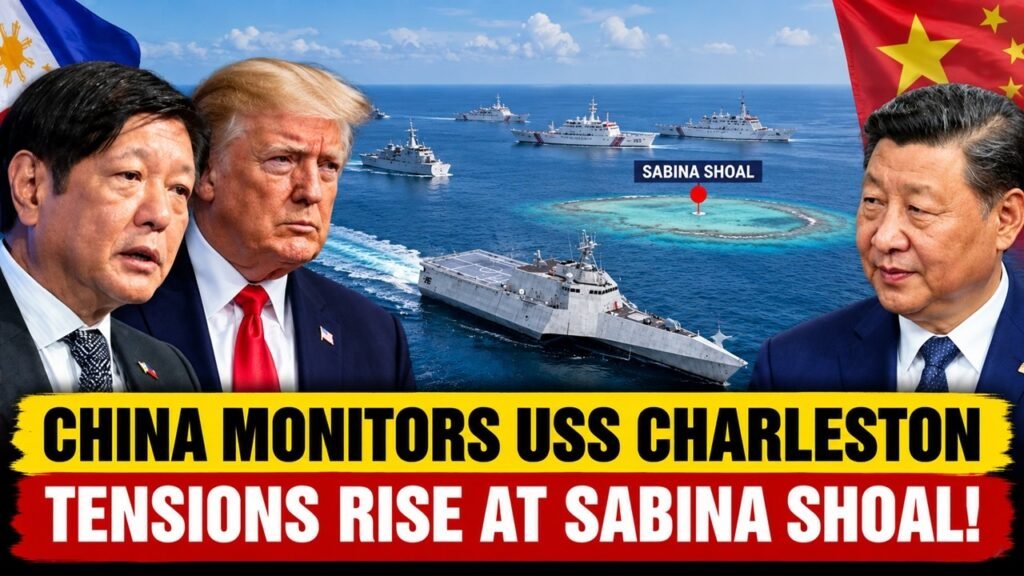
China’s reported tracking of the USS Charleston near Sabina Shoal has brought renewed attention to rising maritime tensions in the South China Sea. On October 20, 2026, China said its forces monitored the American warship near the disputed feature, accusing it of entering waters claimed by Beijing without permission. The United States maintained that its operations were consistent with international law, while the Armed Forces of the Philippines (AFP) rejected China’s claim that the American vessel had trespassed into Chinese territory.
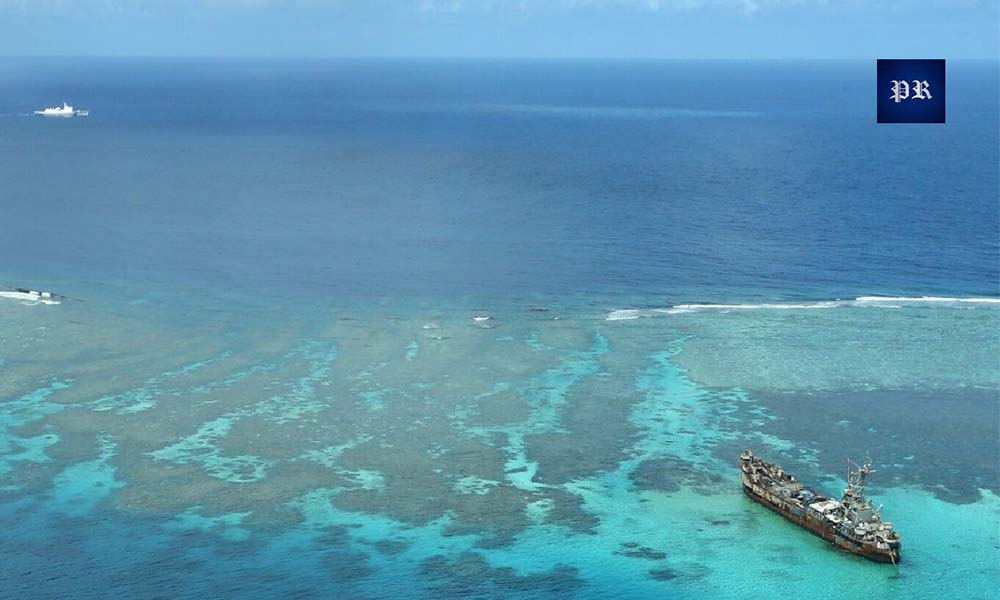
The incident matters because Sabina Shoal, known in the Philippines as Escoda Shoal, is located west of Palawan in a strategically important part of the West Philippine Sea. Although the reported encounter did not establish that a military clash was imminent, it highlighted the continuing disagreement between China, the United States, and the Philippines over maritime rights, naval operations, and freedom of navigation. The wider situation also deserves attention. Philippine authorities reported monitoring 31 Chinese coast guard and naval vessels across four key features in the West Philippine Sea between October 13 and 19. These figures describe broader Chinese maritime activity and should not be interpreted as evidence that all 31 vessels participated in the USS Charleston encounter.
Why Sabina Shoal Is Important to the Philippines
Sabina Shoal is a small maritime feature with significant strategic importance. Located west of Palawan, it lies within the wider South China Sea dispute, where competing maritime claims overlap with fishing activities, coast guard patrols, naval operations, and concerns about access to natural resources. The feature is known internationally as Sabina Shoal, as Escoda Shoal in the Philippines, and as Xianbin Jiao in China.
For Manila, the shoal matters because of its location and its connection to the Philippines’ maritime interests. Philippine authorities seek to monitor Chinese vessel movements, maintain a presence in the area, and protect the country’s sovereign rights and jurisdiction under international law. The location also matters for maritime surveillance because vessels operating nearby can observe movements across a wider part of the West Philippine Sea. The legal status of the surrounding waters is particularly important. Under the United Nations Convention on the Law of the Sea (UNCLOS), an exclusive economic zone (EEZ) can extend up to 200 nautical miles from a coastal state’s baselines, subject to the Convention’s provisions. Within an EEZ, a coastal state has sovereign rights over natural resources and certain forms of jurisdiction. Other countries retain freedoms of navigation and overflight, along with other internationally lawful uses of the sea.
An EEZ is not the same as territorial waters, where a coastal state exercises sovereignty subject to international law. This distinction helps explain why China’s claim that a foreign vessel entered waters around a disputed feature does not, by itself, establish that the vessel violated international law. The legal assessment depends on the ship’s precise location, the status of the waters, and the activities it was conducting. Sabina Shoal has also been a source of tension in previous years. In 2024, the Philippine Coast Guard vessel BRP Teresa Magbanua remained in the area for an extended period amid disagreements over Chinese maritime activity. That episode was separate from the October 2026 USS Charleston encounter, but it demonstrated the shoal’s importance in the broader competition between Manila and Beijing.
USS Charleston Near Sabina Shoal: What Happened?
The USS Charleston, identified by hull number LCS-18, is an Independence-class littoral combat ship operated by the United States Navy. Its trimaran design and mission systems support a range of naval operations, including surface warfare and mine countermeasures, depending on its configuration. The ship operates within the broader American military presence in the Indo-Pacific, a region where US and Chinese forces regularly monitor one another’s activities. According to China’s Southern Theater Command, Chinese forces tracked and monitored the USS Charleston after it entered waters around Sabina Shoal. Beijing described the movement as an unlawful intrusion and said it challenged Chinese sovereignty and security interests. The announcement reflected China’s opposition to American military activity near maritime features it claims. The Armed Forces of the Philippines rejected China’s characterization of the incident. AFP spokesperson Rear Admiral Roy Vincent Trinidad argued that the American vessel had not trespassed into Chinese territory and maintained that lawful navigation through international waters does not require permission from a single country. The United States has also maintained that its regional operations are consistent with international law. However, the available account does not establish every operational detail of the encounter.
The ship’s precise route, its exact distance from the shoal, and the nature of any close manoeuvres have not been fully established in the material underlying this report. There is also insufficient information to conclude that the encounter involved a collision, an exchange of fire, or an imminent military confrontation. This distinction matters because the presence of a warship near a disputed feature does not automatically mean that a conflict is about to begin. It is also important not to describe the movement as a formally designated freedom of navigation operation unless official information confirms that classification. The incident is best understood as a reported naval encounter that exposed competing positions on maritime access and international law.
Why China Publicly Announced That It Tracked the American Warship
China’s public announcement can be understood through several possible strategic explanations, although its internal intentions cannot be established from the statement alone. One possibility is operational monitoring. Navies routinely observe foreign military vessels in strategically important areas to maintain awareness of their movements and understand the forces operating nearby. Tracking a warship can therefore be part of routine military surveillance rather than evidence of preparations for an attack. A second possibility is political signalling. By announcing that it monitored the USS Charleston, Beijing communicated its opposition to American naval activity near Sabina Shoal. The statement also reinforced China’s claim that the ship’s presence challenged its sovereignty and security interests. Public announcements of this kind can serve domestic political purposes while signalling a government’s position to other countries.
A third possibility is regional messaging. The announcement was relevant not only to Washington but also to Manila and other governments concerned about the South China Sea. China’s statement could be interpreted as an effort to demonstrate that it intends to monitor foreign military movements and publicly challenge operations it considers unlawful. These explanations are possibilities, not confirmed accounts of Beijing’s decision-making. Tracking a vessel is not the same as attacking it, and a diplomatic protest does not establish that a military blockade or wider confrontation is being planned. The significance of the announcement lies in the way surveillance activity can become part of a larger political and strategic contest. For the Philippines, the incident raises a practical question: how can Manila protect its maritime interests while reducing the risk that routine encounters develop into dangerous confrontations? The answer depends on reliable information, consistent maritime monitoring, effective diplomacy, and the ability to respond proportionately to developments at sea.
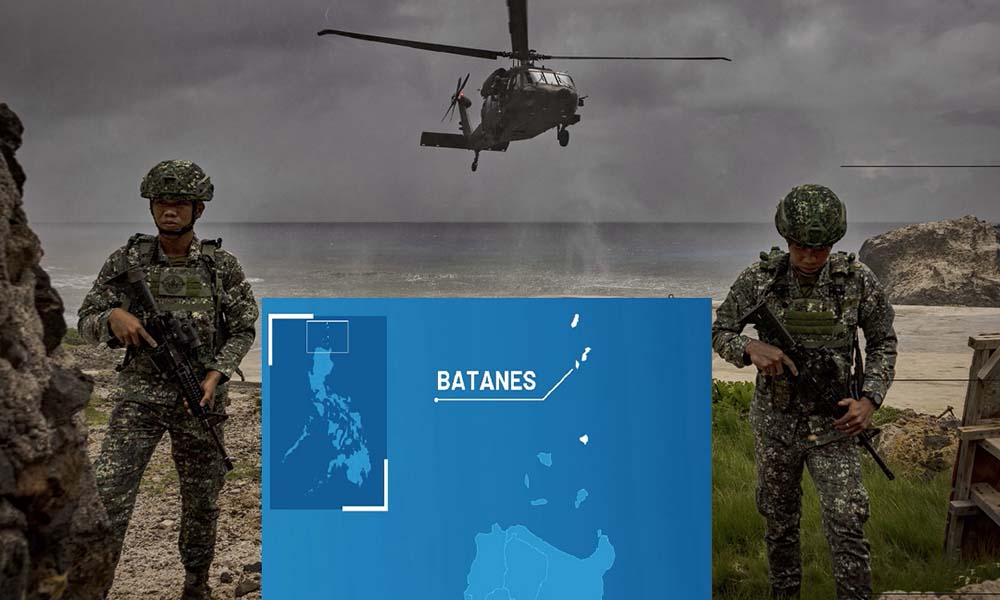
Philippines’ Two-Front Strategy at Palawan and Scarborough Shoal — China is watching
The Legal Dispute: Can China Require Permission for Naval Operations?
International maritime law is central to the disagreement surrounding the USS Charleston. UNCLOS establishes different rights and responsibilities for territorial seas, exclusive economic zones, and the high seas. A coastal state exercises sovereignty in its territorial sea, subject to international law, while an EEZ gives that state specific rights over resources and certain activities without turning the entire area into sovereign territory. nOther states generally retain freedom of navigation in an EEZ under UNCLOS, along with other internationally lawful uses of the sea connected with those freedoms. The application of these rules to a particular military activity can depend on the circumstances and on the legal positions taken by the states involved. Consequently, China’s accusation that the USS Charleston entered waters without permission is not sufficient on its own to determine whether international law was violated. A proper assessment requires reliable information about the ship’s location, the applicable maritime zone, and its conduct. The legal status of the relevant feature and the surrounding waters must also be distinguished from competing claims of sovereignty.
The Philippines also relies on the July 12, 2016 South China Sea arbitral award. The tribunal rejected the legal basis for China’s expansive historic-rights claims insofar as they exceeded the rights provided under UNCLOS. The award addressed maritime entitlements, the status of certain maritime features, and specific actions by China and the Philippines. However, the ruling did not decide territorial sovereignty over every disputed island or resolve every maritime boundary in the South China Sea. China rejects the award, while the Philippines continues to rely on it in defending its maritime rights. The ruling must therefore be understood in terms of its actual findings rather than treated as a complete resolution of every dispute in the region. In the USS Charleston incident, the central issue is whether the reported movement occurred in waters where the ship could lawfully operate and whether its conduct complied with applicable international rules. Without independently verified details of the ship’s route and activities, a definitive legal conclusion about every aspect of the encounter would be premature.
What the Incident Means for Philippine Maritime Security
The reported encounter is significant for Manila because Sabina Shoal lies close to Palawan and within the broader maritime area where the Philippines is seeking to maintain its presence and protect its rights. China’s announcement and the AFP’s response demonstrate that competing interpretations of naval activity remain a feature of the dispute. The wider maritime picture adds context. Philippine authorities reported monitoring 31 Chinese coast guard and naval vessels across four key features in the West Philippine Sea between October 13 and 19, compared with 27 during the previous week. The reported total included 23 China Coast Guard vessels and eight People’s Liberation Army Navy warships. Sixteen Chinese vessels were recorded around Scarborough Shoal during the reporting period, with others monitored near additional disputed features.
These numbers relate to the broader maritime environment. They do not establish that every vessel was involved in tracking the USS Charleston or that all the vessels were participating in a single coordinated operation. Nevertheless, they illustrate the scale of activity that Philippine authorities must monitor across several locations.
One important priority for Manila is stronger maritime-domain awareness. Reliable surveillance, vessel identification, and information-sharing help authorities understand where ships are operating and whether patterns of activity are changing. Better information can support decisions about patrols, resource allocation, and diplomatic responses. Another priority is accurate documentation. Verified photographs, video, vessel information, and official reports can help establish what happened during maritime encounters. A clear record can strengthen diplomatic representations, improve public understanding, and make it easier to distinguish documented events from competing claims. The Philippines can also improve coordination with the United States and other regional partners. Information-sharing and maritime cooperation can help authorities develop a broader understanding of activity across the West Philippine Sea. At the same time, cooperation does not remove the need for Philippine agencies to maintain their own operational capabilities and presence. Continued investment in coast guard capacity, communications, maintenance, training, and safe patrol procedures is also important. These capabilities help the Philippines monitor its maritime approaches and respond more effectively when encounters occur. Diplomacy remains equally necessary because the objective is not simply to demonstrate presence but to protect national interests while reducing the risk of escalation.
How the USS Charleston Incident Affects the US–Philippines Alliance
The United States and the Philippines are treaty allies, and their defence relationship is an important part of the strategic environment surrounding Sabina Shoal. The 1951 Mutual Defense Treaty provides a framework for their security commitments and cooperation. Both governments have reaffirmed that an armed attack on either country’s armed forces, public vessels, or aircraft in the Pacific, including the South China Sea, falls within the treaty’s mutual-defence commitments, subject to the treaty’s terms and applicable constitutional processes. However, tracking a warship, issuing a diplomatic protest, or shadowing a vessel does not automatically trigger the same response as an armed attack. The circumstances of a future incident would matter, including what happened, which vessels were involved, and whether the event met the relevant threshold under the treaty.
American naval operations can have strategic significance even when no armed confrontation occurs. A US warship operating in the region demonstrates continued American military presence and reflects Washington’s position that lawful maritime activities should not be restricted through excessive claims. It can also signal continued engagement to allies and regional partners. Yet the USS Charleston encounter alone does not establish how Washington would respond to a future crisis, nor does it prove that China has changed its broader strategy. The alliance involves more than the movement of an individual warship. It includes consultations, training, defence planning, information-sharing, and cooperation designed to improve the two countries’ ability to respond to security challenges. For Manila, the practical challenge is to combine American support with stronger national capabilities. The Philippines needs its own surveillance systems, capable coast guard operations, trained personnel, and diplomatic tools to protect its maritime interests. Cooperation with Washington can support these efforts, but effective national maritime policy also depends on the Philippines’ ability to assess incidents independently and make informed decisions.
What Could Happen Next in the South China Sea?
One possible outcome is that the USS Charleston encounter remains a limited episode. Chinese forces may continue monitoring American naval movements, while the governments involved maintain their existing positions through public statements and diplomatic channels. If further encounters occur without dangerous manoeuvres, the incident may remain part of the ongoing competition over maritime access rather than develop into a wider crisis. A second possibility is increased maritime pressure. More frequent monitoring, closer manoeuvring, or additional deployments near disputed features could make patrol operations more complicated for the Philippines. Such developments could also require more intensive communication and coordination between Manila and Washington. However, an increase in vessel activity would not automatically establish that either side had decided to initiate a conflict. A third possibility is an accident or dangerous manoeuvre. When military and coast guard vessels operate in close proximity, mistakes in navigation or misinterpretation of another vessel’s movements can create serious risks.
A collision, injury, or use of force could turn a routine monitoring encounter into a diplomatic or military crisis. In such circumstances, governments would face pressure to respond firmly while trying to prevent further escalation. The response would depend on the verified facts, the actions of the vessels involved, and the legal and diplomatic circumstances. The US–Philippines alliance could become more consequential if an incident involved an armed attack covered by the treaty. These scenarios are analytical possibilities rather than predictions. The October 20 encounter does not establish that any particular outcome is inevitable. The principal concern is that repeated operations in a contested maritime environment can create opportunities for miscalculation, especially when governments interpret the same movement in sharply different ways.
What to Watch After the USS Charleston Encounter
Further information from the United States Navy could help clarify the USS Charleston’s route, mission, and interactions with Chinese forces. Until more details are independently established, claims about the ship’s precise movements or the closeness of any manoeuvres should be treated cautiously. Statements from China’s military authorities may provide additional information about Beijing’s position and its reported monitoring activities. However, official announcements should be assessed alongside independently verifiable evidence rather than treated as conclusive accounts of every aspect of an encounter.Updates from the Philippine Coast Guard and Armed Forces of the Philippines will also be important. Reports about Chinese vessel movements near Sabina Shoal, changes in Philippine patrol activity, and developments elsewhere in the West Philippine Sea may help establish whether the incident forms part of a broader pattern.
Credible visual evidence, official imagery, and reliable vessel-movement information could further clarify the circumstances. Not every detail of a naval operation will necessarily be made public, so conclusions should reflect the limits of the available evidence. Diplomatic developments are another important indicator. Further consultations or statements from Manila, Washington, and Beijing could show whether the encounter remains a limited disagreement or becomes part of a wider diplomatic dispute. Activity around Sabina Shoal should also be compared with developments at other maritime features before drawing conclusions about a regional change in strategy. The purpose of monitoring these developments is to distinguish an isolated incident from a sustained change in behaviour. Another public protest does not, by itself, prove a military buildup, just as a higher vessel count in one reporting period does not necessarily demonstrate a coordinated operation.
Conclusion: Why China Tracking USS Charleston Matters to the Philippines
The reported tracking of the USS Charleston near Sabina Shoal highlights the continuing dispute over maritime access, international law, and military activity in the South China Sea. China said it monitored the American warship after it entered waters around a feature claimed by Beijing. The Philippines rejected China’s accusation, while the United States maintained that its operations were consistent with international law.
The location matters because Sabina Shoal is closely connected to Philippine maritime interests west of Palawan. The legal disagreement matters because an accusation of unlawful entry does not, by itself, establish that a ship violated international law. The strategic dimension matters because surveillance, naval movements, and public statements can influence regional security even when no shots are fired. At the same time, the available information does not establish that the encounter was an imminent military confrontation. The ship’s precise route and the details of any close interaction remain unclear, and Beijing’s internal intentions cannot be determined with certainty from a public announcement alone. For the Philippines, the most practical response is to maintain reliable maritime surveillance, document encounters carefully, strengthen coast guard capabilities, coordinate with partners, and use diplomatic channels to defend its position. American support remains an important part of the regional security picture, but Manila also needs the national capacity to monitor its maritime approaches and respond to developments in a measured way.
About Indo-Pacific Report
For more geopolitical analysis, strategy coverage, and Indo-Pacific security reporting, visit Indo-Pacific Report:
Website
Facebook
YouTube