Japan Fires Missiles in Philippines & Donates 6 Warships to Manila
Japan Fires Missiles in the Philippines for the First Time Since World War II — and Donates Six Warships to Manila
In one week, Tokyo crossed two postwar lines: the first Japanese missile fired on foreign soil since 1945, and a free transfer of up to six destroyer escorts to the Philippine Navy. Both moves are aimed at China.
What Just Happened
On May 6, 2026, Japanese troops set up a truck-mounted Type 88 anti-ship missile launcher at Culili Point in Ilocos Norte, Philippines. They fired two missiles at a decommissioned Philippine Navy ship, the BRP Quezon, floating 75 kilometers offshore. Both missiles hit. The ship sank in six minutes.
It was the first time Japan’s Self-Defense Forces fired a missile outside Japanese territory since the end of World War II.
One day earlier, Japan’s Defense Minister Shinjiro Koizumi met Philippine Defense Secretary Gilberto Teodoro Jr. in Manila and agreed to fast-track the transfer of up to six Abukuma-class destroyer escorts to the Philippine Navy — free of charge.
In one week, Tokyo crossed two postwar lines — and both moves were aimed directly at China.
The Manila Meeting: Six Warships, No Price Tag
On May 5, Koizumi flew to Manila from Jakarta, where he had just signed a separate defense agreement with Indonesia. In Manila, he met President Ferdinand Marcos Jr. at Malacañang Palace before closed-door talks with Teodoro.
The outcome was direct. Japan and the Philippines agreed to form a bilateral working group to accelerate equipment transfers — Abukuma-class destroyer escorts, TC-90 maritime patrol aircraft, and additional gear.
When a reporter asked how Manila would pay, Teodoro was blunt: “The transfer is a giveaway.”
In their joint statement, Koizumi and Teodoro cited shared concern over China’s coercive behavior in the South China Sea and the East China Sea, where Japan has its own territorial dispute with Beijing over the Senkaku islands.
The Ships: What the Philippines Is Getting
The Abukuma-class destroyer escort is not a flashy vessel — but it is combat-ready. Six were built between 1989 and 1993. Each is 109 meters long, displaces around 2,550 tons, and carries serious armament:
An Otobreda 76mm rapid-fire main gun
Eight anti-ship missiles
An ASROC anti-submarine rocket launcher
A Phalanx Close-In Weapon System for incoming threat defense
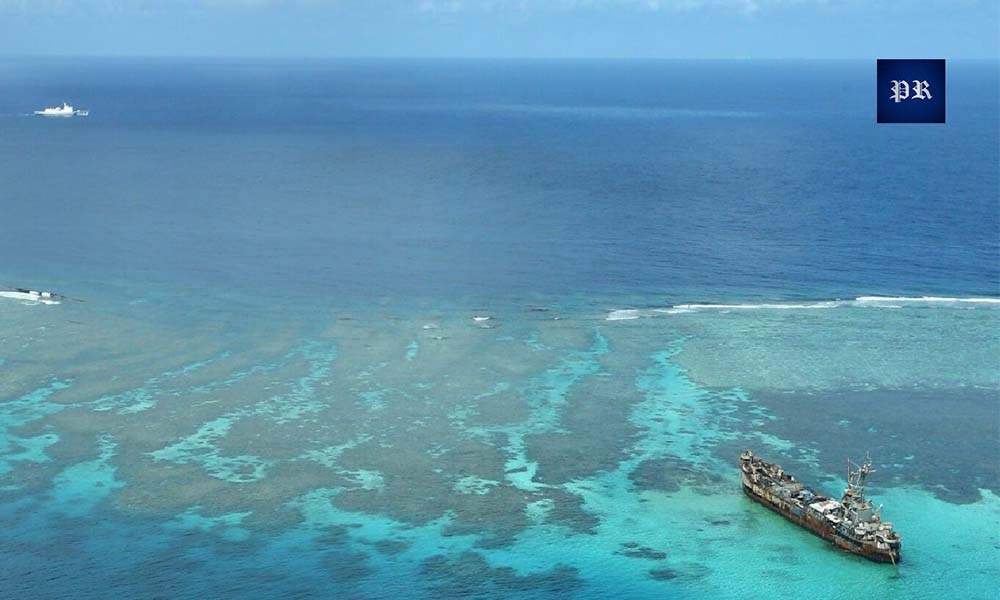
The Philippine Navy currently has no destroyers in service. Its largest combatants are two José Rizal-class frigates from South Korea and a single corvette. Adding three to six Abukumas would immediately give Manila a real anti-ship and anti-submarine capability across its exclusive economic zone — including the West Philippine Sea.
TC-90 maritime patrol aircraft add to that reach. Japan already handed five TC-90s to the Philippines between 2017 and 2018. More are now on the table.
There are still legal hurdles. Japanese law may require another amendment to allow free transfer of warships. Manila will also have to integrate Japanese systems into a fleet built around South Korean and US equipment. Deliveries could realistically begin in 2027, when the Abukumas are due for retirement and replacement by Japan’s new Mogami-class frigates.
The Missile Strike: A Postwar First
On May 6, the day after the Manila meeting, Koizumi and Teodoro flew north to Ilocos Norte. The Paoay sand dunes had been turned into a live-fire range for Balikatan 2026, the largest such exercise in the drill’s history — over 17,000 troops from seven nations.
Japanese troops from the 1st Anti-Ship Regiment positioned a Type 88 launcher facing the West Philippine Sea. The Type 88, built by Mitsubishi Heavy Industries, has a range of around 180 kilometers. It had never been fired outside Japan.
At the signal, two missiles launched two minutes apart. Both hit the BRP Quezon — an 82-year-old hull that began its life in 1944 as the USS Vigilance, hunting Japanese submarines in the Pacific. It sank within six minutes.
President Marcos watched via live feed from Camp Aguinaldo in Manila. US Army forces followed with a HIMARS rocket strike on the same wreck. A multinational strike package — including Japanese warships JS Ise, JS Ikazuchi, and JS Shimokita alongside Filipino, American, Canadian, and Australian vessels — operated as a single coordinated force.
For nearly 80 years, Japan’s Self-Defense Forces trained almost entirely at home. Firing a missile from the soil of a former wartime enemy — now a treaty partner — signals that Japan’s purely defensive era is ending.
China Deploys Carrier Fleet as Japan Joins Balikatan 2026 — The Indo-Pacific’s New Flashpoint
Three Changes Inside Tokyo That Made This Possible
1. Japan Lifted Its Arms Export Ban
On April 21, 2026, Tokyo overhauled its decades-old restrictions on lethal weapons exports — the biggest such change since 1945. If the Abukuma transfer proceeds, it would be Japan’s first export of lethal naval hardware under the new framework.
2. The Reciprocal Access Agreement Is Now in Force
The 2024 Reciprocal Access Agreement between Japan and the Philippines allows each country to deploy troops on the other’s soil. Balikatan 2026 is the first major test. Japan deployed roughly 1,400 personnel — the first Japanese combat forces to set foot on Philippine soil since World War II.
3. Prime Minister Takaichi Is Taking a Harder Line on Beijing
Japan’s Prime Minister Sanae Takaichi has been more direct on China than her predecessors. In November 2025, she warned that a Chinese attack on Taiwan would represent an existential threat to Japan and could trigger a military response. Beijing accused her government of pursuing what it called ‘neomilitarism.’ Takaichi has not backed down.
She is also signaling to Washington that Japan wants to be treated as a serious frontline ally — not a junior partner sheltering behind US power — especially while American forces remain committed in the Middle East.
Why Beijing Is Watching This Closely
China’s response was swift. After Tokyo eased its arms export rules, Foreign Ministry spokesperson Guo Jiakun warned the global community would resist what he called ‘reckless moves toward a new type of militarism.’
But the real problem for Beijing is not the rhetoric. It is the map.
China’s People’s Liberation Army Navy now operates over 400 vessels — carriers, destroyers, submarines. Even after years of modernization, the Philippine Navy fields only a handful of modern surface combatants. That raw gap cannot be closed by the Abukumas alone.
But it can be narrowed. A small flotilla of Abukuma destroyer escorts operating out of Subic Bay, Cavite, or Palawan would not stop a Chinese carrier group. It would, however, force Beijing to plan around new platforms with real anti-ship and anti-submarine teeth inside the South China Sea.
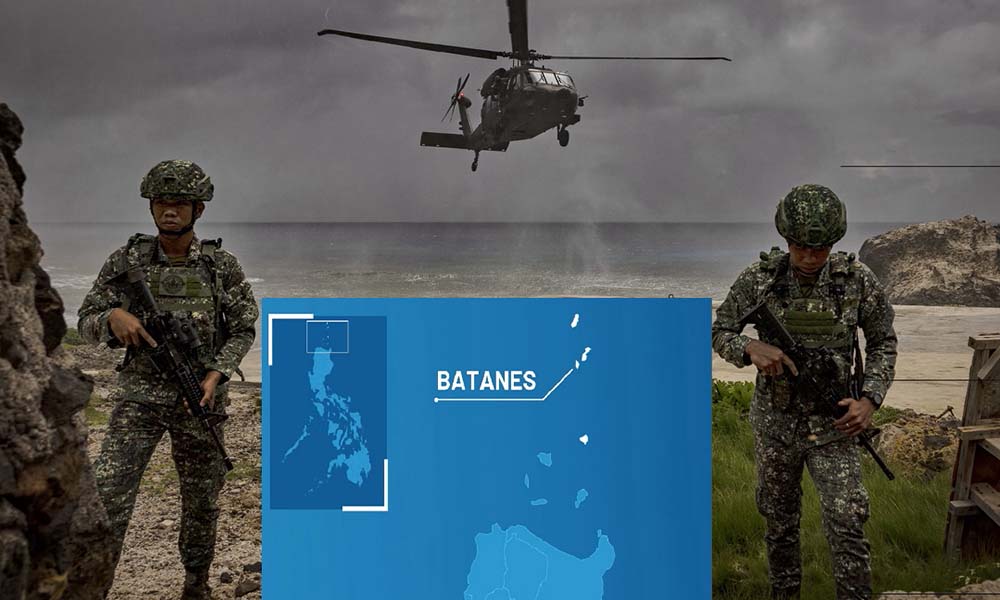
Combined with US Typhon missile launchers, NMESIS anti-ship units already deployed to the Philippine province of Batanes, and now a proven Japanese Type 88 capability firing from Luzon, the first island chain is hardening into a genuine defensive line — from southern Japan, through Taiwan, into the northern Philippines.
The old enemies of the Pacific War are now the closest of partners. The reason is sitting just over the horizon, in the contested waters of the South China Sea.
The Bigger Picture
This week was not an accident. It reflects a deliberate convergence of Japanese rearmament, a US-backed alliance architecture, and Philippine strategic will — all tightening around a common concern: Chinese expansion in the South China Sea.
Naoko Aoki of the RAND Corporation noted that the maritime strikes, amphibious operations, and missile defense drills practiced this week directly apply to a Taiwan contingency. John Hemmings of the Henry Jackson Society described Japan’s participation in Balikatan as a clear deterrence signal to Beijing.
The question now is whether this deterrence holds — or whether it accelerates the confrontation it is meant to prevent.
Follow IndoPacific Report
For daily analysis of South China Sea developments, Philippine defense affairs, and Indo-Pacific security, follow us across platforms:
🌐 IndoPacific Report — Website
▶️ IndoPacific Report — YouTube Channel
📘 IndoPacific Report — Facebook Page