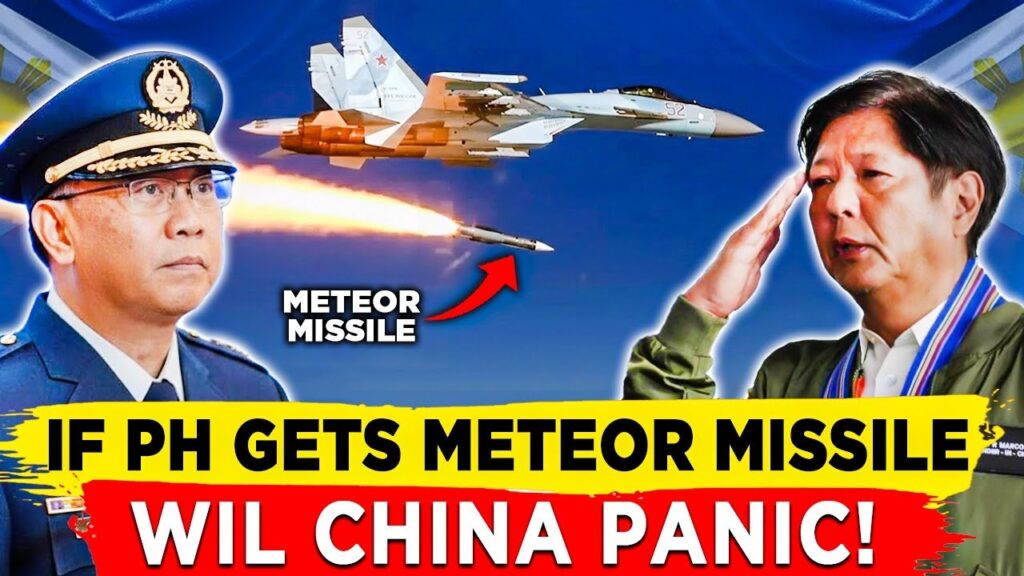
If the Philippines Gets Meteor Missiles, the Air War Changes Overnight
What if one missile could rewrite the balance of power in Southeast Asia overnight?” That’s not a rhetorical fantasy, it’s the exact question defense analysts are asking after the latest buzz from Manila. As the Philippine Department of National Defense hinted last week, talks are underway about equipping the Philippine Air Force with Meteor beyond-visual-range air-to-air missiles, the very same seekers that have reshaped air combat dynamics in Europe and the Gulf. “This is not just a weapon,” one retired fighter pilot commented, “it’s a wake-up call to every air force in the region.”
Think about that for a second: a country long pigeonholed as a junior airpower player potentially fielding a system that gives it reach, precision, and deterrence once reserved for powerhouse jets. Historically, the Philippines has been an airspace defender at best, scrambling aging fighters to chase off intruders, more reactive than proactive. Sure, Philippine skies have seen their share of typhoons and territorial spats, but pure air combat relevance? Not so much.
Now imagine the shift: a warrior traditionally on the back foot suddenly able to deny enemy aircraft long before they breach sovereign airspace. That’s not incremental modernization, that’s a paradigm flip. And if this deal goes through, the whole air war calculus in the South China Sea and beyond could change overnight.
Understanding the Meteor Missile: Why It’s a Game-Changer
The Meteor isn’t just another missile, it’s the air combat equivalent of giving a sprinter rocket boosters. At its core, the Meteor is a beyond-visual-range air-to-air missile (BVRAAM), designed to engage enemies long before they even know you’re in the sky. What truly sets it apart is its ramjet propulsion system, which allows the missile to sustain high speed all the way to the target, unlike conventional rocket-powered missiles that burn fast and then coast, losing energy and range.
This constant energy translates into a larger no-escape zone, meaning an enemy aircraft that might have dodged older missiles has almost zero chance against a Meteor. While comparable systems like the AMRAAM are limited once the target tries evasive maneuvers, the Meteor keeps chasing relentlessly, making it a nightmare for pilots relying on agility over raw distance.
The Meteor isn’t just about numbers on paper; it’s built for first-shot, first-kill dominance. Its high endgame energy allows it to defeat even the most maneuverable fighters, ensuring that a single launch can neutralize threats that older missiles might require multiple attempts to down. Integrated with modern Western fighters, think Eurofighter Typhoon, Saab Gripen, and Rafale, the Meteor has already proven itself in exercises across Europe and the Middle East, giving pilots the confidence to control the skies rather than react to threats.
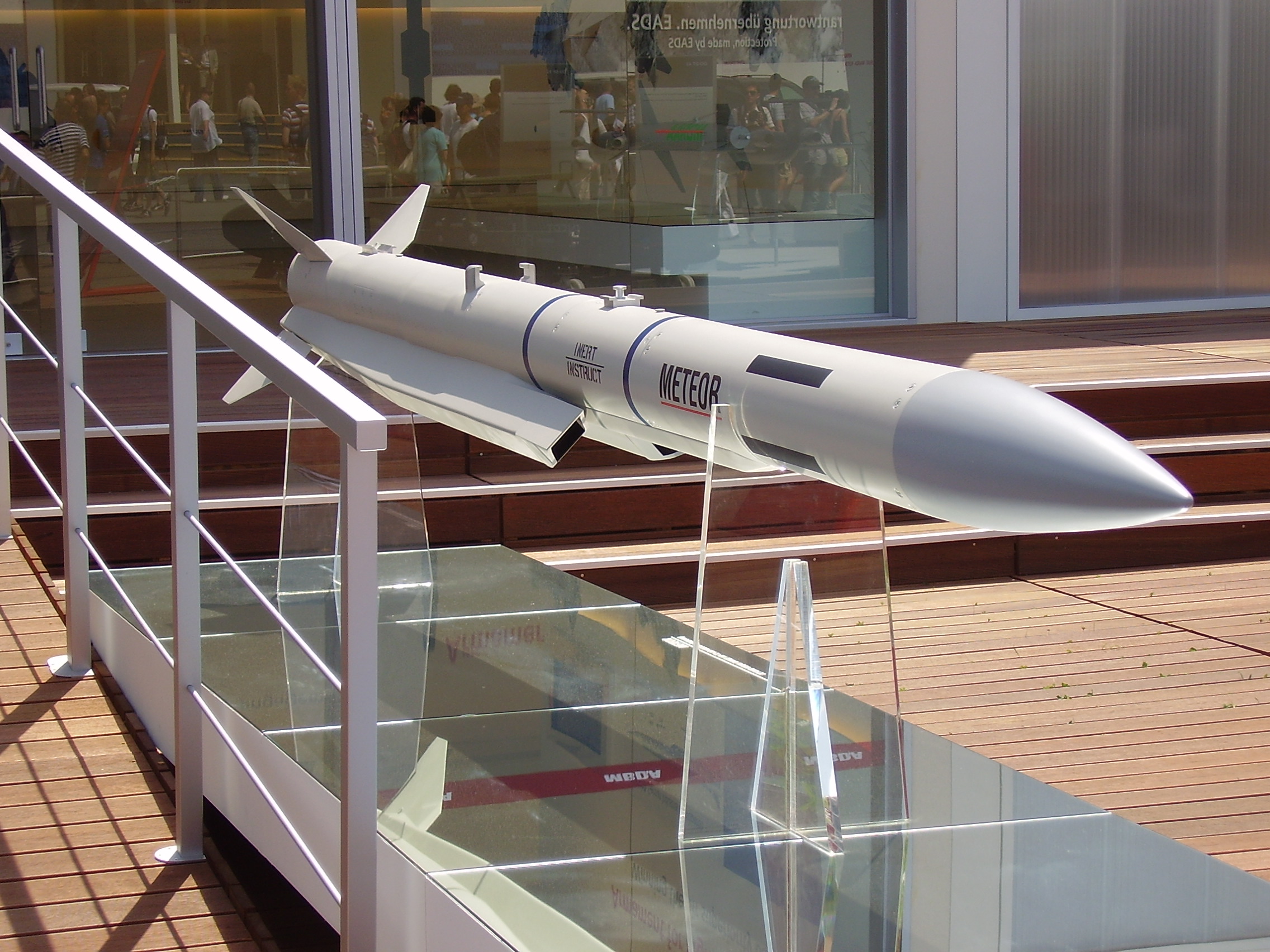
But the Meteor’s power isn’t just physical, it’s psychological. Pilots know that once an opponent is equipped with this missile, they can no longer rely on dogfighting tricks alone. The very uncertainty of engagement reshapes enemy behavior: aircraft are forced to keep greater distance, rethink interception strategies, or avoid contested airspace entirely. In military terms, that’s called deterrence through capability, and it’s arguably just as valuable as a successful missile launch. Simply put, the Meteor doesn’t just fight; it changes the way wars are fought in the mind before the first shot is fired.
The Philippine Air Force Today: Structural Constraints
The Philippine Air Force (PAF) isn’t exactly the stuff of legend, at least not yet. With a small fighter inventory and modest sortie generation capacity, the PAF has historically flown more patrols than power plays. Its jets are designed to scramble, intercept, and defend, rather than dominate or project influence beyond its borders. In essence, the PAF has been a reactive force, good for safeguarding airspace but lacking the punch to tip the scales in a regional standoff.
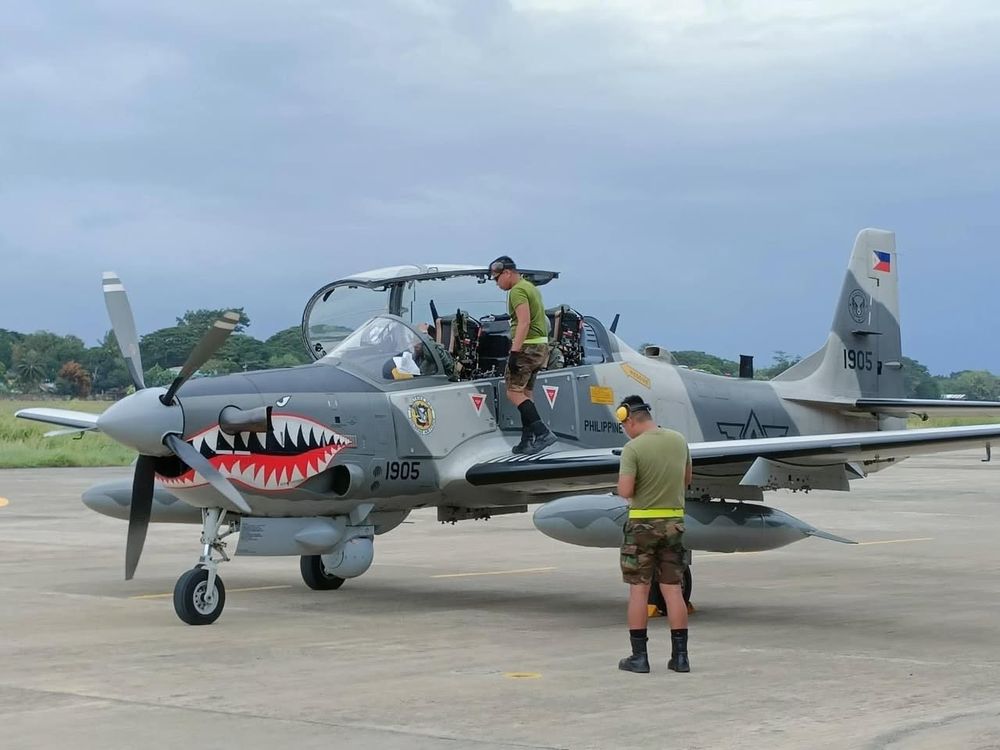
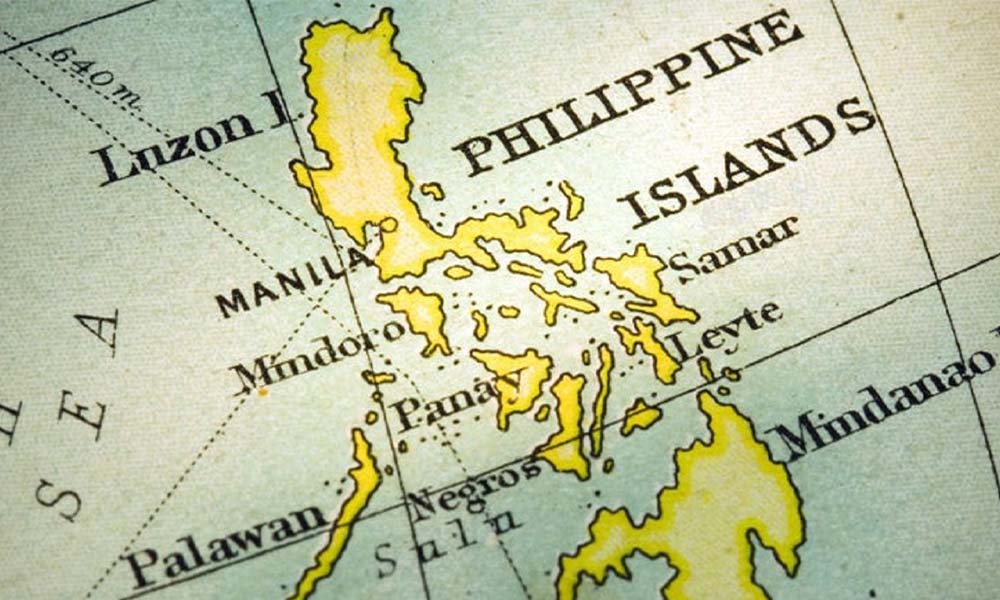
Then there’s the archipelago itself. The Philippines is made up of over 7,000 islands, meaning any defense strategy has to contend with fragmented geography, vulnerable airbases, and enormous distances between operational points. Limited redundancy in infrastructure means a single strike could cripple key hubs, and the PAF often has to rely on allies to plug gaps. In short, geography forces Manila into defense-first thinking, making it hard to play the kind of proactive role that airpower enthusiasts dream of.
Here’s the kicker: the PAF can’t outnumber its neighbors, and in any prolonged air war, sheer attrition would be its undoing. That’s why force multipliers like the Meteor missile matter more than ever. One advanced, long-range missile can do the work of dozens of outdated short-range systems, allowing a quality-over-quantity approach. For a small air force in a sprawling, complex theater like the Philippines, smart technology isn’t just an advantage, it’s a lifeline, a way to punch above its weight and turn structural limitations into strategic leverage.
Overnight Shift: What Changes the Moment Meteor Enters Service
The moment the Meteor missile enters Philippine service, the rules of engagement change almost instantly. Suddenly, Philippine fighters are no longer just scrambling to defend territory, they can threaten enemy aircraft long before those aircraft can even fire a shot, transforming the air force into a stand-off, air denial force. That alone shifts the psychological and tactical balance, forcing any potential adversary to rewire their playbook: jets may have to fly lower, take longer detours, or travel under heavy escort, all while relying more on electronic countermeasures and decoys to survive.
The battlefield itself expands in ways that were previously unthinkable. With the Meteor’s reach, Philippine fighters could project influence far beyond the nation’s borders, blurring the line between homeland defense and regional operations. What was once a purely reactive force now gains strategic teeth, capable of shaping the decisions of adversaries and asserting control over contested skies. In essence, one missile doesn’t just add capability, it redefines what it means for the Philippines to fight and deter in the modern air war, overnight turning limitation into leverage.
Implications for China and the Western Pacific Air Balance
The introduction of Meteor missiles into the Philippine arsenal would send immediate ripples across the Western Pacific air balance, directly complicating the operational calculus of the People’s Liberation Army Air Force. Routine Chinese patrols near the West Philippine Sea would no longer be low-risk exercises; every reconnaissance sortie, airborne early warning mission, or tanker operation would carry the shadow of a long-range, highly maneuverable threat. The presence of these missiles raises the stakes, forcing planners to account for danger where previously there was none, and turning even routine flights into high-risk endeavors.https://youtu.be/vv53qtkJGoU?si=2eOAB-8zJFYVpo7D
China would inevitably adjust, leaning more heavily on stealth platforms, long-range precision missiles, and electronic warfare to counter the Philippine stand-off capability. Concepts like preemptive strikes and suppression of airbases may rise from theoretical strategies to operational priorities, as every PLA sortie now faces not only detection but the prospect of instant neutralization.
Yet beyond the purely tactical effects, the Meteor carries immense strategic and political weight. It is more than a missile, it is a signal. Its deployment communicates to Beijing that Manila is willing to escalate capability rather than rhetoric, asserting sovereignty and deterrence in a theater where words often fail. In this sense, the Meteor is as much a tool of diplomacy as it is a weapon of war, shaping not only what aircraft can do but also how regional powers calculate risk, restraint, and respect.
Alliance Dynamics: The U.S., Japan, and Regional Integration
The Meteor doesn’t just change the Philippine Air Force, it changes the Philippines’ role in the entire Western Pacific alliance architecture. By adopting a missile system shared with Western air forces, the PAF becomes seamlessly interoperable with the U.S., Japan, and other allies, able to slot into coordinated targeting networks and integrated kill chains. This isn’t about hosting large foreign forces on Philippine soil; it’s about quietly punching above its weight, providing forward air capabilities that amplify collective deterrence. The Philippines is no longer just a consumer of regional security, it becomes a partial provider, contributing to alliance burdens in subtle but meaningful ways, signaling that Manila is serious about its sovereignty and its role in regional stability.
Philippines Accuses China of Mischaracterizing South China Sea Deal
Risks, Limitations, and Hard Realities
Even a weapon as capable as the Meteor cannot magically solve every problem the Philippine Air Force faces. Advanced as it is, the missile is expensive, technologically sophisticated, and operationally demanding. Procurement is just the first step; sustaining the system over time requires secure logistics, regular maintenance, and a well-stocked inventory of missiles ready for immediate use. Pilots cannot simply launch these weapons and hope for results, they must be rigorously trained to exploit the Meteor’s full capabilities, mastering engagement envelopes, flight dynamics, and integration with the aircraft’s radar and avionics. Even small mistakes in targeting or timing can reduce the missile’s effectiveness, and that training takes both time and money.
The very strategic weight the Meteor brings also comes with heightened risk exposure. By suddenly increasing the Philippines’ relevance in the regional air balance, the nation becomes a higher-value target. Airbases and key infrastructure may attract preemptive strikes or sabotage attempts, as adversaries reassess the threat and prioritize neutralizing it before it can be used effectively. Every gain in capability simultaneously raises the stakes for defense planning.

Critically, the Meteor is not a substitute for strategy. It does not solve underlying vulnerabilities such as limited airbase redundancy, long-range surveillance gaps, or dependence on allied intelligence and refueling support. The PAF still relies on partners to maintain continuous situational awareness, extend operational reach, and conduct deep-strike missions. Without these complementary systems and well-thought-out doctrine, even a powerful missile like the Meteor cannot fully tilt the balance of power.
In short, the Meteor is a force multiplier, not a magic wand. Its presence enhances options, changes risk calculations, and amplifies deterrence but it does not eliminate the hard realities of geography, infrastructure, or alliance dependence. Any plan to leverage it effectively must consider these limits, combining the missile’s raw power with careful strategy, training, and logistics to truly transform the Philippines’ air capabilities.
The Bigger Picture: Why “Overnight” Isn’t an Exaggeration
When analysts say the Meteor could change the air war “overnight,” they’re not indulging in hyperbole. The impact is both immediate and systemic, affecting tactics, strategy, and even the psychology of regional adversaries. Modern air combat isn’t just about numbers, it’s about timing, distance, and first-strike potential. A fighter force equipped with long-range, high-energy missiles like the Meteor can engage opponents far beyond visual range, striking before the enemy even knows it is under threat. This compresses the decision-making timelines for adversaries dramatically, forcing them to react faster, often with incomplete information, and increasing the likelihood of mistakes or overcautious behavior.
Even a relatively small Meteor stockpile can impose outsized costs on any adversary. Each missile represents not just a single potential kill, but a strategic deterrent: enemy planners must allocate extra resources to protect their aircraft, adjust patrol routes, fly under heavier escort, or rely on electronic countermeasures and decoys. These adjustments may seem small individually, but collectively they slow operations, reduce efficiency, and create vulnerability elsewhere. In essence, the Meteor allows a modest air force to exert influence far beyond its numerical strength.
The geographic and operational context of the Philippines amplifies this effect. Its archipelagic terrain, long distances between bases, and reliance on rapid-response air cover mean that every enemy incursion carries risk. With Meteor missiles, the PAF can project reach across key air corridors and contested waters, turning what was previously reactive defense into proactive deterrence. Adversaries must now assume that any sortie near Philippine airspace carries significant danger, forcing a re-evaluation of risk and operational planning across the region.
Moreover, the Meteor’s influence extends beyond pure military calculations. The missile serves as a strategic multiplier, a signal to both allies and adversaries that the Philippines is not a passive participant in regional security. Its deployment reshapes how neighbors, including major powers, perceive Manila’s willingness and capability to defend its interests, adding a political dimension to its military effect. In a theater defined by uncertainty and fast-moving aerial threats, reach isn’t merely an advantage, it is power in its most immediate and tangible form.
For the Philippines, the Meteor delivers that power in one decisive leap. It doesn’t require decades of fleet expansion or massive infrastructure investment. With the right training, integration, and doctrine, a few well-placed missiles can transform the PAF from a marginal defender into a credible air-denial force, capable of influencing regional air operations and deterring adversaries long before they cross sovereign boundaries. That’s why, in the context of Southeast Asia’s complex air environment, the phrase “overnight shift” is not exaggeration, it’s a literal statement of strategic reality.
Conclusion: From Marginal Player to Strategic Variable
With the Meteor, the Philippines transforms overnight from a marginal airspace defender into a strategic variable that regional planners cannot ignore. It doesn’t need to achieve air superiority to matter; it only needs air relevance, the ability to threaten, deter, and influence events far beyond its borders. In the modern calculus of air warfare, reach is power, and with the Meteor, the Philippines finally acquires the reach that turns limitation into leverage, defense into deterrence, and a once-reactive force into a game-changing actor in the skies of the Western Pacific.https://youtu.be/maH2SXynpeQ?si=Y2L7b6JmDg4hpSbu