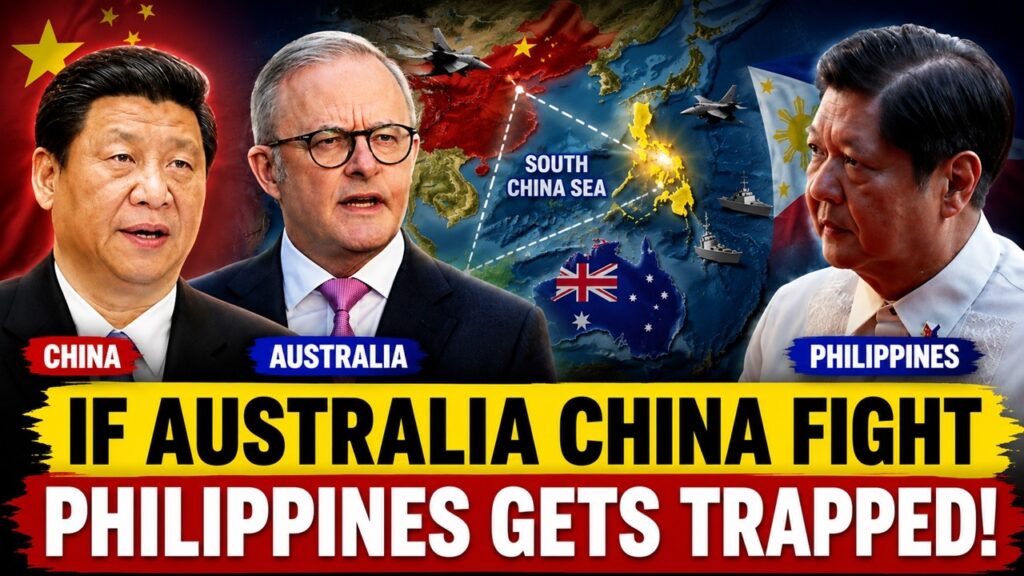
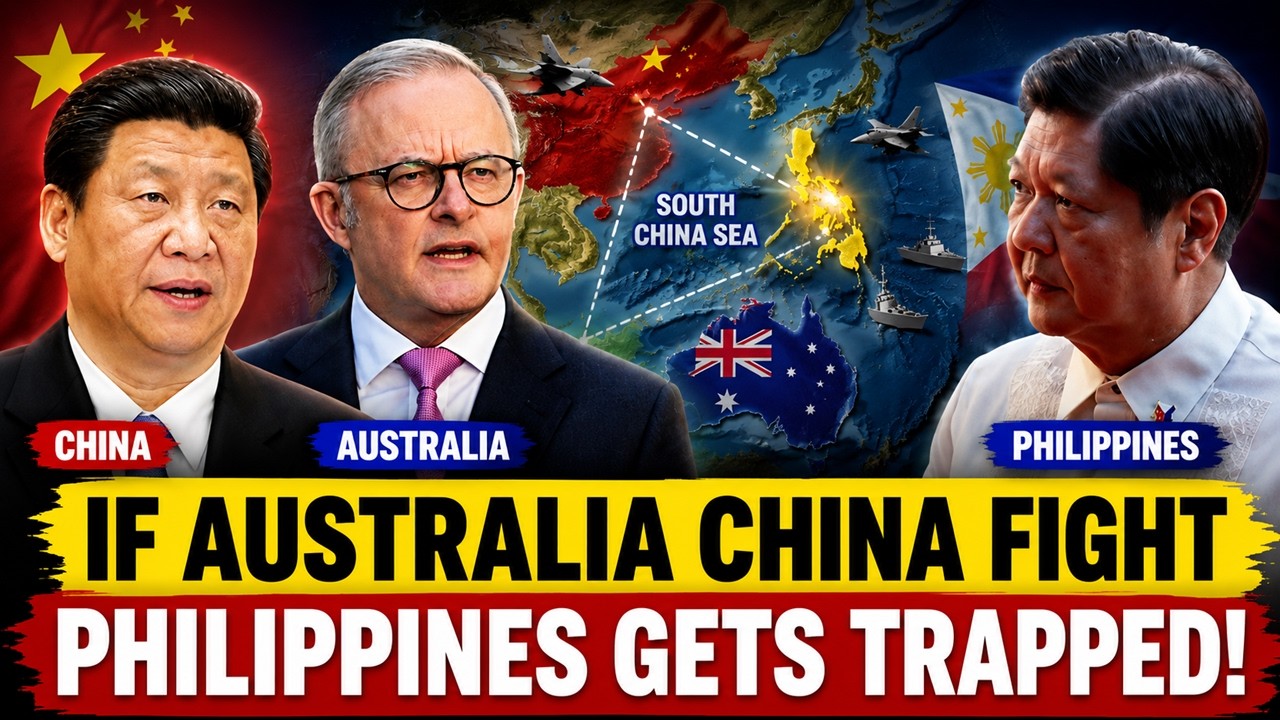
If Australia and China Fight, Which Side Will the Philippines Take?
And then comes the question that every strategic analyst, every foreign ministry, and every news anchor would be asking within hours:
What will the Philippines do?
Will Manila support Australia, its growing defense partner? Will it try to stay neutral? Or will it quietly avoid picking a side and hope the storm passes?
At first glance, the answer seems obvious. The Philippines and Australia have been getting closer by the year. They run joint exercises together. They both believe in freedom of navigation. They share almost identical concerns about China’s behavior in the South China Sea.
But international politics is never that simple. And what makes this question so fascinating — and so important — is that the Philippines is caught between two worlds. One is the world of security alliances and shared democratic values. The other is a world of economic reality, where billions of dollars in trade with China cannot simply be switched off.
To understand what Manila would truly do, we have to understand how this country arrived at the most strategically complicated position in Southeast Asia.
The Relationship That Changed Everything
Ten years ago, Australia and the Philippines were friendly. Cordial. But their defense relationship was relatively thin — more symbolism than substance.
In August 2025, Australian Defense Minister Richard Marles flew to Manila and sat across the table from Philippine Defense Secretary Gilberto Teodoro. When they were done, both governments announced a Statement of Intent for a new, formal Defense Cooperation Agreement — the deepest security pact the two countries have ever attempted. The deal, expected to be signed in 2026, will lock in annual defense ministers’ meetings, coordinated exercises, and direct Australian investment in Philippine military infrastructure.
“This will be a really important step forward in terms of our defense relationship,” Marles told reporters. He was not exaggerating.
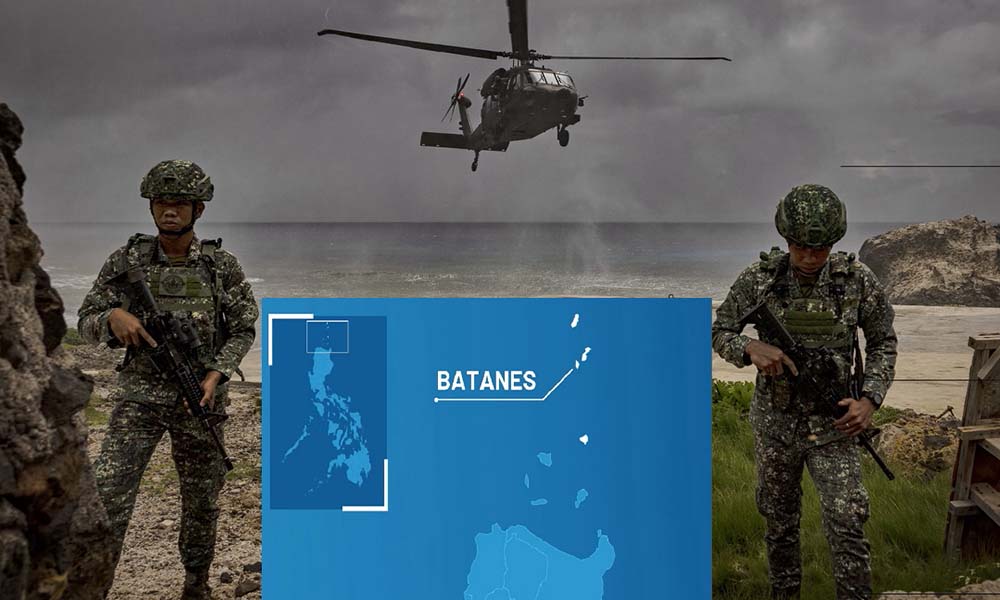
At the same time, Australia committed to infrastructure projects across five military bases on Luzon — the Philippines’ main island — with construction set to begin in 2026. The locations matter. Luzon sits beside the contested South China Sea to its west, and just 250 kilometers from Taiwan to its north. Australian investment in those bases is not random. It is a calculated strategic statement.
Then, in February 2026, Australian, Filipino, and American naval vessels completed a joint Multilateral Maritime Cooperative Activity inside the Philippine Exclusive Economic Zone in the South China Sea. Three countries, sailing together, in waters that China insists belong to it. That is not a routine drill. That is deterrence made visible.
This growing partnership has a name in some defense circles: the “Squad” — Australia, Japan, the United States, and the Philippines, four nations coordinating on security in ways that would have seemed extraordinary just five years ago.
The China Problem — And Why It Cannot Be Ignored
Now here is the other side of the story. The side that makes this question so difficult.
China is not just a security concern for the Philippines. It is an economic lifeline.
China-Philippines bilateral trade: $69.9 billion in 2024. China is the Philippines’ largest import source at $50.5 billion. This relationship has held for a decade straight.
Think about what those numbers mean in real life. Electronics factories in the Philippines depend on Chinese components. Filipino exporters ship bananas, copper, and semiconductors to Chinese buyers. Chinese-made energy products power parts of the Philippine grid. The economic ties are not abstract. They touch ordinary Filipino lives every single day.
At the same time, the political relationship has been deteriorating sharply.
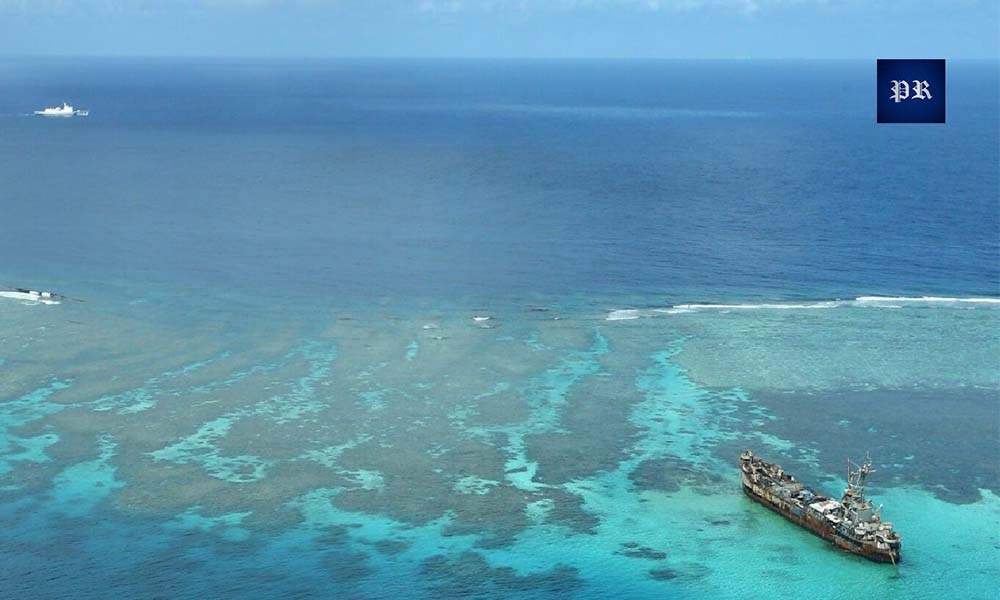
Chinese coast guard vessels have repeatedly rammed and blocked Philippine supply boats near Second Thomas Shoal — where a small group of Filipino marines have been stationed on a deliberately grounded warship for years. In August 2025, a Chinese coast guard vessel collided with a Philippine ship conducting a humanitarian mission near Scarborough Shoal. The US Senate took the incident seriously enough to pass a resolution condemning China’s behavior and reaffirming the 1951 Mutual Defense Treaty with Manila.
In June 2026, the Philippines lodged fresh diplomatic protests over a Chinese floating structure appearing near Scarborough Shoal — the same contested reef that China effectively seized from the Philippines in 2012. Philippine officials warned against any activity that might be a precursor to the kind of artificial island-building that transformed the South China Sea in the 2010s.
So here is the situation the Philippines lives in every single day: their biggest trading partner is also their biggest security threat. That is not a contradiction. It is a trap.
What Manila Is Actually Doing — Right Now
When people ask which side the Philippines would take in a conflict, they sometimes miss what Manila is already doing. Because the choice — at least in part — has already been made.
Under President Ferdinand Marcos Jr., who took office in 2022, the Philippines has made a clear pivot toward its Western security partners. After years of ambiguity under his predecessor Rodrigo Duterte — who famously pivoted toward China and froze joint exercises with the US — Marcos reversed course hard.
Joint exercises with the United States, which Duterte had suspended, resumed in 2023. By January 2026, the Philippines and US had conducted their 11th bilateral Maritime Cooperative Activity since the restart — including a joint sail near Scarborough Shoal itself, where a Chinese warship was also present. This was no coincidence. It was a message.
The US also announced an additional $144 million investment for military infrastructure under the Enhanced Defense Cooperation Agreement, which gives American forces access to nine sites across the Philippines. US missiles and unmanned systems are now being deployed in the archipelago specifically to deter aggression in the South China Sea.
Meanwhile, Marcos is simultaneously trying to manage the economic relationship with Beijing. The Philippines holds the ASEAN chairmanship in 2026, giving it a diplomatic platform to push for de-escalation. And in 2026, Manila and Beijing have explored a potential reset — partly driven by an energy crisis that saw China ship 260,000 barrels of diesel to the Philippines.
This is the core of Philippine strategy: build the military deterrent with allies, but keep the economic door with China at least partially open. It is an extraordinarily difficult balance. And it only becomes harder if a war between Australia and China ever begins.
What the Philippines Would Actually Do in a Crisis
So let us go back to the original question. Australia and China are fighting. What does Manila do?
The first and most honest answer is: the Philippines would not want to choose.
No responsible government makes war decisions in advance. Every leader would look at the specific circumstances first. And there are five questions that Philippine decision-makers would ask almost immediately:
First: Who started it, and why? A Chinese first strike on Australia looks very different from a maritime collision that escalated badly.
Second: Where is the conflict happening? If it is thousands of kilometers from Philippine waters, Manila has more room to stay back. If it is in the South China Sea — right on the Philippines’ doorstep — the geography itself removes the option of standing aside.
Third: Has anyone attacked Philippine territory or forces? Under the 1951 Mutual Defense Treaty, the US is obligated to respond if the Philippines is attacked. But the Philippines also has defense obligations of its own. And Secretary of State Mike Pompeo clarified in 2019 that any armed attack on Philippine forces, aircraft, or vessels in the South China Sea triggers mutual defense obligations.
Fourth: Is the United States involved? This changes everything. If Washington enters the conflict — which is likely, given Australia is one of America’s closest treaty allies — the Philippines suddenly faces pressure from its only formal treaty ally. That is not a small thing. The US-Philippines Mutual Defense Treaty has been the cornerstone of Philippine security since 1951. Walking away from that relationship, or undermining it, would be a seismic decision for any Philippine president.
Fifth: What does the Philippine public support? Filipinos have a deep memory of Chinese harassment at sea. Surveys consistently show negative views of China’s behavior in Philippine waters. But Filipinos also generally do not want war — and would need a clear, compelling reason to support military involvement in a distant conflict.
Geography Decides — And the Philippines Cannot Escape It
Here is the factor that gets discussed least and matters most: geography.
The Philippine archipelago stretches across one of the most strategically critical locations on Earth. Its islands sit directly between the South China Sea and the open Pacific. Any serious military conflict involving China would flow through or around Philippine waters, airspace, and coastlines — whether Manila wanted it to or not.
Military planners in Washington, Beijing, Canberra, and Tokyo all understand this. The Philippines is not on the edge of the Indo-Pacific strategic map. It is close to the center of it.
Even if Manila tried to declare total neutrality, that neutrality would be tested from day one. If China wanted to pressure the Philippines into closing US access to Philippine bases, the economic tools are already in place. Disrupted trade. Pressure on Filipino workers in Chinese supply chains. Energy supplies withheld. These are not hypotheticals. They are established patterns in how China applies coercion.
On the other side, if the US asked the Philippines to allow access to its bases for operations in support of Australia, saying no would put the entire Mutual Defense Treaty at risk — the same treaty that protects the Philippines from exactly the kind of Chinese pressure it faces every week in the South China Sea.
The Philippines cannot escape its geography. And its geography makes true neutrality almost impossible.
The Realist Verdict: Where the Trend Points
Realism in international relations is simple at its core: countries follow their interests, not their emotions. And when you look at where Philippine interests point in 2026, the direction is not ambiguous.
Every major security decision Manila has made in recent years has moved it closer to Australia, the United States, and Japan. New exercises. New base agreements. New infrastructure projects. New defense pacts. New multilateral patrols. The patterns of behavior are the clearest signal of where a country’s real commitments lie — and those patterns all point in one direction.
Meanwhile, China has given Manila very little reason to lean its way. Every confrontation at sea — every collision, every water cannon, every blocked supply run — has pushed Filipino public opinion further from Beijing and closer to the alliance network.
This does not mean the Philippines would send fighter jets to support Australia in a distant confrontation. That would be a massive escalation, and no leader makes that call easily.
But here is what it likely does mean: the Philippines would provide logistical access. It would share intelligence. It would allow the United States to operate from Philippine bases in support of the broader allied response. It would make diplomatic statements that clearly sided with the rules-based order. And it would not break with its alliance partners to stay neutral — because breaking that network would leave the Philippines alone against China the next morning.
As one Philippine defense official put it in 2026: “Allied coordination multiplies our effectiveness, raises the threshold for aggressive behavior, and reinforces the rules-based international order in the entire South China Sea.”
That is not the language of a country planning to stay neutral when its allies are in a fight.
The Bigger Picture: Why This Question Matters
Here is the deeper truth behind this whole question.
Nobody in Manila, Canberra, Washington, or Tokyo actually wants an Australia-China war. The costs would be catastrophic — not just in human lives, but in economic collapse, disrupted trade, and a shattered regional order that took decades to build.
That is precisely why the Philippines, Australia, the United States, and Japan are all investing so heavily in what strategists call deterrence. The goal is to make the cost of Chinese aggression so high — militarily, diplomatically, and economically — that Beijing concludes conflict is not worth it.
The joint exercises are part of that deterrence. The base agreements are part of it. The infrastructure investments are part of it. Even the simple act of sailing three allied navies together through the South China Sea sends a message: aggression here will not go unanswered.
A decade ago, the Philippines was often treated as a secondary player in Indo-Pacific security — a relatively poor country with an underfunded military that bigger powers worked around rather than with. That era is over.
Today, the Philippines is a pivotal state. Its decisions — on basing, on access, on alliances, on trade — have consequences that ripple across the entire regional order. Where Manila stands matters enormously. And right now, the clearest answer to the question of which side it would take is this: not by choice, but by geography, by treaty, by shared threat, and by a decade of deliberate decisions — the Philippines has already been choosing.
“The Philippines has emerged as the pivot of a new network of security partnerships with an eye on China’s rise.” — Richard Heydarian, China-US Focus, January 2026
The question of an Australia-China war may still feel hypothetical. But the Philippines is already living with its implications every day — in every water cannon fired at Scarborough Shoal, in every joint exercise at Basa Air Base, in every diplomatic calculation made in Manila about how far to push and when to hold back.
That is what it means to be at the center of the Indo-Pacific. Every choice matters. And in 2026, the Philippines is learning — faster than anyone expected — exactly how much.
About IndoPacific Report For more defense, security, geopolitics, and Indo-Pacific analysis, visit:
Will the Philippines Back Australia Against China in the South China Sea?