From a Lost Shoal to a Missile Wall: How the Philippines Quietly Became Asia’s Hardest Nut
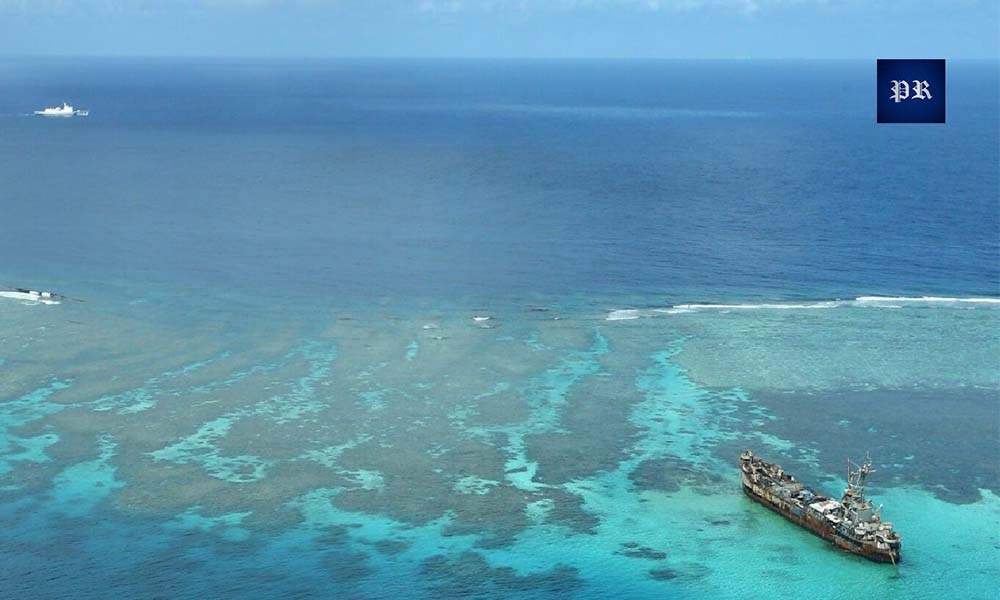
April 10, 2012. The BRP Gregorio del Pilar, the largest warship in the Philippine Navy, slid into the calm waters of Scarborough Shoal. Filipino sailors boarded eight Chinese fishing boats. Inside, they found illegal hauls of corals, giant clams, and live sharks. Arrests were prepared.
Then a distress call went out to Hainan. Two unarmed Chinese marine surveillance ships rushed in. They blocked the mouth of the lagoon. A standoff began. It lasted about ten weeks.
Washington brokered a deal. Both sides would pull back. The Philippines complied. China did not. By July, a typhoon forced the last Filipino vessels home. By August, Beijing had cordoned off the entrance. By the end of 2012, Scarborough Shoal was lost — under the de facto control of
China — and it has stayed that way ever since.
The lesson hit Manila like cold water. A single frigate is not enough. Diplomacy alone is not enough. Without missiles to back up sovereignty, sovereignty becomes paper.
What you are about to see is the 14-year answer to that humiliation. Quietly, layer by layer, the Philippines is now building one of the most integrated missile defense networks in Asia. Most of the world is missing it. Beijing is not.
ACT I — From Soft Spot to Hard Nut
For decades, the Philippines was the soft spot of the First Island Chain — the long arc of US-friendly islands that runs from Japan through Taiwan and the Philippines down to Indonesia. The American strategist Alfred Thayer Mahan argued more than a century ago that sea power begins by controlling the chokepoints. The Philippines sits on three of them: the Bashi Channel, the Luzon Strait, and the western approach to the South China Sea.
Yet for years, Manila held those chokepoints with almost nothing. No real fighter jets. No long-range missiles. Thin and broken radar coverage. If you were planning a war in the Western Pacific, the Philippine sky was nearly an open door.
That door is closing.
In just four years, Manila has bought Israeli air defense missiles, Indian supersonic anti-ship missiles, and Japanese long-range radars. A deal for Indian Akash interceptors is in talks. American Typhon and NMESIS launchers now sit on Philippine ground. Japanese Type 11 and Type 88 systems train alongside Filipino crews. Each piece is small on its own. Together, they form a defensive web stretching from the West Philippine Sea to the Luzon Strait — the same sea lanes Beijing must use in any future fight over Taiwan.
This is not a shopping list. This is a system. And systems are far harder to defeat than single weapons.
ACT II — The Shooters
Start with the air defense layer. The Philippine Air Force operates three batteries of the Israeli SPYDER-MR system, paid for under a 5.8 billion peso contract — about 99.5 million US dollars. Each battery uses two missile types. Python-5 missiles handle close-in threats with heat seekers. Derby missiles reach further with radar guidance, out to about 50 kilometers. All three batteries are now operational with the 960th Air and Missile Defense Group at Cesar Basa Air Base in Pampanga. The Philippine Marines are now studying their own SPYDER variant to protect the country’s prized BrahMos launchers.
Then comes the punch. In 2022, the Philippines signed a 375 million dollar deal with India for three batteries of BrahMos supersonic cruise missiles. They are among the fastest cruise missiles in active service anywhere. They fly close to Mach 3. They skim the sea at low altitude. They are very hard to shoot down.
The first battery was unveiled on November 7, 2025, at the Marine Corps’ 75th anniversary in Zambales. Each battery includes two mobile launchers, a radar vehicle, a command center, and a transporter loader. From that one site in western Luzon, the missiles can hold ships at risk out to 290 kilometers — and Scarborough Shoal sits roughly 250 kilometers offshore.
Read that line again. The same shoal Manila lost in 2012, helpless, is now inside the strike zone of a BrahMos battery sitting on its own coast. That is not an accident. That is policy turned into steel.
https://indopacificreport.com/japan-fires-missiles-in-philippines-donates-6-warships-to-manila/
In March 2026, a new BrahMos unit — the 273rd Marine Company — was activated at Camp Cape Bojeador in Ilocos Norte. From there, the missiles can lock down the Luzon Strait, the corridor between Taiwan and Luzon that any Chinese fleet would have to cross. Former Defense Secretary Delfin Lorenzana put it plainly. The missiles, he said, would “provide deterrence against any attempt to undermine our sovereignty.” More batteries are now planned for both the Marines and the Army.
ACT III — The Eyes
Missiles are blind without radars. So Manila spent the last three years buying the best eyes it could find.
In December 2023, a Mitsubishi-built FPS-3ME radar was inaugurated at Wallace Air Station in northern Luzon. It can detect aircraft and missiles up to 555 kilometers away. That distance pushes the air picture deep into the West Philippine Sea, exactly where Chinese ships and aircraft most often appear. It was also the first defense system Japan ever exported to a foreign buyer. The full deal is worth around 98.7 million US dollars. A second Japanese system, the TPS-P14ME mobile radar, can be moved on short notice to almost any province, including the contested western islands.

The picture is being widened. Israeli ELM-2288 ER radars from the earlier Horizon 1 phase already cover the western coast — from Paredes Air Station in northern Luzon down through Mount Salakot in Palawan. Under Horizon 3, the country plans new radar sites at Pag-asa Island, Guiuan in Eastern Samar, and Davao. Pag-asa is special. It is a tiny Philippine-held island in the Spratly chain. Putting a radar there is more than a military move. It is a quiet sovereignty statement.
Philippine Air Force chief Lt. Gen. Stephen Parreño explained the logic in plain words: “the PAF needs the radar system to keep watch of the entire archipelago.” Defense Secretary Gilberto Teodoro is also pushing for an Airborne Warning and Control System — a flying radar — to support the country’s future fighter jets. If that comes through, the Philippines will have eyes in the air, on the ground, and at sea.
ACT IV — The Allied Layer
Filipino weapons alone are not the whole story. The biggest leap came from April 26 to 29, 2026, at Naval Station Leovogildo Gantioqui in Zambales — the same coast that now hosts the first BrahMos battery.
For four straight days, American, Filipino, and Japanese troops fused their air defenses into a single network. The US side brought Marine Air Control Group 38, the 3rd and 12th Littoral Anti-Air Battalions, and Army Air Defense Artillery from the 1-51 and 6-52 ADA regiments. They tested counter-drone weapons, including the L3 Harris VAMPIRE rocket launcher. The Philippines plugged in its 960th Air and Missile Defense Wing and the Army’s 1st Air Defense Artillery. Japan’s Self-Defense Force linked its Type 11 short-range system into the same picture.
The aim was simple. Different uniforms, different radars, one shared sky. Col. Gabriel L. Diana of the 3rd Marine Littoral Regiment described the goal: “we can maintain a persistent defensive umbrella, even in the most remote littoral environments.” On the Filipino side, Balikatan 2026 spokesman Dennis Hernandez said the integration “allows us to build a truly unified tactical picture.”
This is the heart of an integrated network. A drone seen by a Japanese radar can be shot down by a US Marine launcher under Filipino command. That kind of teamwork takes years to build. In Balikatan 2026, it became real.
Japan Fires Missiles in Philippines & Donates 6 Warships to Manila
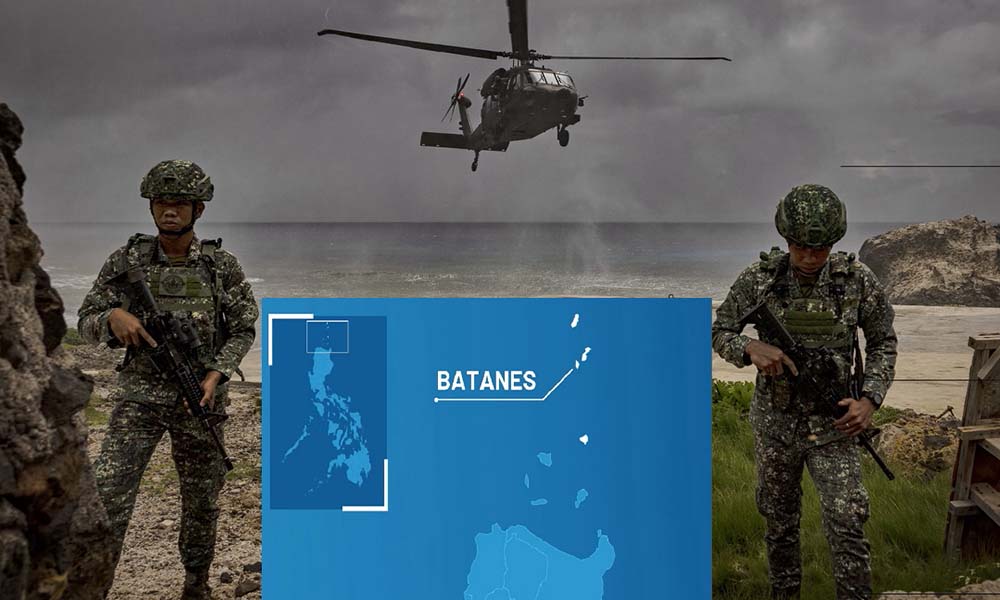
The exercise also saw the first-ever firing of US Tomahawk missiles on Philippine soil. The Typhon Mid-Range Capability launcher, which can fire both Tomahawks and SM-6 interceptors, has been in northern Luzon since April 2024. In February 2026, Washington and Manila announced more Typhon batteries on the way, plus an extra 144 million dollars for the nine EDCA bases. The US Navy’s NMESIS anti-ship system is now staged on Itbayat Island in Batanes — only about 100 miles south of Taiwan, sitting right on the Bashi Channel where any Chinese fleet would have to pass.
Then came the boldest signal yet. On May 6, 2026, Japanese troops fired two Type 88 missiles from Culili Point near Laoag and sank the decommissioned BRP Quezon 75 kilometers offshore. It was the first time Japan had ever fired this system outside its home islands. The message to Beijing was unmistakable: the wall on the Western Pacific is no longer just American. It is allied, layered, and now firing live.
ACT V — The Honest Gaps
Now the hard truth. The system is still incomplete.
A March 2026 analysis from the ISEAS Fulcrum journal warned that the Philippines still lacks the “fundamentals” — enough air defense batteries, modern fighter jets, interceptors, and a real medium-range missile defense layer. Today, the SPYDER’s Derby missile reaches only about 50 kilometers. Against a heavy Chinese missile salvo, that is not enough. The Iran-style strikes on US bases in the Gulf in 2024 and 2025 have already pushed Filipino lawmakers to ask hard questions about whether the nine EDCA sites could become targets too.
The country’s Multi-Role Fighter program has been stuck for years. Without modern fighters, no air defense network can be complete. Many EDCA sites still have only thin local air defense. In a real war, Manila might have to choose between protecting its BrahMos launchers and protecting its cities. These are not small gaps. They are the difference between a working shield and a leaky one.
But the trend line is clear. The Philippines is moving from a country with almost no missile defense to one with a layered, networked one. From a buyer of weapons to a builder of a system. From a soft spot to a hard nut.
Geography never changes. The Philippines sits on the seam of the First Island Chain. It guards the Bashi Channel. It overlooks Scarborough Shoal. As Mahan argued, sea power begins by controlling the chokepoints. Today, Manila is finally building the tools to do exactly that — quietly, carefully, and faster than most analysts expected.
Fourteen years ago, a single Filipino frigate stood alone at Scarborough Shoal and lost. Today, missiles in Zambales hold that same shoal at gunpoint. That is the difference between paper sovereignty and real sovereignty. That is the lesson Manila finally learned.
DISCUSSION QUESTION
Do you think this missile network is enough to deter China — or will it pull the Philippines deeper into a future US-China conflict? Drop your view in the comments.
CALL TO ACTION
If this analysis brought clarity to a story most outlets are missing, hit the like button, subscribe to IndoPacific Report, and turn on notifications. We track the Indo-Pacific so you do not have to chase the headlines yourself.
Until next time — the seas remain contested, the maps keep being redrawn, and the watch continues.