France To BOOST Defense Possible Nuclear Cooperation With the Philippines
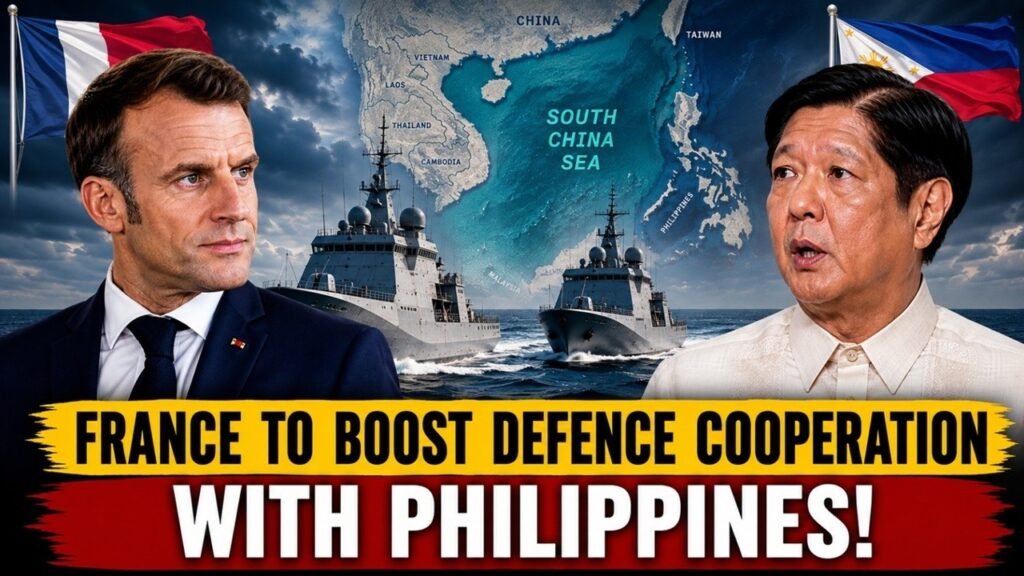
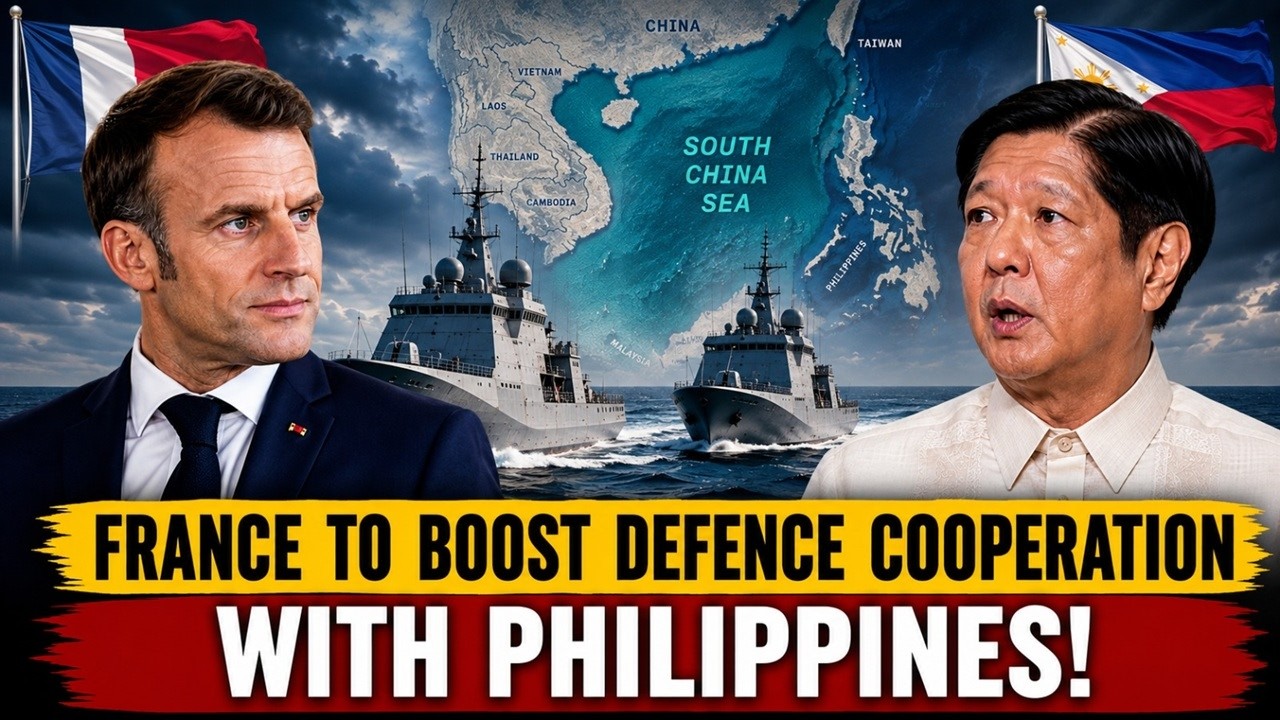
Discover why France is deepening defense, nuclear energy, and economic cooperation with the Philippines and what it means for Indo-Pacific security.France’s expanding partnership with the Philippines is becoming one of the most significant strategic developments in the Indo-Pacific. Rather than focusing only on defense, Paris is simultaneously strengthening cooperation in security, civilian nuclear energy, and trade. This integrated approach reflects long-term geopolitical priorities and growing regional challenges.
Just days after President Ferdinand Marcos Jr. called for stronger national defense and urged the Philippines to explore civilian nuclear energy, France responded with one of its most significant strategic offers to Manila in years.
The offer went far beyond military cooperation.
France pledged deeper defense ties, offered to share decades of civilian nuclear expertise, signaled its readiness to support the Philippines’ future military modernization, and backed closer economic cooperation through a future European Union–Philippines Free Trade Agreement.
And what does France see in the Philippines that makes this partnership so strategically important?
To answer those questions, we have to look beyond this week’s headlines—and examine how a relationship once defined largely by diplomacy is rapidly evolving into something much more significant.
More Than Just Another Diplomatic Announcement
Just days after President Ferdinand Marcos Jr. used his State of the Nation Address to highlight two of his administration’s biggest priorities—strengthening national defense and exploring civilian nuclear energy—France signaled that it was ready to help with both.
Speaking ahead of the end of her diplomatic posting, French Ambassador Marie Fontanel announced that France is prepared to deepen defense cooperation with the Philippines, share decades of expertise in civilian nuclear energy, support future defense modernization, and strengthen economic ties through a proposed Free Trade Agreement between the European Union and the Philippines.
On the surface, these may seem like separate announcements.
One concerns defense. Another focuses on energy. A third aims to expand trade and investment.
But what made Fontanel’s remarks unusual was that France presented all of them together.
Defense. Energy. Economy. Three different sectors. One strategic message. The timing was equally significant.
Only months earlier, France and the Philippines signed a Status of Visiting Forces Agreement, creating the legal framework for closer military cooperation. Now, as the Marcos administration places greater emphasis on territorial defense and long-term energy security, France is signaling that it wants to support both priorities.
The ambassador also reaffirmed France’s concern over the growing number of incidents involving Philippine vessels and fishermen in the West Philippine Sea. She said Paris would continue supporting international law, freedom of navigation, and a rules-based international order while leaving future defense acquisitions entirely to the Philippine government.
At the same time, France offered something beyond military cooperation.
Fontanel said France was ready to share its decades of experience in civilian nuclear energy, emphasizing that any successful nuclear program must be built on strong science, independent regulation, and rigorous safety standards—not simply the construction of a power plant. She also revealed that the French government has approved a grant allowing EDF, France’s national electricity company, to begin sharing its expertise with the Philippines.The economic dimension was just as important.
Fontanel described a future EU–Philippines Free Trade Agreement as a potential “game changer,” saying it could improve market access and encourage more French investment in the Philippines.
Taken individually, none of these proposals would be unusual.
Countries regularly discuss defense cooperation, energy projects, or trade agreements. But France announced all of them together.
That raises a much bigger question. Why is France investing in the Philippines across defense, energy, and trade—all at the same time?
To answer that, we first need to understand something many people overlook.
France is not just a European power. It is also one of the world’s most important Indo-Pacific nations.
Why France Cares About the Philippines
To understand why France is investing more heavily in the Philippines, we first have to challenge a common assumption.
Most people think of France as a European power, focused on NATO, the European Union, and events closer to home.
But that is only part of the story.
France is also one of the world’s leading Indo-Pacific powers.
Unlike most European countries, France has territories stretching across the Indian and Pacific Oceans, including New Caledonia, French Polynesia, Wallis and Futuna, Réunion, and Mayotte. Together, they are home to more than 1.6 million French citizens and give France one of the world’s largest Exclusive Economic Zones. Nearly 90 percent of France’s EEZ lies in the Indo-Pacific, making the region a matter of national interest—not distant foreign policy. Protecting those interests requires more than diplomacy.
France maintains a permanent military presence across the Indo-Pacific, with naval forces, aircraft, and thousands of personnel conducting surveillance, humanitarian missions, joint exercises, and freedom of navigation operations.
That is why France adopted a dedicated Indo-Pacific Strategy.
Its objective is to protect international law, keep vital sea lanes open, strengthen regional security, and deepen partnerships with countries that share those goals.
Ukraine’s Drone War Is Coming to the Philippines | What Happens Next?
The Philippines is one of those countries.
Sitting between the South China Sea and the wider Pacific, the Philippines occupies one of the world’s most strategically important maritime locations. As tensions in the West Philippine Sea have increased, France has become increasingly vocal in supporting international law, freedom of navigation, and the peaceful resolution of maritime disputes.
This helps explain Ambassador Marie Fontanel’s recent remarks.
France’s growing partnership with the Philippines is not simply a response to recent events.
It reflects a long-term strategy built around France’s own interests as an Indo-Pacific nation.
In other words, France is not expanding into the Indo-Pacific.
It is strengthening its position in a region where it has been a resident power for decades.
But strategic interests alone do not create strong partnerships.
They have to be built over time.
And that is exactly what France and the Philippines have been doing since 2023.
Building a Security Partnership
France’s growing role in the Philippines did not emerge overnight.
It has been built step by step, transforming a traditional diplomatic relationship into an increasingly close security partnership.
The turning point came in December 2023, when French Minister of the Armed Forces Sébastien Lecornu visited Manila. The visit marked the beginning of a new phase in bilateral relations, with both governments agreeing to deepen defense cooperation and pursue what French officials described as “strategic and operational intimacy” between their armed forces.
From there, cooperation accelerated.
Senior defense officials held more frequent meetings. Military dialogue expanded. Both countries explored new areas of maritime cooperation as security challenges across the Indo-Pacific continued to grow.
The partnership also became more visible at sea.
The agreement provides the legal framework for military personnel from both countries to participate in joint exercises, training, humanitarian missions, and other approved activities within each other’s territory.
Although it is not a mutual defense treaty, the SOVFA removes many of the legal obstacles that previously limited military cooperation. More importantly, it allows both armed forces to train together more regularly and build the operational familiarity needed for long-term cooperation.
For both countries, the agreement marked an important milestone.
It showed that the relationship had moved beyond diplomatic dialogue and into practical security cooperation.
That evolution also helps explain Ambassador Marie Fontanel’s recent remarks.
When France offered deeper defense cooperation, support for future modernization, and closer strategic ties, it was not proposing an entirely new relationship.
Why Nuclear Cooperation Matters
When people hear the words “nuclear cooperation,” many immediately think of nuclear weapons.
But that is not what France is offering.
Instead, Paris is offering something far less dramatic—but potentially just as important for the Philippines’ future: decades of experience in building, operating, and regulating one of the world’s most advanced civilian nuclear energy programs.
The timing is significant.
In his State of the Nation Address, President Ferdinand Marcos Jr. said the Philippines must seriously explore nuclear power as part of its long-term strategy to meet rising electricity demand and strengthen the country’s energy security.
The Bataan Nuclear Power Plant, completed in the 1980s but never placed into operation, has long symbolized the country’s complicated relationship with nuclear energy. Today, however, the discussion is taking place under very different circumstances, as the Philippines looks for reliable, low-carbon energy sources to support long-term economic growth while reducing dependence on imported fuels.
This is where France believes it can make a difference.
France generates most of its electricity from civilian nuclear power and has spent decades building one of the world’s most experienced nuclear industries. But Ambassador Marie Fontanel emphasized that successful nuclear cooperation goes far beyond constructing a reactor.
A safe nuclear program requires trained scientists and engineers, independent regulators, rigorous safety standards, emergency preparedness, secure radioactive waste management, and a strong legal framework.
Without those institutions, even the most advanced technology cannot operate responsibly.
To support that effort, France has already approved government funding that will allow EDF, the country’s national electricity company, to begin sharing its expertise with the Philippines. Rather than promoting a single power plant, EDF is expected to help Philippine institutions understand the planning, regulatory, and operational requirements of a civilian nuclear program.
That approach is consistent with the guidance of the International Atomic Energy Agency, which emphasizes that countries must establish strong regulatory systems, independent oversight, skilled personnel, and comprehensive safety measures before introducing nuclear power.
In other words, France is not simply offering technology.
It is offering decades of institutional experience.
And that makes this partnership about more than electricity.
For the Philippines, energy security is becoming a strategic issue—one that affects economic resilience, industrial development, and national competitiveness just as much as military strength affects national defense.
If France is helping the Philippines strengthen one pillar of its future through energy, could it also play a larger role in strengthening another—
Its armed forces? That possibility is already beginning to emerge.
Future Defense Acquisitions
That idea reflects a broader trend across the Indo-Pacific. Countries are investing in stronger militaries not because they seek conflict, but because they believe credible capabilities can discourage aggression before it occurs.
France is well positioned to support that goal.
It has one of the world’s most comprehensive defense industries, producing submarines, surface warships, fighter aircraft, missile systems, radars, electronic warfare equipment, and advanced command-and-control technologies.
For the Philippines, several French-made systems have attracted attention from defense analysts. These include the Scorpène-class submarine, which could support Manila’s long-term goal of developing an undersea capability, and the Rafale multirole fighter, one of several aircraft being evaluated as the Philippine Air Force modernizes its combat fleet.
But the opportunity goes beyond individual platforms.
France is also capable of providing training, technical support, maintenance, and long-term industrial cooperation—elements that are just as important as the equipment itself.
None of this means the Philippines has decided to buy French weapons.
Major defense acquisitions take years of planning, evaluation, and budgeting, and Manila continues to consider proposals from several international partners. What France has made clear is something different. It wants to compete as a long-term defense partner—not simply as an arms supplier. And that raises a broader question. Why is France investing so heavily in the security of a country thousands of kilometers from Europe? To answer that, we need to look beyond France and the Philippines—and examine the wider geopolitical competition unfolding across the Indo-Pacific.
The Bigger Geopolitical Picture
France is deepening defense cooperation with the Philippines, sharing expertise in civilian nuclear energy, supporting closer economic ties, and positioning itself as a long-term strategic partner.
But these developments are not happening in isolation.
They are unfolding against the backdrop of the Indo-Pacific’s most important strategic flashpoint—the South China Sea.
Every year, roughly one-third of global maritime trade passes through these waters. For countries that depend on secure sea lanes, what happens here affects not only regional security but the global economy.
That helps explain France’s growing interest in the region.
As an Indo-Pacific nation with overseas territories, military forces, and one of the world’s largest Exclusive Economic Zones, France has a direct stake in preserving stability, freedom of navigation, and respect for international law.
Those principles have become increasingly important as tensions in the West Philippine Sea continue to rise. In recent years, confrontations involving Philippine vessels, coast guard ships, and fishermen have drawn growing international attention, prompting France to repeatedly reaffirm its support for the United Nations Convention on the Law of the Sea, or UNCLOS, and the peaceful resolution of maritime disputes.
The Philippines has therefore become more than a bilateral partner.
Its strategic location at the crossroads of the South China Sea and the wider Pacific makes it an important part of France’s broader Indo-Pacific
France is not the only European country increasing its engagement in the region. The United Kingdom, Germany, Italy, and the Netherlands have also expanded naval deployments, defense cooperation, and diplomatic engagement across the Indo-Pacific. While each country follows its own strategy, they share a common interest in maintaining open sea lanes, supporting international law, and preserving regional stability.
The growing partnership between France and the Philippines reflects that larger geopolitical reality.
What began as closer bilateral cooperation is becoming part of a broader effort to strengthen security, protect global trade, and uphold the rules that govern one of the world’s most important maritime regions.
The question is no longer whether France has a role in the Indo-Pacific.
It already does.
The real question is how far that role—and its partnership with the Philippines—will grow in the years ahead.
What Happens Next
One area likely to grow is defense cooperation. With the Status of Visiting Forces Agreement now in force, both countries have a legal framework that makes joint training, military exchanges, humanitarian missions, and other operational activities easier to conduct. As cooperation deepens, military engagement between the two armed forces is likely to become more frequent.
Defense modernization could also become an important part of the relationship. France has made it clear that if the Philippines decides to strengthen its military capabilities, its defense industry is ready to compete alongside other international suppliers. Whether any future contracts are awarded will remain a sovereign decision for the Philippine government.
Energy cooperation may also move into a new phase. If Manila decides to pursue civilian nuclear power, French institutions could play a larger role in technical studies, regulatory development, workforce training, and knowledge sharing—building on the expertise that France has already offered.
Economic ties could strengthen as well. If negotiations on a European Union–Philippines Free Trade Agreement are successfully concluded, both countries could benefit from greater investment, improved market access, and closer commercial cooperation.
Taken together, these developments point to something larger than individual agreements.
They suggest that France no longer views the Philippines simply as a friendly country in Southeast Asia.
It increasingly sees the Philippines as an important partner in its long-term Indo-Pacific strategy.
Whether that partnership ultimately becomes one of the region’s most significant strategic relationships remains to be seen.
But one thing is already clear. France is no longer engaging the Philippines through diplomacy alone.
It is building a partnership that spans defense, energy, economic cooperation, and regional security.
And as competition in the Indo-Pacific continues to reshape global geopolitics, that partnership may become increasingly important—not only for Manila and Paris, but for the future stability of the region itself.
Conclusion
The France–Philippines relationship is evolving into a comprehensive strategic partnership that extends beyond diplomacy. Its future will depend on decisions made in Manila and Paris, but its importance to Indo-Pacific stability is already becoming clear.
About Indo-Pacific Report
For more geopolitical analysis, strategy coverage, and Indo-Pacific security reporting, visit Indo-Pacific Report:
Website
Facebook
YouTube
France To BOOST Defense Possible Nuclear Cooperation With the Philippines