EDCA Upgrade: The U.S. Is Expanding Its Military Footprint in the Philippines to Deter China
Philippine President Ferdinand Marcos Jr. has drawn an important political boundary over what Manila would allow if war broke out around Taiwan. The Philippines does not want to become a belligerent, and Marcos has made clear that Philippine territory should not simply be turned into a launchpad for attacks against another country. His position is significant because it attempts to separate Philippine defense cooperation with the United States from automatic participation in a future conflict over Taiwan.
The Philippines also occupies an unusual position in the regional security system. It is a treaty ally of the United States and has significantly expanded defense cooperation with Washington. At the same time, Manila maintains diplomatic and economic relations with China and continues to operate within its One China policy. Taiwan itself lies immediately north of the Philippines and has important geographical and people-to-people connections with the country, but Manila does not maintain formal diplomatic relations with Taipei.
That leaves President Marcos facing a difficult strategic question: if a Taiwan war begins, can the Philippines actually stay out of it? The answer is not straightforward. Manila can make a political decision not to participate, but geography, military cooperation and alliance commitments could make neutrality increasingly difficult if fighting spreads beyond Taiwan.
Marcos Has Drawn a Boundary
Marcos’ position should not be interpreted as the Philippines abandoning the United States or siding with China. Instead, it establishes a political boundary around Philippine participation in a potential Taiwan conflict. Manila can continue strengthening its military capabilities and working with Washington while maintaining that Philippine territory should not automatically become an offensive platform for another country’s military operations. This distinction is important because the U.S.-Philippines defense relationship has become much deeper. The Enhanced Defense Cooperation Agreement, or EDCA, has expanded the framework for defense cooperation, while Balikatan exercises and other forms of military engagement have increased interoperability between Philippine and American forces. These developments have made the Philippines more important to Washington’s regional security planning.
From the American perspective, the Philippines provides an increasingly important geographical position in the Indo-Pacific. From Manila’s perspective, however, military cooperation with the United States is primarily connected to Philippine defense, sovereignty and national security. These interests can overlap with American strategic objectives, but they are not necessarily identical. That difference is at the heart of Marcos’ position. The Philippines wants a stronger military relationship with the United States because it believes that greater defense capability can help protect Philippine interests. But Manila also wants to retain control over how Philippine territory is used during a regional crisis.
This means the Philippine government is attempting to maintain two principles at the same time. First, it wants stronger deterrence and closer cooperation with its treaty ally. Second, it wants to preserve the political authority to decide whether Philippine territory becomes involved in a conflict involving Taiwan. For Manila, those two goals are not necessarily contradictory. A stronger alliance can provide greater security while a clear political boundary can help prevent the country from becoming unnecessarily involved in a war.
Taiwan Just Changed Its Scarborough Shoal Claim — China Won’t Like This
Why Geography Makes Philippine Neutrality Difficult
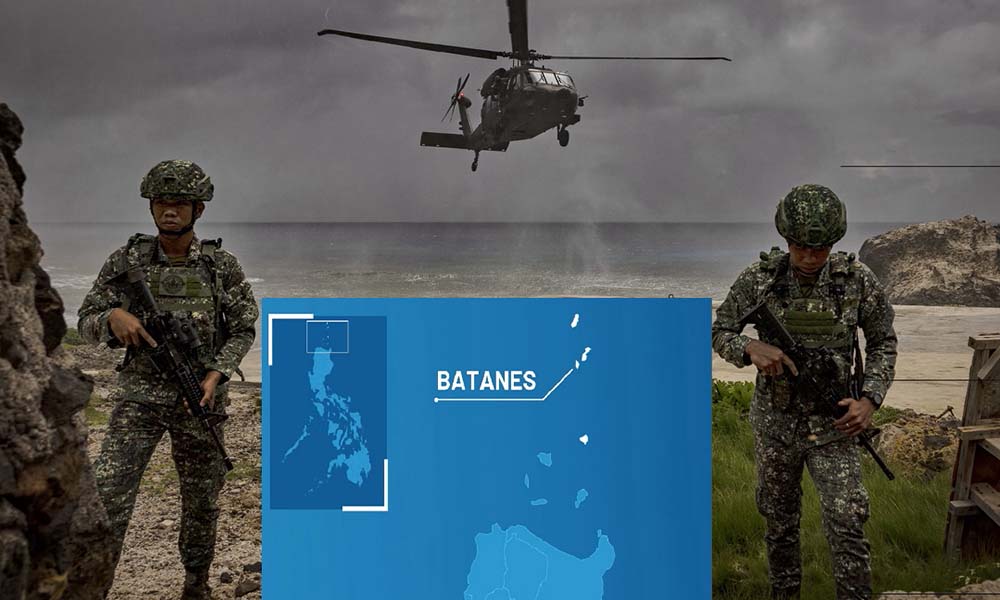
The geography of the Philippines makes its Taiwan policy particularly complicated. Northern Philippine territory sits close to Taiwan, while the Bashi Channel lies between northern Luzon and Taiwan. The Batanes island group is also positioned close to this strategically important maritime corridor. This geography means that a Taiwan conflict would not necessarily remain confined to the Taiwan Strait. Military operations, aircraft movements and maritime activity could extend into surrounding areas. Even if Manila formally declared that it was not participating in the conflict, the Philippines could still experience direct consequences from the fighting.
Commercial shipping is one potential concern. A major regional war could disrupt maritime routes and create uncertainty for trade. Air routes could also be affected, particularly if military activity increased around Taiwan and the northern Philippines. Fishing activity could face disruption as maritime security conditions deteriorated. Civilian safety could become another major concern. If a conflict expanded toward the Bashi Channel or surrounding areas, Manila could face pressure to monitor northern waters and airspace more closely. The government could also have to consider evacuation planning and the movement of civilians in areas potentially affected by military activity.
This creates the central contradiction in Philippine strategy: neutrality is a political choice, but geography is not. Manila can decide that it does not want to fight over Taiwan, but it cannot move northern Luzon farther away from Taiwan. It cannot relocate the Batanes islands, and it cannot completely control the movement of military aircraft and naval forces during a major regional conflict. That is why Marcos’ position is significant. The Philippines may not choose the war, but geography could bring the consequences of that war directly to the country. The closer a conflict moves toward Philippine territory, the more difficult it would become for Manila to maintain a clear distinction between staying outside the war and defending its own national interests.
EDCA Does Not Give the United States a Blank Check
When American forces have access to Philippine military facilities, it can be tempting to assume that Washington can simply use those facilities however it wants during a crisis. The situation is more complicated. Philippine territory remains under Philippine political control. Defense agreements do not automatically remove Manila’s role in decisions concerning the use of facilities located inside the Philippines. The political question becomes particularly important if an activity moves from defensive cooperation into direct offensive operations against another country. For example, using an EDCA location for training, surveillance, logistics, humanitarian support or territorial defense is one situation. Using that same location to support offensive operations against Chinese forces involved in a Taiwan conflict would be a fundamentally different political and strategic question. This distinction is central to Marcos’ position. The Philippines wants the American alliance to strengthen Philippine security, but Manila does not want Philippine territory to automatically become an offensive launchpad.
That could create tension during a major Taiwan crisis. Washington might see Philippine facilities as strategically important because of their geographical position. Manila, however, would have to consider the consequences of allowing those facilities to become directly associated with military operations against China. The closer a Taiwan crisis comes to Philippine facilities, the more difficult it could become for Manila to maintain a separation between American military operations and Philippine national policy. This is why the question is not simply whether the Philippines has an alliance with the United States. The deeper question is how that alliance would operate during an actual war and where Manila would draw the line between cooperation and participation.
The Mutual Defense Treaty Could Change Everything
The hardest question may not be whether the Philippines would help Taiwan. The harder question is what happens if a Taiwan conflict starts affecting the Philippines itself. Imagine a Taiwan conflict beginning while Philippine territory remains untouched. Manila would have more political space to maintain its position that it does not want to become a belligerent. The government could increase readiness, monitor its northern territory and protect its sovereignty without formally entering the war.
But the situation could become much more complicated if American forces operating from Philippine territory became directly involved in the conflict. Beijing could potentially view the Philippines as increasingly connected to the conflict even if Manila continued to insist that it was not a participant. This could put enormous diplomatic and security pressure on the Philippine government.
The Real Red Line May Be Philippine Territory
This may be the clearest way to understand Marcos’ position. The Philippine red line is not necessarily Taiwan itself. It may be Philippine sovereignty. Manila does not have to decide whether it is willing to fight a war for Taiwan in order to decide whether it is willing to defend its own territory. Those are two different political questions. This distinction gives the Philippine government strategic flexibility. Manila can maintain its One China policy, avoid declaring support for Taiwan’s independence, strengthen its relationship with Washington and prepare its military for a regional crisis.
At the same time, the Philippines can insist that its territory should not be used as a platform for offensive attacks against another country. The difficulty is that this strategy becomes harder to maintain as the conflict moves closer to the Philippines.If fighting remains concentrated around Taiwan, Manila could attempt to stay outside the conflict. If military operations spread toward the Bashi Channel, northern Luzon or Philippine airspace, however, the situation would become increasingly difficult.
The Philippines could suddenly find itself dealing with the consequences of a war it did not start and did not want to join. If Philippine territory were attacked, the distinction between a “Taiwan war” and a “Philippine war” could disappear completely.That is why Philippine sovereignty sits at the center of Marcos’ policy. The issue is not simply whether Manila supports Washington or Beijing. It is whether Manila can preserve control over its own territory and its own strategic decisions while living next to one of the world’s most dangerous potential flashpoints.
How Beijing May Read Marcos’ Position
From Beijing’s perspective, Marcos’ position sends a mixed but deliberate signal. China has consistently opposed the expansion of American military cooperation with the Philippines, particularly because some Philippine facilities have clear strategic relevance to both Taiwan and the South China Sea. From Beijing’s point of view, the concern is that Philippine territory could become part of a wider American military architecture designed to strengthen U.S. regional power and limit China’s military and strategic options.
At the same time, Marcos’ position contains one element that could be seen as reassuring from Beijing’s perspective. Manila is making clear that it does not want Philippine territory to be used simply as a platform for launching attacks against another country. This suggests that the Philippines is seeking to avoid becoming an automatic participant in a conflict between the United States and China.
What Washington Is Hearing From Marcos
Washington is receiving a different but equally important message from Manila: Marcos is not rejecting the U.S. alliance; he is defining its limits.The Philippines wants continued American support in areas such as military modernization, intelligence cooperation, maritime security, joint exercises and regional deterrence. At the same time, Manila wants to retain control over its territory and preserve its ability to make its own decisions about whether and how the Philippines becomes involved in a major regional conflict.
This distinction matters because an alliance does not automatically erase the national interests of either country. The United States and the Philippines may share broad strategic objectives, but they can still have different priorities during a crisis. Washington could focus on maintaining the regional balance of power, supporting its allies and partners, and preventing China from achieving its objectives through force. Manila’s immediate concern, however, would be more direct: protecting Philippine territory, protecting its population and preventing the country from becoming a battlefield. These interests can overlap in important ways. A stronger U.S.-Philippines security relationship can help Manila improve its military capabilities, strengthen maritime awareness and increase its ability to respond to threats. At the same time, a stronger Philippine defense posture can contribute to wider regional deterrence by making potential aggression more difficult and costly.
Three Ways a Taiwan Conflict Could Affect the Philippines
From Manila’s perspective, there are at least three broad ways a Taiwan crisis could develop, and each would create a different level of pressure on the Philippines. The first scenario would be a Taiwan crisis that stops short of full-scale war. In that situation, Manila could increase military readiness, strengthen surveillance around the country’s northern waters, coordinate more closely with its allies and prepare for possible disruption to civilians and commercial activity. At the same time, the Philippines could continue insisting that it is not a belligerent and has no intention of voluntarily entering the conflict.
This would give Manila the greatest political flexibility. The Philippines could continue cooperating with Washington, particularly on surveillance, preparedness and regional security, while avoiding an explicit decision to become a participant in the fighting. Such a position would allow Manila to protect its own interests while trying to keep the Taiwan crisis from directly affecting Philippine territory.
Preparing for War Without Seeking War
That is ultimately what Marcos appears to be trying to achieve. The Philippines is preparing for the consequences of a regional conflict without declaring that it wants to participate in that conflict.Manila is strengthening its military, deepening alliances, improving interoperability, developing defense infrastructure, increasing maritime awareness and maintaining diplomatic space with China. These policies are not necessarily contradictory. A country can prepare for war because it wants to prevent war. Stronger defenses can make aggression more difficult, while diplomatic restraint can reduce the risk of unnecessary escalation. The challenge is credibility. Manila needs enough military capability to convince others that Philippine territory cannot be taken easily. At the same time, it needs enough diplomatic restraint to avoid becoming unnecessarily entangled in a conflict.
That is a very narrow line to walk. Taiwan makes the line even narrower because of geography. The Philippines is simply too close to Taiwan to assume that a major conflict would remain completely separate from Philippine security concerns. The success of Manila’s strategy will therefore depend on whether it can maintain a credible defense posture without creating the impression that Philippine territory is automatically available for offensive operations.
Conclusion
Marcos has sent a clear message: the Philippines does not want to become belligerent in a Taiwan conflict, and Manila does not want Philippine territory turned into a platform for offensive attacks against another country. That statement should not be interpreted as a guarantee that the Philippines would remain outside a future war. A more accurate interpretation is that Manila is trying to preserve its freedom of action for as long as possible. If Taiwan remains the center of the conflict and Philippine territory remains untouched, Marcos may have room to maintain his red line. Manila could strengthen readiness, protect its territory and continue diplomatic efforts without formally entering the war. If American forces operating from Philippine facilities become directly involved, however, political pressure on Manila would intensify. Beijing could see the Philippines as increasingly connected to the conflict, while Washington could seek greater cooperation from its treaty ally.
And if Philippine territory or Philippine forces are attacked, the entire strategic calculation could change. The Philippines may be able to choose whether it enters a Taiwan war. It cannot necessarily choose whether a Taiwan war enters the Philippines. That is why Marcos’ red line matters so much. The future of the U.S.-Philippines alliance may ultimately be tested not simply by what happens in Taiwan, but by what happens when the consequences of that conflict reach Philippine territory.
About Indo-Pacific Report
For more geopolitical analysis, strategy coverage, and Indo-Pacific security reporting, visit Indo-Pacific Report:
Website
Facebook
YouTube
EDCA Upgrade: The U.S. Is Expanding Its Military Footprint in the Philippines to Deter China