EDCA Is Not a U.S. Base: Manila’s Strategic Recalibration Amid Middle East Tensions
Last week, as headlines screamed about possible escalation between Iran and Israel, a different kind of panic started trending in Manila. “Are we about to be dragged into someone else’s war?” That was the message lighting up group chats. That was the tone on late-night radio. And then came the line from a senior Philippine defense official, calm, almost tired: “EDCA sites are Philippine military bases. They are not American bases.” But here’s the real question no one is asking loud enough: If they’re not U.S. bases, why does it feel like they are? Let’s slow this down.
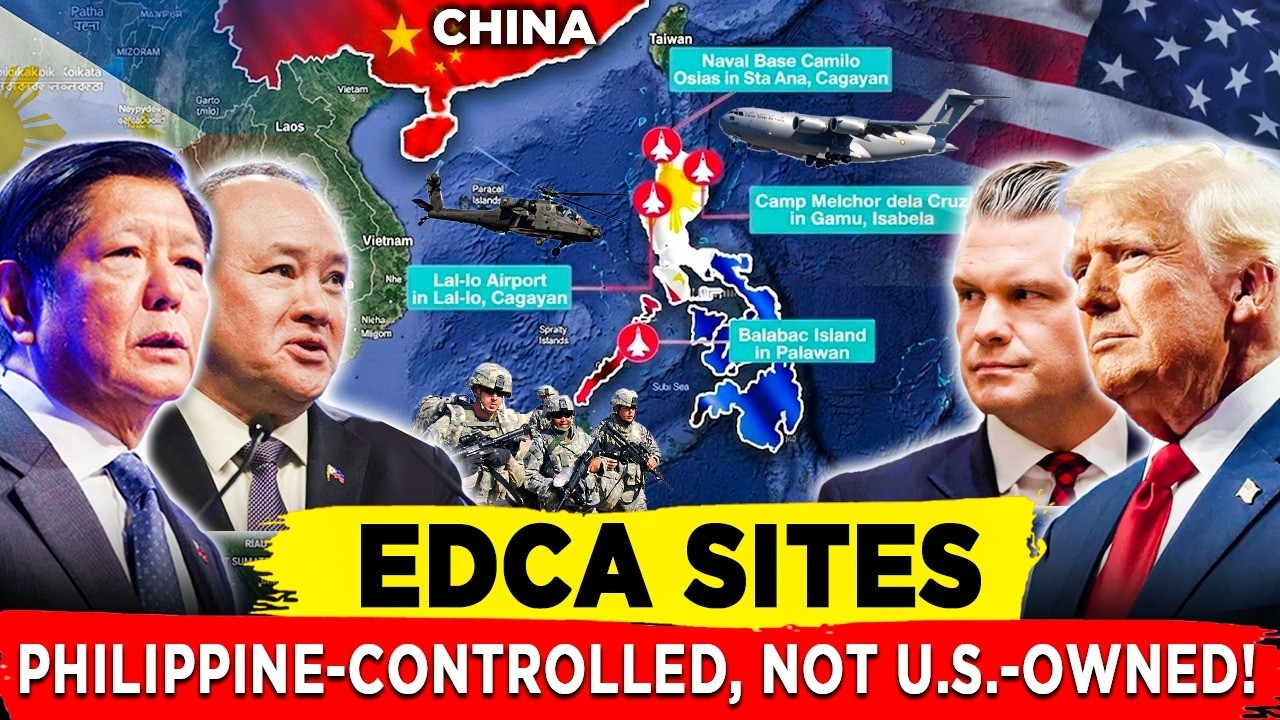
Because of this debate? It’s not really about the Middle East. It’s not about missiles over the Persian Gulf. It’s not even about Iran. It’s about fear. It’s about sovereignty. And, whether we admit it or not, it’s about China. When tensions in the Middle East flare up, everything feels closer than it actually is. I remember scrolling through the news the other night, oil prices rising, warnings of retaliation, speculation about U.S. military movements. And then suddenly someone posts a map of EDCA sites in northern Luzon. Big red circles. Dramatic arrows. “Target locations.”
That’s how fear spreads. Not with facts. With graphics. But let’s be clear about something basic and often misunderstood: the Enhanced Defense Cooperation Agreement (EDCA) between the Philippines and the United States does not create U.S. bases.
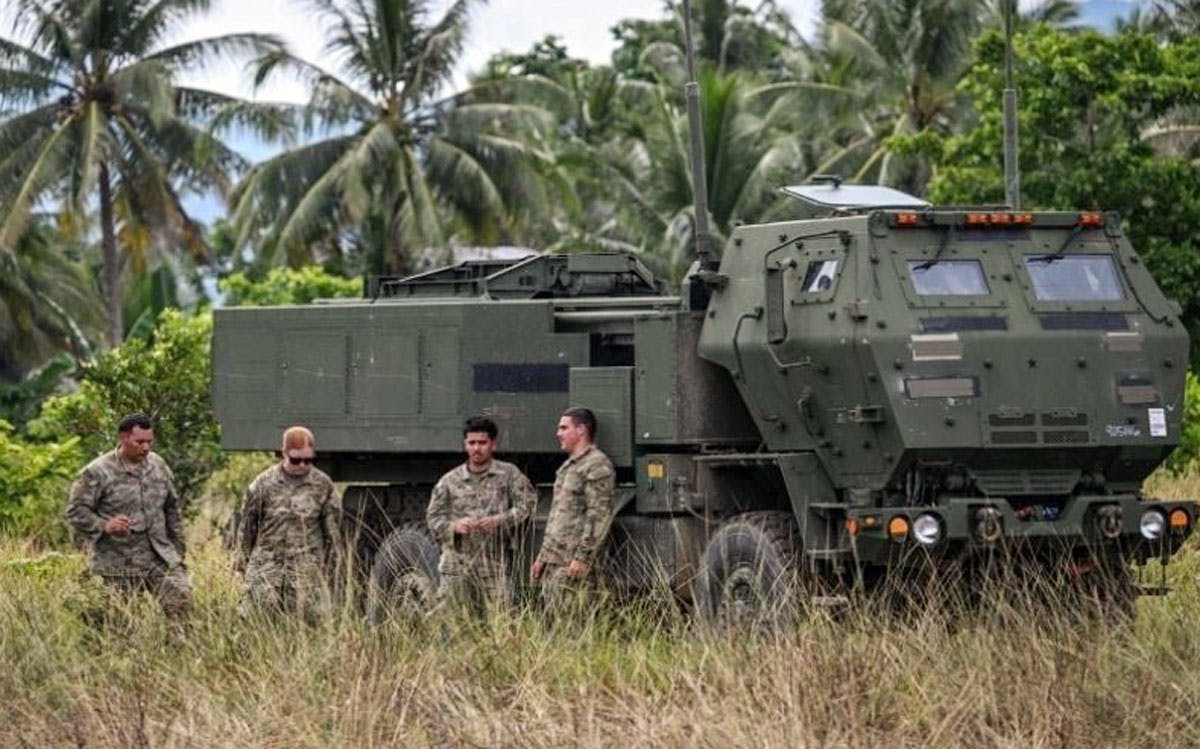
EDCA, signed in 2014, allows rotational U.S. access to Philippine bases. The land remains owned by the Philippines. The facilities are under Philippine command. The U.S. cannot permanently station troops. It cannot build sovereign American installations. It operates inside Philippine camps, with permission. That distinction matters. Legally. Politically. Strategically. And yet, when global tensions spike, nuance disappears. So why now? Why is EDCA suddenly under fire?
Because when people see American troops rotating through northern Luzon, close to Taiwan and then watch Middle East tensions explode on their screens, their brains connect dots. Maybe irrationally. But understandably. They ask: If the U.S. goes to war somewhere else, do we become collateral? It’s an emotional reaction. And emotions in geopolitics are powerful. They shape elections. They pressure policymakers. They rewrite narratives. But step back for a second.
Philippines is moving toward military cooperation with Taiwan
The Philippines didn’t expand EDCA sites because of Iran. It expanded them because of increasing pressure in the South China Sea and rising instability in the Taiwan Strait. That’s the real theater. Over the last decade, Beijing’s coast guard patrols, gray-zone tactics, and maritime militia operations have intensified. Philippine vessels have been water-cannoned. Supply missions have been blocked. Outposts tested. EDCA is not about projecting power into the Middle East. It’s about deterrence in the Western Pacific. It’s about making sure that if something happens in the South China Sea, Manila is not standing alone.
Here’s the uncomfortable truth: small and middle powers don’t get the luxury of isolation. The Philippines sits at a crossroads of major power competition. To its west: contested waters. To its north: Taiwan. To its east: the open Pacific and U.S. naval power. Geography is destiny, at least partly. And so Manila recalibrated. Not by surrendering sovereignty. But by leveraging alliance credibility. EDCA is part of a broader structure that includes the 1951 Mutual Defense Treaty. It signals that the alliance is alive. That it is operational. That it is not just paper. Deterrence only works if it looks real. Now, let’s address the sovereignty argument directly.

Critics say EDCA undermines Philippine autonomy. That it risks entanglement. That it makes the country a forward staging ground. Those concerns aren’t stupid. They’re serious. Sovereignty is sacred in post-colonial states. The memory of foreign bases, like those closed in the early 1990s, still lingers. But EDCA was deliberately designed to avoid that history. No permanent bases. No transfer of territory. No independent U.S. command zones. Facilities built under EDCA revert fully to Philippine ownership. Prepositioned equipment remains regulated. Access is negotiated. Is it perfect? No agreement ever is. But calling EDCA a U.S. base oversimplifies a very technical, very calibrated security arrangement. And here’s where things get real. If the Middle East explodes tomorrow, the Philippines does not automatically become a battlefield.https://indopacificreport.com/5-major-issues-haunting-the-south-china-sea-in-2026/
There is no clause that converts EDCA sites into launchpads for unrelated wars. Operational decisions would require coordination. Political decisions would involve Manila. That’s the part people forget. The Philippines is not a passive chessboard square. It’s an actor. A state with agency. Yes, alliance politics involve risk. But so does standing alone in increasingly contested waters. When I look at this whole debate, what strikes me most isn’t anger. It’s anxiety. People don’t want to be dragged into someone else’s fight. That’s fair. No one wakes up hoping their country becomes a flashpoint.
But the strategic logic behind EDCA isn’t about fighting wars far away. It’s about preventing one close to home. The South China Sea is not theoretical. It’s not distant. It’s daily friction. Daily pressure. Daily tests of resolve. And in that context, EDCA is less about escalation and more about signaling: the Philippines has partners. The alliance is active. Deterrence is credible.
So let’s end where we began. Is EDCA a U.S. base? No. It is a Philippine facility with allied access. A tool of strategic recalibration. A hedge against uncertainty.
The Middle East headlines may dominate the news cycle. But the real strategic equation for Manila lies much closer, in the waters west of Palawan and the narrow strait north of Luzon. This debate isn’t about Iran. It’s about China. It’s about deterrence. It’s about whether a middle power can strengthen its alliances without surrendering its sovereignty. And that’s a far more complicated, and far more important, conversation than the panic posts suggest.
https://www.youtube.com/watch?v=F5krgC4CYR0
Context: Why This Issue Surfaced Now
This didn’t start in Manila. It started with breaking news from the Middle East. When reports confirmed coordinated air strikes by the United States and Israel against targets inside Iran, the atmosphere shifted almost instantly. It wasn’t just another flare-up in a region long used to volatility. It felt larger, more consequential. Within hours, footage circulated of damage assessments, emergency meetings, and analysts warning of retaliation.
Then retaliation came. Iranian responses reportedly targeted U.S.-linked facilities in neighboring states. That’s when the psychological chain reaction began. Because once American facilities anywhere are hit, countries hosting American forces, even rotationally, begin asking hard questions. The fear travels faster than the facts.
In the Philippines, that fear landed squarely on EDCA. The Enhanced Defense Cooperation Agreement has been in place since 2014. It is not new. It did not suddenly expand because of the Middle East. And yet, in the middle of rising tensions thousands of kilometers away, it became part of the domestic conversation. Social media posts connected distant strikes to EDCA locations in Luzon. Commentators suggested exposure. The narrative shifted from legal framework to potential vulnerability.
That emotional leap is important to understand. It wasn’t driven by treaty clauses. It was driven by association. If the United States is involved in conflict, and U.S. forces have access to facilities in the Philippines, does that make the Philippines a target? For some groups, the answer was immediate and loud. They framed EDCA as a liability. As entanglement. As an unnecessary risk at a moment when global tensions are already high. The argument resonated because it tapped into something older and deeper than the Middle East.
In 1991, the Philippine Senate voted to reject the renewal of permanent U.S. bases. That moment remains symbolic, a statement of post–Cold War sovereignty and a reclaiming of national space. The closure of those bases is still remembered as a defining assertion of independence. So whenever foreign military presence becomes visible again, even in a different legal form, the historical memory resurfaces.
This is not just policy debate. It is memory politics. Against that backdrop, the government moved quickly. The Department of National Defense, the National Security Council, and the Armed Forces of the Philippines delivered consistent messaging. There were no dramatic speeches, no escalation in tone. Instead, officials emphasized continuity and control. EDCA sites remain Philippine bases. There are no permanent U.S. installations. Any activities fall within agreed parameters tied to mutual defense.https://www.youtube.com/watch?v=o-uRUDPyRdU
The key objective was reassurance. Officials stressed that developments in the Middle East do not automatically translate into risk for the Philippines. EDCA, they reiterated, is structured around rotational access and joint training, not offensive operations unrelated to Philippine security. There is no standing authorization for unilateral American military action from Philippine territory.
That clarity matters in moments like this. When global crises unfold, public imagination fills in gaps quickly. Strategic agreements that were once abstract suddenly feel immediate. The role of the state, in such moments, is to narrow the gap between perception and reality.
The issue surfaced now not because EDCA changed, but because the global environment did. Middle East escalation acted as a catalyst, exposing underlying anxieties about sovereignty, alliance politics, and vulnerability. The political climate that followed was less about legal mechanics and more about trust, trust in institutions, in alliances, and in the government’s ability to manage risk in a turbulent international system.
What EDCA Actually Is?
The Enhanced Defense Cooperation Agreement, commonly known as EDCA, is a bilateral security arrangement between the Philippines and the United States that was signed in April 2014. It is explicitly designed to supplement the 1951 Mutual Defense Treaty and the 1999 Visiting Forces Agreement, forming part of the legal architecture that governs U.S.–Philippine defense cooperation.
Legally, EDCA does not grant the U.S. sovereign rights over Philippine territory: all facilities and “agreed locations” remain owned and controlled by the Philippines. Prior consent through Philippine institutions, such as the Mutual Defense Board and Security Engagement Board, is required before any U.S. access or activity. The agreement was upheld as consistent with the Philippine Constitution and does not alter the prohibition on foreign military bases unless approved by the Senate.
Strategically, EDCA’s core features are straightforward. First, the Philippines retains ownership of all sites. Second, U.S. military presence is rotational rather than permanent, meaning forces come for scheduled activities but are not stationed indefinitely. Third, the agreement allows for the prepositioning of equipment and supplies, including humanitarian and disaster response materiel, at these locations. Finally, it institutionalizes joint training and interoperability exercises that enhance the capabilities of both militaries to operate together.https://www.youtube.com/watch?v=A40FNkeA9Pk
To clarify what EDCA is not: it does not create sovereign U.S. military bases in the Philippines; it is not a mechanism to launch offensive wars from Philippine soil; and it does not remove Philippine military authority from these facilities, as operational command stays with the Armed Forces of the Philippines. This legal and strategic grounding is where credibility is earned: EDCA is an access and cooperation framework, not a surrender of sovereignty.
Sovereignty vs. Alliance: The Core Debate
At the heart of the controversy lies sovereignty anxiety. For many Filipinos, the memory of once-massive U.S. bases at Subic Bay and Clark Air Base still lingers, places that were symbols of foreign military presence and, to some, contested sovereignty. The specter of being drawn into great power conflict, or becoming a “proxy battleground,” taps into deep historical experience and shapes how EDCA is perceived politically.
But this sovereign concern exists alongside a strategic counterargument: the Philippines’ vulnerability in regional geopolitics is not a byproduct of EDCA; it is rooted in geography. The nation’s long coastline, its location on key sea lines of communication, and its proximity to the contested waters of the South China Sea and the Taiwan Strait make it intrinsically relevant in great power competition. These structural realities predate EDCA and will persist regardless of any single security agreement. Geography, not EDCA, makes the Philippines strategically relevant in the Indo-Pacific.
Middle East Conflict: A Red Herring?
The recent escalation in the Middle East, including U.S. strikes against Iranian forces and subsequent Iranian actions against U.S. facilities in neighboring states has fueled fear narratives about potential spillover. Indeed, Iran’s targeting of U.S. positions followed straightforward operational logic: it struck where U.S. facilities were geographically proximate and operationally relevant, not because of distant agreements in Southeast Asia.
But the Philippines occupies a strategically distinct space. Manila is not a combatant in Middle East conflicts, it does not host infrastructure designed to stage attacks in that region, and it has no permanent U.S. strike platforms on its territory. In this sense, the Middle East flashpoint is a distraction, a red herring, when applied to EDCA debates in the Philippines.https://www.youtube.com/watch?v=lgyJA351Pis
At the same time, fear narratives are real and politically potent. They are amplified by misinformation and can function as psychological operations in alliance politics, whether intentional or not. In this information environment, misinterpretations of EDCA can spread faster than the actual text of the agreement, creating geopolitical anxiety detached from legal reality.
The Strategic Capabilities and Intentions of China in the South China Sea?
The Real Strategic Theater: Indo-Pacific Power Competition
The true strategic context for EDCA lies squarely in the Indo-Pacific power competition. In the South China Sea, Beijing’s sustained military build-up, gray-zone tactics, and maritime coercion have repeatedly tested Manila’s defenses and challenged international rules. These dynamics have elevated regional maritime security as a core concern of Philippine defense policy.https://www.youtube.com/watch?v=7TyGTGqG-yw
Similarly, Taiwan contingency scenarios show the strategic importance of Northern Luzon. The proximity of the Philippines to Taiwan and to key maritime chokepoints means that any regional conflict would directly affect Philippine security, regardless of EDCA.
Within this context, EDCA operates as deterrence infrastructure: enhancing logistics readiness, expanding humanitarian and disaster response capacity, and improving forward defense capability. The essential line is this, deterrence reduces vulnerability; it does not create it. U.S.–Philippine cooperation under EDCA is intended to make conflict less likely, not more probable, by signaling collective resolve and operational capacity in shared security spaces.
Marcos Jr.’s Strategic Positioning
President Ferdinand Marcos Jr.’s approach reflects a calibrated sovereignty strategy, not dependency. Manila pursues economic engagement with China alongside security reinforcement with the United States, while also investing in ASEAN diplomacy. This balancing act acknowledges both economic realities and security imperatives.
Under his leadership, the Armed Forces of the Philippines has pursued modernization, addressing capability gaps that have long limited defensive capacity. Alliance-enabled cooperation, including through EDCA, accelerates this process by providing training, interoperability, and infrastructure support that Manila’s military could not easily finance on its own.
Political messaging under Marcos has emphasized the defensive purpose of EDCA, with repeated assurances that any activities under the agreement will not be used offensively or without Philippine consent.
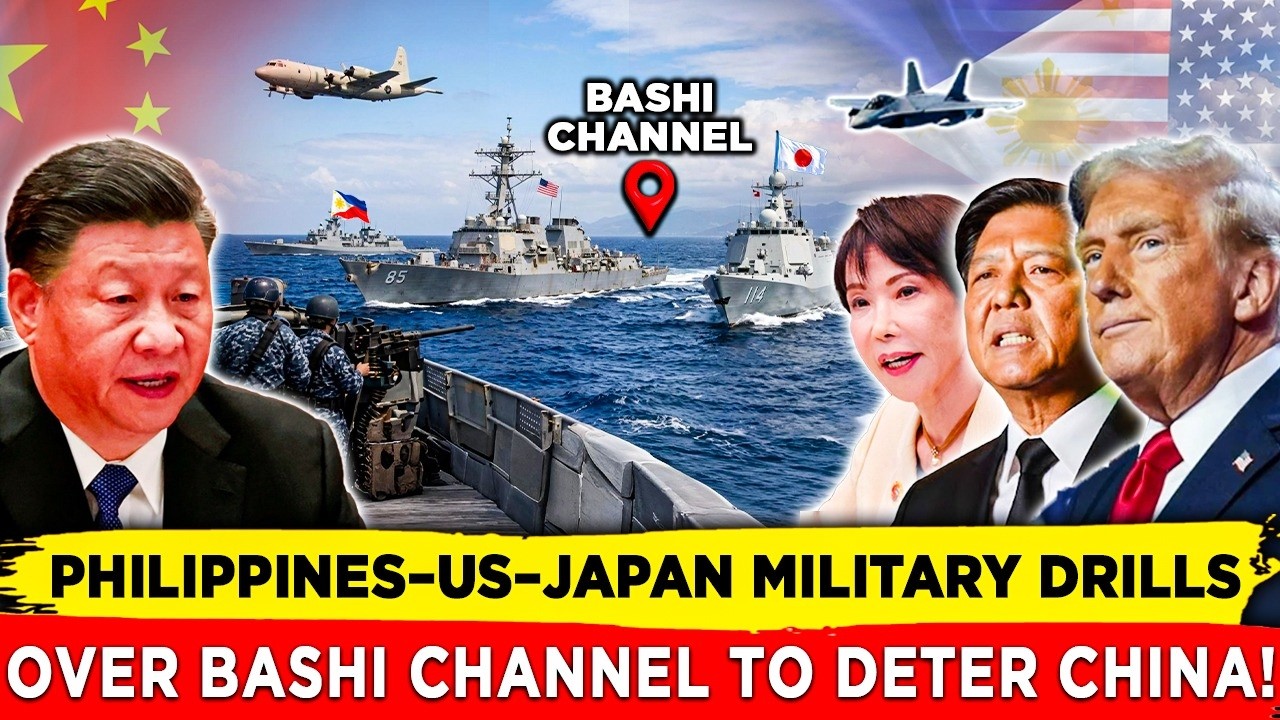
Philippines–US–Japan Military Drills Over the Bashi Channel (Feb 2026)
Risk Assessment
No strategic framework is without risk. Potential risks include escalation scenarios involving Taiwan, Chinese economic or political retaliation, and increased domestic political polarization over alliance policy. Yet these risks are mitigated by the rotational nature of U.S. presence, clear legal safeguards within EDCA, Philippine command authority over its facilities, and ongoing diplomatic signaling to partners and adversaries alike. Avoiding absolutism in risk assessment shows a maturity in strategic thinking, acknowledging real dangers without succumbing to fear-driven narratives.https://www.youtube.com/watch?v=F8wcKvWPBrM
Strategic Implications for Southeast Asia
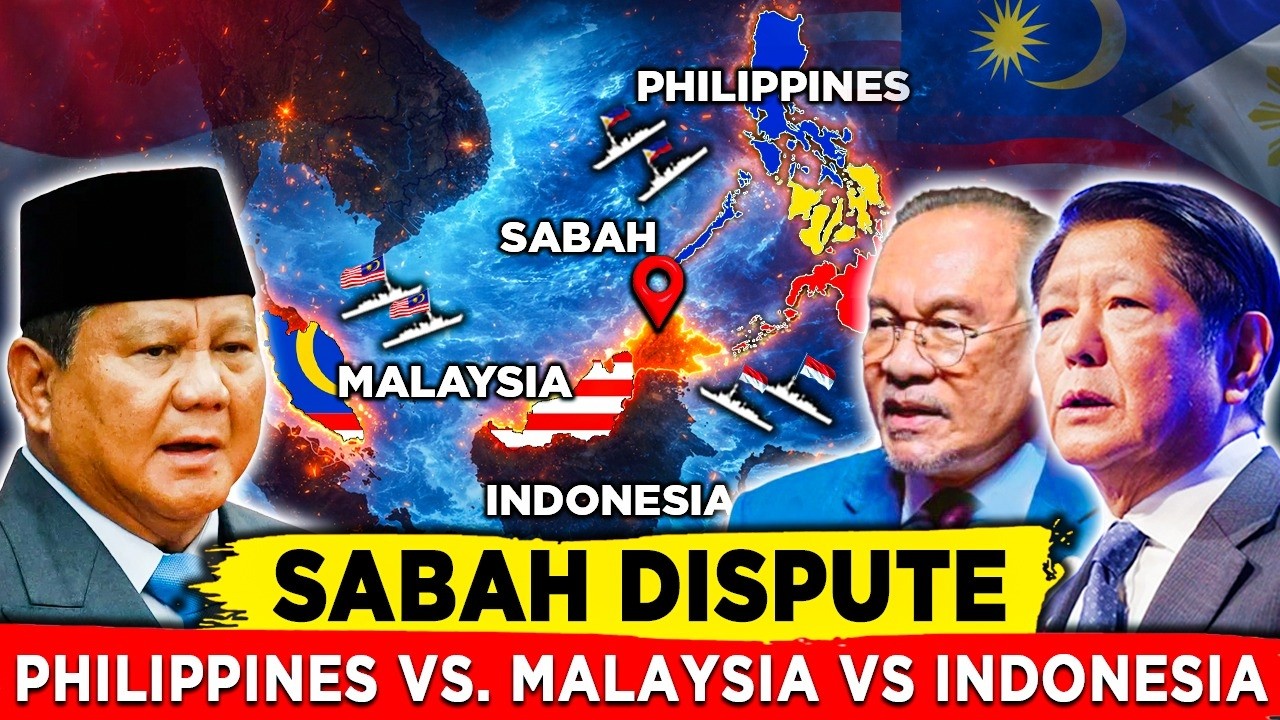
EDCA’s implications extend beyond the Philippines. It sends signals to ASEAN members about the normalization of alliance architecture in Southeast Asia, reinforcing a U.S. presence in the First Island Chain and shaping regional deterrence frameworks. Other states such as Vietnam, Indonesia, and Malaysia, which balance hedging strategies between major powers, will interpret Manila’s choices as part of a broader signal about alliance viability and regional security commitment.
Conclusion: EDCA as Strategic Insurance
At its core, EDCA is not about projecting American power; it is about hardening Philippine defense within a volatile strategic environment. The debate around it reveals how alliance politics intersects with historical memory and public perception.
In an era of intensifying great power competition, strategic ambiguity is less viable than structured deterrence. The Philippines is not choosing war; it is choosing preparedness, not out of fear, but out of a sober assessment of geography, capability, and the imperatives of national security.
https://youtu.be/yIpC-8wr1ZA?si=dF1J8vT_usCa7xNL