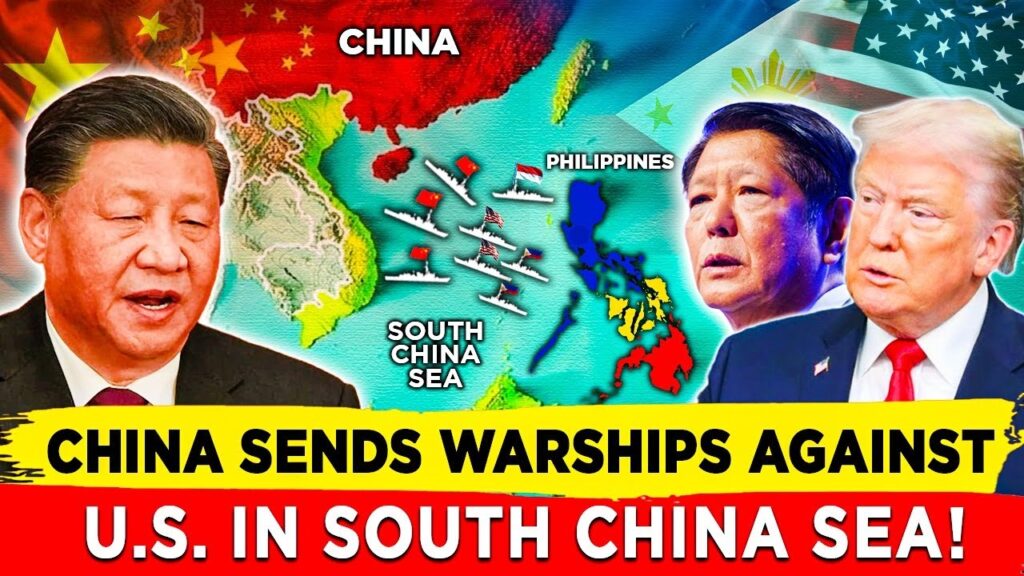
China Sends Warships to Counter US in South China Sea – Philippines on Alert!
“What happens when the world’s busiest trade highway turns into a naval chessboard?” That’s the question hanging heavy over Asia right now. In the latest jolt of breaking news, Chinese warships and coast guard vessels have surged back into contested waters of the South China Sea, shadowing U.S. naval activity and circling flashpoints like Scarborough Shoal. One regional security official summed it up bluntly: “This is no longer signaling, this is positioning.” And suddenly, Manila is on high alert, allies are dialing each other up, and the calm blue waters are starting to look dangerously crowded.
Picture this for a second: a stretch of sea carrying nearly $3 trillion in global trade every year, now packed with destroyers, patrol ships, and combat aircraft flying too close for comfort. This isn’t some distant maritime dispute, it’s the route your fuel, food, electronics, and energy supplies travel through. Scarborough Shoal, just a short sail from the Philippine coast, has once again become ground zero, with China flexing power and the Philippines responding by tightening coordination with the United States and regional partners. One wrong move here doesn’t just make headlines, it rewrites security equations.
And that’s why this moment hits different. This isn’t about one patrol or one provocation; it’s about who controls the rules of the sea. Beijing’s deployments challenge freedom of navigation, test international law, and directly push back against U.S. presence in the Indo-Pacific. For the Philippines, it’s an uncomfortable reminder that sovereignty isn’t abstract, it’s defended in real time, under real pressure. The South China Sea is no longer simmering in the background; it’s boiling, and the world is watching to see who blinks first.
Background Context
Alright, let’s set the stage properly because none of this is random, and none of it started yesterday. The South China Sea has been contested for decades, long before today’s headlines and warship movements. China, the Philippines, Vietnam, Malaysia, Brunei, and Taiwan all lay overlapping claims to islands, reefs, and waters in this strategically priceless maritime zone. On paper, many of these claims are supposed to be governed by the United Nations Convention on the Law of the Sea (UNCLOS), which defines territorial waters, exclusive economic zones, and maritime rights. In reality? Power politics often outweigh legal diagrams. What should be clear-cut lines on a map have turned into gray zones patrolled by coast guards, naval vessels, and surveillance aircraft.https://youtu.be/V_7TzRqlcSw?si=KXrmNH_R-hacGOQe
The tension exploded into legal warfare in 2016, when an international arbitral tribunal in The Hague delivered a landmark ruling in favor of the Philippines. The court decisively struck down China’s sweeping “Nine-Dash Line” claim, declaring it had no legal basis under UNCLOS. For Manila, the verdict was a diplomatic weapon, proof that international law was on its side. For Beijing, it was a red line. China rejected the ruling outright, calling it “null and void,” and has since acted as if it never existed. That legal standoff still defines today’s confrontations: the Philippines cites the ruling in protests and speeches, while Chinese ships continue operating as if the map never changed.

Layered on top of this is the constant presence of the United States Navy, which views the South China Sea not as a regional dispute, but as a global test case. Through regular Freedom of Navigation Operations (FONOPs), U.S. warships deliberately sail near contested features, including recent patrols close to Scarborough Shoal, to challenge what Washington calls “excessive maritime claims.” The message is old-school but crystal clear: the seas stay open, no matter who tries to fence them off. As U.S. officials put it, these missions defend “the right to fly, sail, and operate wherever international law allows.” And every time an American ship shows up, Chinese vessels shadow it, turning the South China Sea into a high-stakes standoff where law, history, and raw power collide.https://youtu.be/1CI3OfHngQs?si=n_ojya8MRdZ9YHwW
China’s Recent Naval Deployment
Now here’s where things get real because this isn’t just talk anymore, it’s steel in the water and aircraft in the sky. Over the past few days, China has rolled out serious naval and airpower into waters claimed by the Philippines, and the composition of these forces matters. Guided-missile destroyers and frigates, not symbolic patrol boats, have been tracked operating close to sensitive areas, signaling high-end combat readiness rather than routine law-enforcement presence. These platforms are built for air defense, anti-ship warfare, and long-range operations, meaning this deployment is designed to be seen, noted, and calculated by everyone watching the radar screens.

Even more eye-catching is the aerial component. China has flown H-6 strategic bombers, aircraft capable of carrying YJ-12 supersonic anti-ship missiles with an estimated strike range of up to 500 kilometers. That’s not defensive posturing, that’s a clear reminder of reach. From those distances, major naval formations, ports, and sea lanes fall well within potential engagement zones. In simple terms, Beijing is quietly saying: we can hit far, and we can hit fast.https://indopacificreport.com/china-is-watching-the-9th-u-s-philippines/
Officially, China’s Southern Theater Command is playing it cool. The patrols are described as “routine,” while Manila is accused of “colluding with external forces”, diplomatic shorthand for working too closely with the United States and its allies. According to Beijing, these deployments are meant to “preserve peace and stability.” It’s a familiar script: assert dominance, deny escalation, blame the other side. Old playbook, new hardware.
At the core, China’s stated objective remains unchanged. Beijing insists it is defending territorial sovereignty and responding to what it calls provocations by rival claimants and outside powers meddling in regional affairs. But the scale and sophistication of the forces involved tell a deeper story. This isn’t just about protecting claims, it’s about shaping behavior, intimidating opponents, and setting red lines in real time. In the South China Sea, China isn’t asking for attention anymore. It’s commanding it.
U.S. Response and Military Posture
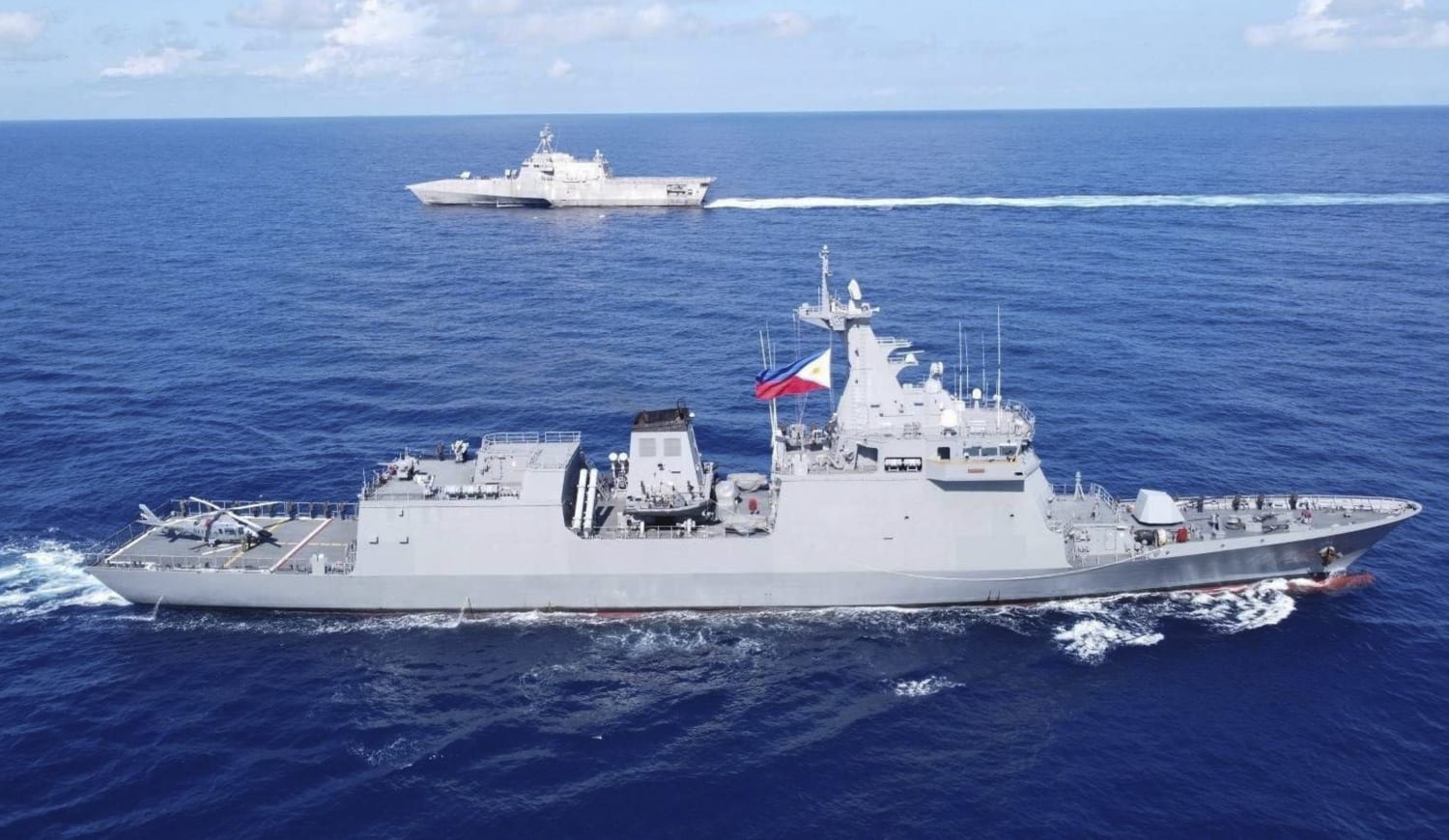
Washington didn’t waste time responding and it responded the way it always has: by showing up, staying visible, and refusing to blink. The U.S. Navy has surged Arleigh Burke-class guided-missile destroyers alongside Littoral Combat Ships (LCS) into waters near disputed shoals, reinforcing what officials call a persistent presence in the South China Sea. These aren’t ceremonial sail-bys. Arleigh Burkes are among the most capable surface combatants afloat, packed with Aegis air-defense systems, cruise missiles, and anti-submarine warfare capabilities. Their deployment sends a quiet but unmistakable signal: the U.S. is prepared to operate in contested waters and stay there.
At the heart of this posture is Freedom of Navigation Operations (FONOPs), a doctrine Washington treats almost like sacred tradition. U.S. officials stress that these operations are fully consistent with international law and not aimed at any single country, even if everyone knows who’s being challenged. One Pentagon spokesperson cut straight through the noise, stating that China’s maritime claims do not “deter us.” In plain terms, the message is simple and old-school: no nation gets to rewrite the rules of the sea by force.
Philippines Nears Strategic Defense Partnership with France to Enhance Naval Capabilities
But beneath the tough talk lies a very real danger. The South China Sea has already seen near-misses, aggressive shadowing, and even collisions between Chinese vessels during high-speed maneuvers. Add American warships, Chinese destroyers, bombers overhead, and coast guard vessels weaving between them and the margin for error shrinks fast. A misjudged turn, a misread radar contact, or an overly aggressive intercept could trigger a crisis no one actually planned for.
That’s the uncomfortable truth of the current U.S. posture. Deterrence keeps the peace until it doesn’t. And in these crowded waters, where pride, power, and patrol routes collide, escalation doesn’t need intent. It only needs one bad moment.
The Philippines’ Reaction and Preparedness
For Manila, this isn’t theory or great-power abstraction, this is happening right off its coast, and the response has been sharp, public, and deliberate. The Philippine government has moved quickly on the diplomatic front, issuing official protests and lodging “firm representations” with the Chinese embassy over both Beijing’s rhetoric and its expanding maritime presence. Philippine officials have pushed back hard against accusations of “collusion,” stressing that defending sovereign rights is not provocation. In statements from Malacañang and the Department of Foreign Affairs, the message is consistent: China’s actions are being challenged on record, in writing, and through international channels, no quiet acceptance, no silent retreat.
At sea, the posture has tightened. The Philippine Navy and Philippine Coast Guard have stepped up patrols across the West Philippine Sea, keeping a closer watch on contested areas and maintaining presence near sensitive features. While Manila knows it cannot match China ship-for-ship, visibility itself has become a form of resistance. Each patrol shows the same point: these waters are not abandoned, and sovereignty isn’t surrendered just because the other side is bigger.https://indopacificreport.com/philippines-commissions-its-latest-frigate-brp-diego-silang-ffg-07/
Diplomatically, the Philippines is also playing the long game. Coordination with the United States remains central, especially through joint exercises, intelligence sharing, and operational planning under existing defense agreements. At the same time, Manila continues engaging ASEAN partners, pushing for unity, consultations, and a rules-based approach to maritime security. It’s a careful balancing act, strengthening alliances without triggering outright escalation.
The Philippine response is quiet but firm, cautious but unmistakable. Manila isn’t pounding the table, but it isn’t backing down either. In a region where silence can be mistaken for consent, the Philippines is making one thing clear: it’s present, it’s watching, and it intends to stand its ground.
Regional Implications
What’s unfolding in the South China Sea doesn’t stay neatly boxed inside national borders, it ripples across the entire region, and ASEAN is feeling the pressure first. For ASEAN, these tensions are a stress test of unity. Some member states are deeply uneasy about being dragged into a confrontation between major powers, preferring quiet diplomacy and strategic ambiguity. Others, especially claimant states, are increasingly vocal about the need to push back against coercive behavior before it becomes the new normal. The result is a familiar ASEAN dilemma: consensus versus credibility. Every flare-up exposes how hard it is to speak with one voice when national interests, threat perceptions, and economic ties to China all pull in different directions.https://indopacificreport.com/philippines-calls-on-the-world-to-stop-chinas-south-china-sea-grab/
The economic stakes raise the temperature even further. The South China Sea isn’t just geopolitically sensitive, it’s economically indispensable. These waters carry critical shipping lanes and energy routes that feed East Asian manufacturing hubs, fuel markets, and consumer supply chains. Any serious disruption, whether from military standoffs or heightened insurance risks, would ripple straight into ports, prices, and production lines. For economies built on just-in-time trade, even short-term instability can translate into long-term uncertainty.
Then there’s the most immediate danger: maritime safety. The sea is getting crowded, and not just with warships. Military vessels, coast guard cutters, and maritime militia are operating in close quarters, often at high speed and under political pressure. Each aggressive maneuver, each shadowing incident, raises the odds of an accident and in this environment, accidents don’t stay accidents for long. One collision, one misread intention, and the region could find itself in an escalatory spiral no one planned for, but everyone would have to deal with. In short, the South China Sea is becoming more than a dispute zone, it’s a regional fault line. And the longer tensions simmer, the harder it becomes for ASEAN, markets, and mariners alike to pretend this is business as usual.
International Law and Maritime Claims
At the core of all this naval muscle-flexing is a much quieter battlefield, international law and that fight may be the most consequential of all. The legal backbone of the South China Sea disputes is the United Nations Convention on the Law of the Sea (UNCLOS). Under UNCLOS, coastal states are granted clearly defined maritime entitlements, including territorial seas and Exclusive Economic Zones (EEZs) extending up to 200 nautical miles. This framework is what anchors the Philippines’ legal position in the West Philippine Sea. Manila argues that its claims aren’t based on power or history, but on codified international law that most of the world recognizes and follows. In theory, UNCLOS is supposed to remove ambiguity. In practice, it’s become the very thing being contested.

China, however, plays by a different script. Beijing asserts “historical rights” that it argues predate UNCLOS and justify its extensive presence and deployments across much of the South China Sea. This interpretation has been widely challenged, especially after the 2016 arbitral ruling, but China continues to treat these claims as non-negotiable. From Beijing’s perspective, patrols, exercises, and ship deployments are not violations, they are enforcement of long-held sovereignty. Law, in this view, bends to history and power.https://youtu.be/iZzfvz2AIQQ?si=PExRYp8bMDeh_kZP
The United States cuts straight across that argument. Washington insists that freedom of navigation and overflight are protected under UNCLOS norms and customary international law, regardless of competing sovereignty claims. That’s the legal logic behind U.S. Freedom of Navigation Operations: they are not about ownership of reefs or shoals, but about preventing any single state from turning international waters into restricted zones. Every FONOP is a legal statement made with a warship.
And that’s the real tension. One side sees law as fixed rules; the other treats it as flexible history. Until those visions align or one clearly prevails, the South China Sea will remain not just a military standoff, but a legal one, fought ship by ship, patrol by patrol.
Strategic Analysis and Security Concerns
When you strip away the press statements and naval posturing, what’s left is a tense strategic equation, and none of the outcomes are guaranteed to stay tidy. One possible path is de-escalation, driven by sustained diplomacy, military hotlines, and confidence-building measures. This is the scenario everyone publicly claims to want: fewer risky maneuvers, clearer communication, and a return to managed competition. But let’s be real, de-escalation in the South China Sea doesn’t mean ships go home. It means tensions are contained, not resolved, and restraint becomes a daily operational choice rather than a permanent fix.
The more likely near-term scenario is a prolonged standoff. Persistent patrols, shadowing operations, and shows of force continue, but without major incidents. Friction becomes normalized. Each side learns the other’s habits, thresholds, and red lines. This kind of frozen confrontation feels stable on the surface, but it’s exhausting, expensive, and inherently fragile. One political crisis elsewhere or one aggressive captain at sea can shatter the balance overnight.
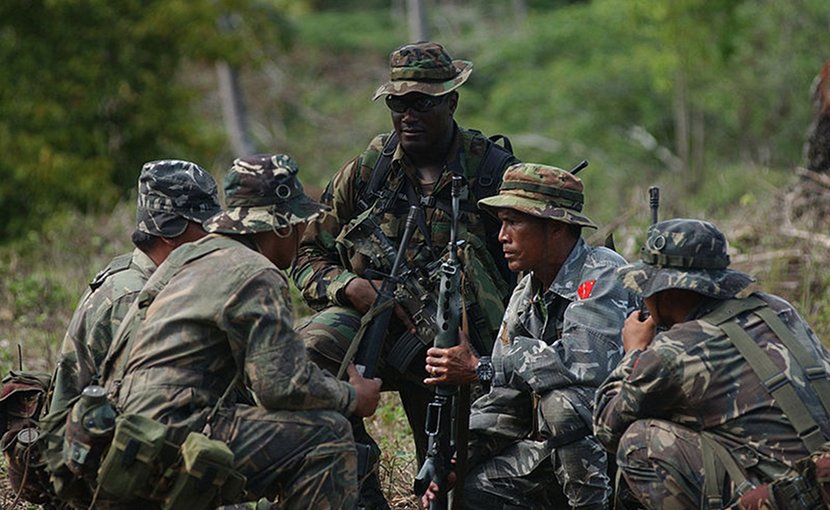
The most dangerous scenario is escalation, and the scary part is that it wouldn’t have to be intentional. An unintended collision, an aircraft intercept gone wrong, or a misinterpreted radar lock could trigger rapid military responses before diplomacy has time to catch up. In an environment thick with nationalism and alliance commitments, even a “minor” incident can spiral faster than leaders can control.
Complicating all of this is the accelerating technological edge. Advanced missile platforms, long-range strike systems, real-time surveillance drones, and networked sensors are compressing decision-making timelines. Commanders now see more, track faster, and react quicker, which sounds stabilizing, until it isn’t. Speed reduces room for human judgment, and in contested waters, that can turn seconds into strategic consequences.
Bottom line: the South China Sea isn’t drifting toward resolution, it’s hardening into a test of endurance, discipline, and crisis management. The danger isn’t war by design. It’s war by miscalculation and history tells us that’s often how the worst ones start.
Diplomatic & Political Dimensions
Zoom out for a second, and it’s obvious the South China Sea isn’t just about reefs and shoals anymore, it’s a frontline in the U.S.–China strategic rivalry. Every patrol, every statement, every joint exercise feeds into a much larger contest over influence, credibility, and leadership in the Indo-Pacific. For Washington, presence equals commitment, to allies, to international law, to an open maritime order. For Beijing, pushing back is about reshaping that order and proving it can no longer be dictated from outside the region. The result? Alliances are tightening, defense cooperation is deepening, and neutral ground is getting harder to find.

Multilateral diplomacy is supposed to be the pressure valve, but progress has been painfully slow. ASEAN forums, UN platforms, and related mechanisms offer space for dialogue, confidence-building, and rule-setting, yet consensus remains elusive. Competing interests, economic dependencies, and strategic caution keep outcomes watered down. The long-discussed Code of Conduct in the South China Sea, for example, moves forward inch by inch, always discussed, never quite delivered. Still, these forums matter. In a crisis-prone environment, even slow diplomacy is better than silence.
That’s why dialogue, however imperfect, remains essential. Military deterrence may prevent immediate conflict, but only sustained diplomatic engagement and respect for international norms can prevent long-term instability. Hotlines, maritime communication protocols, and regular consultations don’t solve sovereignty disputes but they can stop misunderstandings from turning into flashpoints. In a region this tense, talking is not weakness; it’s damage control.
Conclusion
What we’re witnessing now is a clear escalation in geopolitical intensity. China’s expanded naval deployments, the United States’ firm maritime posture, and the Philippines’ heightened state of alert all point to a South China Sea that is more contested, more crowded, and more consequential than ever. This isn’t a temporary spike, it’s a new normal taking shape in real time.
The risks are obvious and serious. Military operations intersect with strategic rivalry and unresolved legal claims, creating a volatile mix where miscalculation could carry regional even global consequences. Trade routes, energy flows, alliance credibility, and international law are all on the line. When great-power competition plays out at sea, the margin for error is dangerously thin.
The path forward is narrow but clear. Stronger diplomacy, greater transparency, and consistent adherence to lawful maritime conduct are no longer optional, they’re essential. The South China Sea has always been a crossroads of commerce and culture. Whether it becomes a corridor of cooperation or a theater of confrontation depends on the choices being made right now, while the ships are still maneuvering and the lines are not yet crossed.