China Is Watching the 9th U.S.–Philippines Patrol Very Closely!
The West Philippine Sea has seen tension before, but nothing quite like this moment. As dawn breaks over contested waters, Philippine and U.S. warships slice through the waves in tight formation, their radars sweeping, their aircraft carving arcs across the sky. It is a scene that feels less like routine patrol and more like a declaration: the allies are no longer watching events unfold from a distance. They are now inside the battlespace.
For months, China has put pressure to unprecedented levels. Between 50 and 200 Chinese vessels swarm key reefs at any given time: Bajo de Masinloc, Ayungin Shoal, Sabina, and Iroquois. High-pressure water cannons slam into Philippine supply boats. Ramming attempts grow bolder. Lasers and military-grade flares threaten aircraft in international airspace. And beneath it all, China’s upgraded electronic warfare systems, new jammers, stronger sensors, and more aggressive emissions, stretch their reach across the Spratlys.
This is the environment in which the 9th Philippine–U.S. Joint Maritime Patrol launches. And that is precisely why it matters more than the previous eight. The patrol is not a symbolic fly-by or a diplomatic gesture. It is a calibrated, deliberate move at the moment of Beijing’s heaviest coercion in decades. Regional militaries are already warning: “China’s posture is the most aggressive we’ve seen in a generation.”
Against this backdrop, the 9th MCA becomes a turning point. It signals a shift in alliance behavior, from reactive statements to proactive presence; from reassurance to deterrence; from monitoring Chinese activity to challenging it directly in contested waters. In short, this patrol marks the moment the U.S.–Philippines alliance stops merely responding to pressure and starts shaping the battlespace itself.
BACKGROUND — HOW PH–US MARITIME PATROLS EVOLVED
The modern chapter of Philippine–U.S. maritime cooperation didn’t begin with bold naval maneuvers, but with a simple strategic need: to see clearly in a contested sea. Under the Enhanced Defense Cooperation Agreement (EDCA), the two allies launched the Maritime Cooperative Activities (MCA) to close critical detection gaps across the West Philippine Sea. These early patrols were built for one purpose: situational awareness. They aimed to strengthen Maritime Domain Awareness (MDA), track illegal or coercive behavior inside the Philippine EEZ, and ensure that Manila could document, verify, and respond to what was happening in its own waters.
But as tensions rose, so did the complexity of the patrols. The first few MCAs were quiet, almost cautious, largely focused on ISR missions, maritime monitoring, and routine presence operations. Then they evolved. Mid-stage patrols introduced coordinated sailing, tighter integration of air assets, and real-time drone feeds that provided a unified picture of the maritime environment. What began as surveillance gradually shifted into combined operations, more public, more visible, and unmistakably more assertive.
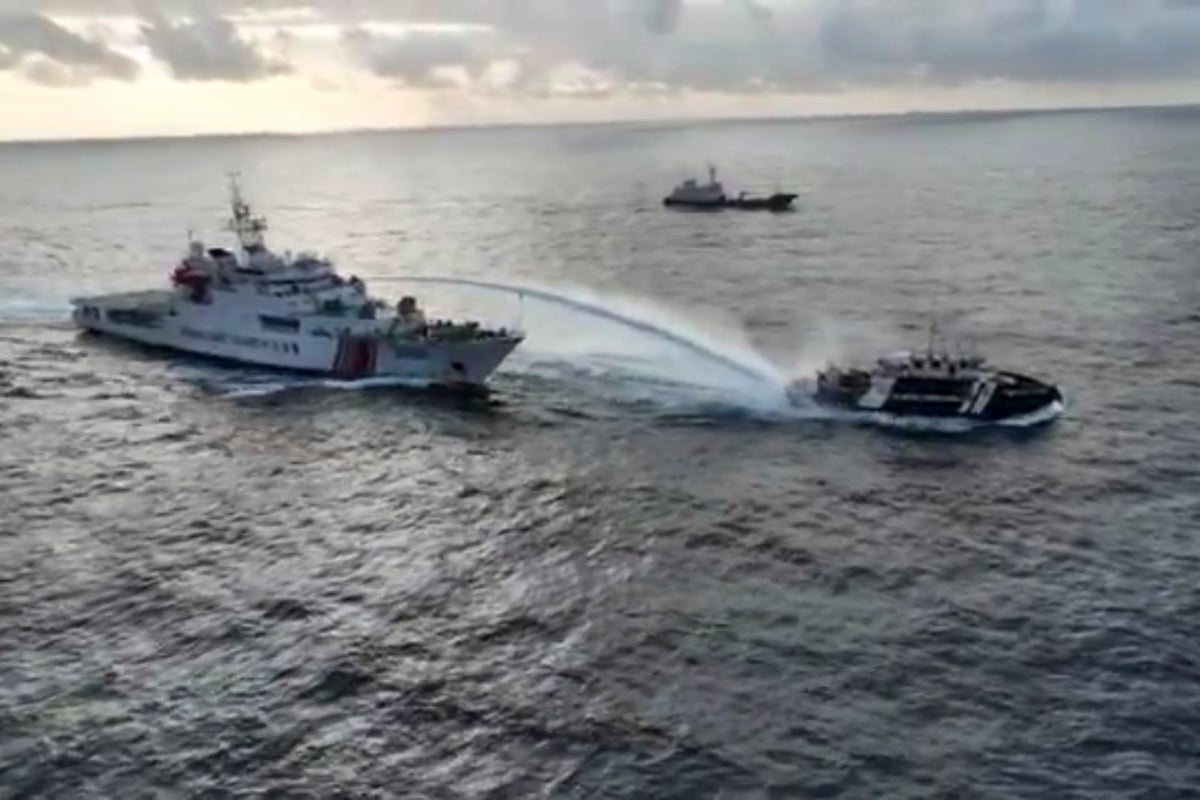
This evolution didn’t happen in a vacuum. A rapidly deteriorating security environment shaped it. China intensified its gray-zone pressure on an unprecedented scale and with greater persistence. At Ayungin Shoal alone, up to 40 or more militia vessels loitered for weeks, forming a blockade-like presence. Philippine crews suffered repeated injuries from high-pressure water cannon attacks. By the end of 2024, Manila had logged over 140 harassment incidents, a record-breaking surge that signaled a deliberate campaign of coercion.
Even regional partners, usually restrained in their public messaging, began issuing unusually sharp warnings. Japan, Australia, and others described China’s posture as destabilizing and increasingly aggressive, showing a shared concern that the status quo in the South China Sea was shifting in dangerous ways. As one senior Philippine maritime official put it: “China’s actions are no longer routine; they are systematic.” It is against this backdrop of escalating pressure and evolving alliance cooperation that the 9th MCA emerges, not as another patrol in a series, but as a strategic turning point.
WHAT MADE THE 9th PATROL DIFFERENT?
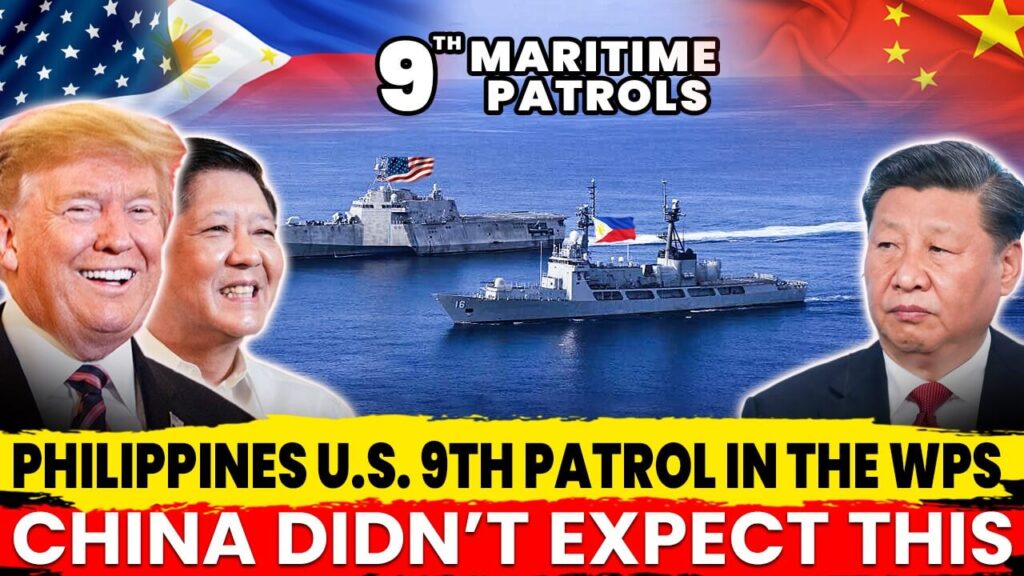
The 9th PH–US joint maritime patrol was fundamentally different from its predecessors because it marked the moment the alliance shifted from cooperative presence to coordinated deterrence, fielding its most integrated force to date: the Philippines deployed a Jose Rizal–class frigate, a Yap-class corvette, and ISR aircraft, while the United States brought an Arleigh Burke–class destroyer, a P-8A Poseidon, and full logistical support, all operating for the first time on a shared tactical picture with synchronized tracking, data-linked sensors, and a fused surveillance grid that allowed real-time awareness across the contested battlespace.
Unlike earlier MCAs that remained at the periphery of tension points, this patrol deliberately crossed China’s most sensitive pressure zones, Scarborough Shoal, Ayungin Shoal, and Rozul Reef, areas heavily patrolled by Chinese coast guard, militia swarms, and naval escorts, where harassment, ramming attempts, and water-cannon attacks against Philippine vessels are routine. By navigating these hotspots as a united formation, the allies were not only asserting freedom of navigation inside the Philippine EEZ but also directly challenging Beijing’s unlawful nine-dash-line claims at the precise locations where China tries hardest to enforce them. Trump Sparks Global Trade War with Sweeping Tariffs on Canada, China, and Mexico
The operation’s objectives reflected this new posture: to stress-test EDCA-enabled command-and-control networks, evaluate how fast PH and U.S. sensors could merge tracking data, deepen Philippine maritime situational awareness through P-8A surveillance, and demonstrate the ability to maintain presence despite Chinese coercion. Yet the most powerful message came through action, not rhetoric, the deliberate tempo of joint sailing, coordinated air–sea patterns, and persistent ISR orbits made clear that the alliance is transitioning toward routine, crisis-ready operations, and that every act of Chinese pressure now risks triggering not a unilateral Philippine response, but a coordinated, immediate show of allied military presence right where it matters most.
WHY THIS MATTERS FOR THE PHILIPPINES?
For the Philippines, the 9th joint patrol matters because it delivers immediate operational benefits and long-term strategic momentum at a moment of unprecedented pressure in the West Philippine Sea. First, it represents a dramatic leap in maritime domain awareness, with U.S. P-8A Poseidon flights and Philippine ISR aircraft merging their radar tracks into a unified picture that exposes militia clustering, Coast Guard maneuver patterns, and Chinese movements that were previously invisible to Philippine sensors. Second, the patrol strengthens deterrence, forcing Beijing to calculate not just the risk of provoking Manila but the risk of drawing in the United States, raising the cost of water cannon attacks, ramming efforts, and blockade tactics.
Third, the presence of allied warships provides practical, on-the-water protection for Filipino fishermen and for the high-stakes Ayungin resupply missions; in fact, after an early 2024 PH–US patrol, harassment around Ayungin temporarily fell, showing how joint presence can disrupt coercive behavior.
Finally, the patrol accelerates AFP modernization, giving Philippine forces real-world experience in data-linking, coordinated maneuvering, and joint surveillance, skills essential as the country prepares to field BrahMos coastal batteries, new long-range radars, submarine capabilities, and expanded UAV fleets. In short, the 9th MCA is not only a message; it is a major step in transforming the Philippines into a more aware, more protected, and more capable maritime power.
WHY THIS MATTERS FOR THE UNITED STATES?
For the United States, the 9th joint patrol with the Philippines carries deep strategic importance because it strengthens the very architecture of Indo-Pacific stability at a time when Chinese assertiveness threatens to upend it. First, it directly supports First Island Chain security, as Philippine bases, especially EDCA sites in Luzon and Palawan, form the southern anchor of U.S. deterrence against any Chinese move toward Taiwan; operating alongside Philippine vessels in contested waters ensures a persistent American presence precisely where Beijing’s rapid military expansion poses the greatest risk.
Second, it helps protect freedom of navigation in a region where nearly $3.4 trillion in global trade flows annually; by normalizing U.S. patrols inside areas China claims unilaterally, Washington prevents Beijing from normalizing its own expansive, illegal maritime assertions, thereby safeguarding commercial routes the world depends on.
Third, the patrol reinforces America’s role at the center of a growing alliance network, demonstrating that U.S. commitments are not just diplomatic talking points but operational realities; this credibility encourages partners such as Japan, Australia, and South Korea to join future rotations or conduct coordinated patrols, gradually building a multi-nation security ecosystem that raises the strategic cost of Chinese coercion. Ultimately, the 9th MCA strengthens U.S. deterrence, protects global trade, and expands the coalition capable of balancing China, making it a mission with consequences far beyond the West Philippine Sea.
What does THIS MEAN FOR CHINA?
For China, the 9th PH–US joint maritime patrol represents a disturbing inflection point because it confirms that the U.S.–Philippines alliance has transformed from a largely political partnership into an operationally active, forward-deployed coalition capable of challenging Beijing’s behavior directly inside the waters where China has grown used to dominating uncontested. The fact that American and Philippine vessels sailed together through Scarborough, Ayungin, and Rozul, areas Beijing treats as extensions of its own security perimeter, sends a message far more confrontational than any diplomatic statement: China can no longer rely on isolating Manila or confronting Philippine vessels one-on-one.
Now, any coercive play, whether a blockade, a ramming attempt, a water-cannon strike, or a flare incident, carries the added risk of triggering an immediate U.S. naval or air response, complicating the entire logic of China’s gray-zone strategy, which depends on calibrated pressure without crossing into open conflict. Beijing’s near-term responses will likely include surging more maritime militia ships, dispatching larger coast guard cutters to shadow allied vessels, issuing aggressive radio warnings, and intensifying propaganda campaigns accusing the Philippines of “inviting external forces” or “undermining regional stability.” Yet China faces a deeper strategic dilemma: every act of aggression it employs now strengthens the very coalition it fears most.
It pushes the Philippines tighter into Washington’s strategic orbit, provides justification for Japan and Australia to expand their own patrols, and accelerates emerging trilateral and quadrilateral frameworks that give the region more collective leverage. Instead of deterring U.S. partners, China’s coercion is creating a more unified, interoperable, and militarily capable network along the First Island Chain, one that increasingly views Chinese pressure not as isolated incidents, but as a shared threat that must be countered together. In trying to dominate the West Philippine Sea, Beijing is inadvertently catalyzing the very regional alignment it has spent years trying to prevent.
REGIONAL RIPPLE EFFECT — THE ALLIES ARE TAKING NOTE
The 9th PH–US joint patrol has triggered a visible strategic ripple across the Indo-Pacific, prompting allies and partners to reassess their own roles in the West Philippine Sea. Japan, already supplying the Philippines with advanced air-defense radars and maritime sensors, is now openly considering joint patrols, an unprecedented move that signals Tokyo’s growing willingness to counter coercive behavior at sea.
Australia, operating under the broader momentum of AUKUS Pillar II, has increased its naval tempo and is widely expected to join more PH–US patrol rotations as part of a more coordinated Indo-Pacific presence. Meanwhile, India, France, and South Korea continue expanding defense ties with Manila through port visits, ship deployments, officer exchanges, and specialized training programs, reflecting a broadening international belief that the stability of the West Philippine Sea affects global security.
Even ASEAN, despite its trademark neutrality, is quietly supportive; several Southeast Asian nations prefer a maritime environment where China’s assertiveness is balanced by allied presence, rather than one where Beijing operates without challenge. The patrol, therefore, does more than secure waters; it reshapes regional expectations and invites multilateral alignment.
A NEW PH–US DEFENSE PATTERN TAKES SHAPE
The 9th MCA marks the beginning of a new operational rhythm in PH–US defense cooperation, one that appears designed to normalize frequent, near-monthly joint patrols. This steady tempo signifies a shift from episodic activity to routine alliance operations. The backbone of this new pattern is EDCA, which now anchors U.S. fuel stocks, surveillance equipment, logistics hubs, and rapid-deployment assets across Luzon and Palawandramatically reducing response times and enabling tighter coordination during real-time maritime incidents.
As this infrastructure matures, the Philippines gains faster access to intelligence, improved maritime domain awareness, and the confidence that support can arrive within hours, not days. Beyond bilateral operations, the trajectory is pointing toward a multinational patrol framework, with Japan, Australia, and South Korea expected to integrate into future rotations. This evolution transforms the West Philippine Sea from a bilateral security concern into a shared strategic responsibility among Indo-Pacific partners.
RISKS & ESCALATION PATHWAYS
Despite the benefits, the expanded patrol posture introduces significant operational risks. Accidental collisions or close encounters are increasingly possible as more PLA Navy, militia, and coast guard vessels shadow allied ships at short distances, raising the chances of miscalculation during high-pressure maneuvers. China may escalate harassment tactics, deploying stronger water cannons, laser attacks on aircraft, targeted jamming of communications, and unpredictable militia swarming, to test allied resolve and probe the limits of response.
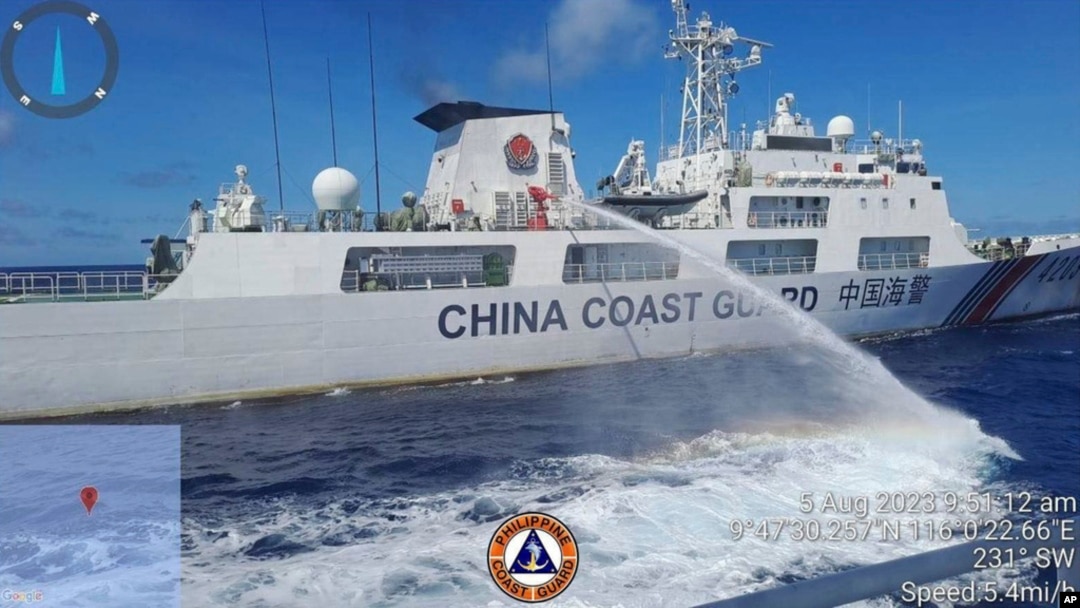
A more concerning scenario involves saturated gray-zone pressure, where China floods contested areas with overwhelming militia numbers to stretch the Philippines’ capacity and undermine joint patrol effectiveness. In this environment, the allies must walk a delicate line: the purpose of frequent patrols is deterrence, not provocation, yet the conditions now make it easier for small confrontations to spiral into broader incidents. Maintaining clarity of communication, disciplined maneuvering, and strict rules of engagement becomes critical to avoiding escalation while sustaining deterrent value.
CONCLUSION — A NEW ERA IN THE WEST PHILIPPINE SEA
The 9th MCA marks a defining shift in the security landscape of the West Philippine Sea. The Philippines, once forced to face Chinese coercion largely alone, now operates as part of an increasingly coordinated and capable alliance network. China’s pressure no longer goes unanswered; instead, it meets visible, consistent, and strategically aligned resistance from multiple partners.
Why the U.S. Wants Taiwan to Fund Philippines EDCA Military Bases?
The maritime environment is transforming from a gray-zone arena dominated by unilateral Chinese actions into a contested space shaped by allied operations, intelligence sharing, and collective resolve. For Manila, the patrol represents empowerment; for Beijing, a warning; for the region, a sign that balance is returning to the waters where global trade and security intersect. In waters where every movement carries meaning, the 9th joint patrol declares a single, unmistakable truth: the Philippines no longer sails alone; it sails with a superpower, reshaping the balance of power in the South China Sea, one patrol at a time.