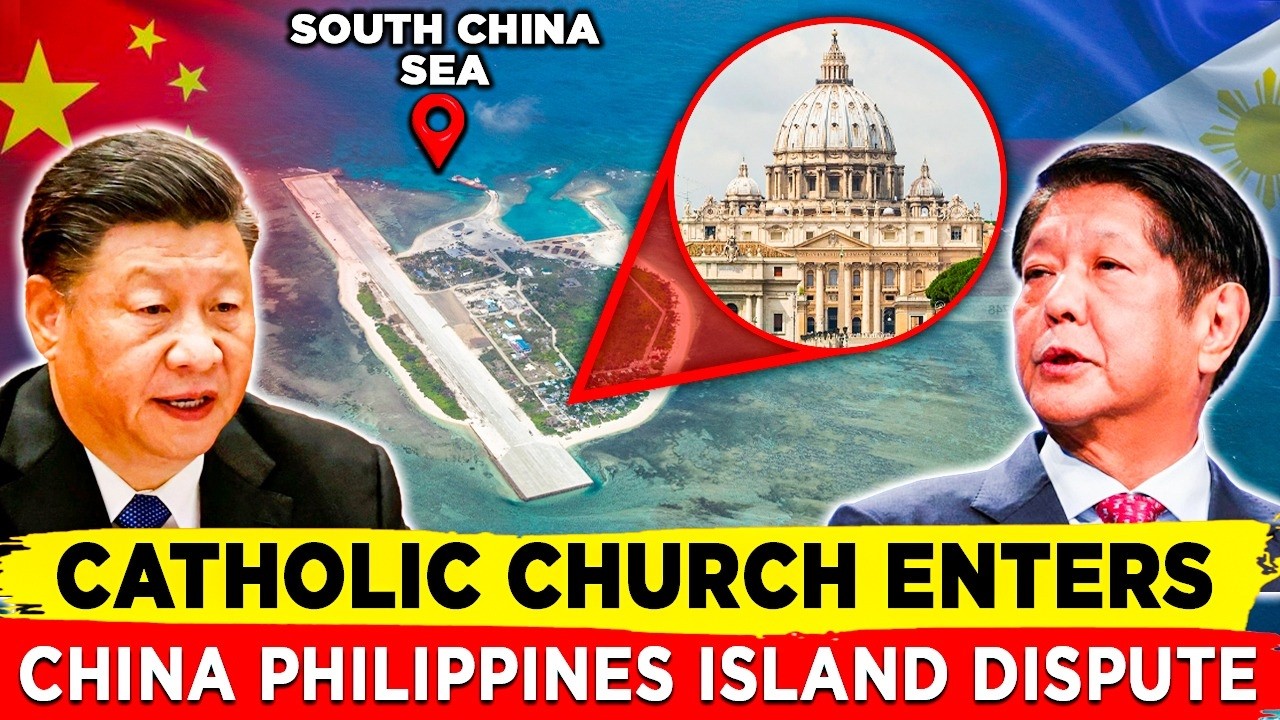
Catholic Church to Open a Mission on a South China Sea Island Claimed by the Philippines and China
“We bring no weapons. We bring the Gospel.” That quiet line, shared in early reports this week, hit harder than any naval press release. Because here’s the question no one expected to ask in 2026: What happens when faith plants a flag where warships already circle?
In the latest twist in the long-running South China Sea drama, the Catholic Church is preparing to open a mission on a disputed island claimed by both the Philippines and China. A chapel. A priest. Humanitarian outreach for fishermen who spend weeks at sea. On paper, it sounds almost gentle, even beautiful. But nothing in the South China Sea is ever just simple.
This is the same stretch of water where Chinese coast guard vessels shadow Filipino boats near Second Thomas Shoal. The same region was watched closely by commanders in Manila and strategists in Beijing. The same sea where concrete, steel, and sand have already turned reefs into airstrips.
And now, a chapel. I keep thinking about the fishermen. The ones who leave Palawan before dawn, rosaries hanging from rearview mirrors of battered boats. The ones who whisper quick prayers before sailing into waters where radio warnings can suddenly crackle through the silence. For them, a small mission isn’t a geopolitical chess move. It’s comfortable. It’s familiar. It’s someone to bless a boat before it heads back into uncertain waters. But zoom out, just a little and the symbolism becomes impossible to ignore.
In contested spaces, presence is power. A runway changes facts. A coast guard patrol changes facts. Even a weather station changes facts. So what does a church change? That’s the tension. On one level, this is pastoral care, priests ministering to isolated communities, offering sacraments to sailors who can’t exactly drop by Sunday Mass. On another level, it quietly plants a civilian footprint in territory both the Philippines and China claim as their own. And in a region where sovereignty is measured not just in treaties but in who shows up consistently, even prayer can look strategic.https://www.youtube.com/watch?v=bticl1hTkO4
The rivalry between the Philippines and China in the South China Sea has intensified over the past decade. Coast guard standoffs. Water cannon incidents. Diplomatic protests. Each action calibrated just below the threshold of open conflict. A slow, grinding contest of endurance. So when the Church steps in, it enters a space already thick with suspicion. Is it humanitarian? Absolutely. Is it political? Inevitably.

History tells us that missions have often followed frontiers. In some eras, they softened expansion. In others, they legitimized it. The difference now is that this frontier is not jungle or desert, it’s one of the world’s most strategically vital maritime corridors, carrying trillions in trade and sitting at the heart of Asia’s shifting power balance.
And maybe that’s what makes this moment so quietly dramatic. Because a chapel doesn’t fire missiles. It doesn’t patrol waters. It doesn’t issue diplomatic demarches. But it does something subtler: it tells the world, “People belong here.”
And belonging is the foundation of sovereignty. So yes, this is a story about faith. But it’s also about narrative power. About who gets to define presence. About how even symbols, when placed carefully, can ripple outward in ways no one fully controls. In the South China Sea, even silence carries weight. Now there will be bells.
Background: The South China Sea Dispute
To really understand why a small Catholic mission on a disputed island matters, we have to zoom out. Way out. The South China Sea is not just another regional waterway. It is one of the most strategically loaded maritime spaces on the planet. A lot of people throw that line around, but here it’s not an exaggeration. It’s a fact.
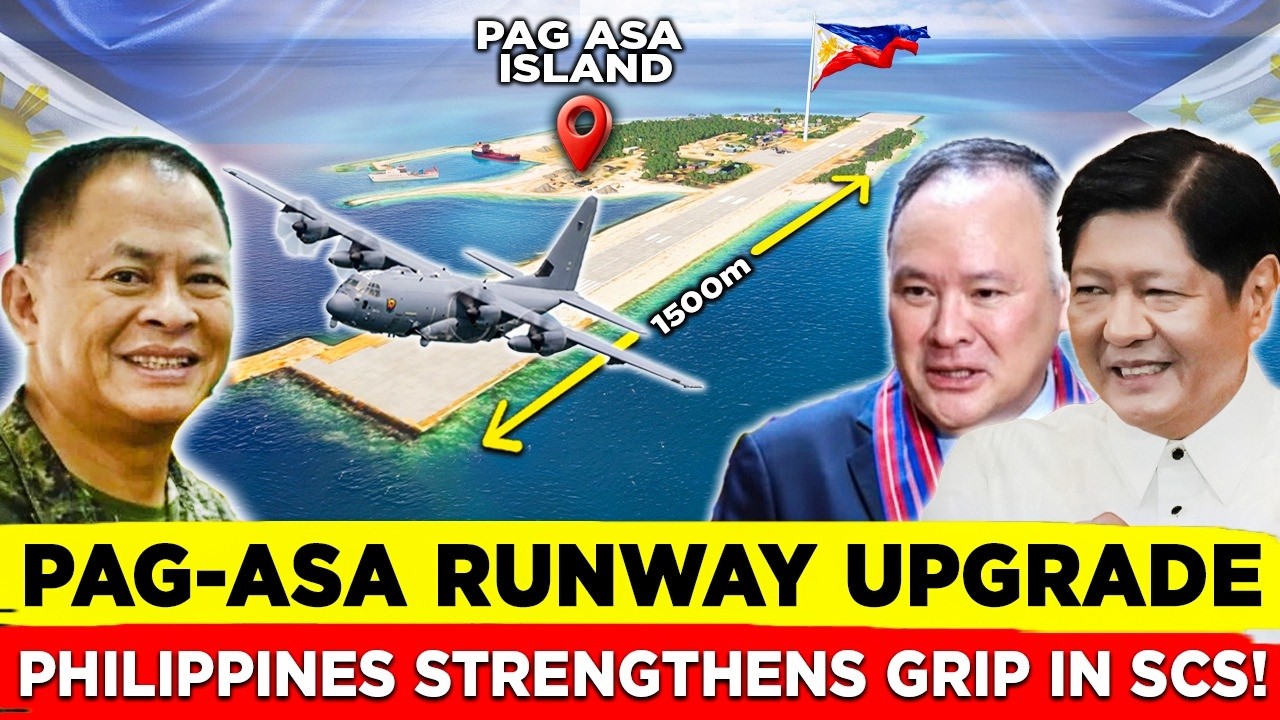
Every year, an estimated three to five trillion dollars’ worth of global trade moves through this sea. That’s about one-third of all maritime commerce worldwide. Tankers carrying Middle Eastern oil to East Asia. Container ships packed with electronics and machinery heading toward Europe and North America. Bulk carriers loaded with grain. These routes connect the Pacific and Indian Oceans, linking major manufacturing hubs with global markets. Disrupt this corridor, and supply chains shudder almost instantly.https://indopacificreport.com/philippines-strengthens-grip-in-south-china-sea-with-pag-asa-runway-upgrade/
Then there’s energy. The U.S. Energy Information Administration estimates that beneath these waters lie around eleven billion barrels of oil and roughly one hundred ninety trillion cubic feet of natural gas in proven and probable reserves. In a world where energy security drives foreign policy, those numbers aren’t just statistics. They shape naval deployments, diplomatic language, and long-term strategic planning.
And we cannot ignore fisheries. The South China Sea accounts for roughly twelve percent of the world’s total fish catch. For millions across Southeast Asia, this isn’t theoretical geopolitics. It’s livelihood. It’s daily income. It’s food on the table. When access to fishing grounds becomes restricted by patrol vessels or maritime confrontations, the consequences ripple through entire coastal communities.
Layered over all of this is a heavy military presence. The sea hosts overlapping naval patrols, fortified artificial islands, radar installations, and strategic shipping lanes that double as strategic choke points. Warships and coast guard vessels operate in close proximity. Surveillance aircraft trace steady arcs overhead. This is not quiet water. It is a contested operational environment.
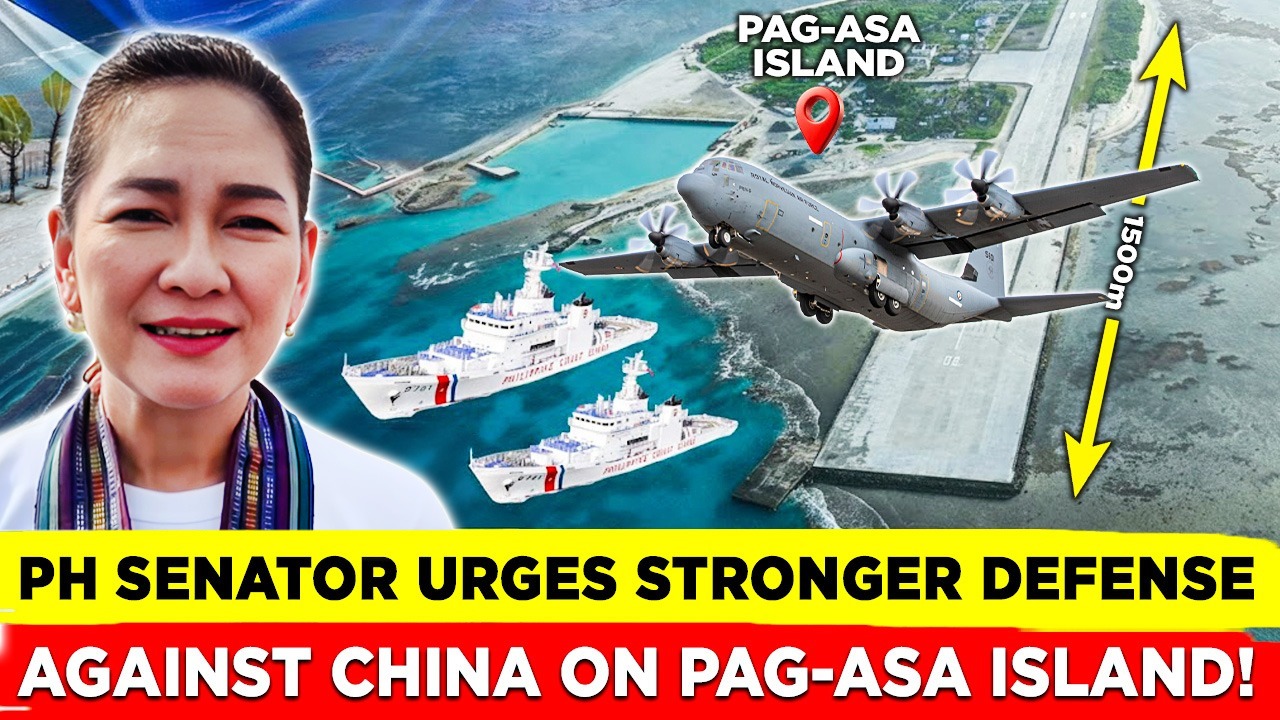
Philippine Senator Urges Stronger Defense Against China on Pag-asa Island
Competing Sovereignty Claims
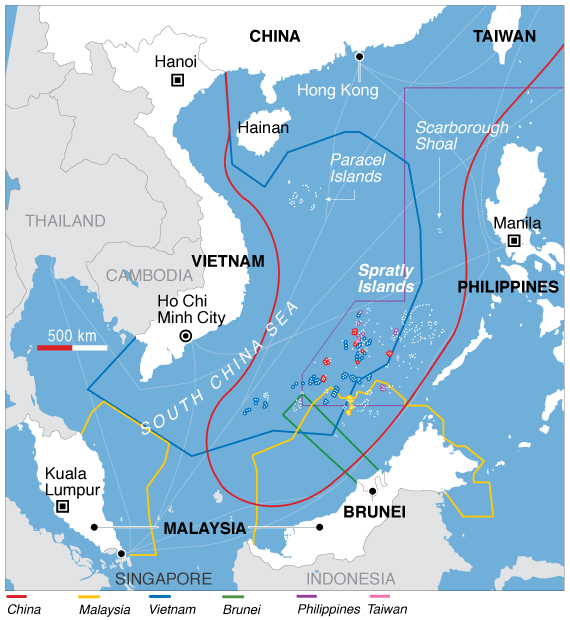
Several states claim portions of the South China Sea, but the most prominent and politically charged dispute centers on the Philippines and China.
In 2016, the Permanent Court of Arbitration in The Hague ruled in favor of the Philippines in a case brought under the United Nations Convention on the Law of the Sea. The tribunal concluded that China’s expansive “nine-dash line” claim had no legal basis under international law. It also clarified the maritime entitlements of certain contested features.
Beijing rejected the ruling outright, calling it “null and void,” and has continued to assert its claims in practice. Since then, legal clarity and strategic reality have existed side by side, but not in harmony.
Meanwhile, the Association of Southeast Asian Nations has pursued negotiations toward a Code of Conduct intended to prevent escalation and manage incidents. Progress, however, has been incremental. The process remains politically sensitive, shaped by divergent national interests and the broader rivalry between China and external powers.
So the dispute is not frozen. It is active, dynamic, and layered, legal, diplomatic, operational.
Philippines is moving toward military cooperation with Taiwan
Religious Presence in Contested Spaces
Against that backdrop, the Catholic Church’s decision to establish a mission in such an environment becomes more than a pastoral footnote. Historically, Catholic missions have often operated in frontier regions and politically fragile areas. In parts of Africa and Latin America, Church institutions have served as stabilizing presences in conflict zones, providing education, healthcare, and community cohesion where state capacity was weak. On the Korean Peninsula, pastoral outreach has continued even amid division and unresolved war.https://www.youtube.com/watch?v=QpCPWoAMOzE
The Church’s missionary identity is longstanding. As Pope Francis has emphasized, the Church is called to go to the peripheries, not only geographically, but existentially. In that sense, a remote island in the South China Sea fits the description of a periphery. It is geographically isolated. It is politically sensitive. It is inhabited, if at all, by small numbers of fishermen or maritime personnel operating far from urban centers.
The key question, however, is not whether the Church has a tradition of operating in difficult spaces. It clearly does.
The deeper question is how a religious presence will be interpreted in one of the world’s most strategically contested maritime theaters and whether a chapel in disputed waters can remain purely pastoral in the eyes of rival claimants.
The Catholic Church’s Strategic and Pastoral Objectives
When people hear about a Catholic mission on a disputed island, the first instinct is to ask, Is this political? But step back for a moment. Before geopolitics, before maritime law, before naval patrols, there are people out there. Real people. And that matters.
Evangelization and Pastoral Care
The Philippines is roughly 80 percent Catholic. In fact, it has the third-largest Catholic population in the world. Faith isn’t a side detail in Filipino life; it’s woven into the culture. It shows up in fiestas, in family rituals, in how communities respond to crises. It’s inherited, practiced, argued over, but rarely ignored.
Now imagine being a Filipino fisherman stationed for weeks near contested waters. Or a coast guard officer rotating through an isolated outpost. No parish church. No Sunday Mass. No confession. No familiar rhythm of worship.
A mission in that environment isn’t abstract theology. It’s access. It could offer Mass. Confession. Spiritual direction. But beyond sacraments, it could provide something less measurable and just as important: psychological grounding. Isolation does things to people. Maritime deployments are not easy. Being stationed in a politically tense area adds another layer of stress.https://www.youtube.com/watch?v=7TyGTGqG-yw&list=PL4jgdFMGYAe7uj42HSdvZGrqaFAalo-NB
A priest’s presence can create a community where there is none. A chapel, even a small one, can anchor morale. It becomes a reminder that someone sees you, that your service or livelihood isn’t invisible. And that human element shouldn’t be dismissed too quickly.
China Sends Warships to Counter US in South China Sea – Philippines on Alert!
Humanitarian Outreach
Then there’s the humanitarian side. The Catholic Church doesn’t operate only through parishes. It moves through networks like Caritas Internationalis, which has long experience in disaster response and community support. In a region battered by storms, that infrastructure matters. The Philippines faces around twenty tropical cyclones each year. Many directly impact coastal and maritime communities. Boats are damaged. Livelihoods disappear overnight. Medical access becomes scarce. Relief takes time.
A mission presence in contested waters could function as more than a spiritual outpost. It could support medical missions, distribute emergency supplies, and provide educational outreach to transient or vulnerable communities operating at sea. In that sense, it fits within the Church’s longstanding model: go where the state is thin, where geography is harsh, where communities are exposed. And let’s be honest, typhoons don’t care about sovereignty disputes.
Moral and Symbolic Presence
But here’s where it gets more layered. The Holy See, which governs the Catholic Church diplomatically, has a long tradition of positioning itself as a mediator and advocate for peace-building. It maintains formal diplomatic relations with states across ideological divides. It rarely speaks in military terms. Its language is moral, not strategic.
Pope Francis has repeatedly called for restraint in maritime disputes, emphasizing that peace is not simply the absence of war but the patient construction of justice. So the mission could be framed not as territorial signaling, but as a symbol of peaceful presence. A reminder that even in contested spaces, there is room for pastoral care and human dignity.https://www.youtube.com/watch?v=LjZrz0x0Rig
Of course, symbolism cuts both ways. In disputed territory, any permanent structure can be interpreted as reinforcing presence. A chapel may not assert sovereignty in legal terms. But it exists physically. It gathers people. It endures. And that’s the delicate balance.
Is the mission there to evangelize and serve? Clearly. Does it carry symbolic weight in a geopolitically sensitive theater? Inevitably. The Church may see periphery. States may see positioning. Both interpretations can exist at the same time.
Legal and Diplomatic Implications
Once you move past the symbolism, the legal questions start stacking up fast. First, sovereignty and jurisdiction. If a Catholic mission is established on a disputed island, which diocese oversees it? Would it fall under a Philippine ecclesiastical jurisdiction? If so, does that carry implicit administrative recognition from Manila? And if Philippine domestic law recognizes the structure as operating under its authority, could that be read, externally, as reinforcing de facto control?
Under international law, particularly in territorial disputes, physical presence matters. Civilian installations, even when non-military and humanitarian in function, can contribute to arguments about effective occupation. They signal administration, continuity, and organized activity. A chapel is not a naval base. But it is still a permanent structure with institutional backing.
Subic Bay Returns to the Geopolitical Spotlight US–China Rivalry in the Indo‑Pacific
That nuance is where things become delicate. Then there is the Vatican–China dimension. In 2018, the Holy See and Beijing signed a provisional agreement concerning the appointment of bishops in China. The arrangement was widely viewed as an attempt to stabilize long-fractured relations between the Vatican and Chinese authorities. China formally recognizes Catholic practice only under the state-sanctioned Chinese Patriotic Catholic Association, and tensions between underground and official churches have long complicated diplomacy.
If a mission in disputed waters is perceived in Beijing as aligning, even indirectly, with Philippine territorial claims, it could strain that fragile arrangement. The Holy See generally avoids overt entanglement in sovereignty disputes. Its diplomatic posture is calibrated, incremental, and cautious. A maritime controversy would not be an environment it enters lightly.https://www.youtube.com/watch?v=A40FNkeA9Pk
Geopolitical Reactions
From Manila’s perspective, the framing is straightforward. The Philippine government could present the mission as pastoral support for Filipino fishermen, coast guard members, and stationed personnel operating far from regular parish life. Domestically, the move may resonate as a cultural affirmation. Catholicism is deeply embedded in Filipino national identity. A chapel in contested waters could be interpreted by local audiences as a soft assertion of presence, not through force, but through faith.https://www.youtube.com/watch?v=eVEsMNWDS2s
China’s reaction would likely be more guarded. Beijing could interpret the initiative as subtly reinforcing Philippine administrative presence. It might also scrutinize any Vatican involvement for diplomatic implications. Responses could range from formal diplomatic protest to symbolic maritime patrols near the site, reinforcing China’s own claims without escalating militarily.
The broader regional response would be measured. The Association of Southeast Asian Nations has consistently prioritized stability and the avoidance of open confrontation in the South China Sea. Any development that appears to alter the status quo, whether civilian or military, tends to raise quiet concern among member states wary of incremental escalation.
Risks and Challenges
Security is the most immediate concern. The waters are already heavily patrolled. Coast guard vessels operate in close proximity. Encounters can escalate quickly, even when unplanned. A civilian religious outpost would exist in an operationally tense environment. Add to that the Philippines’ exposure to roughly twenty tropical cyclones annually, rising sea levels, and fragile infrastructure realities, and the logistical challenges become clear.
There is also the risk of politicization. The Church’s credibility in such a setting depends on visible neutrality. If it is perceived, rightly or wrongly, as favoring one claimant, its pastoral mission could become overshadowed by geopolitical interpretation.
Environmental considerations cannot be overlooked either. The South China Sea hosts ecologically fragile coral systems that have already suffered extensive damage from large-scale artificial island construction. Any new structure, however modest, must avoid contributing to reef degradation. Global scrutiny over environmental stewardship in contested waters is intense.
Philippines Needs Submarines Now More Than Ever to Deter China
Ethical and Theological Dimensions
Catholic social teaching consistently emphasizes peace, justice, and stewardship of creation. The Catechism frames peace not merely as the absence of conflict, but as the product of justice and charity. Historically, the Church has acted as mediator in conflicts across Latin America and parts of Africa, often leveraging moral authority where formal state diplomacy stalled.https://www.youtube.com/watch?v=b2u-Ud4CCGQ
That legacy shapes expectations. If a mission is established in disputed waters, it will not be evaluated only as infrastructure. It will be evaluated as a moral signal. Does it lower tensions? Does it support human dignity? Does it avoid entrenching division? Those questions go to the heart of the Church’s theological identity.
Broader Global Context
The Holy See maintains diplomatic relations with more than 180 states, giving it a unique form of soft power. It does not project military force. It projects moral influence. Faith-based diplomacy has become more visible in recent decades, particularly in politically divided or post-conflict societies.
Comparable patterns can be observed in religious humanitarian missions operating in disputed areas of Eastern Europe, or in church-mediated dialogues within deeply polarized states. In each case, the institution acts not as a sovereign power, but as a transnational moral actor navigating between governments. That positioning is delicate by design.
Possible Scenarios
In a best-case scenario, the mission functions strictly as a humanitarian and spiritual center. Both China and the Philippines tolerate its presence. It becomes, over time, a modest but stable symbol of coexistence in contested waters. A moderate scenario is more likely. The mission operates under careful diplomatic balancing. There is periodic political friction. Statements are issued. Patrols continue. But escalation is avoided. The worst-case scenario would involve Beijing interpreting the structure as a sovereignty assertion. Diplomatic protests intensify. Maritime activity increases around the site. Security risks grow, eventually forcing mission personnel to withdraw.
Conclusion: Faith at the Crossroads of Power
The establishment of a Catholic mission on a disputed South China Sea island sits at the intersection of maritime law, national identity, regional rivalry, and faith-based diplomacy. Its long-term significance will not depend solely on its architecture or liturgical schedule. It will depend on perception. If it is seen as pastoral care for isolated communities, its presence may be quietly accepted. If it is viewed as an extension of territorial competition, it risks becoming entangled in the very tensions it seeks to transcend. In one of the world’s most contested maritime theaters, even a small chapel carries weight. Whether it becomes a symbol of division or a rare space of spiritual continuity in turbulent waters will hinge on disciplined neutrality, careful diplomacy, and the consistent articulation of peace as its central purpose.